• KGS/USD = 0.01144 0%
  • KZT/USD = 0.00194 -0%
  • TJS/USD = 0.10877 -0%
  • UZS/USD = 0.00008 0%
  • TMT/USD = 0.28571 0%
  • KGS/USD = 0.01144 0%
  • KZT/USD = 0.00194 -0%
  • TJS/USD = 0.10877 -0%
  • UZS/USD = 0.00008 0%
  • TMT/USD = 0.28571 0%
  • KGS/USD = 0.01144 0%
  • KZT/USD = 0.00194 -0%
  • TJS/USD = 0.10877 -0%
  • UZS/USD = 0.00008 0%
  • TMT/USD = 0.28571 0%
  • KGS/USD = 0.01144 0%
  • KZT/USD = 0.00194 -0%
  • TJS/USD = 0.10877 -0%
  • UZS/USD = 0.00008 0%
  • TMT/USD = 0.28571 0%
  • KGS/USD = 0.01144 0%
  • KZT/USD = 0.00194 -0%
  • TJS/USD = 0.10877 -0%
  • UZS/USD = 0.00008 0%
  • TMT/USD = 0.28571 0%
  • KGS/USD = 0.01144 0%
  • KZT/USD = 0.00194 -0%
  • TJS/USD = 0.10877 -0%
  • UZS/USD = 0.00008 0%
  • TMT/USD = 0.28571 0%
  • KGS/USD = 0.01144 0%
  • KZT/USD = 0.00194 -0%
  • TJS/USD = 0.10877 -0%
  • UZS/USD = 0.00008 0%
  • TMT/USD = 0.28571 0%
  • KGS/USD = 0.01144 0%
  • KZT/USD = 0.00194 -0%
  • TJS/USD = 0.10877 -0%
  • UZS/USD = 0.00008 0%
  • TMT/USD = 0.28571 0%
16 December 2025

Uzbekistan Announces New Electricity Rationing Amid Power Shortages

Uzbekistan has announced a new electricity rationing schedule as power shortages strain the national grid. The Ministry of Energy said temporary evening outages would help stabilize supply while repairs and emergency measures continue. The outages, which began this week, are concentrated during peak hours between 5:00 p.m. and 9:00 p.m. and are expected to last until mid-January.

Causes of the Shortfall

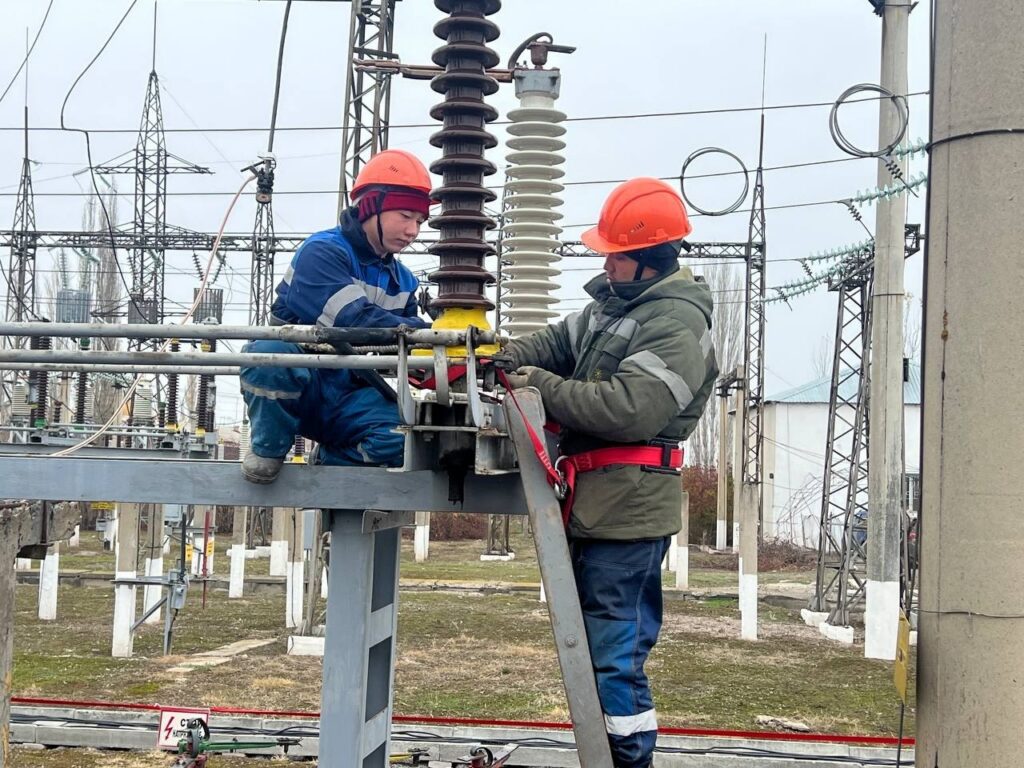
The crisis stems from a major failure at the Syrdarya thermal power plant, one of the country’s largest. A newly installed Mitsubishi gas turbine suffered a mechanical fault in late November, forcing the station to shut down part of its capacity. A replacement 114-ton rotor was delivered by air on December 8, and engineers expect to finish installation and testing in four weeks.

Seasonal factors have also reduced the available power supply. With winter’s shorter daylight hours, output from solar stations has dropped significantly, increasing the load on the grid. An unexpected gas supply disruption has further strained generation: Energy Minister Jurabek Mirzamakhmudov revealed that an accident in a neighboring country’s network cut Uzbekistan’s gas intake by about 6 million cubic meters per day. Natural gas fuels a large share of the country’s power plants, so this drop in fuel supply, combined with cloudy weather, has constrained electricity production. “Because of rain, there was neither wind nor sun,” Mirzamakhmudov said. These factors combined have left the grid struggling to meet peak demand in early December.

Peak-Hour Outages to Balance Demand

Officials have emphasized that rolling blackouts will be kept brief and targeted; each outage is not expected to last more than about two hours, and consumers will be notified in advance whenever possible. By shedding some load at peak times, the grid can avoid more dangerous unplanned breakdowns and ensure critical facilities remain powered. Residents have also been urged to use electricity sparingly and to monitor official announcements, rather than panic if an interruption occurs.

The Energy Ministry has stressed that rumors of any nationwide “blackout” are unfounded, and any power cuts will be localized and limited in scope, not a return to the wide-ranging outages seen in the past. Citizens have been cautioned against spreading unverified information on social media and encouraged to rely on updates from authorities.

Winter Energy Challenges and Reforms

Winter months have historically tested Uzbekistan’s energy infrastructure. In previous years, electricity deficits forced scheduled outages – commonly known as rolling blackouts – across the country. However, officials note that the situation has improved markedly due to new power projects and efficiency measures. According to Energy Ministry data, the volume of electricity consumption that had to be curtailed through such restrictions fell from about 4 billion kWh in 2013 to just 357 million kWh in 2024. Even during the Central Asian energy crisis of winter 2022, Uzbekistan’s forced power cuts totaled around 2 billion kWh, a figure that has since sharply declined as new capacity comes online.

Uzbekistan has been racing to expand its electricity generation to meet growing demand and reduce chronic winter shortages. The government has partnered with international firms to build modern gas-fired plants and large renewable energy projects. As a result, wind and solar power output have surged. The country’s solar and wind farms generated a record 10 billion kilowatt-hours of electricity this year, saving an estimated 2.7 billion cubic meters of natural gas that would otherwise have been burned for power. Still, these gains can be hampered by seasonal conditions: on cold, overcast days, when new solar panels and wind turbines yield less energy. By announcing targeted evening rationing now, the authorities hope to manage the current shortfall in a controlled way and avoid a repeat of the widespread outages that have plagued past winters.

Kazakhstan Launches First Domestic Green Hydrogen Production Station

Kazakhstan has unveiled its first fully integrated green hydrogen production station, a significant milestone in the country’s transition toward renewable energy and industrial innovation. The project, spearheaded by the Renewable Energy Laboratory at Nazarbayev University in Astana, is the first of its kind in Kazakhstan to receive a national patent, according to the Ministry of Science and Higher Education.

Powered entirely by solar and wind energy, the pilot facility uses innovative, locally developed catalysts to convert renewable electricity into hydrogen through electrolytic water splitting. The hydrogen is then stored and can be used as fuel for motor vehicles or standalone generators. Currently, the laboratory-scale station is capable of filling a six-cubic-meter hydrogen cylinder in three hours.

“This is a significant step toward the practical implementation of hydrogen technologies in Kazakhstan. What began as laboratory prototypes has evolved into a functional, outdoor industrial-scale system,” said Professor Nurshat Nurazhi, head of the Renewable Energy Laboratory.

The project was developed in collaboration with Zhejiang H2-Bank Technology Co., Ltd. of China. “Partnership with an industrial leader ensured scalability and compliance with international standards for hydrogen production and safety,” noted Dr. Yerbolat Magazov, head of the hydrogen production team. “This system demonstrates the potential of domestic innovation in clean energy and sets a milestone for Kazakhstan’s scientific community.”

The Kazakh government has identified hydrogen as a strategic component of its low-carbon transition. The Concept for the Development of Hydrogen Energy through 2030, approved in 2024, outlines hydrogen’s critical role in reducing greenhouse gas emissions and diversifying the national energy mix.

South Korean Firm Invests $12 Million in Kyrgyz Meat Processing Facility

A major South Korean investment is set to strengthen Kyrgyzstan’s agricultural sector with the launch of a $12 million agro-industrial complex. A groundbreaking ceremony held on December 10 in the village of Baytik, Chui region, marked the start of construction on the project, a joint venture between the state-owned Kyrgyz Agroholding JSC and South Korea’s DOD Company.

According to the Kyrgyz Ministry of Water Resources, Agriculture, and Processing Industry, the facility will feature the country’s first shock-freezing unit capable of blast-freezing meat to -35°C. This technology helps preserve the natural structure of the meat, minimizes moisture and weight loss, and extends shelf life without additives, meeting export standards required by high-end markets such as South Korea and Japan.

The project will also include a feedlot for 5,000 head of cattle, ensuring a reliable and consistent supply chain for the processing plant.

Speaking at the ceremony, Deputy Chairman of the Cabinet of Ministers Bakyt Torobaev said the investment reflects strong trust from Korean partners and represents a major step in integrating Kyrgyz meat production into global value chains.

Torobaev noted that Kyrgyz Agroholding, established to develop agro-industrial clusters and boost exports, plans to launch a pilot “Meat Cluster” project in 2026 in the Chui-Bishkek economic zone. Ten cluster associations will receive financing at 3% interest to purchase livestock, feed, cold-chain storage systems, packaging equipment, refrigerated trucks, and working capital.

He also highlighted that, for the first time since independence, the Kyrgyz Armed Forces are now fully supplied with domestically produced food, an indicator of the growing capacity and resilience of the national agricultural sector.

How Tajikistan Is Struggling to Keep the Lights On Amid Winter Power Shortages

As winter grips Tajikistan, severe electricity restrictions have become a daily reality. While officials claim that recent rainfall has helped partially stabilize the country’s largest hydroelectric power plant, residents across multiple regions report worsening shortages, with power barely available for a few hours each day.

Government officials say that water inflow into the Nurek Reservoir has increased following recent rains. Kurbon Ahmadzoda, a representative of the state energy company Barki Tojik, reported an increase of 30-40 cubic meters per second, enabling authorities to supply electricity for four to five hours daily.

Earlier, the government had attributed stricter electricity limits to a drop in water levels at the Nurek Hydroelectric Power Plant, which generates over half of Tajikistan’s electricity. A prolonged dry spell had reduced reservoir levels, triggering the latest round of supply cuts.

“As of December 9, around seven meters of the reservoir’s total 53-meter reserve have already been used,” Ahmadzoda said, adding that recent rainfall had improved inflows into the Vakhsh River, which feeds the plant.

Dustmurod Toirov, head of the Transmission Networks Control Center, confirmed a 15-20% increase in water inflow. As a result, daily depletion of the reservoir dropped from 23 centimeters to 17 centimeters. This, he said, allowed authorities to extend supply in some areas by an additional two to two-and-a-half hours.

Toirov also claimed that residents in Khujand, Bokhtar, Kulob, and the Rudaki district were receiving consistent electricity, with high-rise buildings fully supplied.

However, social media posts paint a different picture. Dozens of residents report receiving only one to three hours of electricity per day, describing increasing hardship as winter progresses.

To address consumption, authorities have implemented strict rationing measures. Toirov said automated power cuts are triggered when household usage exceeds 4 kW, a move he claims has already led to more economical electricity use.

In late November, the “Distribution Electric Networks” company sent mass SMS warnings to citizens: exceeding usage limits would result in 30-minute power cuts.

Amid the broader energy crisis, the government has also introduced new penalties targeting illegal cryptocurrency mining, which officials say consumes large amounts of stolen electricity.

Electricity rationing in Tajikistan typically begins in mid-autumn and continues through spring. However, in the past two years, restrictions have started earlier, as soon as September. The 2024-2025 winter has seen some of the harshest limits yet, with some regions receiving just two to four hours of electricity per day.

Uzbekistan to Import 300,000 Animals, Launch $367 Million in Livestock Projects

Uzbekistan’s President Shavkat Mirziyoyev has announced a sweeping expansion of the country’s livestock sector as part of broader agricultural reforms. Speaking on December 10 at a meeting with industry specialists to mark Agriculture Workers’ Day, the president outlined key initiatives aimed at boosting domestic production of meat and dairy products.

According to the president’s press secretary, the government will import 100,000 head of cattle and 200,000 sheep and goats in 2026. Farmers working within cotton and grain clusters will be permitted to construct lightweight livestock facilities of up to 20 sotok (approximately 0.2 hectares) on their existing plots, a move designed to better integrate crop and livestock operations.

Uzbekistan will also extend its subsidy program for imported breeding cattle and day-old chicks for an additional five years. To support the livestock sector’s growth, the government plans to allocate $157 million from funding provided by the World Bank and the International Fund for Agricultural Development. These loans will be issued to farmers at an interest rate of 17% for a term of up to 10 years, including a three-year grace period.

Additional financing will include $150 million from the Japan International Cooperation Agency (JICA) and $60 million from the Asian Development Bank. Authorities say the efficient use of these resources could support the launch of 1,000 projects valued at 5 trillion UZS, including the establishment of 340 small livestock farms across 167 districts, modeled after a French framework.

Last year, the European Union Delegation to Uzbekistan and the French Development Agency (AFD) signed agreements to support sustainable livestock development. The EU committed €4.7 million in grants for technical assistance and an additional €7.9 million to support Uzbekistan’s drinking water program, helping lay the groundwork for these agricultural reforms.

Uzbekistan Performs First Liver Transplant on Seven-Month-Old Infant

Uzbekistan has successfully performed its first liver transplant on a seven-month-old infant. The operation was carried out at the National Children’s Medical Center, with the child’s mother serving as the donor, a technically demanding procedure rarely performed worldwide.

Medical specialists at the center emphasized that liver transplantation in infants under one year of age requires advanced surgical capabilities and extensive pre-operative assessment. Both mother and child underwent comprehensive evaluations prior to the operation. Surgeons transplanted a segment of the mother’s liver into the child, and the procedure was completed without complications.

The mother has already been discharged in stable condition. The infant remains under close medical supervision, with doctors describing the child’s condition as stable and satisfactory. Preparations for discharge are currently underway.

The Ministry of Health hailed the operation as a milestone for Uzbekistan’s healthcare sector, highlighting the increasing ability of domestic institutions to carry out high-complexity medical procedures.

In a related development, the ministry also noted recent advances in orthopedic surgery. In October, during the “Days of Kazakh Medicine in Uzbekistan” event, surgeons from Kazakhstan conducted robotic-assisted joint replacement surgeries in Tashkent. The team, led by orthopedic surgeon Timur Baidalin from Kazakhstan’s Batpenov National Scientific Center, performed one knee and one hip replacement using the MAKO robotic system. The technology enables precise surgical planning and reduces the risk of complications.