• KGS/USD = 0.01143 -0%
  • KZT/USD = 0.00192 -0%
  • TJS/USD = 0.10820 0.19%
  • UZS/USD = 0.00008 0%
  • TMT/USD = 0.28575 0%
  • KGS/USD = 0.01143 -0%
  • KZT/USD = 0.00192 -0%
  • TJS/USD = 0.10820 0.19%
  • UZS/USD = 0.00008 0%
  • TMT/USD = 0.28575 0%
  • KGS/USD = 0.01143 -0%
  • KZT/USD = 0.00192 -0%
  • TJS/USD = 0.10820 0.19%
  • UZS/USD = 0.00008 0%
  • TMT/USD = 0.28575 0%
  • KGS/USD = 0.01143 -0%
  • KZT/USD = 0.00192 -0%
  • TJS/USD = 0.10820 0.19%
  • UZS/USD = 0.00008 0%
  • TMT/USD = 0.28575 0%
  • KGS/USD = 0.01143 -0%
  • KZT/USD = 0.00192 -0%
  • TJS/USD = 0.10820 0.19%
  • UZS/USD = 0.00008 0%
  • TMT/USD = 0.28575 0%
  • KGS/USD = 0.01143 -0%
  • KZT/USD = 0.00192 -0%
  • TJS/USD = 0.10820 0.19%
  • UZS/USD = 0.00008 0%
  • TMT/USD = 0.28575 0%
  • KGS/USD = 0.01143 -0%
  • KZT/USD = 0.00192 -0%
  • TJS/USD = 0.10820 0.19%
  • UZS/USD = 0.00008 0%
  • TMT/USD = 0.28575 0%
  • KGS/USD = 0.01143 -0%
  • KZT/USD = 0.00192 -0%
  • TJS/USD = 0.10820 0.19%
  • UZS/USD = 0.00008 0%
  • TMT/USD = 0.28575 0%
13 December 2025

Cash, Horses, But No Meatballs — What Kazakhstan’s Olympic Medalists Receive For Their Success

As Kazakhstani athletes begin returning home from the 2024 Olympic Games in Paris, the medalists are being greeted not only by new fans, but with payments and presents from the government.

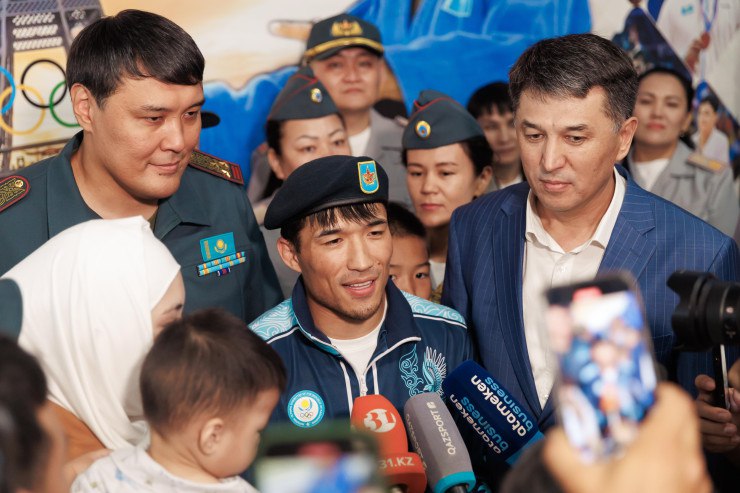
Yeldos Smetov, Kazakhstan’s first-ever Olympic gold medalist in judo, received the keys to a Lexus LX 600 SUV worth at least 78 million KZT ($165,000). He was also given a 5-room apartment in his native Taraz, and a check for 2.6m KZT ($5,500). Smetov received a $250,000 government bonus, lifetime monthly payments of 369,000 KZT ($785), and was promised a herd of 100 thoroughbred horses.

Meanwhile, Gusman Kyrgyzbayev, a bronze judo medalist at the Games, was also showered with gifts. A judoka who usually represents the Ministry of Defense’s own sports club, Kyrgyzbayev was promoted from senior lieutenant to captain upon his return to Kazakhstan. Kyrgyzbayev was also given a Toyota Land Cruiser-250 SUV worth about 31 million KZT ($65,000), and received $75,000 as a state award.

Kazakhstan’s Ministry of Tourism and Sports has announced monetary incentives for anyone else who brings a medal home from Paris. Gold medalists will be paid $250,000; silver medalists will receive $150,000, and bronze medalists will receive $75,000. Bonuses of $30,000, $10,000, and $5,000 are also provided for 4th, 5th, and 6th places respectively.

As generous as the Kazakh government has been, in East Asia the rewards are even more lavish. The government of Hong Kong is promising prize money of 6 million local dollars ($768,000) to any champions at the 2024 Olympics. In Malaysia, meanwhile, the recent gold medalists in badminton doubles, Apriyani Rahai and Gracie Poli, were each given five cows, a specialty meatball restaurant, and a new house.

Controversy and Confrontation Surround LGBT Issues in Kazakhstan

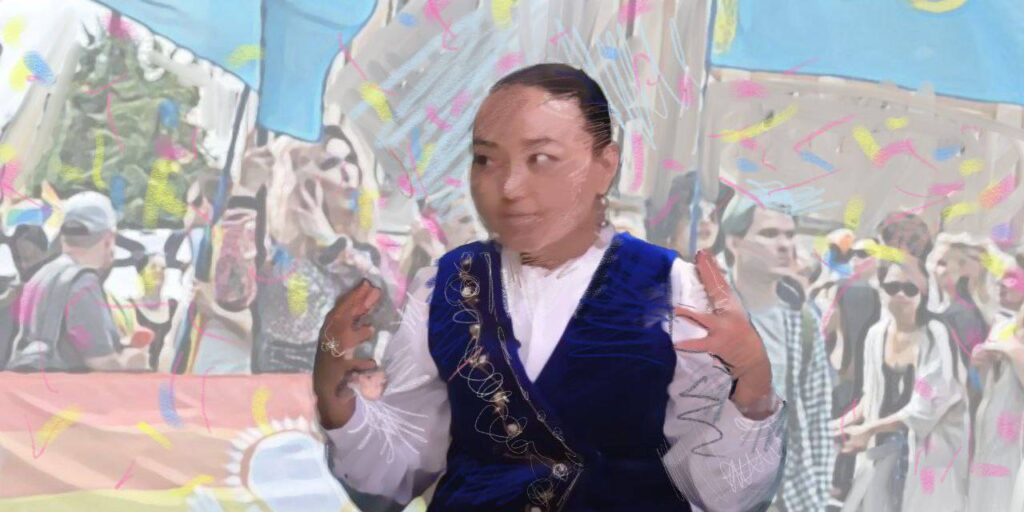
The situation surrounding the so-called “LGBT propaganda” conversation continues to heat up in Kazakhstan. Known for its controversial initiatives and stances, earlier this year the Parents’ Union published a petition demanding a ban on demonstrations of non-traditional relationships in the country. The petition gained over 50,000 signatures, meaning Kazakhstan’s Ministry of Culture and Information must consider it under a law passed following Tokayev’s promise of a more engaged and aware “listening state.” However, UN experts have warned that Kazakhstan should not accept the petition for consideration, as it would seriously damage the republic’s image in the international arena.

The authors of the petition “We are against open and hidden propaganda of LGBT in Kazakhstan,” published on the official portal E-Petition.kz, is the Kazakhstan Union of Parents. The Ministry of Culture reported that according to Article 90-4 of the Administrative Procedural Code of the Republic of Kazakhstan, the petition should be considered. A working group, which includes representatives of interested parties, state bodies, and public associations, has been established, and hearings are underway.
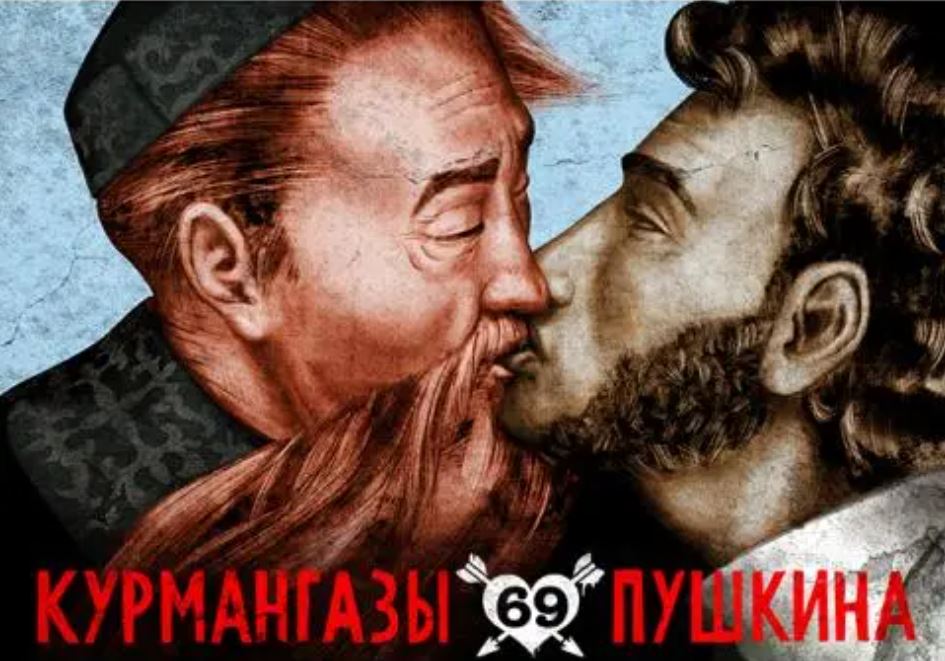

Poster of Kazakh composer Kurmangazy Sagyrbaiuly and Russian poet Aleksandr Pushkin, Havas Worldwide, Facebook


UN warning

On July 31, UN experts said Kazakhstan should reject the petition calling for a law banning gay propaganda. The statement was attributed to Graham Reed, Independent Expert on the Protection against Violence and Discrimination on the Basis of Sexual Orientation and Gender, Irene Khan, UN Special Rapporteur on the right to freedom of opinion and expression, Mary Llor, Special Rapporteur on the situation of human rights defenders, Gina Romero Rodriguez, Special Rapporteur on the right to freedom of peaceful assembly, and Farida Shaheed, Special Rapporteur on the right to education.

“The Government of Kazakhstan should reject the petition it is considering for legislation that violates freedom of expression, peaceful assembly, and association based on sexual orientation and gender identity. The petition itself is based on prejudice, and any legislation resulting from it inevitably and unlawfully tramples on human rights,” the UN experts stated.

In their opinion, the call for a ban on propaganda of the LGBT movement contradicts the Administrative Procedure Code of Kazakhstan. According to it, the government is prohibited from considering petitions, the implementation of which may lead to the violations of human rights and freedoms. If the government responds to the petition and adopts a law banning the public expression of lesbian, gay, bisexual, and transgender (LGBT) identity, it would violate many rights, including freedom of expression and equality before the law, as guaranteed by the International Covenant on Civil and Political Rights, which Kazakhstan ratified in 2005.

The UN has previously expressed concern about similar bills on so-called “LGBT propaganda” in Kazakhstan, Kyrgyzstan, and the Russian Federation. In Russia, laws against “LGBT propaganda” were introduced in 2013 and were tightened in 2022. A complete legal ban on LGBT propaganda (among people of all ages) was introduced, administrative cases were conducted, and internet resources were blocked.

Kyrgyzstan passed a similar law in 2023, effectively banning any public discussion of LGBT representatives and mischaracterizing information about “non-traditional sexual relations” as “harmful” to children, experts wrote. The petition presented to the Kazakh authorities also says the requested law is aimed at “protecting adolescents and children.”

“Such a vaguely worded law will have a chilling effect on civil society organizations and human rights defenders and contribute to the creation of a hostile environment in which discrimination and even violence will take place,” the UN endorsed statement continues. In 2020, Kazakhstan accepted a recommendation from UN member states to “guarantee an enabling environment for civil society, activist groups, and human rights defenders” working on LGBT issues. If Kazakhstan adopts a restrictive “propaganda” law stemming from the petition, it would directly contradict the government’s commitment to its human rights obligations, the statement argues.


Who are the Parents Union?

The Parents Union of Kazakhstan is headed by Bagila Baltabayeva, whom in a spate of statements has on more than one occasion referred to the battle for LGBT rights as a call for revolution. “Today’s little child can become the leader of the country tomorrow. And today, these eight- and nine-year-old girls who go to rallies say, ‘My vagina is my business,’ ‘Down with the patriarchy, let’s have a revolution.’ They are directly calling for a revolution, these little girls. In two or three generations, what kind of people will run our country?” Baltabayeva stated. “If you want to become a country, fix your cradle! If you want to save your nation, fix your daughter! Today’s girl, tomorrow’s Mother!

Ahead of the public debate on the anti-LGBT propaganda petition, its initiator, the Parents Union, once again expressed its views and urged people to support their initiative. “The demands do not attack the rights of homosexuals in any way. The demands are aimed at protecting the rights and interests of the majority of citizens of the Republic of Kazakhstan, and especially at protecting the rights of minors, enshrined in international acts and the Constitution of the Republic of Kazakhstan,” the Union of Parents stated.

“At the same time, it is important to realize that no law of the RK contains any norm that would give homosexuals the ‘right’ to indoctrinate their unnatural attitudes to others. Demands of homo-NGOs to allow them to promote a perverted way of life grossly infringe on human rights and freedoms,” their appeal states.

Earlier, members of the Parents’ Union spoke out against this year’s amendments to the legislation on family violence, which toughened punishment for family tyrants which were praised by the OSCE and UNDP as laying a “foundation for a stable, prosperous society.” Contrary to the facts, the Parents’ Union argued that the new law would lead to the mass removal of children from families.

In addition, several Parents’ Union activists are known for speaking out against vaccinations. Childhood diseases like measles, whooping cough, and diphtheria, which have caused many deaths in the past, have been virtually eradicated in the former Soviet Union through mass vaccination. But in recent decades, anti-vaxxer beliefs have been spreading. As a result, collective immunity has been seriously weakened. Now, there are regular measles outbreaks in Kazakhstan, and since the beginning of this year, two children, both unvaccinated, have died of whooping cough.
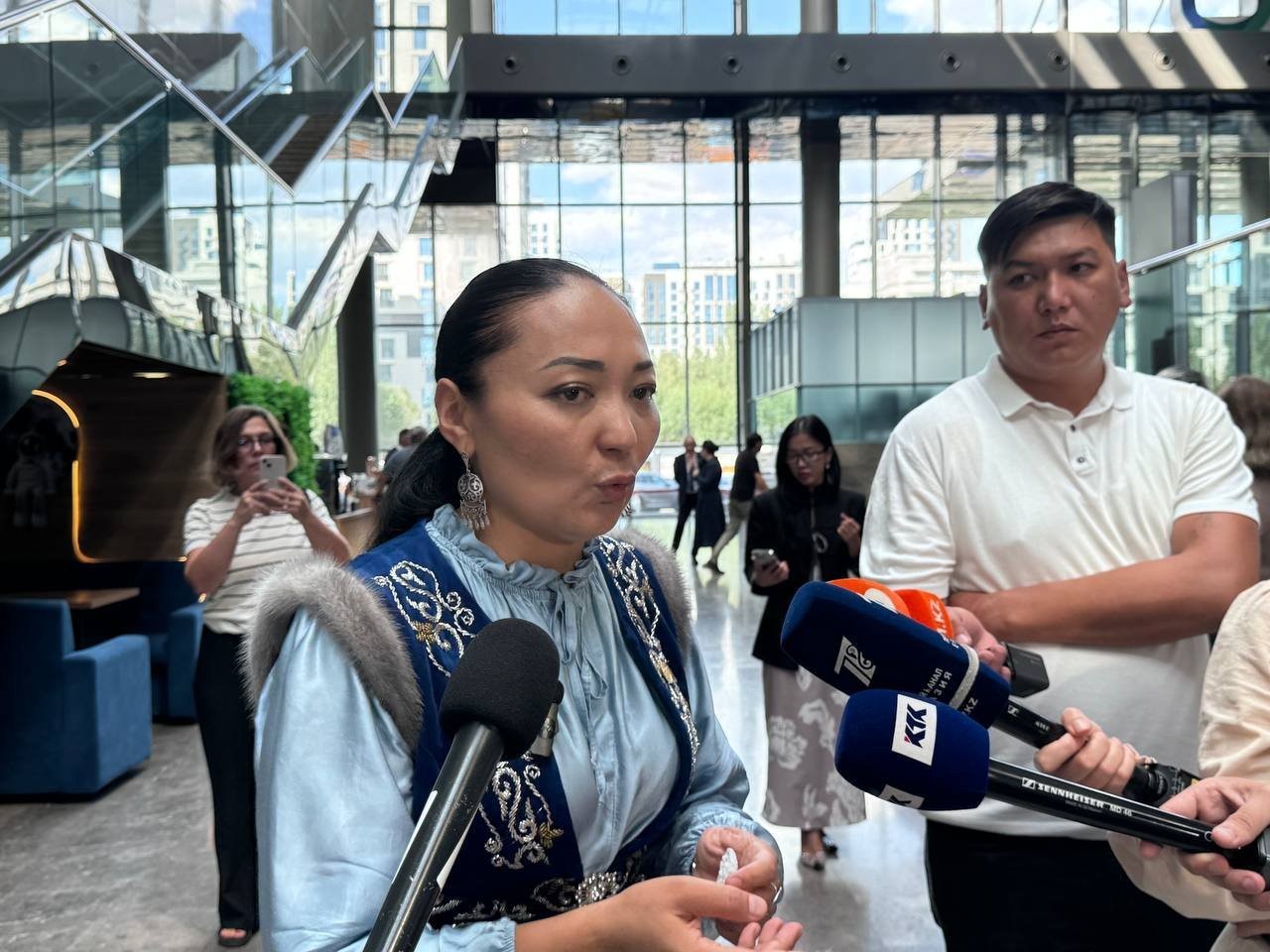

Bagila Baltabayeva, Instagram


Contrary to the Constitution

Activists and supporters of the LGBT movement have, of course, taken a polar opposite position. In particular, Zhanar Sekerbayeva, co-founder of the Kazakhstan feminist initiative Feminita, spoke on political scientist Marat Shibutov’s podcast.

The Constitution clearly states that everyone is equal before the law, she stated, and no one can be discriminated against. We must respect this article of the Constitution — the Basic Law of the Republic of Kazakhstan. “We have pledged to respect human rights conventions,” Sekerbayeva said.

Human rights activists are convinced that passing a law against LGBT propaganda could lead to more bullying and an increase in teen suicide. In addition, Kazakhstan may lose access to almost all Western video content, as it massively contains this “propaganda.” Feminita have initiated a complaint about the petition. Bloggers supporting the petition, meanwhile, believe that Western countries are imposing non-traditional values on Kazakhstan.

Kyrgyz Foreign Minister: Demarcation of Tajik Border Will Be Completed in October

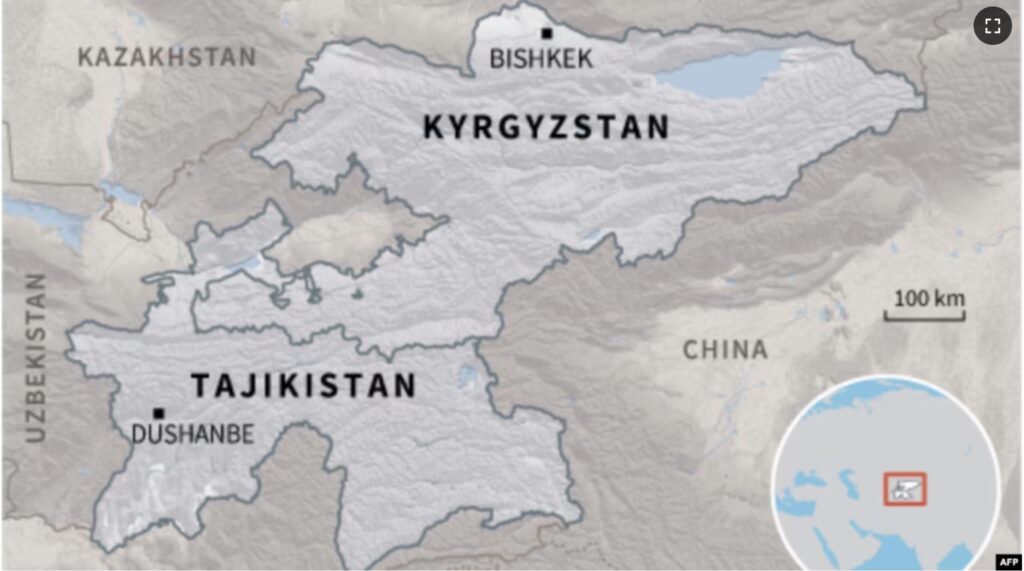
At a press conference in Bishkek, Kyrgyz foreign minister Zheenbek Kulubaev said that 90% of the state border has already been demarcated.
Kulubaev said that, as the border issue is very sensitive for Kyrgyzstan and Tajikistan, working groups from the two countries have been holding weekly meetings, alternating between Bishkek and Dushanbe.

“We are still harmonizing several points. The heads of state have an understanding and instructed us to finalize the border issue shortly. I assume the issue will be resolved in the coming months,” Kulubaev said.

The foreign minister emphasized that the negotiations will likely be completed by October.

The length of the state border between the countries is 980 kilometers, and negotiations on delimitation have been going on since late 2002. Failure to settle this issue has periodically led to border conflicts, including with the use of firearms. Still, the border between Kyrgyzstan and Tajikistan remains closed. The reason behind the closure is the military clashes between border guards in 2022. At that time, heavy weapons were used, and dozens of people were killed.

ADB Grants $21 Million to Modernize Hydropower Plant in Tajikistan

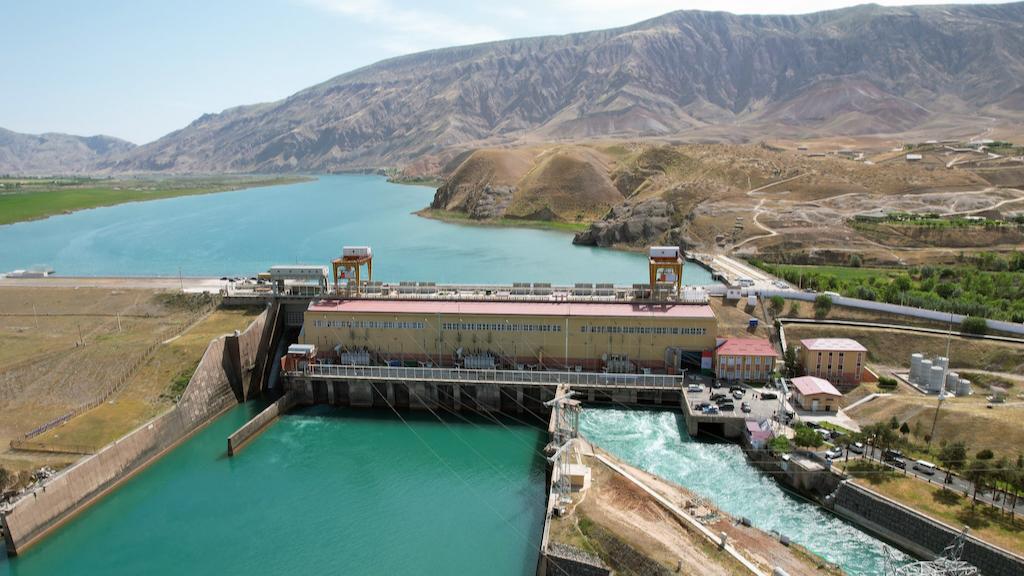
The Asian Development Bank (ADB) announced on August 6 that it had approved a $21 million grant as additional financing to modernize the Golovnaya hydropower plant in Tajikistan.

The additional financing will replace the power generation unit 4 at the Golovnaya hydropower plant. Unit 4, which was not part of ADB’s original project approved in 2013, ceased operations in 2019 due to damage to its mechanical equipment.

ADB’s original project provided a $136 million grant to replace five of the plant’s six power generation units. It also rehabilitated switchyards at the Golovnaya hydropower plant, modernized the Vose substation, and constructed the Rudaki substation and a transmission line connecting the Rudaki and Vose substations in southern Tajikistan.

The hydropower plant’s modernization will increase its installed capacity from 240 megawatts in 2012 to 274 megawatts by 2026.

ADB Director General for Central and West Asia, Yevgeniy Zhukov, commented: “The electricity from the Golovnaya hydropower plant goes to national and regional grids, benefiting Tajikistan and neighboring countries. ADB’s support improves regional energy security, contributing to inclusive, sustainable economic growth and balanced regional development.”

Late in December 2023, Tajik president Emomali Rahmon stated that Tajikistan’s energy capacity exceeded 6,000 megawatts in 2023, and electricity production amounted to 22 billion kilowatt-hours, 4.8 billion kilowatt-hours or 28% more than in 2017.

Rahmon also said that by 2032, electricity production in the country would be entirely from renewable sources; that is, 100% will be provided by “green energy, and Tajikistan will truly become a green country.”

Climate Council Established in Uzbekistan

Uzbek media is reporting that a Climate Council is being established in the country. The council will coordinate activities to combat climate change, develop policy in this area, and ensure the country’s fulfillment of its obligations under the Paris Agreement.

The main functions of the Council will also include:

— Development of the National Strategy for Climate Change Mitigation and Adaptation, as well as coordination of government agencies in this area;

— Monitoring the implementation of Uzbekistan’s obligations under the UN Framework Convention on Climate Change and the Paris Agreement;

— Support for projects to combat climate change, including using green technologies, scientific research, and innovation.

The National Center for Green Transformation and Adaptation to Climate Change under the Ministry of Ecology has been renamed the National Center for Climate Change. This center will serve as the working body of the Climate Council, and coordinate Uzbekistan’s preparation for international and regional climate events.

Kazakhstan Completes Annual Anti-Locust Measures

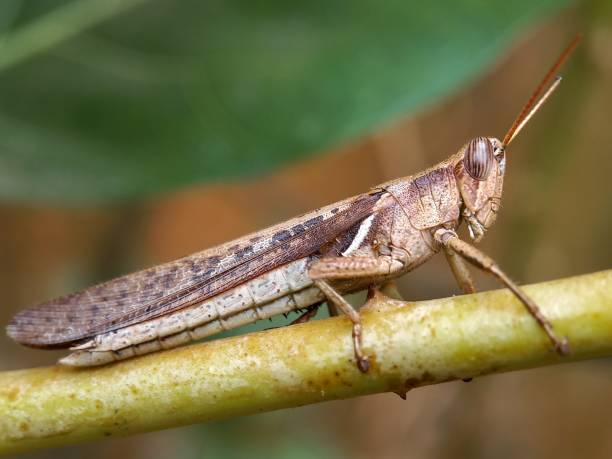
This year’s locust control measures have been completed in all regions of Kazakhstan. As a result, farmers’ crops have not been damaged by swarms of the grasshopper pests.

Over 3.1 million hectares of land have been treated against locusts, 23% more than the planned 2.5 million hectares. Monitoring work will continue in some regions for another week.

The amount of agricultural land affected by locusts has dramatically increased in recent years, from 514,000 hectares in 2020 to 1.6 million hectares in 2023. According to the UN’s Food and Agriculture Organization, locust outbreaks pose a severe threat to agriculture in the South Caucasus and Central Asia, with more than 25 million hectares and 20 million people in the region vulnerable to damage.

Kazakhstan has cooperated closely with agricultural authorities of bordering countries, including Russia, to monitor the potential spread of locusts. Next year the government plans to purchase 100 drones to monitor the birthplaces of locust larvae and more drones to treat fields.