• KGS/USD = 0.01144 0%
  • KZT/USD = 0.00193 -0%
  • TJS/USD = 0.10811 -0.28%
  • UZS/USD = 0.00008 0%
  • TMT/USD = 0.28490 0%
  • KGS/USD = 0.01144 0%
  • KZT/USD = 0.00193 -0%
  • TJS/USD = 0.10811 -0.28%
  • UZS/USD = 0.00008 0%
  • TMT/USD = 0.28490 0%
  • KGS/USD = 0.01144 0%
  • KZT/USD = 0.00193 -0%
  • TJS/USD = 0.10811 -0.28%
  • UZS/USD = 0.00008 0%
  • TMT/USD = 0.28490 0%
  • KGS/USD = 0.01144 0%
  • KZT/USD = 0.00193 -0%
  • TJS/USD = 0.10811 -0.28%
  • UZS/USD = 0.00008 0%
  • TMT/USD = 0.28490 0%
  • KGS/USD = 0.01144 0%
  • KZT/USD = 0.00193 -0%
  • TJS/USD = 0.10811 -0.28%
  • UZS/USD = 0.00008 0%
  • TMT/USD = 0.28490 0%
  • KGS/USD = 0.01144 0%
  • KZT/USD = 0.00193 -0%
  • TJS/USD = 0.10811 -0.28%
  • UZS/USD = 0.00008 0%
  • TMT/USD = 0.28490 0%
  • KGS/USD = 0.01144 0%
  • KZT/USD = 0.00193 -0%
  • TJS/USD = 0.10811 -0.28%
  • UZS/USD = 0.00008 0%
  • TMT/USD = 0.28490 0%
  • KGS/USD = 0.01144 0%
  • KZT/USD = 0.00193 -0%
  • TJS/USD = 0.10811 -0.28%
  • UZS/USD = 0.00008 0%
  • TMT/USD = 0.28490 0%
10 December 2025

Kyrgyzstan’s Capital to Switch to Russian Gas

At the St Petersburg International Economic Forum 2024, Gazprom Export LLC and Gazprom Kyrgyzstan LLC signed  a long-term contract for the supply of natural gas by Russia to Kyrgyzstan.

Deputy General Director of Gazprom Kyrgyzstan Arzamat Aldayarov announced that Russian Gazprom is now set to double its supplies of ‘blue fuel’ to Kyrgyzstan from 2025-2040.

He stated that the Bishkek Thermal Power Plant will switch completely to gas from 2026. In addition, the Kyrgyz authorities are planning to launch several more stations near Bishkek, which will also operate on Russian raw materials.

Arzamat Aldayarov added that the development of a five-year roadmap for providing gas throughout Bishkek was imminent and referencing plans to build 250–300 kilometers of gas pipelines annually, connecting 13–15 thousand apartment buildings to supplies, said, “Currently, a lot of electricity is spent on heating, which puts pressure on city networks. We are looking for other sources of heat. We want to completely gasify residential areas and switch them to gas heating.”

How Limits on Electricity Use will Impact Uzbekistan

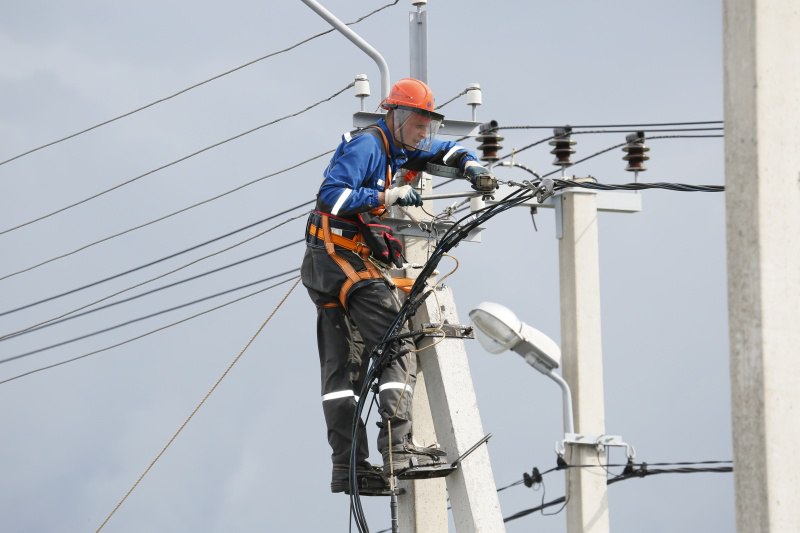
This year, Uzbekistan implemented reforms aimed at modernizing and optimizing energy consumption, including a new scheme introduced by the Cabinet of Ministers of the Republic of Uzbekistan.

Entitled “Additional measures to introduce market mechanisms in the fuel and energy sector,” the scheme comprises a new pricing structure for fuel and energy resources for 2024-2025, alongside revised basic standards for monthly household electricity and natural gas consumption, starting May 1, 2024.

Under the new regulations, residents must pay 450 UZS (3.6 cents) for each kilowatt used up to 200 kWh per month and 900 UZS (7.2 cents) for 201 kWh to 1,000 kWh per month. If energy consumption increases, the price changes accordingly. Household consumers living in apartment buildings and dormitories equipped with centralized electric plates for cooking will be charged 225 UZS (1.8 cents) for up to 200 kWh per month, from 201 kWh to 1,000 kWh – 450 UZS (3.6 cents).

Negative reaction to the move has been widespread with numerous complaints posted on social networks such as Instagram and Facebook, demanding the cancellation of the limit of up to 200 kWh. One of the key protests is that the number of family members was not considered when setting the limit and that it will need to increase in the colder months of autumn-winter. Residents also commented they will need to save up to pay for their bills and one Facebook post commented that the 200-kWh limit should be cancelled or at least increased to 500 kWh.

In response  to public outcry, Uzbekistan’s Ministry of Energy  issued an official statement announcing that there was no reason to revise its decision and reported that since 71% of the population consumed less than 200 kW of electricity in June, the limit was realistic.

When interviewed by TCA on the situation, Umida Ahadova from the Navoi region, commented, “Four people live in our family, and electricity is mainly used for housework. Since it is summer, we often use the air conditioner to cool the house. But the electricity consumption rarely exceeds the set limit of 200 kW.”

Another interviewee Roziboyeva, who shares a rented house in Tashkent with seven friends said, “Eight girls have lived in a 3-room apartment for almost a year, but our energy consumption is only slightly more than 150 kW. That said, we don’t use air conditioners to heat and cool the house.”

According to the ministerial statement , 1 kWh of electricity costs 895 UZS (7.1 cents) (without VAT). The state reimburses 552.4 UZS (4.4 cents) for each kWh of electricity supplied to the population within the basic norm and 102.1 UZS (0.81 cents) from 201 kW to 1000 kWh.

“It should be said that consumers’ electricity savings have increased due to increasing tariffs, ” claimed the ministry. ” As a result, the load on the system is reduced, people’s electricity systems are cut, and accidents are also decreasing.”

Research conducted by Asia-Plus last year showed that Kazakhstan has the highest electricity tariff among Central Asian countries. The price of 1 kWh of electricity, for example in Kazakhstan is 4.8 US cents; in Tajikistan, 2.4 cents, and in Kyrgyzstan, just 1 cent.

According to data studied by TCA, electricity tariffs in Kazakhstan vary by region.  For example, in Almaty, it is 25.55 KZT (5.4 cents) per kWh (without VAT), while in Astana, the rate is equivalent to 23.13 KZT (4.9 cents) (with VAT). The country also has a different tariff system to Uzbekistan. Citizens in the capital consuming up to 90 kWh, must pay 18.66 KZT (3.9 cents) per kWh, and as consumption increases, the price changes from 90 to 180 kWh – 27.75 tenge (5.9 cents) and if it exceeds 180 kWh, the cost rises to 34.70 KZT (7.3 cents).

From 1993 to January 1, 2019, residents of  Turkmenistan, did not pay for water, gas, and electricity. The country now applies differentiated tariffs with 35 kWh of electricity per month provided free of charge.

Uzbekistan has now commenced construction on two solar power plants in the Fergana and Namangan regions, with a total capacity of 400 megawatts. The electricity generated is to be supplied to Kyrgyzstan, further enhancing regional energy cooperation.

In conclusion, Uzbekistan’s reforms are part of a broader effort to modernize its energy sector, improve efficiency, and reduce reliance on traditional energy sources. The changes are expected to bring long-term benefits, including new job creation, improving the quality of the electricity supply, and increasing efficiency in the overall energy system.

Nursultan Nazarbayev Stripped of Academy of Sciences Membership

News that the first president of Kazakhstan, Nursultan Nazarbayev, has been stripped of his status as a member of the Academy of Sciences of Kazakhstan, was announced by Minister of Science and Higher Education, Sayasat Nurbek.

Nurbek explained that in 2023, Kazakhstan’s current president, Kassym-Jomart Tokayev, decided to create a new Academy of Sciences with just nine members and in the process,  ‘reset’ the status of former academy members.

Nursultan Nazarbayev was awarded the status of academician of the Academy of Sciences of Kazakhstan in 1995 and in 2011, whilst participating in a scientific forum at the academy, received the honourable title of “Scientist of the Century.”

The loss of his membership of the academy is the most recent example of Nazarbayev’s fall from grace. In July last year, he was deprived of his position as head of the supreme board of trustees of autonomous educational organizations. Then, this spring, a waxwork of the first president, installed six years ago in the State Military History Museum of the Armed Forces of Kazakhstan in Astana, disappeared. Previously, the monument to Nursultan Nazarbayev, inaugurated on his 80th birthday in 2020, was dismantled from the territory of the National Defense University in Astana, in tandem with the removal of another memorial to the man from the National Museum.

Russia Deports Thousands of Tajik Citizens

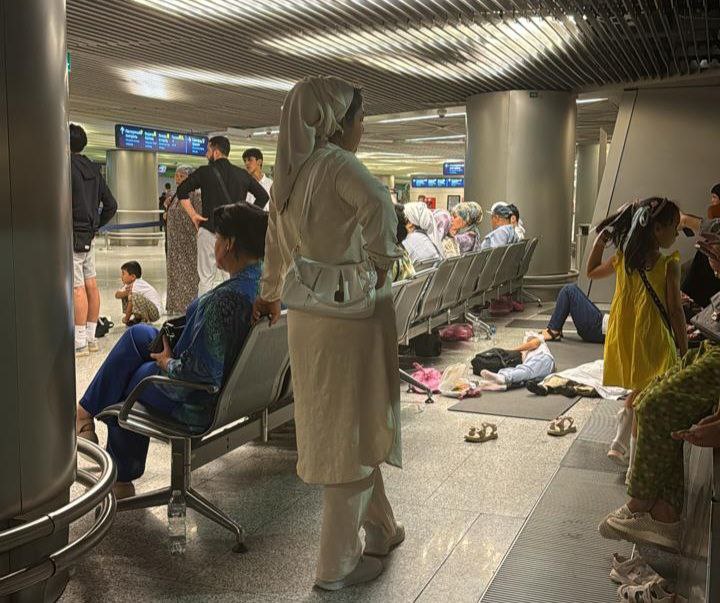
During a press conference, director of the Civil Aviation Agency, Habibullo Nazarzoda, announced that over the past six months, Russia expelled or deported some 3,400 Tajikistan citizens.

Nazarzoda emphasized that the action was spurred by errors in the Tajik citizens’ documents as opposed to being politically motivated and stated, “The reason for denied entry into Russian territory was sometimes a lack of necessary documents. 95% of people who travel to the country know where they are going and why they are going, but cannot answer questions when asked. Many become confused. That’s why it’s not political.”

Conditions for migrants heading for Russia and for those already in the country, have become stricter following the recent terrorist attack at Moscow’s Crocus City Hall and the suspected involvement of Tajik citizens.

Complaints about difficulties in entering the country are increasing and dozens of migrants report being detained at Russian airports and land border crossings under various pretexts. Since neither the Tajik nor Russian sides have commented on the situation, the official reasons for the above remain unclear.

Turkish Company to Build Vegetable Storage Facility in Kazakhstan

On July 24, Kazakhstan’s Deputy Minister of Agriculture, Ermek Kenzhekhanuly met managers of the Turkish company Saraylim Tarim to discuss plans for a new vegetable storage facility.

A leader in Turkey’s fruit and vegetable storage industry, the company plans to build a 5,000-ton vegetable storage facility in Kazakhstan costing around $15 million.

In addition, Saraylim Tarim  plans to invest a further $15 million in establishing a vinegar and canned vegetable production facility in the country’s Almaty region.

According to the Turkish company, the project would be implemented in cooperation with a Kazakh partner and  Deputy Minister Kenzhekhanuly has promised maximum assistance from the Ministry of Agriculture.

Rise in Uzbekistan’s Foreign Trade Turnover

According to a report  published by the Statistics Agency of Uzbekistan on the country’s socio-economic situation for the first  half of 2024, the gross domestic product amounted to 567.4 trillion UZS ($44.93 billion), an increase of 6.4% compared to the same period last year.

The industrial network grew by 7.8%; agriculture, forestry, and fisheries by 3.8%, and construction by 10.1%. Local enterprises produced industrial products worth 370.0 trillion UZS ($29.30 billion) and the volume of agricultural, forestry, and fishery products totalled 170,297.3 billion UZS ($13.49 billion).

The rate of inflation in Uzbekistan’s consumer sector was 5.2%.

Foreign trade turnover amounted to $31,828.2 million, an increase of $2,486.7 million or 8.5% compared to 2023. Exports reached $12,992.7 million, an increase of 5.5%, and imports, reached $18,835.5 million, an increase of 10.6% compared to the previous year.

In July 1, 2024, 455,600 enterprises (excluding farms and peasant farms) were operating in the country, of which 387,100 are small enterprises and micro firms.

Between January and June, 42,400 new enterprises and organizations were established, of which 41,000 were small enterprises and micro firms, and by July, of the 13,880 enterprises operating with foreign capital, 4,221 were joint ventures, and 9,659, solely international.