• KGS/USD = 0.01144 0%
  • KZT/USD = 0.00211 0%
  • TJS/USD = 0.10460 0.19%
  • UZS/USD = 0.00008 0%
  • TMT/USD = 0.28490 0%
  • KGS/USD = 0.01144 0%
  • KZT/USD = 0.00211 0%
  • TJS/USD = 0.10460 0.19%
  • UZS/USD = 0.00008 0%
  • TMT/USD = 0.28490 0%
  • KGS/USD = 0.01144 0%
  • KZT/USD = 0.00211 0%
  • TJS/USD = 0.10460 0.19%
  • UZS/USD = 0.00008 0%
  • TMT/USD = 0.28490 0%
  • KGS/USD = 0.01144 0%
  • KZT/USD = 0.00211 0%
  • TJS/USD = 0.10460 0.19%
  • UZS/USD = 0.00008 0%
  • TMT/USD = 0.28490 0%
  • KGS/USD = 0.01144 0%
  • KZT/USD = 0.00211 0%
  • TJS/USD = 0.10460 0.19%
  • UZS/USD = 0.00008 0%
  • TMT/USD = 0.28490 0%
  • KGS/USD = 0.01144 0%
  • KZT/USD = 0.00211 0%
  • TJS/USD = 0.10460 0.19%
  • UZS/USD = 0.00008 0%
  • TMT/USD = 0.28490 0%
  • KGS/USD = 0.01144 0%
  • KZT/USD = 0.00211 0%
  • TJS/USD = 0.10460 0.19%
  • UZS/USD = 0.00008 0%
  • TMT/USD = 0.28490 0%
  • KGS/USD = 0.01144 0%
  • KZT/USD = 0.00211 0%
  • TJS/USD = 0.10460 0.19%
  • UZS/USD = 0.00008 0%
  • TMT/USD = 0.28490 0%

Kazakhstan Expands Aviation Hub with Focus on U.S. and Long-Haul Flights

Kazakhstan is preparing for an audit by the U.S. Federal Aviation Administration (FAA) that would allow the country to launch direct flights to the United States. To achieve this, the government must demonstrate the reliability of its aviation regulatory system, the presence of an independent and effective oversight body, and transparent airline certification procedures.

The country is also planning to acquire modern long-haul aircraft and has begun construction of its first maintenance center to service them. The Times of Central Asia spoke with representatives of Kazakhstan’s aviation industry about the progress of these efforts, when direct flights to North America may begin, and what challenges remain.

As part of efforts to expand international routes and strengthen Kazakhstan’s position as an aviation hub between Europe and Asia, Bauyrzhan Umiraliyev, head of the Aviation Safety Department at the Civil Aviation Committee, said the national carrier Air Astana plans to purchase 15 Boeing 787 Dreamliner aircraft, with deliveries scheduled between 2026 and 2035.

“This is a strategically important decision that can significantly boost civil aviation, the economy, and the country’s international standing,” an aviation authority representative told The Times of Central Asia. “Long-haul aircraft will allow airlines to launch direct flights to destinations in North America, Europe, Asia, and Australia that were previously inaccessible or required layovers.”

The aircraft will also enhance Kazakhstan’s attractiveness as a transit hub and tourist destination, while enabling airlines to compete internationally through improved efficiency, pricing, and service quality.

The purchase of these aircraft, previously delayed twice since 2025 due to production backlogs at Boeing, is expected to open new opportunities for Kazakhstan’s aviation sector, particularly following the anticipated attainment of Category 1 (CAT-1) safety status, confirming compliance with international aviation standards.

CAT-1: The Path to the U.S.

In 2024, Kazakhstan’s aviation authorities and the FAA signed an agreement to conduct a technical assessment under the International Aviation Safety Assessment (IASA) program.

According to Aslan Satzhanov, Acting Executive Director of the Aviation Administration of Kazakhstan, the assessment identified areas requiring improvement in flight safety oversight.

“We are currently working on amendments to regulatory acts to implement modern safety procedures and standardize processes, with technical support from FAA experts,” Satzhanov said.

In parallel, experts from the U.S. Transportation Security Administration have conducted preliminary assessments of airport security under the Export Control and Border Security Program.

The first visit, in October 2021, resulted in a generally positive evaluation of Kazakhstan’s aviation security framework. A follow-up visit in August 2022 focused on screening procedures for passengers, baggage, and cargo at Astana Airport.

“The capital’s airport received a positive assessment, and the coordinated work of aviation security personnel was noted,” Satzhanov said.

According to preliminary information, the full IASA audit may take place after long-haul aircraft enter service and relevant infrastructure is fully prepared; though, it should be noted that Kazakhstan does not control the timing of the IASA audit.

Industry Awaits New Aircraft

Preparations for launching new international routes, including previously announced flights to New York and Tokyo, are already underway. According to Satzhanov, flights to Tokyo may begin in the second half of 2026, while New York routes are expected no earlier than early 2027.

These timelines depend directly on the delivery and operational readiness of new aircraft.

Kazakhstan’s airlines are also planning broader route expansion. SCAT Airlines aims to launch flights to destinations including Tel Aviv, Shanghai, Guangzhou, Larnaca, Dalaman, and Salalah. Meanwhile, the Air Astana Group is considering routes to Tokyo, Samarkand, Xi’an, Urumqi, and Riyadh.

“At the same time, long-haul aircraft may also be deployed on existing routes to increase capacity and improve efficiency,” Satzhanov added.

Staffing Challenges and Foreign Pilots

Training personnel for such a large-scale expansion remains a critical challenge. Under agreements with Boeing, initial training for pilots and technical staff is provided by the manufacturer.

In the first phase, foreign instructors train local specialists, who then pass on their knowledge to other staff. This approach is intended to build domestic expertise over time.

Air Astana has already begun training engineers for the Boeing 787 at international centers, and plans to transition to in-house training programs. The airline is also developing partnerships with local aviation institutions.

However, industry representatives acknowledge that foreign pilots will be required in the short term due to a shortage of locally certified specialists qualified to operate the new aircraft.

MRO Development

In late February, SCAT Airlines, in partnership with Boeing, launched construction of a major Maintenance, Repair, and Overhaul (MRO) center in Shymkent.

According to aviation officials, the project represents a key milestone in developing Kazakhstan’s aviation infrastructure. The facility will provide a full cycle of aircraft maintenance services and reduce reliance on foreign providers.

The complex will cover more than 45,000 square meters, with additional apron space exceeding six hectares. It will include at least 15 specialized facilities, such as engine repair shops, avionics laboratories, and aircraft painting and interior modification units.

Construction is scheduled for completion in November 2027.

Initially, the center will service Boeing 737 aircraft, which make up the majority of SCAT’s fleet. Plans are in place to expand capabilities to wide-body aircraft, including the Boeing 777, by 2030.

The facility is also expected to attract foreign airlines, strengthening Kazakhstan’s role as a regional aviation hub.

Regional Competition

Kazakhstan’s major airports, including Astana, Almaty, Aktau, Atyrau, and Shymkent, already meet International Civil Aviation Organization standards and are capable of handling long-haul aircraft.

However, competition is intensifying. Uzbekistan has also secured agreements to acquire 22 Boeing aircraft for long-haul operations, positioning itself as a rival regional hub.

Outlook

Kazakhstan’s aviation ambitions reflect a broader strategy to position itself as a key transit hub between Asia and Europe. Achieving this will require sustained investment in infrastructure, workforce development, regulatory improvements, and international cooperation.

If successfully implemented, these measures could strengthen Kazakhstan’s regional position, drive economic growth, and enhance its global connectivity.


Large Families in Kazakhstan Are Cutting Back on Food

A new study by analysts at Finprom.kz highlights a concerning trend: in Kazakhstan, food consumption declines as the number of children in a household increases, while the gap between low- and high-income families continues to widen.

Drawing on data from the National Statistics Bureau for the fourth quarter of last year, the analysts found a clear pattern: per capita food consumption decreases as family size grows.

In households with one child, per capita consumption of meat and meat products stands at 21.8 kg per quarter. In families with four children, this figure falls to 14.8 kg, roughly one-third lower.

A similar pattern is evident across other food categories. In larger families, fish consumption is 33.4% lower, dairy products 26.4% lower, fruit 26% lower, and confectionery 22.8% lower. In households with five or more children, the disparities are even more pronounced.

Year-on-year data show that the situation is deteriorating in families with four children, where consumption of staple foods continues to decline. Meat consumption fell by 3.2% (around 0.5 kg per person), fish by 5.6%, dairy products by 2%, and potatoes by 7.6%.

By contrast, average consumption across Kazakhstan has not declined. On the contrary, overall food intake has increased slightly, suggesting that the negative trend is concentrated among larger, lower-income households.

The disparity is particularly stark when comparing the wealthiest 10% of households with the poorest 10%.

In the fourth quarter of last year, higher-income households increased consumption across most categories: meat by 3.8%, dairy products by 1.8%, eggs by 6%, and vegetables by 3.4%. Consumption of higher-cost items also rose, including fish and seafood (up 8%), oils and fats (up 10.8%), and confectionery (up 11.9%).

In contrast, low-income households reduced consumption in several categories during the fourth quarter of 2025: fish and seafood fell by 11.9%, vegetable oils by 11.3%, and bread and cereals by 4.3%. Modest increases in some items, such as dairy products and eggs, did not offset the overall decline.

Meat consumption illustrates the disparity most clearly. In higher-income households, per capita consumption rose from just over 25 kg to around 30 kg per quarter. In low-income households, it remains at approximately 10 kg.

For comparison, the recommended daily intake for adults is about 150 grams, or roughly 18 kg per quarter. This suggests that lower-income groups consume significantly less than recommended levels.

Overall, the gap between affluent and low-income households is substantial: nearly threefold for meat consumption, 2.4 times for dairy products, and 18.8% for bread and cereals.

EAEU Trade Frictions Deepen Despite Shymkent Integration Push

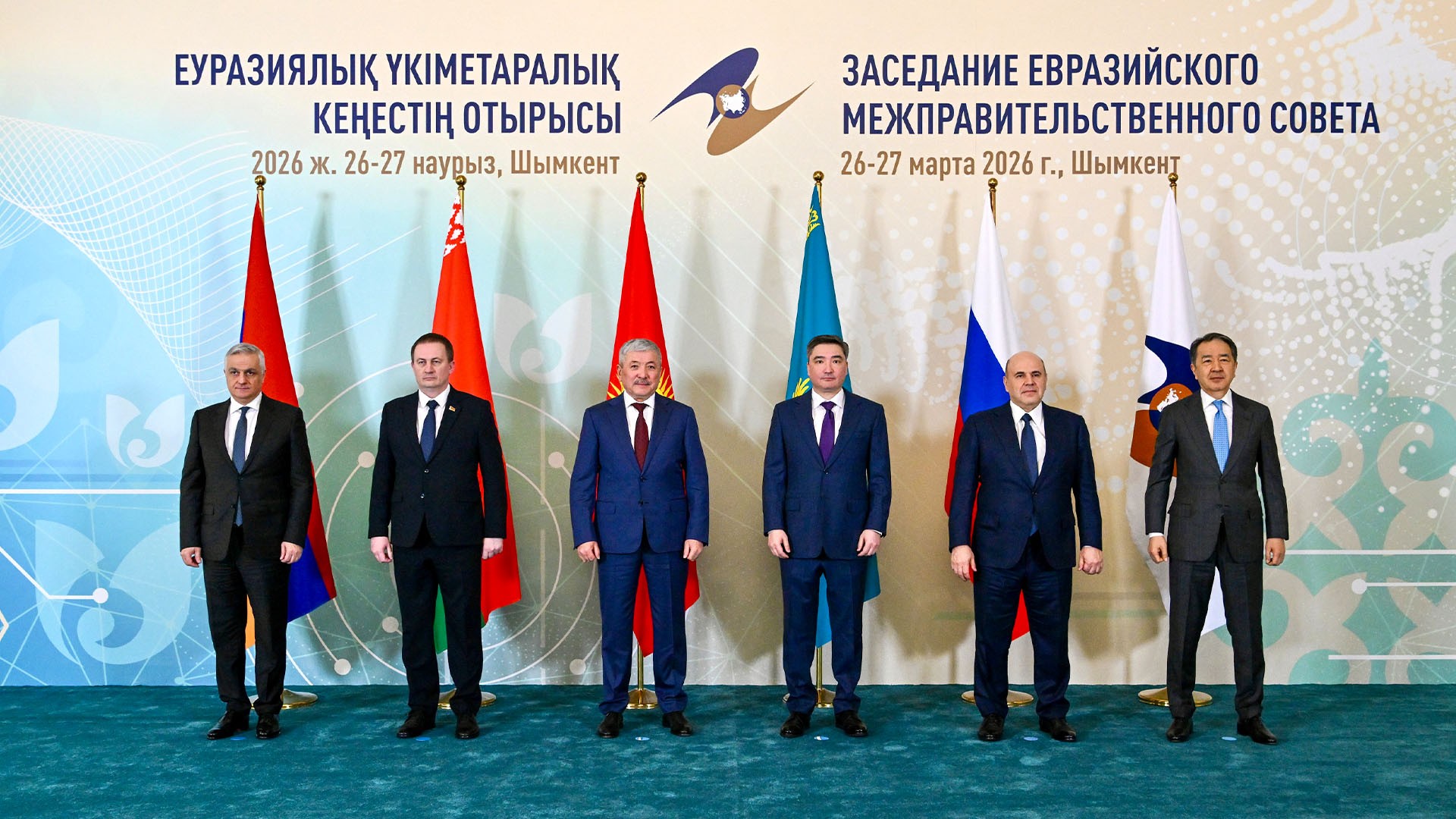
The Eurasian Economic Union (EAEU) met in Shymkent on March 26-27 with a long agenda and a familiar promise: deeper integration, smoother trade, and a more modern common market. Kazakhstan, which holds the bloc’s 2026 chairmanship, used the meeting to push artificial intelligence, digital logistics, industrial cooperation, and the removal of internal barriers. Twelve documents were signed, covering areas including industrial cooperation, transport, and digital integration.

“Kazakhstan aims to become a fully-fledged digital country. We have built a modern ecosystem, including Astana Hub and the Alem.ai AI center, and are ready to share experience with EAEU partners on digital regulation and economic transformation,” Kazakh Prime Minister Olzhas Bektenov stated.

That sounds ambitious, but it also highlights the bloc’s central weakness. The EAEU has no shortage of plans; it has a shortage of trust between its members, and that matters more. The dynamics extend across the bloc, but are most visible in Kazakhstan and Kyrgyzstan.

The EAEU was built to ensure the free movement of goods, services, capital, and labor across Armenia, Belarus, Kazakhstan, Kyrgyzstan, and Russia. But the reality keeps drifting away from the treaty. Kazakhstan’s chairmanship agenda calls for a barrier-free internal market, yet the bloc is entering a new phase of tighter controls, retaliatory measures, and disputes over who really benefits.

Shymkent made that contradiction impossible to miss. Prime Minister Olzhas Bektenov promoted an AI-based system to coordinate cargo flows across the union and speed up transit. He also backed the full electronic handling of veterinary and phytosanitary checks, all of which are practical ideas. Central Asia needs faster, cheaper, and more predictable logistics, but digital tools do not solve a political problem. A system becomes more efficient only if its members want it to be open. When they want leverage instead, technology can only make the controls smarter.

Image: primeminister.kz

Kazakhstan’s priorities already show where the friction lies. President Kassym-Jomart Tokayev opened his chairmanship by calling for digital transformation, better transport links, and the elimination of internal trade barriers. He also pushed a stronger external profile for the EAEU, with wider links across Asia, the Arab world, and the Global South. That is a serious agenda for a bloc trying to present itself as a Eurasian logistics hub. That push for external expansion comes at a time when internal frictions are becoming harder to manage. It sits uneasily beside everyday trade practice inside the union, where growing trade disputes have become part of the EAEU’s normal life, not an exception to it.

The clearest recent example is Russia’s SPOT import-control system, which takes effect for road shipments from EAEU countries on April 1. Importers must submit shipment information two days before trucks reach the border and receive a QR code. Moscow has presented the change as a tax-compliance and anti-fraud measure, with additional financial guarantees expected in later phases of its implementation. In practice, it adds cost, time, and uncertainty before goods even reach the border, the opposite of what a customs union is supposed to do. New Russian trade controls are technical on paper, but they change how power works inside the bloc.

The controls already fit into a wider pattern. Border checks and documentation controls have tightened on the Kazakhstan-Russia frontier, and scrutiny of product labeling and paperwork has grown stricter. Businesses now face a system in which “free movement” exists in law, but not in practice. That gap is politically corrosive because it hits the smaller members hardest. Russia can absorb delays and redesign procedures. Kazakhstan also faces rising costs from disruptions, while smaller economies such as Kyrgyzstan feel them more immediately.

Kyrgyzstan has been blunt about that pressure. Earlier this month, Bishkek asked the Eurasian Economic Commission to remove import duties on a group of socially important goods, including flour, vegetable oil, fruits and vegetables, and cocoa powder. The logic was simple: global inflation is still feeding into domestic prices, and smaller members of the bloc need more flexible trade tools than their larger partners. That request made economic sense for Kyrgyzstan, but it also showed how uneven the union remains. When a member needs emergency tariff relief on basic goods to manage price pressure, the common market isn’t functioning on equal terms. Kyrgyzstan’s push for lower import duties came just a week before the Shymkent meeting.

The same imbalance appears in labor. One of the EAEU’s strongest selling points has always been access to the Russian labor market, especially for Kyrgyzstan. That benefit should be real, giving migrants easier legal access to jobs, simpler registration, and better tax regimes. But labor mobility has never been as stable as the bloc’s rhetoric suggests. In January, Kyrgyzstan took Russia to the EAEU court over compulsory medical insurance for migrants’ family members. In March, the court clarified that member states do not have to issue that coverage automatically. The case exposed a basic truth: labor access inside the EAEU is still vulnerable to national limits when politics hardens. Kyrgyzstan’s experience inside the union captures that well.

Kazakhstan has its own reasons to push back more openly. On March 10, Industry and Construction Minister Yersayin Nagaspayev said Kazakhstan would mirror Russia’s higher recycling fee on imported cars as part of efforts to support the domestic industry. That is not the language of seamless integration; it is the language of reciprocal pressure. Once that logic takes hold, the EAEU stops looking like a common market and starts looking like a managed bargaining arena.

None of this means the EAEU is collapsing. Its economic weight is still large, and its members continue to find value in it. Mutual trade in goods has roughly doubled since 2015, reaching close to $100 billion in 2024, according to the Eurasian Economic Commission. In 2024 alone, mutual trade in goods rose by around 9%. The Eurasian Economic Commission says most settlements now take place in national currencies, accounting for over 90% of transactions inside the union. Those are not minor gains. They explain why no member is walking away.

But Shymkent showed where the EAEU stands in 2026. It is good at producing strategies, roadmaps, and digital concepts, but much weaker at guaranteeing that member states will restrain themselves when their interests come first. Kazakhstan’s chairmanship has chosen the right themes: logistics, digitalization, and fewer barriers. The problem is that the union’s real barriers are now political. Until members stop using trade rules, border procedures, and regulatory measures as instruments of pressure, the EAEU will keep modernizing its systems without fixing its core defect. It can integrate its platforms faster than it integrates its interests.

The next intergovernmental meeting is set for Cholpon-Ata, Kyrgyzstan, in early August.

Opinion: Central Asia Through Western Eyes – Misconceptions Among Young People

Do you know where Kazakhstan is?

Although the question is straightforward, it often causes hesitation on a university campus in Washington, D.C. Some students gesture uncertainly toward Eastern Europe. Others guess the Middle East. Some admit they have never heard of it, often with a nervous laugh.

Central Asia remains one of the least understood parts of the world for many young people in the West. It is often defined more by pop culture, history, and imagination than by its diverse reality.

“I honestly thought Kazakhstan was somewhere near Afghanistan,” said Michael, a student from Georgetown University. “I didn’t realize it was its own region.”

Such knowledge gaps are not unusual. Central Asia is rarely mentioned in Western education systems or media coverage, despite its size, strategic significance, and rich cultural heritage. As a result, assumptions often take the place of understanding and tend to follow similar patterns, which over time may shape Western attitudes toward the region.

A Region Reduced to Stereotypes

When Western students are asked what comes to mind when they think about Central Asia, their responses often follow a familiar pattern: deserts, nomads, the Soviet Union, and sometimes confusion with other regions.

Emily, a student from American University, remarked, “I picture a lot of sand and heat, and perhaps those who ride horses?”

Although this image is partial, it is not entirely inaccurate, as the region’s customs and natural surroundings do contribute to its character. However, contemporary cities, academic institutions, businesses, and the region’s cultural diversity are largely absent from these perceptions.

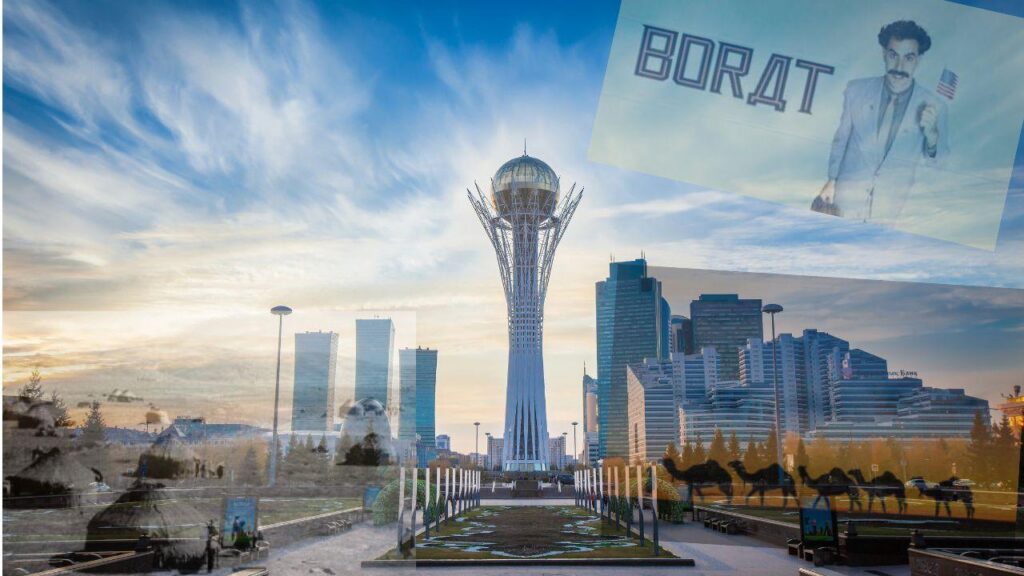
Perceptions have also been shaped by pop culture. For some, Kazakhstan is associated less with geography or history than with Borat, the fictional journalist from a Hollywood comedy. Despite being widely recognized as satire, the persona has nevertheless made a lasting impression on viewers unfamiliar with the region.

As Sacha Baron Cohen explained, Kazakhstan was chosen precisely because it was largely unknown to Western audiences. According to his explanation, he selected the country because “no one had heard anything about it,” making it a blank canvas onto which Western attitudes about backwardness could be projected. None of the scenes depicting Borat’s “home village” were filmed in Kazakhstan; they were shot in rural Romania. The language Borat speaks is not Kazakh, and the customs he describes bear no relation to everyday life in Kazakhstan.

Daniel, a student from George Mason University, asked, half-jokingly, “Is that where Borat is from?” These examples illustrate how humor and media can fill gaps in knowledge.

When Kazakhstan first appeared in popular Western media, it was often portrayed through harsh stereotypes, introducing global audiences to a country still defining its image.

Between Curiosity and Ignorance

However, alongside these misconceptions, there is also genuine interest. “I had no idea it was so multicultural,” said Emma, a student from American University. “We never really learned about it.”

This response points to a broader issue: Central Asia is often misunderstood not only because of misinformation, but because of its limited visibility in the global narrative.

The region is typically mentioned only in passing in Western education, usually in connection with the Soviet Union or the Silk Road. Contemporary developments such as economic growth, political change, and cultural activity receive far less attention.

As a result, many students graduate with little or no understanding of the region.

History’s Legacy and Its Boundaries

When knowledge does exist, it is often interpreted through historical frameworks. Some students still link Central Asia mainly with the Soviet era. In some cases, countries such as Kazakhstan, Uzbekistan, and Kyrgyzstan are viewed not as distinct states with their own identities, but as extensions of Russia.

“I thought it was all kind of still connected to Russia, similar to former Soviet nations that underwent minimal change,” said Alexandra, a senior at George Mason University.

While this perception has historical roots, it overlooks more than three decades of independence and transformation. Central Asian nations have developed distinct political systems, economies, and cultural narratives since the collapse of the Soviet Union in 1991.

However, the persistence of these outdated views highlights how slowly perceptions can change in the absence of new information.

The Invisibility Issue

Central Asia is often overlooked by Western media compared with regions that regularly dominate global headlines. It rarely receives sustained coverage unless it is linked to security issues, energy resources, or geopolitical tensions.

This selective focus results in a limited and sometimes distorted understanding. In an already crowded global information environment, Central Asia struggles to compete for attention without consistent coverage. Without it, even the most basic stereotypes can persist.

Rethinking the Narrative

After doing some research on the region, Oliver, a student from American University, said, “It’s actually really interesting. There’s so much going on, but I feel like nobody talks about it.”

However, perspectives begin to shift for those who take the time to learn more. Students who look beyond preconceived notions often describe a sense of discovery: a place that feels both familiar and surprising, shaped by centuries of cultural exchange and contemporary development.

This contrast between perception and reality helps explain why Central Asia remains largely unknown in Western societies.

Education systems, media priorities, and geopolitical focus all contribute to this gap. More broadly, it reflects patterns of global attention, where some regions remain on the periphery of dominant narratives while others occupy the center.

This marginalization presents both challenges and opportunities. Greater exposure can help address misunderstandings and deepen awareness. At the same time, limited visibility has allowed the region to develop without the level of scrutiny seen elsewhere.

Beyond Misconceptions

For many people in Central Asia, improving the way the region is viewed goes beyond making factual corrections. It is about presenting a more complete narrative that captures both history and development, as well as tradition and modernity. As globalization continues to connect different parts of the world, Central Asia may become less of a blank area on the map and more widely recognized.

Returning to the original question: Do you know where Kazakhstan is?

For now, the answer often reveals more about what the world does not know about Central Asia than about the region’s geographical location.


The views expressed in this article are those of the author and do not necessarily reflect the official policy or position of the publication, its affiliates, or any other organizations mentioned.

Uzbekistan´s Footballers Prep for World Cup with Friendlies at Home

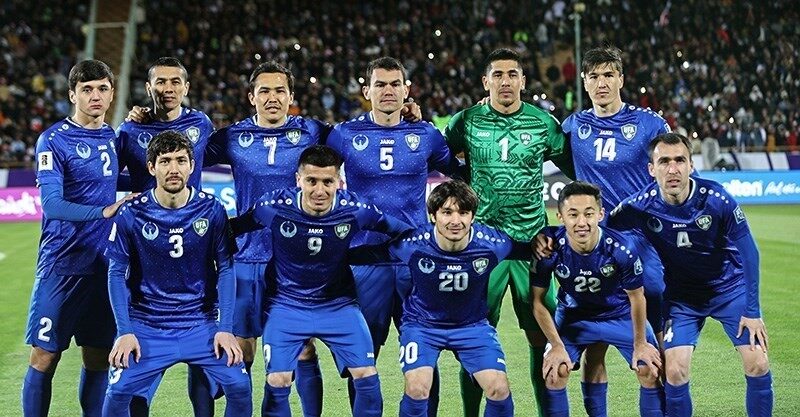
Uzbekistan’s national football team will play friendly matches against Gabon and Venezuela in the coming days as part of its preparation for this year’s FIFA World Cup.

First up for Uzbekistan is Gabon on Friday at Bunyodkor Stadium in Tashkent, followed by a matchup with Venezuela on Monday, March 30 at the same location. Trinidad and Tobago is also participating in the round of friendly matches, and will face Venezuela and Gabon at Pakhtakor Stadium, which is also in the Uzbek capital.

Uzbekistan will compete in the World Cup for the first time and faces some tough contenders in the four-member group K. Its first match is against Colombia in Mexico City on June 17. The Uzbek national team then heads to the United States to play Portugal in Houston on June 23.

The fourth member of group K is yet to be determined, pending the outcome of play-off matches. Uzbekistan will play that final group match in Atlanta on June 27.

Uzbekistan’s team is led by coach Fabio Cannavaro, a former defender who was captain of Italy’s winning team in the 2006 World Cup in Germany.

Uzbekistan Nuclear Project Could Bring Russia Orders Worth $22 Billion

Uzbekistan’s first nuclear power plant, based on small modular reactor (SMR) technology, has entered a new phase, with initial construction, including concrete works, beginning at the site in the Farish district of the Jizzakh region on March 24. The project is part of Uzbekistan’s long-running plan to diversify its energy mix and reduce reliance on gas-fired power generation.

The milestone was marked by parallel ceremonies held in Tashkent and at the construction site. During the events, Uzbekistan’s nuclear energy agency Uzatom and Russia’s state nuclear corporation Rosatom signed several key documents, formally advancing the project to the implementation stage. These included a cooperation roadmap covering nuclear and related sectors, as well as an addendum to the contract for building an integrated nuclear power facility in Uzbekistan. The documents were signed by Uzatom Director Azim Akhmedkhadjaev and Rosatom Director General Alexey Likhachev.

Speaking to reporters, Likhachev said the project could also have significant economic benefits for Russia. According to the Russian news agency TASS, he stated that construction of even a small reactor unit at the Uzbek site could generate orders worth up to $22 billion for Russian companies. He added that the project could create around 1,000 jobs in Russia.

Likhachev also outlined broader potential economic returns, saying that for every ruble invested during construction, up to 1.5 rubles could be returned to the Russian economy, rising to as much as two rubles during the plant’s operational phase.