
• KGS/USD = 0.01144 0%
  • KZT/USD = 0.00196 -0%
  • TJS/USD = 0.10899 -0%
  • UZS/USD = 0.00008 -0%
  • TMT/USD = 0.28490 0%
  • KGS/USD = 0.01144 0%
  • KZT/USD = 0.00196 -0%
  • TJS/USD = 0.10899 -0%
  • UZS/USD = 0.00008 -0%
  • TMT/USD = 0.28490 0%
  • KGS/USD = 0.01144 0%
  • KZT/USD = 0.00196 -0%
  • TJS/USD = 0.10899 -0%
  • UZS/USD = 0.00008 -0%
  • TMT/USD = 0.28490 0%
  • KGS/USD = 0.01144 0%
  • KZT/USD = 0.00196 -0%
  • TJS/USD = 0.10899 -0%
  • UZS/USD = 0.00008 -0%
  • TMT/USD = 0.28490 0%
  • KGS/USD = 0.01144 0%
  • KZT/USD = 0.00196 -0%
  • TJS/USD = 0.10899 -0%
  • UZS/USD = 0.00008 -0%
  • TMT/USD = 0.28490 0%
  • KGS/USD = 0.01144 0%
  • KZT/USD = 0.00196 -0%
  • TJS/USD = 0.10899 -0%
  • UZS/USD = 0.00008 -0%
  • TMT/USD = 0.28490 0%
  • KGS/USD = 0.01144 0%
  • KZT/USD = 0.00196 -0%
  • TJS/USD = 0.10899 -0%
  • UZS/USD = 0.00008 -0%
  • TMT/USD = 0.28490 0%
  • KGS/USD = 0.01144 0%
  • KZT/USD = 0.00196 -0%
  • TJS/USD = 0.10899 -0%
  • UZS/USD = 0.00008 -0%
  • TMT/USD = 0.28490 0%
08 December 2025

Pipelines Under Pressure: Ukraine War Hits Kazakhstan Energy Arteries

The ongoing war between Ukraine and Russia continues to have indirect but notable implications for Kazakhstan’s energy sector. Following the September drone attack in Russia’s Novorossiysk that damaged the offices of the Caspian Pipeline Consortium (CPC) – which exports the majority of Kazakhstan’s oil – another incident has raised concern: the October 19 strike on Russia’s Orenburg Gas Processing Plant, which handles gas from Kazakhstan’s Karachaganak field.

The CPC confirmed that its export terminal continued operating after the September 24 incident, though two employees were injured and part of its office complex was damaged. The consortium remains the backbone of Kazakhstan’s oil exports, handling over 80% of national crude shipments to world markets. This concentration has long been viewed as a vulnerability because nearly all flows depend on infrastructure inside Russian territory. The war has underscored that risk, prompting Astana to accelerate plans for alternative routes across the Caspian Sea toward Azerbaijan and Georgia. Astana has been working with Baku and Tbilisi to expand capacity along the Trans-Caspian International Transport Route (Middle Corridor), supported by EU and World Bank funding commitments.

Kazakhstan’s Ministry of Energy confirmed that the plant, located about 150 kilometers northwest of Kazakhstan’s Karachaganak field across the Russian border, was temporarily shut down following the UAV strike. “According to information from PJSC Gazprom, on October 19, 2025, an emergency situation occurred at the Orenburg gas processing plant as a result of a UAV attack, in connection with which the plant temporarily stopped receiving raw gas from the Karachaganak field.”

The Ministry added that gas supplies to domestic consumers remain unaffected and that consultations are underway with field operators to assess potential disruptions and losses. No details on the extent of the damage or repair timelines have been released by the Russian side. Ukraine’s military confirmed responsibility for the attack as part of its campaign against Russian energy infrastructure, according to statements reported by Interfax-Ukraine and Ukrainska Pravda.

Industry analysts, however, remain cautious. Journalist Oleg Chervinsky noted that the Orenburg plant processes up to nine billion cubic meters of Karachaganak gas annually, a portion of which is returned to Kazakhstan’s northern regions. He warned that a prolonged shutdown could lead to supply shortages, particularly during the winter months. The timing of the Orenburg attack – just before the start of the heating season – adds a seasonal risk dimension.

Olzhas Baidildinov, an expert in the energy sector, criticized delays in constructing a domestic gas processing facility at Karachaganak, arguing that reliance on foreign infrastructure heightens Kazakhstan’s vulnerability to regional conflict and economic disruptions. The replacement of damaged equipment, including components from France’s Technip, could also be complicated by sanctions and supply chain issues, ultimately impacting tariffs and consumer costs.

The cumulative effect of reduced gas processing capacity and potential production slowdowns at Karachaganak could weigh on Kazakhstan’s already strained budget. While some observers note that reduced output may help the country align with its OPEC+ production commitments, previously exceeded at major fields including Kashagan, Tengiz, and Karachaganak, such compliance comes at the expense of export revenue.

In this context, Astana’s muted diplomatic posture toward Kyiv may reflect a broader strategy of balancing competing priorities amid geopolitical and economic uncertainty. The Kazakh government has not publicly criticized drone attacks by Kyiv, and has maintained a neutral stance on the conflict, refusing to recognize the self-proclaimed “quasi-state territories” of Luhansk and Donetsk republics, and restricting the re-export of sanctioned or dual-use goods to Russia.

The Orenburg facility, built in Soviet times and operated by Gazprom Pererabotka, is crucial for both Russia and Kazakhstan. It processes up to nine billion cubic meters of gas annually from Karachaganak – about one-third of the field’s total output – and returns a portion of the processed gas to Kazakhstan for domestic use.

The disruption highlights Kazakhstan’s dependence on Russian downstream infrastructure. Because the Karachaganak field produces both oil and large volumes of associated gas, any interruption in gas processing can indirectly constrain oil production. A reduction in gas intake at Orenburg therefore risks curtailing liquids output as well.

Discovered in 1979, Karachaganak was developed in the mid-1980s, and is now operated by the KPO consortium, comprising KazMunayGas (10%), Eni (29.25%), Shell (29.25%), Chevron (18%), and LUKOIL (13.5%). The field contributes roughly 15% of Kazakhstan’s total hydrocarbon production.

Earlier this year, a joint Russian–Kazakh LPG venture associated with Orenburg suspended operations because of EU restrictions on Russian propane and butane exports, underlining the impact of sanctions on cross-border energy projects.

The sequence of attacks on energy infrastructure underscores how the Russia–Ukraine war has spilled over into broader regional energy systems. Kazakhstan’s multi-vector diplomacy – maintaining balanced relations with both Moscow and Kyiv while accelerating alternative export routes – reflects a pragmatic effort to shield its economy from conflict spillover and to balance geopolitical risk against economic necessity.

Uncategorized

Kazakhstan Launches Electronic Queue System at Border Crossing with Kyrgyzstan

Kazakhstan is expanding the use of its CarGoRuqsat electronic queue system at border crossings with neighboring countries, aiming to streamline freight transport. The system allows transport operators to pre-book border crossing times online or via a mobile app, making the process more efficient and predictable.

Beginning October 20, CarGoRuqsat will be implemented at the Karasu checkpoint on the Kazakh-Kyrgyz border, according to the State Revenue Committee of Kazakhstan’s Ministry of Finance.

The move has been welcomed by Kyrgyz freight operators, who in recent years have faced multi-day delays at the border, often while transporting perishable agricultural goods. The electronic system is expected to ease these bottlenecks and improve the overall efficiency of cross-border logistics.

CarGoRuqsat is part of Kazakhstan’s broader digitalization initiative across its borders with member states of the Eurasian Economic Union (EAEU), which includes Armenia, Belarus, Kazakhstan, Kyrgyzstan, and Russia. The system is already operational at Kazakhstan’s borders with China, Uzbekistan, Turkmenistan, Russia, and Kyrgyzstan. Since its launch, more than 500,000 trucks have used the platform across 33 border crossings with EAEU countries.

A similar initiative has also been introduced on the Kyrgyz-Uzbek border. As previously reported by The Times of Central Asia, an Electronic Queue Management System (e-QMS) was recently launched at the Dostuk checkpoint, the main crossing between Kyrgyzstan and Uzbekistan on the Osh-Andijan highway.

That system, like CarGoRuqsat, enables drivers to reserve crossing slots digitally, reducing wait times, easing congestion, and improving the reliability of transit.

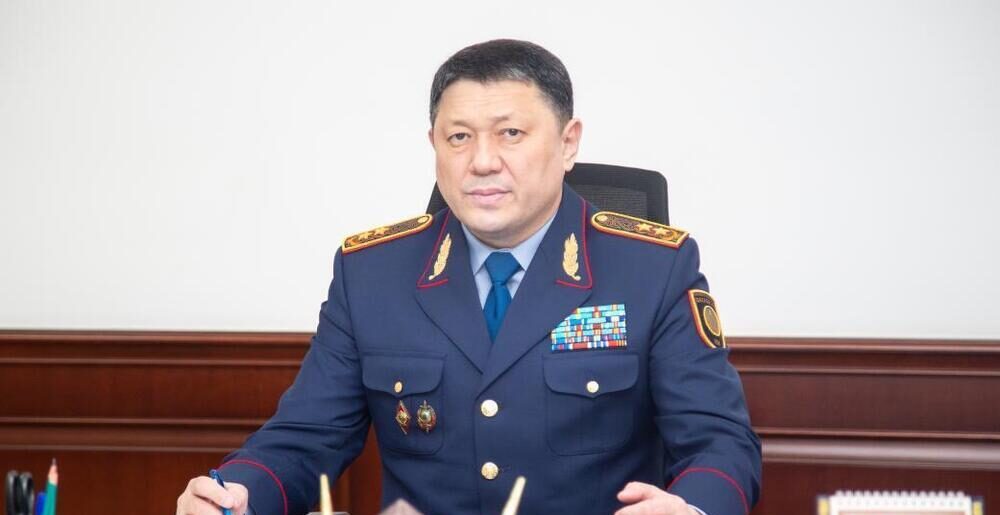
Crimes Against Individuals Decrease in Kazakhstan

Kazakhstan’s Minister of Internal Affairs Yerzhan Sadenov has reported a decline in serious crimes and public offenses for the January-September 2025 period. According to Sadenov, comprehensive measures implemented by the Ministry of Internal Affairs have produced tangible results: overall crime fell by 7%, a reduction of 6,000 cases, compared to the same period in 2024.

Declines were recorded across key categories, including murder, grievous bodily harm, robbery, assault, hooliganism, and theft. Offenses committed in streets and other public spaces also decreased.

“The main thing is people’s safety: fewer crimes against individuals means greater protection for citizens,” the minister said.

The ministry also reported progress in dismantling criminal organizations. Over the past nine months, 70 criminal cases have been initiated against organized crime groups, including 13 transnational operations, with 248 individuals brought to justice. Priorities include combating illegal extraction of natural resources and ensuring the security of freight transport.

Road safety remains a top concern: more than 26,000 traffic accidents have been recorded so far in 2025, although the number of fatalities has decreased. Meanwhile, efforts to prevent domestic violence have intensified. In the same period, over 70,000 protective orders were issued, and 6,500 women and children were referred to crisis centers.

To strengthen crime prevention and response, Sadenov has called for broader implementation of digital tools, the development of operational control centers, and improved crime detection rates.

Kazakhstan has also expanded its surveillance infrastructure. As previously reported by The Times of Central Asia, more than 19,000 AI-enabled CCTV cameras have been installed nationwide, enabling law enforcement to respond more quickly to incidents.

Kazakh Surgeons Use MAKO Robotic System in Tashkent for the First Time

Kazakh surgeons have performed groundbreaking joint replacement procedures in Uzbekistan’s capital Tashkent using the MAKO robotic system, an advanced technology in orthopedic surgery. The operations were a centerpiece of the event ‘Days of Kazakh Medicine in Uzbekistan’.

A surgical team led by traumatologist-orthopedist Timur Baidalin, head of the endoprosthetics department at the Batpenov National Scientific Center for Orthopedics and Traumatology, successfully conducted two joint replacements, one knee and one hip, using the MAKO robotic assistant. The system enables surgeons to plan and execute procedures with exceptional precision and reduced risk of complications.

Developed by the U.S. based company Stryker, the MAKO system functions as an intelligent surgical assistant using 3D modeling technology. It creates a virtual replica of the patient’s joint, allowing the surgical team to pre-calculate the optimal implant angle, depth, and trajectory.

During the procedure, the surgeon guides the MAKO manipulator, which operates with micromillimeter accuracy. This significantly lowers the risk of tissue damage and extends the lifespan of the implanted prosthesis.

“The main advantage of MAKO is the ability to combine the surgeon’s experience with machine precision. This sets a new standard in endoprosthetics,” said Baidalin.

For Uzbek specialists, the event served as a hands-on masterclass. In addition to observing the procedures, local doctors operated the system under the supervision of the Kazakh team.

“We’ve been anticipating this technology for a long time. Today, we not only saw it in action but experienced the difference. This is a milestone for Uzbek orthopedics, and we’re grateful to our Kazakh colleagues for the opportunity to gain this experience,” said Odil Valiev, head of the adult orthopedics department at Uzbekistan’s Republican Specialized Scientific and Practical Center for Traumatology and Orthopedics.

This collaboration follows another recent highlight: in spring 2025, Kazakh specialists from UMC, led by cardiac surgeon Yuri Pii, presented the ALEM device at EXPO 2025 in Osaka. The technology enables the long-term preservation of donor organs and represents another significant advance in regional medical innovation.

Turkmen Activist Saddam Gulamov Faces Harsh Sentence for Government Criticism

Russia has extradited Saddam Gulamov, a Turkmen citizen and outspoken critic of the regime, to Turkmenistan, where he was sentenced to a lengthy prison term in 2024, according to a report by Turkmen.news.

Born in 1991 in Ashgabat, Gulamov had publicly condemned the government’s handling of the food crisis, its denial of the COVID-19 pandemic, and its silence following a devastating hurricane. He is reportedly being held in solitary confinement in prison alongside another activist.

Gulamov had been residing in Russia, working in minor roles in theater and film. He was deported to Turkmenistan between late 2023 and early 2024 and convicted by the spring of 2024. The precise charges and length of his sentence have not been disclosed.

Before his arrest, Gulamov had used social media to denounce the country’s former president, Gurbanguly Berdimuhamedov, calling him a “dictator and thief,” and urging citizens to reject the culture of blind obedience toward Turkmenistan’s leadership. All of his online content has since been removed.

His case is part of a broader crackdown on dissent that intensified in 2020, when the government’s inaction during crises led to rising political awareness among citizens. This growing unrest sparked the formation of opposition movements abroad, with activists using social media to call for unity and reform. Turkmen intelligence services closely monitored these activities, and once pandemic-era border restrictions were lifted, many dissidents were forcibly repatriated.

Several activists, including Farhat Meymankuliev, Rovshen Klychev, and Merdan Mukhammedov, were deported from Turkey, while others sought asylum in European Union countries. Russia, though less involved than Turkey, has also played a significant role in these forced returns. Notable cases include Azat Isakov, who disappeared in Moscow in 2021 after saying he was hiding from security agents, and Myalikberdy Allamuradov, who was deported in December 2023 and later imprisoned.

The list of targeted activists now includes Gulamov. According to Turkmen.news, both he and Allamuradov are being held in solitary confinement in the LB-E/12 penal colony.

His extradition follows a similar incident in May, when activist Umida Bekchanova was detained in Istanbul and faced possible deportation to Turkmenistan. Human rights groups warn these actions are part of an expanding campaign of transnational repression aimed at silencing critics abroad through intimidation and forced returns.

Uzbek Man Forced into Russian Army Pleads for Help to Return Home from Ukraine

A 31-year-old Uzbek citizen from Bukhara, Zukhriddin Yuldoshev, who was forcibly recruited into the Russian army, surrendered to Ukrainian forces almost immediately after arriving at the front. His case, reported by Nexta Live and other media outlets, highlights the growing number of Central Asian nationals being coerced into Russia’s war against Ukraine.

According to Yuldoshev, Russian police planted narcotics on him and threatened him with a prison sentence of 12 to 18 years unless he signed a military contract. “I was given two choices: prison or the front,” he said. After arriving at the battlefield, he was quickly detected by a Ukrainian drone and surrendered without resistance.

Yuldoshev described dire conditions within the Russian military, saying he had to purchase his own communication equipment and gear. He also spoke of widespread disarray and deception among Russian troops. “There were so many dead bodies that there was nowhere to step,” he recalled. He says he has no intention of returning to Russia and is appealing to the Uzbek government for assistance in returning home.

In a June report, Ukraine’s military intelligence stated that citizens of Uzbekistan, Tajikistan, and other Central Asian countries are increasingly being coerced or misled into joining the Russian war effort. Many had initially traveled to Russia as labor migrants and were later pressured into signing military contracts, often with promises of fast cash. Ukrainian officials say many of these recruits are deployed to the most dangerous sections of the front and face high casualty rates.

The forced conscription of migrants has drawn increasing criticism from human rights groups, who argue the practice violates international law. Yuldoshev’s plea for repatriation places added pressure on the Uzbek government to act on behalf of its citizens caught up in Russia’s war.


