The fifth International Falconry Festival was held this month in East Kazakhstan, bringing together falconry masters and custodians of ancient culture from seven countries.
A Festival That Brings the Steppe to Life
Traditionally held in Ulan district near the village of Bozanbay, the event, also known as Shygys Salburyny, drew more than 100 participants, including falconers and cultural figures from Kazakhstan, as well as guests from Spain, Hungary, Russia, Mongolia, China, and Kyrgyzstan.
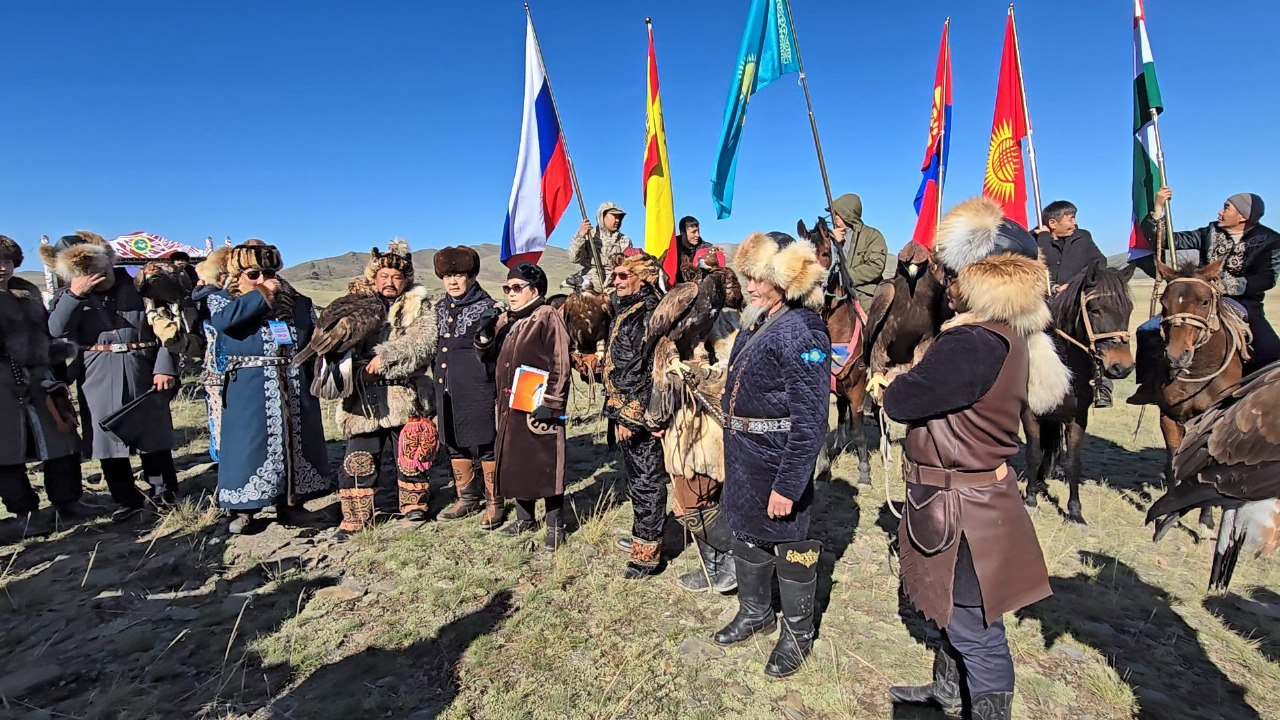
@TCA
Shygys Salburyny is a celebration of nomadic civilization, where customs and crafts are revived, ancestral songs are sung, ancient rituals performed, and golden eagles once again soar over the steppe.
Every gesture of the participants reflects respect for the past, for the harmony between humans and nature, and for the spirit that nurtures strength and nobility.
‘Berkutchi’ and Golden Eagles: Guardians of the Sky and Steppe
For as long as the Kazakh steppe has existed, golden eagles have ruled its skies. Revered for their strength and freedom, their cries louder than the wind, their flight graceful over mountains and rivers, the birds inspired the development of sayat, the art of hunting with birds of prey. From this tradition emerged the berkutchi, a unique brotherhood of falconers.
A berkutchi is more than a hunter. He understands nature’s rhythm, reads the wind’s breath, and senses his bird’s mood. The bond between falconer and eagle cannot be imposed; it must be earned.
Historically, hunting with golden eagles was a matter of survival, especially in the harsh winter months when eagles provided both meat and feathers for warmth. Over time, sayat evolved into a symbol of spiritual strength, courage, and reverence for nature. A true berkutchi was revered like a batyr, a warrior, respected for his calm, fairness, and poise.

@TCA
Training a young eagle is an intricate art, requiring patience and reverence. Eaglets are taken from the nest and slowly trained to accept the falconer’s hand and voice. Trust is built gradually, as the bird learns to recognize and respond to its handler.
Every detail is vital from hand movements to shadows on the ground. Before a hunt, the falconer dons an iyanga (sturdy glove) and fits a tomaga (leather hood) on the bird’s head to block light until the moment of release. A whispered prayer to the spirits of the steppe precedes the flight, reminding all that hunting is not conquest, but a respectful exchange with nature.
Sayat Today
The sayat tradition endures in many parts of Kazakhstan, but East Kazakhstan remains its heartland.
“Not every bird flies in immediately,” said Daniyar Nurbek, chief judge of the festival, speaking to The Times of Central Asia. “What matters isn’t force, but mutual understanding. There must be a deep, almost spiritual bond between hunter and eagle, it cannot be commanded, only nurtured.”

@TCA
Youngsters and Masters
The festival welcomed both seasoned falconers and novices. Among them, seven-year-old Abdurashid Mamyrkhan drew particular attention. His father, Mamyrkhan Manayuly, explained that his son has been learning about birds since the age of five.
“This isn’t just hunting, it’s in our blood and memory,” he said. “By teaching my son, I pass on our respect for nature and our ancestors.”
Foreign guests also shared their impressions. Hungarian falconer Gergely László Bodis noted that in the steppes of East Kazakhstan, he felt “the breath of antiquity” for the first time.
“In Hungary, we also practice falconry, but here it feels like a living ritual, part of the soul,” he said.
Russian participant Alexander Malakhov, attending for the second time, described the event not as a competition, but a philosophy.
“The essence lies not in technique, but in respect. Kazakhstan inspires: its people, its culture, and its nature call for reflection,” Malakhov said.

@TCA
Luis Guijarro Panadero from Spain came to study Asian falconry traditions.
“We also have bird hunting in Spain, but the methods are quite different. Here, it’s not just sport, it’s a cultural code,” he noted.
Ethno-Site and Traditions
Beyond the competitions, guests enjoyed a vibrant cultural program. On the Burkit Tobe site, a traditional village of 40 yurts was assembled, each serving as a miniature museum of Kazakh life and ritual.
Regional delegations from East Kazakhstan staged scenes from ancient Kazakh life: weddings, rituals for newborn children, and the symbolic “adding oil to the fire.”
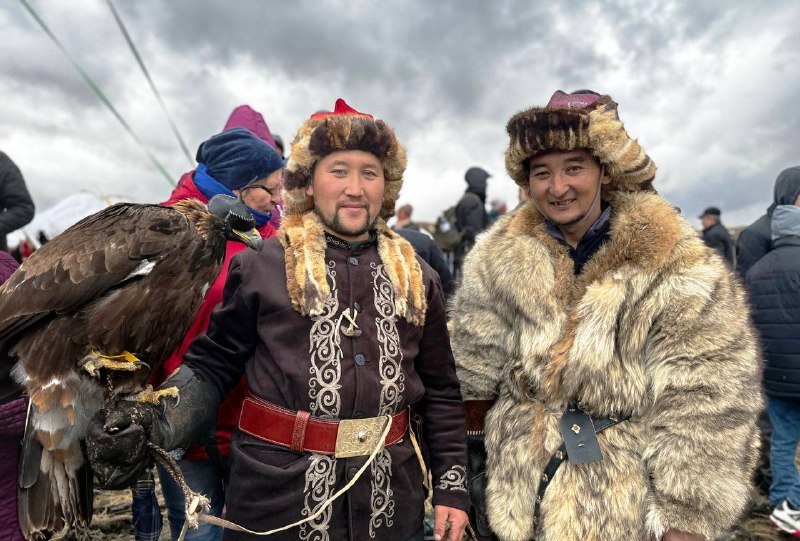
@TCA
The Spirit of Competition
In addition to falconry events, participants competed in shooting and traditional equestrian games. Serikbol Oktyabr won the shooting competition, citing the importance of spiritual strength.
“This tests not only physical power but inner resolve. Through such events, we revive ancestral traditions and set an example for our youth,” he said.
Aqzhan Merke triumphed in the horse-riding competition. “Equestrian sport is a vital tradition, and we must preserve and develop it,” Merke said.
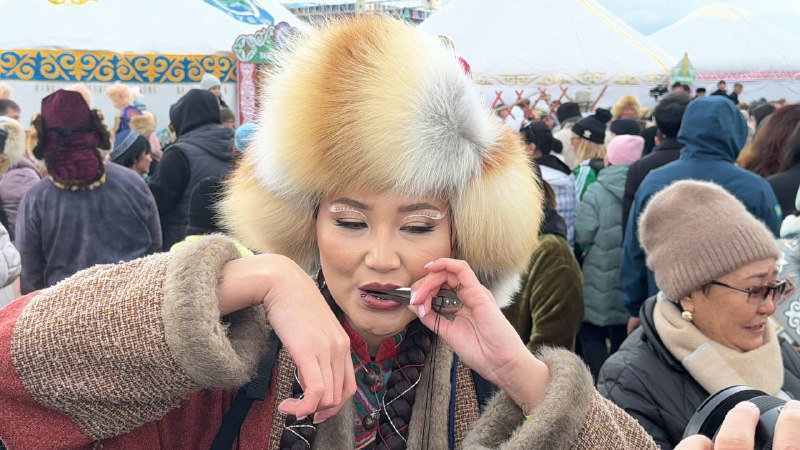
@TCA
Spectators were captivated by the birds soaring, then plunging in response to their handler’s call.
Baitbay Omirkhan from Almaty won the eagle and hawk competitions, while Kenzhetaev Erlan from Akmola region claimed victory in the falcon category.
“The falcon is a noble bird, and working with it carries great responsibility,” Omirkhan said. “This year, I felt the spirit of the festival more deeply than ever. It’s not just a competition, it’s unity.”
Kenzhetaev added: “This is my third Shygys Salburyny. The level of competition keeps rising, and the organization is exceptional. Festivals like this are vital to preserving our heritage.”
As one participant aptly summarized: “As long as the golden eagle soars over the steppe, as long as fathers pass down the tomaga and iyanga, as long as Kazakh songs are sung, our culture will endure.”