• KGS/USD = 0.01144 0%
  • KZT/USD = 0.00210 0%
  • TJS/USD = 0.10528 0%
  • UZS/USD = 0.00008 0%
  • TMT/USD = 0.28571 0%
  • KGS/USD = 0.01144 0%
  • KZT/USD = 0.00210 0%
  • TJS/USD = 0.10528 0%
  • UZS/USD = 0.00008 0%
  • TMT/USD = 0.28571 0%
  • KGS/USD = 0.01144 0%
  • KZT/USD = 0.00210 0%
  • TJS/USD = 0.10528 0%
  • UZS/USD = 0.00008 0%
  • TMT/USD = 0.28571 0%
  • KGS/USD = 0.01144 0%
  • KZT/USD = 0.00210 0%
  • TJS/USD = 0.10528 0%
  • UZS/USD = 0.00008 0%
  • TMT/USD = 0.28571 0%
  • KGS/USD = 0.01144 0%
  • KZT/USD = 0.00210 0%
  • TJS/USD = 0.10528 0%
  • UZS/USD = 0.00008 0%
  • TMT/USD = 0.28571 0%
  • KGS/USD = 0.01144 0%
  • KZT/USD = 0.00210 0%
  • TJS/USD = 0.10528 0%
  • UZS/USD = 0.00008 0%
  • TMT/USD = 0.28571 0%
  • KGS/USD = 0.01144 0%
  • KZT/USD = 0.00210 0%
  • TJS/USD = 0.10528 0%
  • UZS/USD = 0.00008 0%
  • TMT/USD = 0.28571 0%
  • KGS/USD = 0.01144 0%
  • KZT/USD = 0.00210 0%
  • TJS/USD = 0.10528 0%
  • UZS/USD = 0.00008 0%
  • TMT/USD = 0.28571 0%

Teacher Alua Zhanatova Outlines the Growing Popularity of the Kazakh Language Amongst Young People

Despite the country gaining independence from the Soviet Union back on 16 December 1991, the predominant language in Kazakhstan has long remained Russian. To address the issue, the government set a somewhat ambitious target that by 2020, 95% of the population would be fluent in Kazakh, and more recently, in late 2023, mooted a “Concept for the Development of Language Policy for 2023-2029″.

Meanwhile, there are encouraging signs of an increasing interest in the Kazakh language among young people in Kazakhstan.

TCA talked to Alua Zhanatova, a teacher and bachelor of TARGU University, about the rejuvenation of the country’s native tongue and its importance for society.

TCA: What are your thoughts on the current popularity of studying the Kazakh language?

In recent years I have observed significant changes in our young people’s attitude towards their native language. For a long time, the Kazakh language was generally perceived as formal and cumbersome but nowadays, young people are becoming more interested in learning and using it in everyday life.

TCA: What factors have contributed to the revival of interest in the language?

There are several key factors. First, is the noticeable, growth in cultural patriotism, which has led to young people embracing their roots, culture and ancestral language. Second, is the significant impact of contemporary media and social networks on popularizing the Kazakh language. The emergence of bloggers using the Kazakh language, the creation of Kazakh content platforms and active discussion in Kazakh in social networks all contribute to making the language more accessible and appealing.

TCA: What role do educational institutions and teachers play in this process?

I think educational institutions play a major role. It is important that schools and universities provide good tuition in both the Kazakh language and culture. Many educational institutions have started to develop new curricula that make learning the language more exciting and practical, and the expansion of classes taught in Kazakh in schools and universities is facilitating and spurring students’ desire to learn in their mother tongue.

TCA: What is the reaction among young people to new initiatives regarding the use of the Kazakh language?

Reactions are mostly positive. Young people who previously dismissed Kazakh, are now showing an interest in learning the language, encouraged by the availability of better resources and new teaching methods. I receive a lot of feedback on how useful and enjoyable it is to learn the language through more engaging activities such as games, quests or even social activities.

TCA: How do you see the further development of the Kazakh language among young people?

I am optimistic about prospective developments. If existing initiatives continue to develop and new forms and methods of teaching emerge, I am confident that the Kazakh language will become not only an important part of cultural identity, but also an active element of modern life. It is important that efforts continue to keep the Kazakh language alive and engaging for young people.


In addition to Alua, TCA also talked to young people from different cities in Kazakhstan on the use of their native language.

Tair, age 26, Almaty : “I shoot films and because more and more of my customers are choosing to speak only in Kazakh or are asking for promotional videos in Kazakh, my ignorance of the language threatens to significantly hinder my business. Happy to support the trend and in the firm belief that our mother tongue should be part of our everyday life, I have attended language courses.”

Samira, age 15, Taraz: “I think it’s great. I’m pleased that even small children now speak Kazakh and we’re using the language more and more at school.”

Daniyal, age 19, Astana: “I myself have always spoken Kazakh. In the north it was a rarity, but I feel that even here, interest is slowly but surely increasing and many of my friends with no prior knowledge of the language, are now taking courses”.
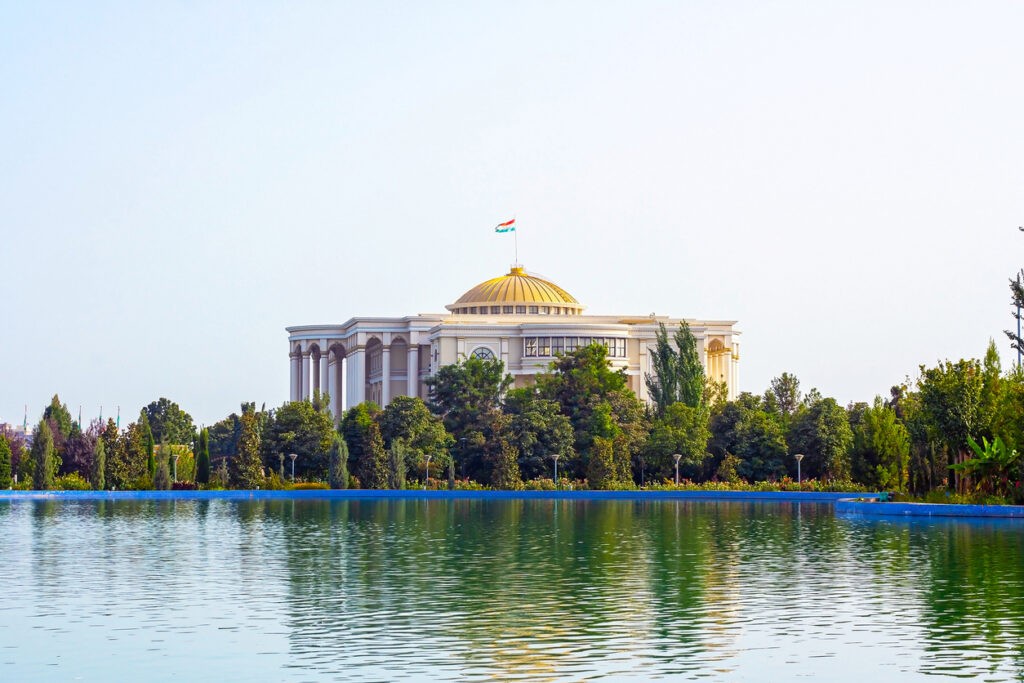


Tajikistan Denies Report of Secret Chinese Military Base

The British newspaper The Telegraph has reported that China has built a secret military base in Tajikistan.

“The facility, carved out of mountains that rise 13,000 ft high, has look-out towers and troops from both countries, which now hold regular joint military drills shown on Chinese state media,” the article says. The Telegraph also posted several satellite images, taken in different years.

In 2016 China and Tajikistan signed a security agreement, highlighting that the external threat to Tajikistan has escalated following the Taliban’s rise to power in Afghanistan. Dushanbe and Beijing work in partnership to combat threats, both bilaterally and within the framework of international organizations.

However, Tajikistan does not officially recognize the existence of the military facilities shown in the Telegraph article. The Tajik Ministry of Foreign Affairs denies that there are any Chinese military bases in the country.

“China does not have a military base on the territory of Tajikistan. This issue is not on the agenda of bilateral relations,” a statement published on the ministry’s website reads.

Henley Passport Index 2024: Kazakhstan Again the Strongest Central Asian Passport

This year’s Henley Passport Index, a ranking that shows how many countries citizens of each country can visit without a visa, has been announced.

The rating is compiled using information from the International Air Transport Association. It covers 199 passports and 227 countries.

The Singaporean passport again takes first place in the rating. Singaporean citizens can visit 195 countries without a visa. In joint second place, able to freely enter 194 countries, are passport holders from France, Germany, Italy, Japan and Spain.

Kazakhstan ranks 67th in this year’s Index: holders of a Kazakhstani passport can enter 79 countries without a visa. Next in Central Asia is Kyrgyzstan, in 78th place, whose citizens can freely visit 65 countries. Uzbekistan is 79th in the ranking (64 countries), Tajikistan is 82nd (60), and Turkmenistan is 90th (52)

The world’s weakest passport is the Afghan passport. Citizens of Afghanistan can only visit 28 countries without a visa.

Chinese Company Plans to Produce Solar Panels in Tajikistan

A Chinese company plans to set up an enterprise to produce solar panels in the south of Tajikistan. This was announced during a meeting between the head of the country’s Khatlon region, Davlatali Said, and Wang Hao, the general director of China’s Datang Corporation in Central Asia.

Wang Hao commented: “We intend to establish an industrial enterprise in the Khatlon region to produce solar panels. Our corporation has been on the Fortune Global 500 list for 14 consecutive years, which shows the result of our good work.”

Mr Said supported the proposal, noting that all issues would be resolved after visiting free economic zones and other regions in the country.

Head of Kazakhstan Football Federation Under Investigation by UEFA

UEFA is investigating Adilet Barmenkulov, the president of the Football Federation of Kazakhstan. In 2022, the businessman succeeded Adilbek Jaxybekov – who had been at the helm of football in Kazakhstan since 2018. “Adilet Barmenkulov is being investigated for knowing about match-fixing and doing nothing about it, suggesting that he had a vested interest in the matches or in favors owed to him by other officials,” Inside The Games reported. Barmenkulov posted a video statement on social media confirming that match-fixing had occurred in the past, but denying that the problem persists. Many prominent figures from the world of soccer have complained, stating that since he knew about it, Barmenkulov is responsible, whether through his actions or inaction.

“I agree that it is difficult to change the structure of a soccer club when past victories were achieved through questionable means,” Barmenkulov said in the video message. He argued, however, that leaders must act systemically rather than locally, and to bring order to soccer in the country it is necessary to act together, not on an ad hoc basis. Clubs must stop trying to bribe referees, he said, and “from now on, I will make corruption in soccer known and public”.

Inside The Games characterized Barmenkulov’s statement as “clearly indicating not only his awareness but also his inaction on the issue of foul play”. Earlier, Barmenkulov had been criticized by Kazakhs for hiring the Russian, Stanislav Cherchesov, as head coach of Kazakhstan’s national soccer team. Sources claim that Cherchesov, the former head coach of the Russian national team, will receive a salary of $1.2 million a year.

Large Bribes Being Extorted from Graduates of Foreign Universities in Turkmenistan

Turkmenistan citizens graduating from foreign universities, are currently required to undergo a complex process to have their  diplomas recognized in their home country.

A source in the Main Department of Education of Lebap told Radio Azatlyk that Turkmenistan citizens graduating  from pedagogical universities in CIS countries are obliged to enrol in a month-long advanced training course at the Pedagogical Institute in Turkmenabad to nostrify (recognize university qualifications) their diplomas and moreover, provide 17 references.

According to graduates, the process also involves the extortion of bribes.

Hakberdi, a Russian language teacher from Turkmenabad who underwent the diploma recognition process about five years ago, explained that the size of the bribe depends on the influential status of whoever is engaged to help. “From 2018 to 2019, the bribe could reach 10-15 thousand dollars. If you have an acquaintance in the ministry, the bribe will be smaller, but can rise if intermediaries are involved.”

In addition, when attempting to get their diplomas recognized, graduates can fall prey to fraudsters who promising help, take their money and disappear.

In parallel with the season of diploma nostrification, the process of submitting documents and sitting exams for admission to foreign universities continues. Exams are taken online and because of internet issues, this can create new problems.

“Since the speed of the Wi-Fi signal at home is inadequate,” reported a resident of Dianev, “applicants from across the districts gather at the Turkmentelecom internet cafe in Turkmenabad but there are not enough computers and often queues from 6 a.m.”