• KGS/USD = 0.01144 0%
  • KZT/USD = 0.00193 -0%
  • TJS/USD = 0.10866 0.55%
  • UZS/USD = 0.00008 0%
  • TMT/USD = 0.28490 0%
  • KGS/USD = 0.01144 0%
  • KZT/USD = 0.00193 -0%
  • TJS/USD = 0.10866 0.55%
  • UZS/USD = 0.00008 0%
  • TMT/USD = 0.28490 0%
  • KGS/USD = 0.01144 0%
  • KZT/USD = 0.00193 -0%
  • TJS/USD = 0.10866 0.55%
  • UZS/USD = 0.00008 0%
  • TMT/USD = 0.28490 0%
  • KGS/USD = 0.01144 0%
  • KZT/USD = 0.00193 -0%
  • TJS/USD = 0.10866 0.55%
  • UZS/USD = 0.00008 0%
  • TMT/USD = 0.28490 0%
  • KGS/USD = 0.01144 0%
  • KZT/USD = 0.00193 -0%
  • TJS/USD = 0.10866 0.55%
  • UZS/USD = 0.00008 0%
  • TMT/USD = 0.28490 0%
  • KGS/USD = 0.01144 0%
  • KZT/USD = 0.00193 -0%
  • TJS/USD = 0.10866 0.55%
  • UZS/USD = 0.00008 0%
  • TMT/USD = 0.28490 0%
  • KGS/USD = 0.01144 0%
  • KZT/USD = 0.00193 -0%
  • TJS/USD = 0.10866 0.55%
  • UZS/USD = 0.00008 0%
  • TMT/USD = 0.28490 0%
  • KGS/USD = 0.01144 0%
  • KZT/USD = 0.00193 -0%
  • TJS/USD = 0.10866 0.55%
  • UZS/USD = 0.00008 0%
  • TMT/USD = 0.28490 0%
11 December 2025

Chinese Businesses Making Inroads into Kyrgyzstan’s Energy Sector

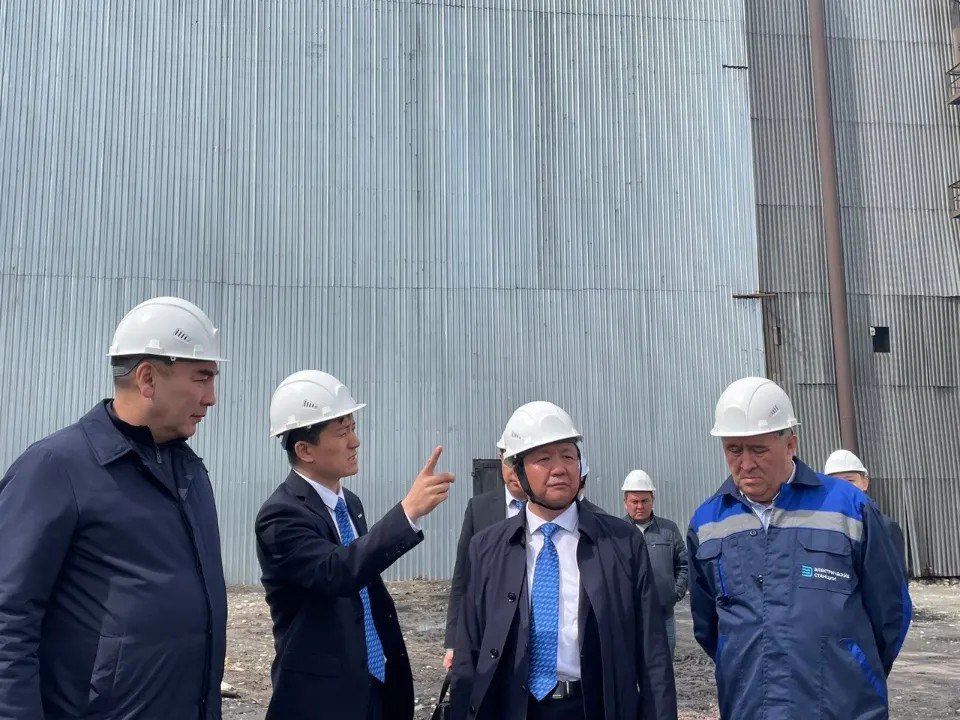
Chinese companies will repair two units of the Bishkek combined heat power plant (CHPP) and plan to invest more than $1 billion in other energy projects. Representatives of the Chinese company, TBEA visited the Bishkek CHPP, where it was decided that TBEA will send its specialists to overhaul the third and fourth power units, as well as train local specialists, the Ministry of Energy of Kyrgyzstan reported.

TBEA chairman, Zhang Xin, together with the Kyrgyz Energy Minister, Taalaibek Ibraev, visited the Bishkek CHPP the previous day. The main topic under discussion was how to increase the electricity and heat capacity of the CHPP. Bishkek CHPP provides electricity to Bishkek and its suburbs, as well as heat to most apartment complexes in the capital.

In 2017, TBEA built four new boiler units at the Bishkek CHPP with a total capacity of 300 MW. The Eximbank of China allocated a loan of $386 million back in 2013 for this purpose. After the accident at the CHPP in February this year, the Kyrgyz authorities decided to overhaul the old boilers. As a result, despite the corruption scandal in 2017, the same Chinese company will repair units three and four. Information on the reconstruction costs for the units has not yet been disclosed.

When fully operational, Bishkek CHPP has 18 boiler units with a total capacity of 812 MW. Following the accident this winter, swathes of equipment failed and the total capacity of the CHPP was decreased by a large factor.

Meanwhile, a Kyrgyz-Chinese business forum was held in Bishkek and attended by more than 60 companies, with contracts totaling $1.15 billion signed with various Chinese companies, mostly from the Xinjiang Autonomous Region. According to the Kyrgyz Government, a project to build a coal logistics center with a conveyor belt on the border of the two countries has been agreed upon and signed. The Chinese company, Dachenglongyuan, will invest $440 million in the project. The same company is reportedly to invest another $700 million to build a wind farm in southern Kyrgyzstan. Contracts for coal exploration and mining were also signed. Some experts attribute the accident at the Bishkek CHPP to low-quality coal mined in the Issyk-Kul region of Kyrgyzstan.

One of President Japarov’s campaign promises in 2020 was to end winter power outages and ensure the country’s energy security.

Despite the great opportunities for Chinese investors, however, many economists in Kyrgyzstan have warned against Kyrgyzstan’s growing dependence on China. According to official data, as of January 1, 2024, Kyrgyzstan’s debt stood at $6.3 billion, with about 40% of that owed to China’s Eximbank.

Travelers to Turkmenistan Still Forced to Pay for COVID-19 Test

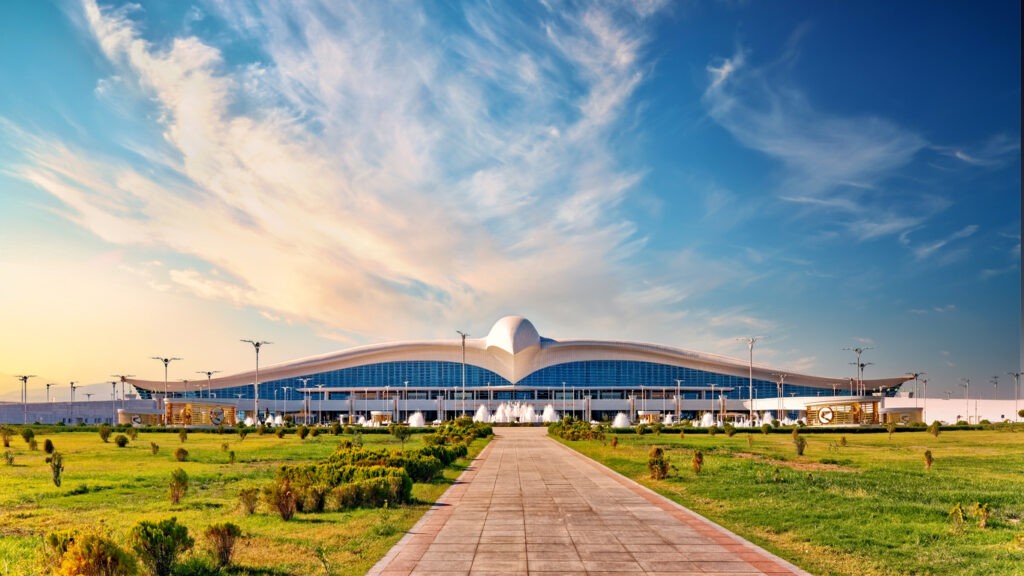
Travelers flying to Ashgabat airport in Turkmenistan still have to pay for a COVID-19 test upon arrival, but don’t have to actually take the test, according to a report by Chronicles of Turkmenistan.

Passengers landing in Ashgabat are forced to pay 60 manat ($17 at the official rate) for a certificate showing a negative result, but officials are letting them leave the airport without conducting the test.

The World Health Organization (WHO) announced in May last year that the COVID-19 virus no longer had pandemic status. Meanwhile, Turkmenistan’s government has always denied that COVID-19 has ever been present in the country.

Will Europe Learn Lessons From Central Asian Gas Failures to Secure Oil Imports Bypassing Russia?

Despite loud statements and reports, alternative routes for transporting oil from Kazakhstan and Central Asia to Europe remain only intentions.

The desire of the EU to diversify its hydrocarbon suppliers is running into internal bureaucracy and a lack of understanding of how things work in Central Asia, which is in fact seeking to ship its energy in different directions.


Lost gas

To start, it is worth recalling the Turkmenistan-Russia gas dispute of 2009. Before that, Gazprom bought gas from Central Asian countries at the border, swapping some volumes of domestic supplies with Kazakhstan, Turkmenistan and Uzbekistan, and buying gas at prices lower than EU export rates.

Gazprom explained this practice rather simply: there is no economic sense in transporting the gas through Russian territory, so at the border the price cannot be European (minus transportation) – this gas was consumed in Russia or supplied at preferential prices to Ukraine, while Russian gas was sent to Europe.

In 2008, Turkmenistan produced 70.5 billion cubic meters (bcm) of gas, exporting 47 bcm, with an increase in production and exports planned for 2009. According to the Energy
Institute, gas consumption by European countries in 2022 amounted to 498.8 bcm, meaning Turkmenistan alone, assuming export volumes stabilized at 50 bcm per year, could cover 10% of Europe’s needs.

That amount, 50 bcm of gas, is the annual consumption of Switzerland, Sweden, the Czech Republic, Greece, Portugal, Slovakia, Slovenia, Bulgaria, Croatia, Denmark, Estonia, Finland, Ireland, Latvia, Lithuania, Luxembourg, Norway and North Macedonia combined.

However, Turkmen gas would never reach Europe.

When an agreement on the volumes and prices of gas purchases by Gazprom failed to be reached, 15 years ago, on April 9, 2009, there was an explosion and fire on the eastern branch of the Central Asia-Center (CAC) gas pipeline, at CAC-4. Subsequent negotiations to resume the transport of Turkmen gas between Russian President Dmitri Medvedev and Turkmen leader Gurbanguly Berdimuhamedov, which took place in September 2009 in Moscow, could not resolve the dispute.

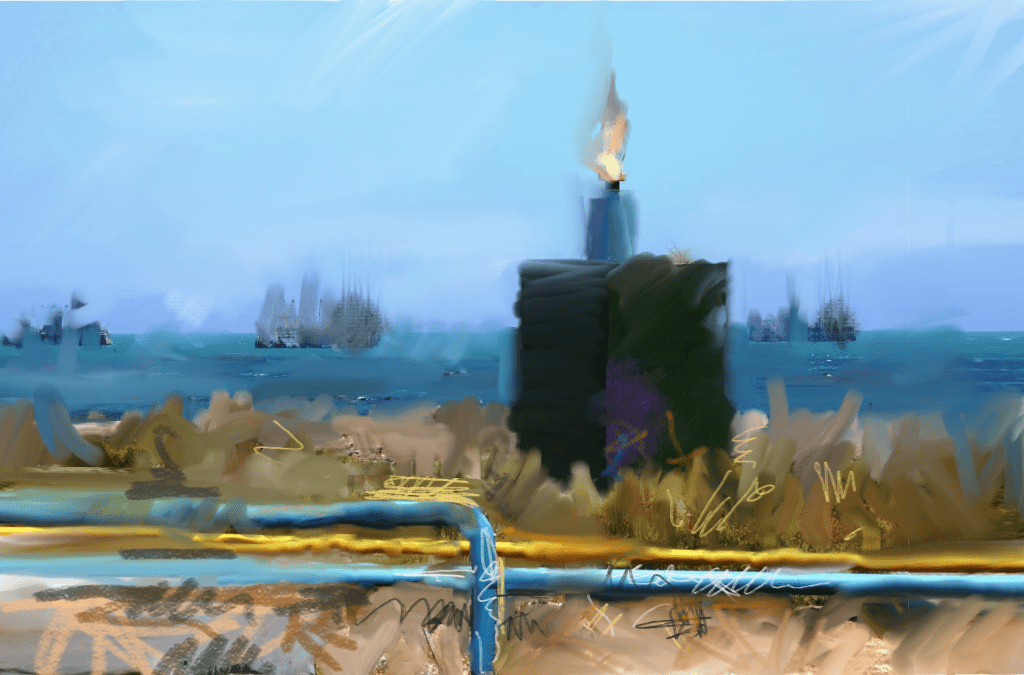
All these years, the media and European leaders have been talking about building the so-called Nabucco gas pipeline, which was to go from Central Asia, along the bottom of the Caspian Sea, through Azerbaijan and on to Germany and Austria. Its design began back in 2002. Note that by 2009, had the project been energetically implemented, Nabucco could have been built and the first deliveries would have begun.

In 2022, gas consumption in Germany and Austria amounted to 77.3 bcm and 7.9 bcm, respectively, meaning supplies from Central Asia could cover at least half of their needs.

This seemed like the perfect opportunity for a large-scale gas pipeline. The Central Asian countries wanted to supply gas to Europe via alternative routes, receiving European prices for their commodities, and Europe could have significantly diversified its gas imports. Another player, however, was closely watching Europe’s red tape and indecision – China.


Hidden dragon

China understands how to work with Central Asia, and in 2007 construction of the first line of the large-scale Central Asia-China gas pipeline was launched, while gas started flowing in record time, on December 14, 2009. The initial capacity was about 40 bcm per year, rising to 55 bcm per year after expansion. The source for the pipeline – one of the largest in the world with a length of over 8,000 km – was the gas fields of Turkmenistan, Uzbekistan and Kazakhstan.

While Europe was talking about Nabucco, China was acting and building. In exchange for gas, Chinese state-owned companies took stakes in gas fields and transport infrastructure, while big government loans were extended to the Central Asian countries. Turkmenistan, Uzbekistan and Kazakhstan, in turn, pledged to supply gas for 20-30 years at significant discounts to world prices, which was not surprising given the lack of alternative gas pipelines to Europe.

Hence what I call the “Great Gas Pivot”: the gas exported to Russia, Ukraine and Europe since Soviet times eventually turned eastward, which deprived European countries of a way to diversify their gas supplies.


What about oil?

In 2023-24, we have seen many reports and statements about the need to set up exports of Kazakh oil bypassing Russia. For example, potential supplies of Kazakh oil to Germany were widely covered as a way to replace oil from Russia, or so the story goes.

To understand the scale: in 2022, Germany consumed 97.3 million tons of oil, meaning 1.0-1.5 million tons per year from Kazakhstan would obviously not be able to change the picture, much less “replace” Russian supplies, which amounted to about 22-24 million tons per year.

The Trans-Caspian route, which Kazakhstan and Azerbaijan earnestly have been trying to build, at the end of 2023 was still only a complement, not an alternative:

Oil exports 2022 2023 Growth
, %
Oil and gas condensate production in Kazakhstan, million tons 84.2 89.9 +7%
Oil exports, million tons 64.3 70.5 +10%
– incl. via the CPC oil pipeline 52.0 56.5 +9%
– incl. via the Atyrau-Samara oil pipeline 8.4 9.3 +9%
– incl. via the Kazakhstan-China oil pipeline 1.15 1.2 -4%
– incl. via Aktau port 2.3 3.4 +48%


Supplies were also carried by rail, both through the territory of Russia and to other countries of Central Asia.

Despite the major bump in oil transport through the Aktau port, by 48% year-over-year, the share of these supplies in total exports is less than 5%. Meanwhile, some of the Kazakh oil is supplied to an Azeri refinery, while some goes by rail through Georgia.

Through the Baku-Tbilisi-Ceyhan (BTC) oil pipeline, whose shareholders include BP, Socar, MOL, TPAO, Eni, TotalEnergies, Itochu, INPEX, ExxonMobil and ONGC, almost 1.5 million tons were exported, a sixfold increase versus the 2022 level.

In the next 2-3 years, oil exports across the Caspian Sea are planned to increase to 5 million tons per year amid growth in oil and gas condensate production in Kazakhstan to 100 million tons per year (about 2 million barrels per day).

Nevertheless, oil pipelines passing through Russia will continue to be the main transport artery for Kazakh oil. Moreover, in the context of heightening geopolitical tensions around China and attacks on tankers at sea, Beijing could easily “flip” Kazakh oil supplies from the Caspian, since the Kazakhstan-China oil pipeline still has free capacity of at least 7 million tons per year.

It also stands to bear in mind the decline of oil production in Azerbaijan, which amounted to 30.2 million tons in 2023, down from the 2010 peak of 50.8 million tons. By 2027, the Azeri energy ministry forecasts a drop in production to 27.0 million tons.

European countries need to realize that Central Asia does not really believe in words and loud statements – money and jobs today are always better than something ephemeral in the indefinite future. Without European investment in infrastructure, transport and oil production projects and plans to diversify hydrocarbon imports will remain just that – plans.

  Olzhas Baidildinov is an
oil and gas industry expert

Uzbekistan to Support Migrant Workers

At a government meeting on April 2nd, following his previous order to facilitate access to the external labour market, Uzbekistan President Shavkat Mirziyoyev was presented with proposals to streamline labour migration and support Uzbek migrant workers abroad.

Over the past two years, the Uzbek Agency for External Labour Migration has assisted 70 thousand people in securing work in developed countries. Many unskilled laborers, however, still opt to work abroad independently and as a result, struggle.

To resolve problems encountered by Uzbek citizens working abroad, Uzbekistan is to introduce round-the-clock call centres and labour migration attachés in its embassies and consulates in the UK, Germany, Poland, Hungary, and Japan.

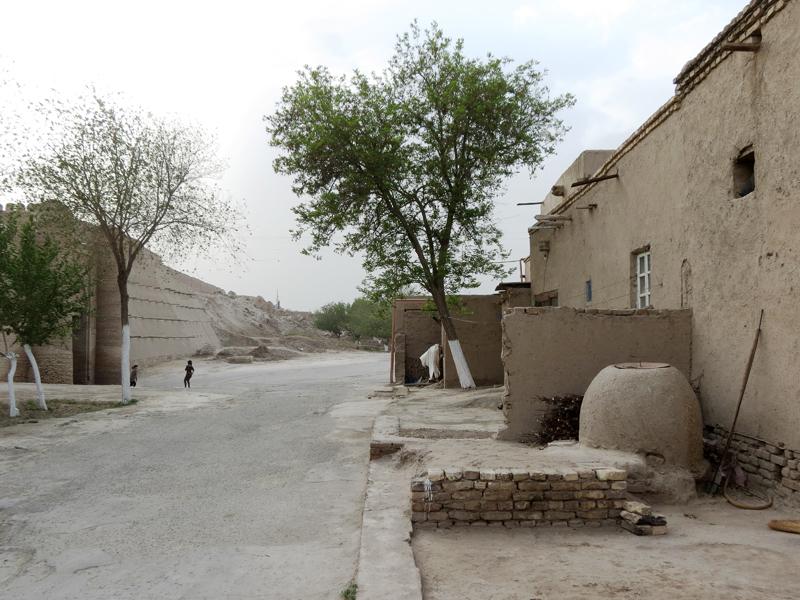
A mahalla is a traditional Uzbek community centred in a residential neighbourhood. Under the new initiative, based on the principle “work abroad begins with the mahalla,” local authorities and youth leaders will identify anyone wishing to work abroad and enter their data in a designated “Online Mahalla” platform. Candidates will then be invited to compete for employment abroad.

Training will be provided by vocational education institutions for citizens lacking professional skills. In addition, a centre for teaching foreign languages will be opened at the Agency for External Labour Migration to help prepare candidates. The state has announced that it will also reimburse part of the costs of work visas and tickets, as well as the assessment of labour migrants’ knowledge of foreign languages and professional qualifications.

Earlier on, the head of state instigated measures to ensure employment for people returning from labour migration.

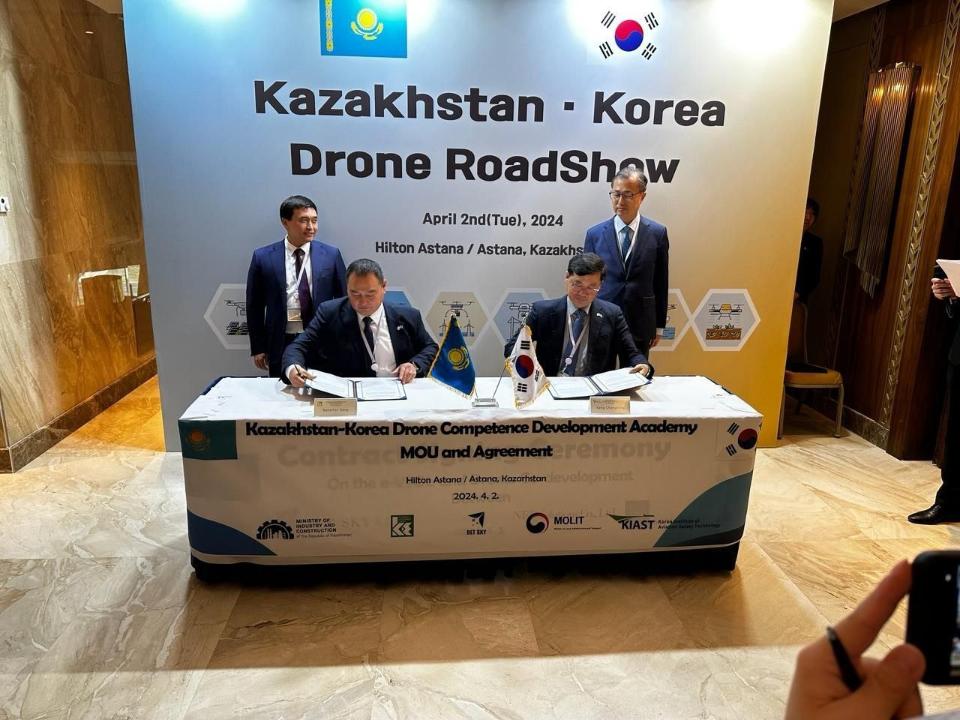
Kazakhstan-Korea Drone Roadshow in Astana

On April 2nd, Astana hosted the “2024 Kazakhstan-Korea Drone Roadshow” which included a seminar on the development of UAVs and the creation of the Kazakhstan-Korea Drone Competence Development Academy.

As reported by the Kazakh Ministry of Industry and Construction, advanced solutions were presented for the use of drones in various fields, training of drone operators, and the control and supervision of the use of UAVs. The seminar also covered the development and improvement of regulatory documents and discussions on Kazakh-Korean cooperation in UAV development.

According to the ministry, the event will help Kazakhstan join the leading number of countries involved in the development and use of unmanned aerial systems.

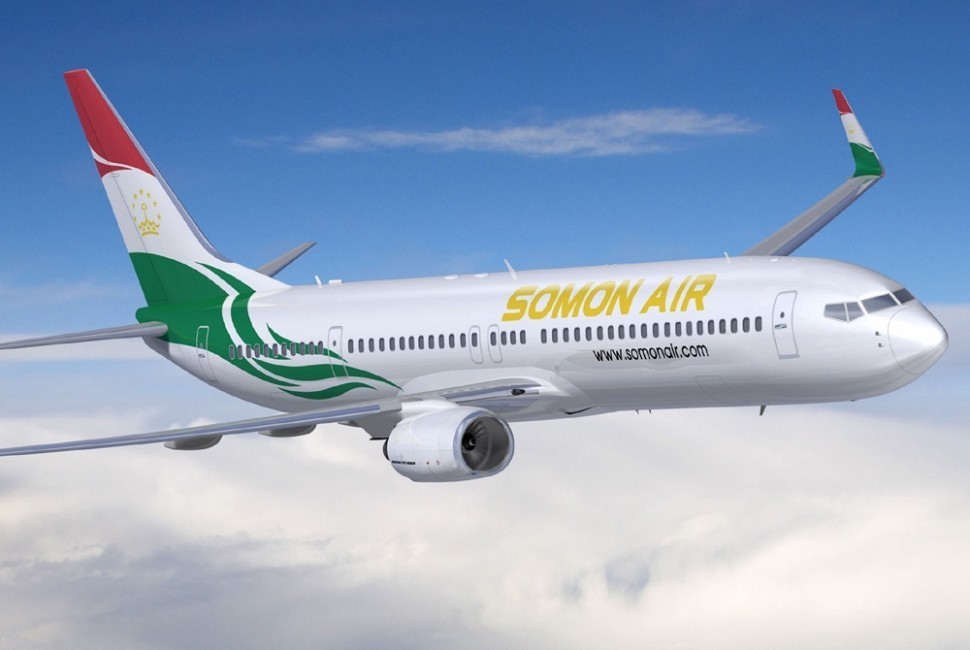
New Somon Air Flights from Dushanbe to Astana

On 2 April, Somon Air launched direct flights between the capitals of Kazakhstan and Tajikistan. Direct flights between Astana and Dushanbe will now operate twice a week on Tuesdays and Fridays.

Praising the initiative, Kazakhstan’s Ministry of Transport stated that the Astana-Dushanbe air route will have a significant impact on furthering the development of trade, business, investment and tourism between Kazakhstan and Tajikistan.

Somon Air currently operates regular flights between Tajikistan and Germany, the United Arab Emirates, Turkey, China, India, Saudi Arabia, Iran, Russia, Kazakhstan, and Uzbekistan. The airline’s fleet consists of Boeing 737-800 and Boeing 737-900 aircraft.