• KGS/USD = 0.01144 0%
  • KZT/USD = 0.00196 -0%
  • TJS/USD = 0.10896 -0%
  • UZS/USD = 0.00008 0%
  • TMT/USD = 0.28571 0.28%
  • KGS/USD = 0.01144 0%
  • KZT/USD = 0.00196 -0%
  • TJS/USD = 0.10896 -0%
  • UZS/USD = 0.00008 0%
  • TMT/USD = 0.28571 0.28%
  • KGS/USD = 0.01144 0%
  • KZT/USD = 0.00196 -0%
  • TJS/USD = 0.10896 -0%
  • UZS/USD = 0.00008 0%
  • TMT/USD = 0.28571 0.28%
  • KGS/USD = 0.01144 0%
  • KZT/USD = 0.00196 -0%
  • TJS/USD = 0.10896 -0%
  • UZS/USD = 0.00008 0%
  • TMT/USD = 0.28571 0.28%
  • KGS/USD = 0.01144 0%
  • KZT/USD = 0.00196 -0%
  • TJS/USD = 0.10896 -0%
  • UZS/USD = 0.00008 0%
  • TMT/USD = 0.28571 0.28%
  • KGS/USD = 0.01144 0%
  • KZT/USD = 0.00196 -0%
  • TJS/USD = 0.10896 -0%
  • UZS/USD = 0.00008 0%
  • TMT/USD = 0.28571 0.28%
  • KGS/USD = 0.01144 0%
  • KZT/USD = 0.00196 -0%
  • TJS/USD = 0.10896 -0%
  • UZS/USD = 0.00008 0%
  • TMT/USD = 0.28571 0.28%
  • KGS/USD = 0.01144 0%
  • KZT/USD = 0.00196 -0%
  • TJS/USD = 0.10896 -0%
  • UZS/USD = 0.00008 0%
  • TMT/USD = 0.28571 0.28%
09 December 2025

Kazakhstan to Earn $1.7 Billion from Russian Oil Transit to China

The Mazhilis of the Parliament of Kazakhstan has ratified amendments to the agreement between the Governments of Kazakhstan and Russia on the transportation of Russian oil through Kazakhstan to China.

The original agreement, signed on December 24, 2013, covers the period up until January 1, 2024 but both parties have now expressed their interest in its extension to 2033.

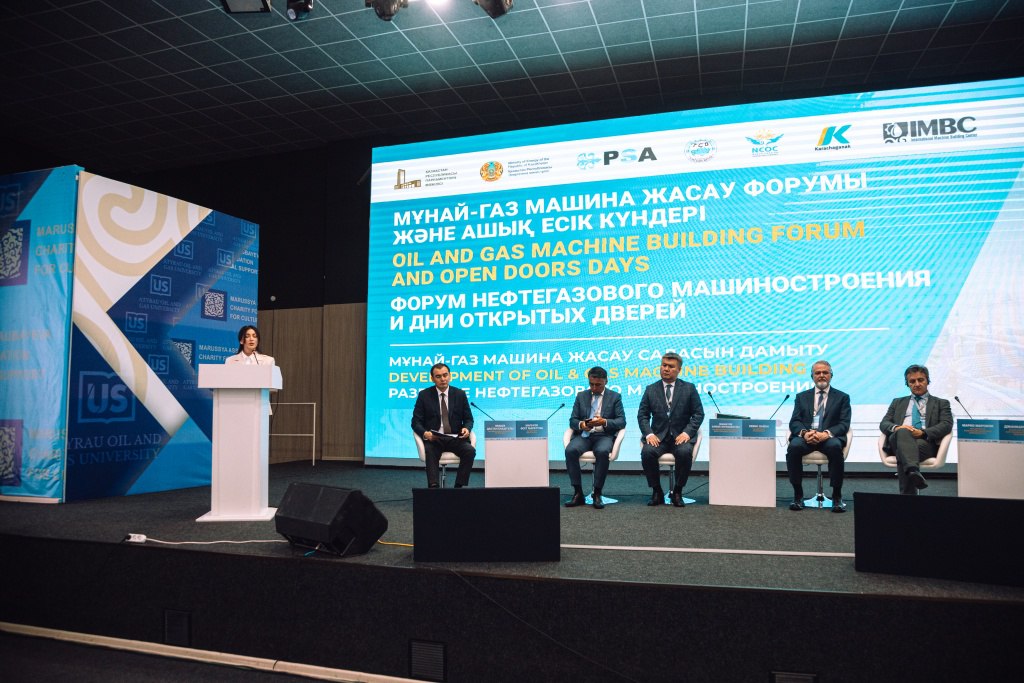
According to Kazakhstan’s Energy Minister Almasadam Satkaliev, extending the agreement for a further ten years will enable the transit 10 million tons of Russian oil per year.

Approval was granted for transit tariff set at $15 per ton and between 2024 and 2033, the forecast revenue from the transit of Russian oil through Kazakhstan to China is $1.710 billion.

Statistics show that from 2014 to 2023, the total transit of Russian oil through Kazakhstan to China amounted to 90,899,271 tons, providing transit revenue of $1.327 billion.

Car Seat Factory under Construction in Almaty

LLC Vehicles Almaty, LLC Motor Company Astana Motors, and LLC Youngsan Kazakhstan have collaborated in the build of a factory to manufacture car seats in Almaty.

According to a report issued by the Kazakh Ministry of Industry and Construction, the factory will have the capacity to supply Kazakhstan’s automobile plants with some 100,000 seats per annum and in so doing, make a significant contribution to the development of the country’s automotive industry.

Excavation of the land and the erection of steels have now been completed and work has begun on the installation of wall panels. Deliveries of technological equipment for assembly and electronics testing were received on 20 March and construction is scheduled to finish this autumn/winter.

Uzbek-born Billionaire Alisher Usmanov Takes On German Prosecutor

Uzbek-born Russian billionaire Alisher Usmanov has filed a complaint alleging a violation of his rights by officers of the General Prosecutor’s Office in the German city of Frankfurt am Main. A criminal case has been opened against two prosecutors, according to the newspaper Bild.

In 2022 Usmanov was accused of money laundering, prompting law enforcement to search a villa linked to him on Lake Tegernsee in Germany, an apartment near Frankfurt am Main, and a yacht, Dilbar, which was then moored at the port of Bremen. In 2023, a Frankfurt am Main court ruled that the authorities’ actions were illegal. The court ordered the return of property confiscated during the search, but this has not been fulfilled. Currently, a preliminary investigation is underway as per Usmanov’s complaint.

According to Statista, Alisher Usmanov ranked eighth among Russian billionaires in 2023, with a net worth estimated at $14.4 billion. He has been under EU sanctions since 2022, and is suspected of money laundering and tax evasion. Usmanov appealed the EU sanctions, saying they will lead to the bankruptcy of major Russian companies in which he holds large stakes – MegaFon, Metalloinvest and Udokan Copper, noted The Wall Street Journal.

The U.K. had until recently imposed restrictions on the billionaire’s sisters, Saodat Narzieva and Gulbahor Ismailova, and his adopted son, Nathan (Anton) Wiener, before these were removed in 2022. It was reported that several accounts in the Swiss bank, Credit Suisse, with assets in excess of $2 billion, were at one point registered under Narzieva’s name.

According to Usmanov, in the near future he intends to step down from his positions in business, and engage further in philanthropy.

Major Storms Cause Injuries and Disruption Across Swathes of Central Asia

Storms accompanied by heavy winds hit parts of Kazakhstan, Kyrgyzstan and Uzbekistan on the evening of March 28th. Heavy flooding in parts of western Kazakhstan forced the evacuation of at least 1,000 people, including hundreds of children, and a state of emergency has been declared in some areas.

Military helicopters evacuated people in distress and rescuers even used rubber dinghies to ferry camels to safety in the Shalkar district of the Aktobe region. Flooding caused widespread disruption after a river overflowed in the city of Aktobe, which has more than half a million residents.

Aktobe’s airport was forced to stop operations. In recent days, the flooding has damaged hundreds of buildings, submerged roads and caused power outages.

Video on social media showed people wading through water in the city streets and water sloshing across the floor of a bus filled with passengers. Aerial images showed some buildings completely surrounded by floodwaters in more isolated areas.

Fifty schools were prepared as temporary evacuation points in the city of Aktobe and rescue teams include volunteers, police officers and military personnel, regional emergency officials said on Instagram.

In Almaty, meanwhile, wind speeds of 24 meters per second were recorded, with the storm felling dozens of trees and tearing roofs from buildings.

“[There] was a very strong dust-storm and then a downpour with a thunderstorm. For our region at this time of year, this is an extremely rare phenomenon,” Almaty resident Arai Batkalova told the Times of Central Asia. “People were filming videos en masse and posting them on social media.”

In Bishkek, strong winds damaged eleven schools and eight kindergartens, and near-hurricane-force winds tore the roofs off at least fifteen residential buildings. Local residents reported dozens of fallen trees, some of which destroyed parked cars.

Bishkek; image: mchs.gov.kg


Emergency public-safety regimes were imposed in Bishkek and the Chui region. In these areas, storms damaged 154 buildings, and 24 local residents (including two children) were admitted to medical centers, according to the Kyrgyz Ministry of Emergency Situations. Four people were hospitalized with fractures and head injuries. “In order to study dangerous areas on the ground and determine the consequences, mobile groups of civil defense services were organized. It was ordered to involve all available utilities and special equipment as soon as possible,” rescuers noted.

Kyrgyz authorities are still calculating the damage from the storm. Utility workers spent all night repairing the storm’s aftermath: clearing roads, removing fallen trees, and repairing power lines.

“On the line of the municipal enterprise, Bishkeksvet, [by] morning [workers repaired] eight cases of broken power lines, as well as other consequences of the bad weather. Brigades continue [working]. By evening, the breaks [of power lines] will be repaired throughout the city,” Bishkek City Hall promised.

According to the Kyrgyz hydrometeorological center, strong winds were also observed in the south of the country in the Osh region, where wind speeds reached 15 meters per second.

Strong winds were also recorded in Uzbekistan’s capital, Tashkent, where its speed reached 17 meters per second. Authorities also reported fallen trees and roofs torn from buildings.

Tajikistan’s Rahmon Wants Government Staff to Speak Three Languages

Tajikistan’s president Emomali Rahmon has instructed all government officials in the country to master two foreign languages at a high level within a year, according to a report by Turkmenportal.

The Tajik head of state commented that knowledge of two foreign languages at the same level as Tajik is vital for them to work effectively. From April 1, employees of state bodies, local state authorities and state organizations will be enrolled in compulsory foreign (Russian, English or others) language courses for a year and a half, according to a report by Interfax-Kazakhstan. “This initiative is being implemented in order to strengthen the professional skills, political outlook and language skills of the employees of state bodies, local government authorities and management bodies,” reads the report.

Central Asia’s Hospitality Market Showing Significant Growth

In 2023, the hospitality industry in the countries of Central Asia, Belarus and parts of the Caucasus seemed to rise to the challenge of the times following Russia’s full-scale invasion of Ukraine, as they experienced a wave of change leading to astonishing growth.

According to news portal infoline.spb.ru, all of the above countries’ hospitality sectors recorded double-digit growth in their local currencies. For example, Kazakhstan (25%), Uzbekistan (12.6%), and Kyrgyzstan (24.9%), as well as Armenia (25.4%) and Azerbaijan (12%), showed steady growth both due to the natural evolution of the industry and the increasing share of legal business. Armenia and Kyrgyzstan, in particular, attributed their dynamics to a sheer increase in the number of customers — the inflow was provided by both tourists and migrants from Russia.

The hospitality industry in Central Asia is still in its formative stages, but the prospects for its development look extremely promising. This is due to several factors:
–The demographic factor. The population of Kazakhstan, for example, has grown by 18% over the last 13 years, which is the main driver of demand for catering services;
–New players in the market: the emergence of new chain restaurants from different countries provides an additional impetus;
–Growth in tourism. Inbound tourism to Central Asia is growing strongly, with Uzbekistan and Kyrgyzstan attracting significant flows of foreign tourists, creating a huge demand for catering services;
–Transformation of the Russian market. The Russian hospitality market — due to the war in Ukraine and international sanctions — is undergoing a period of significant transformation despite its size and maturity. Since the beginning of 2022, major international chains such as McDonald’s, KFC and Starbucks have ceased operations in the country, creating ruptures and opportunities in the industry.

In this context, Russian restaurant chains are showing increased interest in the Central Asian market, recognizing its potential for growth and development. Brands such as Shokoladnitsa, Yakitoria, Osteria Mario, Shvili and others have announced plans to expand into Kazakhstan, Uzbekistan, as well as Azerbaijan and Armenia. They are targeting increased revenue and profits due to low rent, material costs and the lower level of competition in these countries.

The revolution in the world of hospitality that’s sweeping Central Asian countries is opening new horizons for the industry. Rapid growth and transformation is creating unique opportunities for investors and entrepreneurs in the sector.