• KGS/USD = 0.01144 0%
  • KZT/USD = 0.00210 0%
  • TJS/USD = 0.10438 0%
  • UZS/USD = 0.00008 0%
  • TMT/USD = 0.28490 0%
  • KGS/USD = 0.01144 0%
  • KZT/USD = 0.00210 0%
  • TJS/USD = 0.10438 0%
  • UZS/USD = 0.00008 0%
  • TMT/USD = 0.28490 0%
  • KGS/USD = 0.01144 0%
  • KZT/USD = 0.00210 0%
  • TJS/USD = 0.10438 0%
  • UZS/USD = 0.00008 0%
  • TMT/USD = 0.28490 0%
  • KGS/USD = 0.01144 0%
  • KZT/USD = 0.00210 0%
  • TJS/USD = 0.10438 0%
  • UZS/USD = 0.00008 0%
  • TMT/USD = 0.28490 0%
  • KGS/USD = 0.01144 0%
  • KZT/USD = 0.00210 0%
  • TJS/USD = 0.10438 0%
  • UZS/USD = 0.00008 0%
  • TMT/USD = 0.28490 0%
  • KGS/USD = 0.01144 0%
  • KZT/USD = 0.00210 0%
  • TJS/USD = 0.10438 0%
  • UZS/USD = 0.00008 0%
  • TMT/USD = 0.28490 0%
  • KGS/USD = 0.01144 0%
  • KZT/USD = 0.00210 0%
  • TJS/USD = 0.10438 0%
  • UZS/USD = 0.00008 0%
  • TMT/USD = 0.28490 0%
  • KGS/USD = 0.01144 0%
  • KZT/USD = 0.00210 0%
  • TJS/USD = 0.10438 0%
  • UZS/USD = 0.00008 0%
  • TMT/USD = 0.28490 0%

Controversial Petition on “LGBT Propaganda” Passes Threshold for Consideration in Kazakhstan

A petition against so-called “LGBT propaganda” has received more than 50,000 signatures, meaning Kazakhstan’s Ministry of Culture and Information must consider it. However, a number of experts believe that restrictions on the gay community would damage Kazakhstan’s image. In addition, the petition’s authors are known for their controversial initiatives. 

The Kazakhstan Parents’ Union is the author of the petition “We are Against Open and Concealed LGBT Propaganda in the Republic of Kazakhstan,” which was published on the official E-Petition.kz portal. According to Article 90-4 of the Administrative Procedural Code, the government must consider a petition with 50,000 signatures. A working group including interested parties, government agencies, and public associations will be created. The consideration of official petitions are a relatively recent innovation. So far, only three have collected the required number of signatures. The first came in the wake of the Nukenova murder at the hands of a disgraced former minister.  It was considered by the Kazakhstan president himself and brought about landmark legislation on domestic violence. The decision to allow public input via petitions is seen as a sign of the fulfillment of President Tokayev’s promise of a more engaging and aware “listening state.”

Kazakhstan has seen repeated attempts to include in various legislative acts such a ban on promoting “nontraditional relations.” However, these amendments were not adopted, though numerous Mazhilis (lower chamber of parliament) deputies and public figures spoke out in favor of them.

Nevertheless, there have been cases in Kazakhstan where media products containing what is deemed “homosexual content” did not reach the market. For example, in 2022, the former Minister of Culture and Information, Dauren Abaev, announced that, “In response to numerous requests from citizens and the media, I inform you, the animated film Lightyear will not be shown in Kazakhstan.” Officially, however, the ministry did not prohibit the screening of the Hollywood animation in cinemas. According to rumors, distributors themselves canceled showings in response to the public outcry. Also, in January 2024, a website for LGBT people was blocked in Kazakhstan. The site, among other things, had materials to help young people answer questions about their sexual orientation.

“During monitoring of the internet resource selftanu.kz, a violation of the law was identified related to the posting of information harmful to the health and development of children,” the Ministry of Culture stated in justifying blocking the site.

The head of the group pushing the current petition, Bagila Baltabaeva, stated that, “Same-sex love is being openly forced on our children. It is forced [on them] in bookstores, on TV screens, and on smartphones. Young people openly spread [information about] and promote their unhealthy relationships. Thus, stealthily and subtly, new standards of sexual relations are taking shape among young people. In parallel, it is promoted that traditional values are relics of the past, a sign of backwardness. Therefore, for fear of criticism, many remain silent. And those who work up the courage and speak out against LGBT propaganda are branded as retrogrades and conservatives.”

This is not the first controversial initiative of the Kazakhstan Parents’ Union. Representatives of the group have previously campaigned against tougher penalties for violence against women and children and vaccinations. Intense debate was recently sparked on social media by statements made by Parents’ Union members against the new law on domestic violence. When the bill was being discussed, they tried to scaremonger by claiming that the law would lead to a “machine in Kazakhstan for the removal of children and the breakup of families.” Mazhilis deputies who were working on the bill had to publicly explain that the removal of children from families was not being considered whatsoever.

A number of public figures have come out against such a ban even being discussed in the halls of government. Feminist and activist Aigerim Kusayynkyzy believes that the recent petition violates basic rights enshrined in the constitution. “Persecution of a person for their sexual orientation and gender identity is a gross violation of their rights. The number of countries facing the crisis of homophobia is growing every day. Together with human rights experts, we are raising the issue of how to combat homophobia. If you want to become a leading country in terms of human rights, I hope such inhumane laws will not be passed,” she said on social media.

Khalida Azhigulova, a human rights activist and lawyer who was a member of the Mazhilis working group that helped develop the law toughening punishment for domestic violence, called the petition illegal: “I believe that such a petition is unconstitutional, as it violates the constitutional principle prohibiting discrimination under any circumstances, and transmits hatred and intolerance toward an entire social group. Such a petition should not have been posted on the official state petition website in the first place. No reputable international petition platform would ever allow such a hateful and discriminatory petition to be posted, and our state petition platform should not turn into an instrument of obscurantism and hatred. The fact that at least 50,000 people signed the petition would cause serious concern in real democratic regimes where human rights are valued. A ban on so-called LGBT propaganda would be a gross violation of Kazakhstan’s international human rights obligations.”

Neighboring Russia recently passed a law banning “LGBT propaganda,” following which administrative cases were opened against numerous activists.
Kazakhstan and U.S. Focus on Strengthening Trade and Investment Cooperation

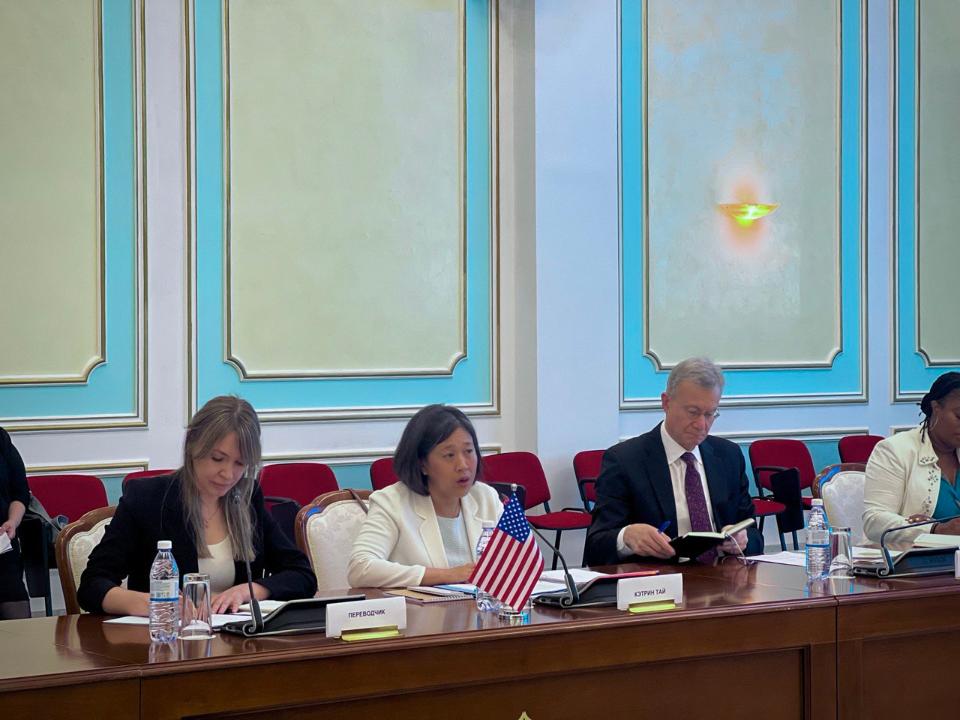
On 14 June, in Astana, Minister of Trade of Kazakhstan Arman Shakkaliev met U.S. Trade Representative Katherine Tai to discuss key areas of cooperation between the two countries.

As reported by the Kazakh Ministry of Trade and Integration, the USA is among Kazakhstan’s ten largest trading partners. With bilateral trade turnover demonstrating a steady growth, Kazakhstan is ready to increase non-resource exports of 90 commodities worth over $770 million to the U.S.

During the meeting, Kazakhstan’s trade minister mooted cancelling the Jackson-Vanik amendment, which restricts trade relations between the two countries, and expressed hope for an imminent decision by the U.S. Congress on the issue.

“We count on the soonest positive outcome of the work on the cancellation of the Jackson-Vanik amendment, which will give a new impetus to the development of trade and economic relations between our countries,” said Shakkaliev.

He also noted the important role of the Generalized System of Preferences (GSP) of the United States in strengthening bilateral trade and economic relations. For its part, Kazakhstan is ready to undertake necessary work to resume the application of the USA GSP.

Trade Representative Katherine Tai spoke optimistically on the development of trade relations and strengthening economic ties between the United States and Kazakhstan. After remarking that the extension of the USA GSP program will be considered by the US Congress next year, she confirmed her readiness to assist Kazakhstan in this matter.

U.S. and Central Asia Further Trade, Economic and Investment Cooperation

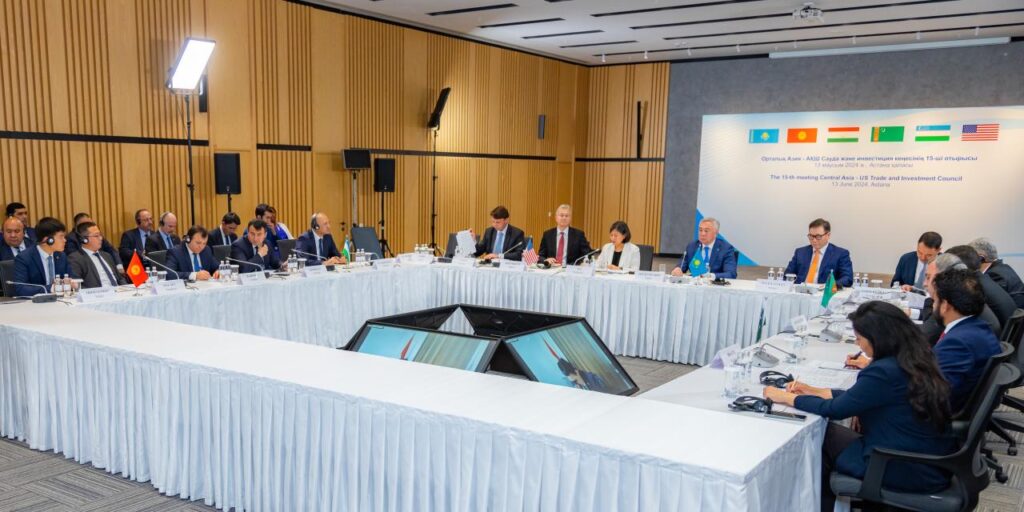
The 15th meeting of the U.S.-Central Asia Trade and Investment Framework Agreement (TIFA) Council was held in Astana on 13 June.

TIFA was signed in Washington in June 2004 by the United States, Kazakhstan, Kyrgyzstan, Tajikistan, Turkmenistan, and Uzbekistan to expand international trade, attract foreign investment, and establish trade relations between Central Asian countries and Afghanistan. The US-Central Asian Trade and Investment Council was established within its framework.

Reporting from Astana, the Kazakh Ministry of Trade and Integration, said that the agenda had covered prospects for diversifying trade and expanding investment cooperation. Representatives of the six countries also discussed the development of new trade routes to improve supply chain resilience and diversify the economy.

During the event, Kazakh Deputy Prime Minister Serik Zhumangarin remarked, “As one of the major economies in the region and a WTO member, Kazakhstan recognizes the high potential offered by TIFA to strengthen not only bilateral but also regional trade relations. This year’s meeting of the TIFA Central Asia Regional Council is further proof of the progressive development of regional cooperation and sustainability, which in turn, plays an important role in stabilizing world economy by connecting the global markets of both the West and the East.”

U.S. Trade Representative Katherine Tai, emphasizing the need to coordinate joint efforts to ensure sustainable growth of TIFA economies, stated:

“Central Asia remains a very important economic and strategic partner for the United States. We are also experiencing climate change and facing the consequences of technological and industrial progress. It is necessary to jointly develop traditional supply chains, the stability of which will ensure sustainable economic growth. The US is interested in improving the quality of trade, supplying critical metals for the production of cars and semiconductors.”


Uzbekistan and Korea Forge New, High-Tech Agenda for Strategic Partnership

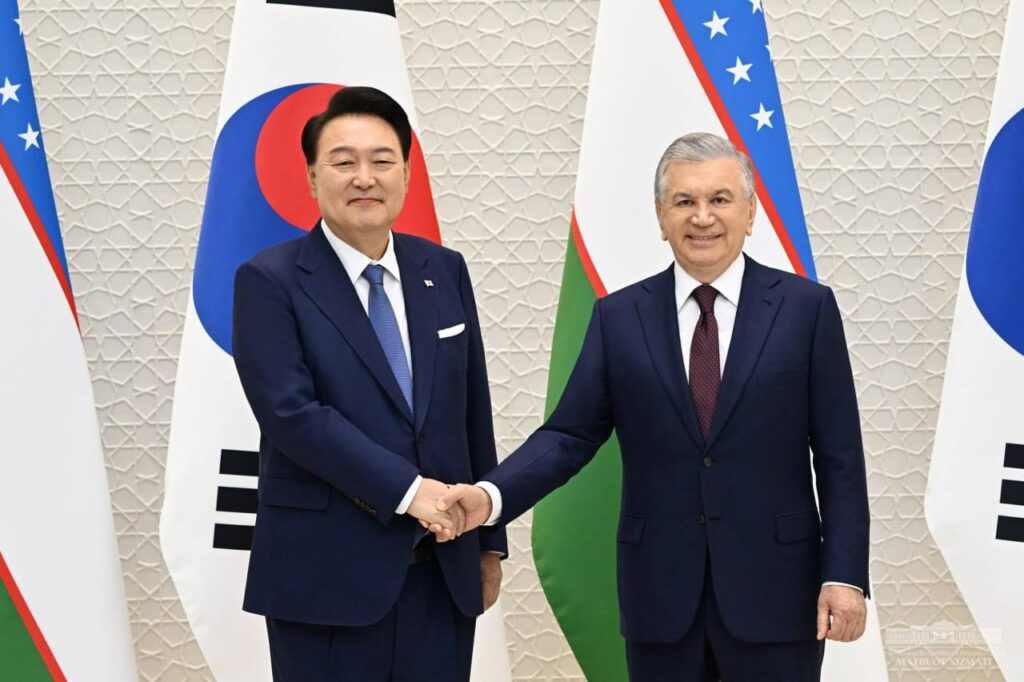
On 14 June, South Korean President Yoon Suk Yeol held talks with Uzbekistan President Shavkat Mirziyoyev.

During their meeting in Tashkent, it was noted that the Republic of Korea is among Uzbekistan’s leading trade and investment partners. Last year, bilateral trade turnover reached $2.5 billion, and Korean investments in Uzbekistan now exceed $7.5 billion.

Negotiations focused on the formation of a new, high-tech agenda for Uzbek-Korean strategic partnership over the next three years.

As a result, the two leaders tasked their governments to prepare a Strategic Program for the creation of a regional high-tech hub in Uzbekistan, with priority given to the following “anchor” areas of the Strategy:

Partnership on critical mineral resources with deep processing and creation of a complete added value chain.

Strategic cooperation in the field of semiconductors, in which the Republic of Korea is recognized as a global leader, and the implementation of plans to create in Uzbekistan’s first fully-fledged research and production cluster of semiconductor products.

Full-scale partnership in the chemical industry, including new projects to produce green hydrogen and ammonia, as well as finished rubber products.

Deepening cooperation in mechanical engineering. This spring, an assembly line for KIA cars was launched in Uzbekistan’s Jizzakh region, to be followed next year, by a plant with the capacity to manufacture over 60 thousand vehicles per year.

Transfer of technologies to develop “smart” agriculture, including via the digitalization of the agricultural sector,  the introduction of “smart” and “green” technologies. Agreements have already been reached on the creation of modern greenhouses and garden complexes in Uzbekistan’s regions based on renewable energy sources.

Infrastructure modernization and a program for urban development, based on the high interest of Korean banks and companies in the modernization of transport infrastructure,  and the design and construction of residential and commercial real estate in Uzbekistan on the principles of public-private partnership.

With regard to developing potential projects in  green energy and increase energy efficiency, strategic dialogue is to be resumed between energy ministers and a meeting organized in Uzbekistan in the near future.

Kyrgyz Banks Restrict Money Transfers to Russia

Several commercial banks in Kyrgyzstan have suspended work with Russian money transfer systems after the expansion of U.S. sanctions. Most cite as the reasons behind this decision both technical problems and exchange rate volatility.

The RSK Bank, which occupies one of the leading positions in Kyrgyz financial market, announced that, “Due to technical works, the following money transfer systems (sending and receiving) are not working at the moment: Astrasend, Unistream, Contact, Zolotaya Korona, Sberbank-Online.”

The temporary suspension of services to send and receive transfers in rubles  through the applications ‘Kompanion ’ and  ‘Unistream,’ was also reported by Kompanion Bank.

Mbank, among the most popular in the Kyrgyz market,  joined suit, stating that, “Due to the exchange rate volatility and possible sharp fluctuations of the currency market, a temporary restriction on ruble accounts and cards has been introduced (replenishment, transfers, conversions). ” Via its website, the bank confirmed its full protection of clients’  ruble accounts.

Five more Kyrgyz banks have now announced the introduction of restrictions on operations concerning dollar accounts and ruble/dollar conversion.

As reported by TCA on June 13, new U.S. sanctions were imposed on the Moscow Exchange, the Russian National Clearing Center (NCC), and the National Settlement Depository (NSD).

PepsiCo to Build Snack Production Plant in Kazakhstan

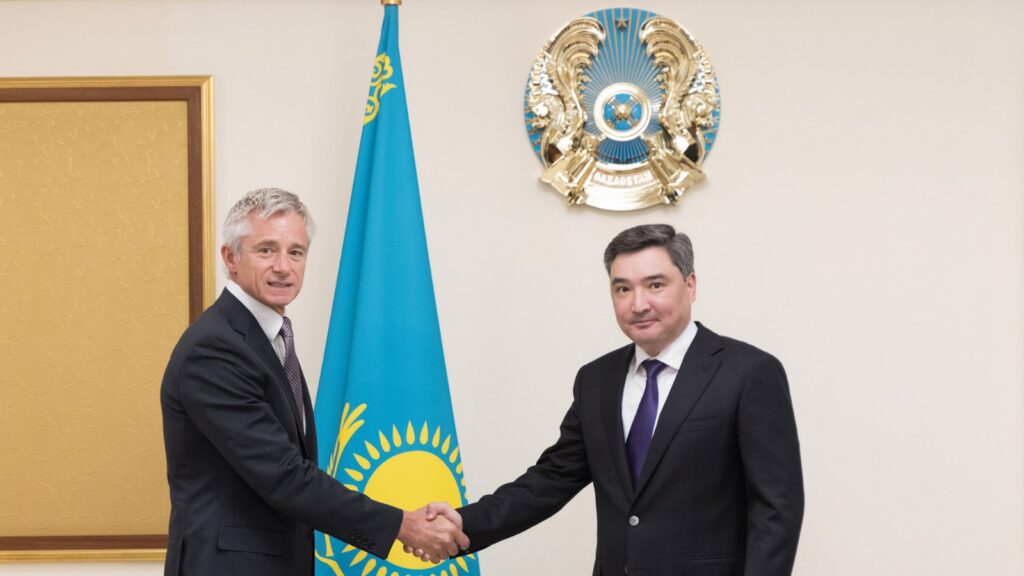
PepsiCo has announced plans to build a full-scale new plant to produce salty snacks, including Lays crisps, in Kazakhstan’s Almaty region. Implementation of the project was discussed at a meeting between Kazakhstan Prime Minister Olzhas Bektenov and David Manzini, President of PepsiCo in Central Asia, Russia, Belarus, and Caucasus.

According to the Kazakh prime minister’s press service, the project has already received $160 million in foreign investment.

The plant, anticipated as the largest of its kind in Central Asia, is scheduled to open in 2026. Its original capacity of up to 16,000 tons of finished products per year, will increase to 21,000 tons from 2027, for distribution to both the Central Asian market and abroad.

Up to a thousand people will be employed during the plant’s construction, with 350 skilled jobs created when it opens.

David Manzini stated PepsiCo’s intention to use locally sourced raw materials. The conclusion of contracts with Kazakh farmers on the delivery of test batches of potatoes is ongoing but all going to plan, the company will purchase up to 50-66 thousand tons of potatoes in 2026-2030, and increase the volume in later years.

Prime Minister Bektenov emphasized the importance of the project for the development of agriculture, increasing Kazakh farmers’ income and strengthening the economy. He mentioned that besides its positive impact the food industry and agribusiness, the plant will have a multiplier effect on related industries including transport, logistics, packaging, and processing of agricultural products.