• KGS/USD = 0.01144 0%
  • KZT/USD = 0.00210 0%
  • TJS/USD = 0.10523 0%
  • UZS/USD = 0.00008 0%
  • TMT/USD = 0.28571 0%
  • KGS/USD = 0.01144 0%
  • KZT/USD = 0.00210 0%
  • TJS/USD = 0.10523 0%
  • UZS/USD = 0.00008 0%
  • TMT/USD = 0.28571 0%
  • KGS/USD = 0.01144 0%
  • KZT/USD = 0.00210 0%
  • TJS/USD = 0.10523 0%
  • UZS/USD = 0.00008 0%
  • TMT/USD = 0.28571 0%
  • KGS/USD = 0.01144 0%
  • KZT/USD = 0.00210 0%
  • TJS/USD = 0.10523 0%
  • UZS/USD = 0.00008 0%
  • TMT/USD = 0.28571 0%
  • KGS/USD = 0.01144 0%
  • KZT/USD = 0.00210 0%
  • TJS/USD = 0.10523 0%
  • UZS/USD = 0.00008 0%
  • TMT/USD = 0.28571 0%
  • KGS/USD = 0.01144 0%
  • KZT/USD = 0.00210 0%
  • TJS/USD = 0.10523 0%
  • UZS/USD = 0.00008 0%
  • TMT/USD = 0.28571 0%
  • KGS/USD = 0.01144 0%
  • KZT/USD = 0.00210 0%
  • TJS/USD = 0.10523 0%
  • UZS/USD = 0.00008 0%
  • TMT/USD = 0.28571 0%
  • KGS/USD = 0.01144 0%
  • KZT/USD = 0.00210 0%
  • TJS/USD = 0.10523 0%
  • UZS/USD = 0.00008 0%
  • TMT/USD = 0.28571 0%

Kazakhstan’s Falcon EuroBus to Supply 600 Electric Buses to Pakistan

Falcon EuroBus, founded in 2018 in Almaty, has signed an agreement with Pakistan to supply 600 electric buses. The deal is one of the largest export contracts for Kazakhstan’s engineering industry in the public transport sector.

Falcon EuroBus produces a range of buses that meet European quality standards. The company’s current production capacity stands at 1,500 buses per year, with plans to expand it to 3,000 units. Uzbekistan and Mongolia have already expressed interest in its products, and Pakistan has now joined that list.

A memorandum on the supply of electric buses was signed between Falcon EuroBus and Pakistani carrier OGCC International at the Kazakhstan–Pakistan business forum in Islamabad, held during the state visit of President Kassym-Jomart Tokayev. The first deliveries are scheduled to begin in April.

The contract covers 600 electric buses and is valued at $108 million. By 2027–2028, the company plans to increase exports to Pakistan to 2,000 buses, including vehicles designed for transporting schoolchildren.

“We carry out the full production cycle for buses. For us, this is an entry into a large market. In addition to the current contract, agreements have been reached on the prospects of supplying 2,000 school buses,” said Murat Adilkhanov, chairman of the board of directors of Falcon EuroBus.

Kazakhstan’s Ministry of Trade and Integration described the agreement as strategically important for promoting the Made in Kazakhstan brand and expanding exports of high-tech products.

A total of 32 commercial documents were signed at the forum. Samruk-Kazyna JSC and Pakistan’s Fauji Group agreed to establish a joint investment platform. Kazakhstan Temir Zholy and Pakistan’s National Logistics Corporation reached an agreement on cooperation in multimodal transport. Kazposhta signed memoranda with Pakistan Post and TCS Private Limited. The Aktau Seaport and the Port of Karachi also agreed to expand cooperation.

The Times of Central Asia previously reported that more than 171,000 vehicles were produced in Kazakhstan in 2025, a record for the industry. Output of commercial vehicles, including buses, reached 12,200 units, up 8% year on year.

Rogun Dam’s Cross-Border Environmental Impact Draws Scrutiny

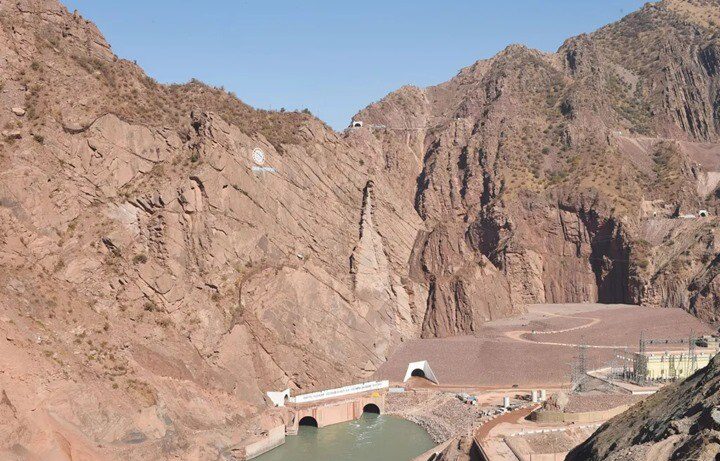
An international environmental coalition has raised new concerns about the environmental assessment of Tajikistan’s Rogun Hydropower Plant, warning that its potential cross-border and cumulative impacts on downstream countries are being underestimated.

The group, Rivers without Boundaries, presented its latest report, Eyes Wide Shut: Ignoring the Transboundary and Cumulative Impacts of the Rogun Hydropower Plant, highlighting what it describes as serious shortcomings in the project’s environmental and social review.

According to the report, the current assessment of Rogun’s transboundary effects does not fully comply with the environmental and social standards of the World Bank. Experts argue the analysis relies on outdated data from 2014 and uses static modeling scenarios that fail to reflect climate change trends and the current hydrological realities of the Amu Darya basin. Rivers without Boundaries contends that this approach prevents a realistic understanding of how the project could affect downstream water availability and ecosystems.

The coalition also criticizes what it describes as a failure to account for key external factors, particularly the construction of Afghanistan’s Qosh Tepa canal, which is expected to significantly alter regional water balances. Rather than applying a basin-wide and cumulative assessment, the developers have labeled Rogun’s impact as “neutral”, a claim environmental experts deem misleading.

“The authors of the impact assessment preferred to act with their eyes wide shut, excluding the most sensitive and uncomfortable scenarios,” said Evgeny Simonov, international coordinator of Rivers without Boundaries. He added that portraying the world’s tallest dam as environmentally neutral contradicts the very premise of cumulative impact assessment. Without binding commitments on environmental water releases and artificial floods, Simonov warned, the project risks prolonging ecological degradation in downstream areas for decades.

The report flags particular threats to biodiversity and wetlands in the Amu Darya delta, many of which are protected under the Ramsar Convention. It notes that the Rogun assessment lacks clear mechanisms to guarantee water flows to these critical habitats during dry periods. The coalition also points to significant gaps in public consultation processes, especially in downstream countries, raising questions about the legitimacy of conclusions drawn regarding the project’s social acceptability.

Alexander Kolotov, the coalition’s Central Asia regional coordinator, said consultations were not conducted in affected areas of Uzbekistan and Turkmenistan. “The risks linked to seasonal water redistribution and the launch of the Qosh Tepa canal were effectively left out of the analysis,” he said, calling this a dangerous precedent for a project of regional significance.

Rivers without Boundaries is calling for a full Strategic Environmental Assessment of the entire Amu Darya basin, along with the development of legally binding water management plans that include climate adaptation strategies and biodiversity protection measures. Without a fundamental revision of the current approach, the coalition warns, Rogun could become a long-term source of environmental and social tension in Central Asia.

At the heart of the concern is the filling of the Rogun reservoir, which experts say could reduce water flows to the Amu Darya delta by 25% or more, accelerating desertification and threatening the livelihoods of up to 10 million people in Uzbekistan and Turkmenistan.

With a planned installed capacity of 3,780 megawatts, Rogun is set to become the largest hydropower facility in Central Asia, projected to generate over 14.5 billion kilowatt-hours of electricity annually once fully operational. The final turbine is scheduled for commissioning in 2029.

Kyrgyzstan’s Sanctions Dilemma: Drifting from the Central Asian Consensus?

While Kyrgyzstan is improving relations with the United States by hosting the second B5+1 forum in its capital, with the participation of U.S. Special Representative for South and Central Asia Sergio Gor, Bishkek’s relations with Brussels appear to be deteriorating. The European Union is discussing possible sanctions against Kyrgyzstan, and is reportedly considering a ban on the import of certain categories of goods into the country.

According to Bloomberg, which was the first to disclose details of the EU’s upcoming 20th package of sanctions against Russia, Brussels is prepared to restrict Kyrgyzstan’s trade in machine tools and radio equipment over allegations of helping the Kremlin circumvent existing bans.

The Kyrgyz government has already responded to the report. On February 3, Deputy Prime Minister Daniyar Amangeldiev held a video conference with EU sanctions envoy David O’Sullivan, during which the sides agreed to engage in “constructive and substantive dialogue on issues related to sanctions.”

Further discussions are expected during O’Sullivan’s visit to Bishkek at the end of the month, scheduled for February 26.

Even before the EU representative’s visit, Kyrgyz officials have publicly commented on the prospect of sanctions, offering a clear sense of the tone likely to shape the dialogue.

In an interview with Azattyk, Amangeldiev stressed that Kyrgyzstan has imposed restrictions on the export of dual-use goods, including weapons, and therefore sees no grounds for measures against the state. He also suggested that any potential restrictions might not take the form of sanctions against Kyrgyzstan itself, but rather recommendations to individual EU member states not to supply certain goods to the republic.

Deputy Chairman of Kyrgyzstan’s Cabinet of Ministers, Edil Baisalov, emphasized that Bishkek consistently communicates its position to European officials, arguing that its “trade relations with Russia do not cause any damage to third countries.” As a negotiating advantage, Baisalov pointed to what he described as growing international attention toward Kyrgyzstan.

“Compared to the past, interest in our country and in the history of its socio-economic strengthening has grown significantly,” Baisalov said. “I believe the European authorities have enough patience, wisdom, and understanding not to damage relations with the Kyrgyz Republic. There is no need to create the impression that they intend to restrict us in any way or undermine our policy of national development and economic strengthening.”

At the same time, small and medium-sized businesses in Kyrgyzstan are already facing serious difficulties due to the existing sanctions regime, even though these measures do not directly target the country’s key economic sectors. The logistics sector has been hit hardest. Delivery times have increased, costs have risen, visa requirements for drivers have tightened, and the volume of required documentation has expanded significantly.

International payments have emerged as a separate challenge. Transfers in dollars, euros, and other currencies are increasingly delayed. Banks demand additional explanations, scrutinize the origin of funds, and in some cases suspend transactions indefinitely, creating cash-flow gaps.

To reduce risks, companies are spreading payments across multiple banks: one for ruble transactions, another for Europe, and a third for the U.S.

“Businesses are forced to keep accounts in three or four banks. This means constant transfers, currency conversions, and lost time. Transactions that used to be simple now take days,” said Gulnara Uskenbaeva, head of the Kyrgyzstan Suppliers Association.

If Kyrgyzstan is included in the EU’s new sanctions package, it would become the first Central Asian republic to be formally targeted. Such a move would further complicate operations for local businesses and risk turning Kyrgyzstan into a weak link in the regional logistics chains currently taking shape, making the country a less attractive partner for international trade.

Seventeenth-Century Gilded Vessel Joins Permanent Exhibition at Uzbekistan’s Islamic Civilization Center

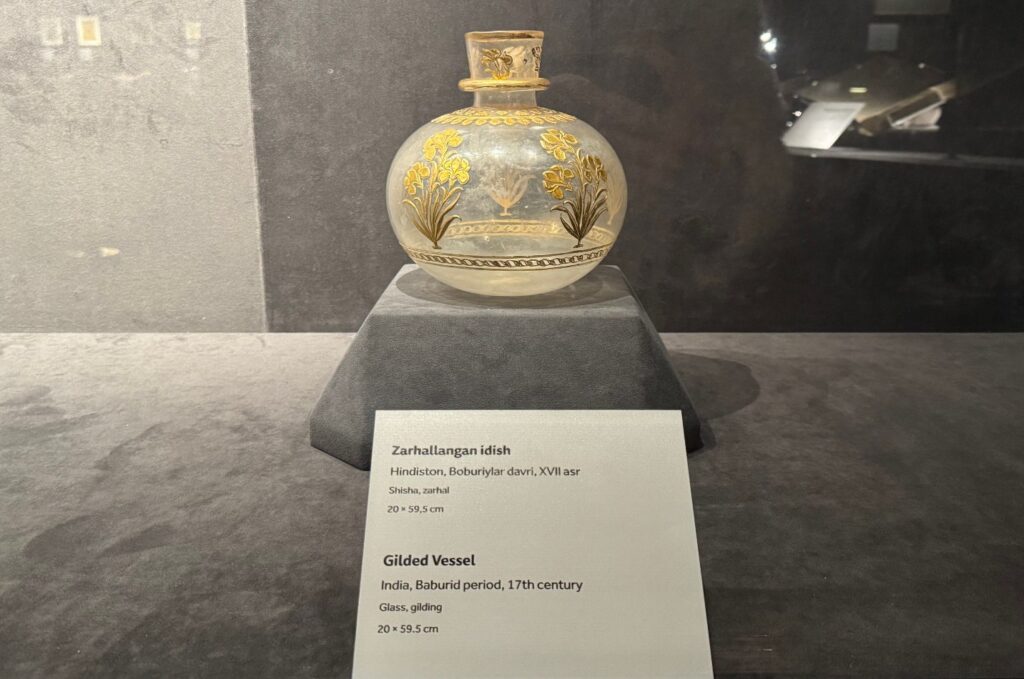
A rare gilded decorative vessel dating to the seventeenth century has been added to the permanent exhibition of the Islamic Civilization Center in Uzbekistan, the Center announced. Acquired from the British auction house Christie’s at the initiative of the president, the artifact is being presented to the public for the first time in Tashkent.

According to the Islamic Civilization Center, the vessel is notable for its refined form, gold-leaf ornamentation, and exceptional craftsmanship, offering insight into the aesthetic sensibilities of its time. Experts describe it as a rare luxury object intended for elite or courtly use, rather than for everyday function.

Rustam Jabborov, Scientific Secretary of the Center, said the vessel is approximately 400 years old and features a carefully balanced design. “The object has a spherical body with cylindrical workmanship. The lower section is adorned with a braided floral ornamental band, while five blooming yellow lotus flowers are arranged above it in a circular pattern to create compositional unity,” Jabborov explained.

He noted that the surface of the vessel was polished and gilded, with gold-leaf decorations that have retained their artistic appeal over centuries. “The gilding enhances both the sense of splendor and the impression of antiquity. The yellow lotus flower, used as the central decorative motif, adds both symbolic and aesthetic meaning to the overall composition,” he said. According to Jabborov, the manufacturing technique, ornamental style, and state of preservation all attest to the object’s historical significance.

The Islamic Civilization Center stated that the inclusion of the vessel in its exhibition reinforces its status as a rare cultural artifact recognized at the international level.

In February last year, the Center announced plans to host an international exhibition in Tashkent featuring Uzbek cultural masterpieces housed in Italian museums and private collections. The event is scheduled to coincide with the opening of the Center for Islamic Civilization.

As part of those preparations, a delegation led by the Center’s director, Firdavs Abdukhalikov, visited Italy, where they held talks with museum representatives and private collectors who expressed support for the project. Elmira Gul, scientific coordinator of the Cultural Heritage of Uzbekistan in the Collections of the World project, noted that collections of Uzbek artifacts in Italian museums have already been documented in published volumes, reflecting the global reach of Uzbekistan’s cultural legacy.

Kyrgyzstan Draws International Attention to Climate Risks for Lake Issyk-Kul

Speaking at the World Governments Summit in Dubai on February 4, Bakyt Torobaev, Kyrgyzstan’s Deputy Chairman of the Cabinet of Ministers and Minister of Water Resources, Agriculture, and Processing Industry, highlighted the growing threat climate change poses to Lake Issyk-Kul, the country’s largest lake, a unique ecological reserve, and one of Central Asia’s leading tourist destinations.

Torobaev described Issyk-Kul as a unique ecosystem of regional significance and a vital socioeconomic and environmental resource for Kyrgyzstan. However, in recent decades, the lake has experienced serious climate-related pressures, according to the Ministry of Water Resources.

Since the mid-19th century, the lake’s water level has dropped by nearly 14 meters, while its total volume has decreased by approximately 85 billion cubic meters. The number of rivers flowing into the lake has also significantly declined, largely due to melting glaciers and increased agricultural water use. Torobaev warned that further declines in Issyk-Kul’s water level could lead to severe environmental and socioeconomic consequences, including threats to biodiversity, the lake’s tourism potential, and the well-being of the local population.

Kyrgyzstan, he said, sees the preservation of Issyk-Kul as part of the broader global climate and water agenda, calling for a shift from short-term measures to long-term, science-based, and investment-driven solutions.

He urged the international community to strengthen partnerships in sustainable water resource management, integrate climate, water, and ecosystem approaches, and support joint initiatives aimed at preserving ecologically significant natural sites.

In December 2025, Kyrgyzstan’s Cabinet of Ministers approved the Concept for the Sustainable Development of the Ecological and Economic System of Lake Issyk-Kul until 2030, along with a corresponding Action Plan. The initiative aims to safeguard the lake and its surrounding biosphere from mounting environmental and human pressures while enhancing long-term economic resilience in the region.

Torobaev also addressed the broader issue of water scarcity, which is becoming an increasingly critical factor for regional stability, food security, and sustainable development in the context of climate change. As a mountainous country that serves as a key source of Central Asia’s rivers, Kyrgyzstan bears particular responsibility for the sustainability of the region’s water ecosystems, he said, and consistently advances the water agenda at international forums.

Also on February 4, Torobaev participated in a Global Councils on SDGs meeting at the summit, where he proposed greater global attention to the challenges facing mountain regions.

He said that mountain ecosystems are among the most vulnerable to climate change. Melting glaciers, shifting precipitation patterns, and more frequent extreme weather events pose long-term risks to water resources, agriculture, and energy security in Central Asia and beyond.

Kyrgyzstan, he said, advocates for recognizing mountain regions as special zones for sustainable development and ensuring their prioritized access to climate finance, adaptation technologies, and environmental monitoring systems.

According to Torobaev, the sustainability of mountain regions is directly linked to the water and food security of millions of people, underscoring the need for systemic and coordinated international responses.

Tajikistan Seeks to Expand the Geography of Labor Migration

Tajikistan has stepped up efforts to expand destinations for labor migration, including countries in Europe and East Asia. The announcement was made by Minister of Labor, Migration and Employment Soleha Kholmahmadzoda at a press conference summarizing the ministry’s work in 2025.

According to the Kholmahmadzoda, a memorandum of cooperation with relevant agencies of the Kingdom of Belgium was signed in November last year and is currently undergoing internal approval procedures.

The agreement provides for the possibility of organized employment for Tajik citizens in the Benelux countries, namely Belgium, the Netherlands, and Luxembourg. The most in-demand sectors include agriculture, construction, social services, and healthcare.

The Ministry of Labor said the initiative is intended to create transparent and legal employment channels, enhancing protection for migrant workers and reducing the risks associated with illegal employment.

Cooperation with Japan is also advancing. The ministry has established a special working group and developed a mechanism to attract Tajik citizens as “specially qualified” workers.

Relevant documents have been sent to the Tajik Embassy in Japan for publication on the website of the Japan International Training Cooperation Organization (JITCO).

In addition, the Agency for Employment Abroad has prepared a draft agreement with Japanese employers. As a result, the first 10 citizens of the republic have already secured jobs.

Special attention is also being given to cooperation with South Korea. In 2025, the Korean side allocated 800 quotas for labor migrants from Tajikistan. After completing professional training and passing the EPS-TOPIK exam, 21 people were employed through the Korean job portal, while documentation is still being processed for 12 additional candidates.

Despite the expansion of destinations, Russia remains the primary labor market for Tajik citizens.

According to the Ministry of Labor, in 2025, 30 licensed entities sent 35,747 citizens abroad through organized channels, an increase of 18,805 compared with the previous year. Of these, more than 31,000 were employed in Russia, Deputy Minister of Labor, Migration and Employment Norzoda Sharif Sanginmurod said.

These figures broadly correspond with estimates from the Russian side. Official data indicate that more than 1 million Tajik citizens are currently working in Russia, mainly in construction, housing and utilities, transport, and logistics.