• KGS/USD = 0.01144 0%
  • KZT/USD = 0.00212 0%
  • TJS/USD = 0.10432 -0.29%
  • UZS/USD = 0.00008 0%
  • TMT/USD = 0.28571 0.28%
  • KGS/USD = 0.01144 0%
  • KZT/USD = 0.00212 0%
  • TJS/USD = 0.10432 -0.29%
  • UZS/USD = 0.00008 0%
  • TMT/USD = 0.28571 0.28%
  • KGS/USD = 0.01144 0%
  • KZT/USD = 0.00212 0%
  • TJS/USD = 0.10432 -0.29%
  • UZS/USD = 0.00008 0%
  • TMT/USD = 0.28571 0.28%
  • KGS/USD = 0.01144 0%
  • KZT/USD = 0.00212 0%
  • TJS/USD = 0.10432 -0.29%
  • UZS/USD = 0.00008 0%
  • TMT/USD = 0.28571 0.28%
  • KGS/USD = 0.01144 0%
  • KZT/USD = 0.00212 0%
  • TJS/USD = 0.10432 -0.29%
  • UZS/USD = 0.00008 0%
  • TMT/USD = 0.28571 0.28%
  • KGS/USD = 0.01144 0%
  • KZT/USD = 0.00212 0%
  • TJS/USD = 0.10432 -0.29%
  • UZS/USD = 0.00008 0%
  • TMT/USD = 0.28571 0.28%
  • KGS/USD = 0.01144 0%
  • KZT/USD = 0.00212 0%
  • TJS/USD = 0.10432 -0.29%
  • UZS/USD = 0.00008 0%
  • TMT/USD = 0.28571 0.28%
  • KGS/USD = 0.01144 0%
  • KZT/USD = 0.00212 0%
  • TJS/USD = 0.10432 -0.29%
  • UZS/USD = 0.00008 0%
  • TMT/USD = 0.28571 0.28%

Fight Against Corruption Allows Kyrgyzstan to Increase State Budget

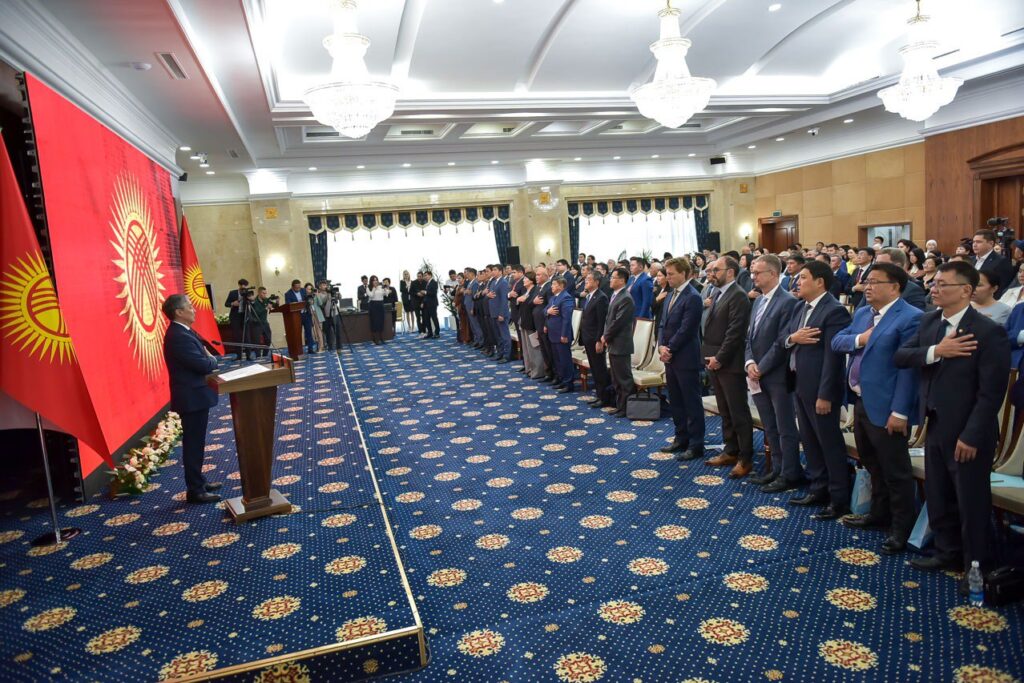
The head of the Kyrgyz Cabinet of Ministers, Akylbek Japarov, has said that thanks to the fruitful work of the government, “a new era in the financial sector of the Kyrgyz Republic has begun.”

During a conference, which was attended by ministers, deputies, officials of various levels, representatives of the World Bank, Asian Development Bank, and other international organizations, Japarov spoke about the new monetary policy.

According to him, in 2020, the consolidated budget amounted to 247.8 billion KGS ($2.8 billion), whereas in 2024, the budget is estimated at 670 billion KGS ($7.6 billion). In four years, the authorities were able to increase the state budget by almost 400 billion som ($4.5 billion).

“The reason for such achievements was the elimination of corruption. The main disease was the Kumtor deposit. Dividends received from it from 1994 to May 2021 amounted to $100 million. Over the past two and a half years, we have made a profit of $300 million,” Japarov said.

The head of the Cabinet emphasized that Kyrgyzstan’s GDP has reached 1.4 trillion som ($15.9 billion), while at the time of the collapse of the USSR and independence, the republic’s GDP was only 100 million som ($1.1 billion). “The growth of state budget revenues has become a solid basis for the implementation of policies to improve the socioeconomic situation of citizens,” Japarov summarized.


A Welcome Expansion of Kazakhstan’s Invataxi Fleet

On 28 May, Kazakhstan Transport Minister Marat Karabaev and Astana’s Mayor Zhenis Kasymbek attended a demonstration of advantages afforded to citizens with special physical needs and impaired mobility by vehicles adapted to serve their needs.

Back in 2008, the Saby Charitable Foundation provided 16 Kazakh cities with a fleet of 62 Invataxis. Equipped with wheelchair-friendly hydraulic lifts, the specially adapted minivans have long facilitated travel for adults and children, opened up opportunities for work and study,  and contributed towards their social integration.

Since then, the Ministry of Transport in collaboration with local executive bodies,  has continued to expand the fleet across Kazakhstan and this year alone, the number of Invataxis operating in the capital has risen by 26 to 145.

A total of 119 Invataxi services with the combined fleet of 760 vehicles currently operate in the country’s regions.


Signs of Racism in Central Asia

By Bruce Pannier

Incidents in May showed two Central Asian countries – Kyrgyzstan and Turkmenistan – are afflicted by racism that is tacitly or explicitly supported by their governments.

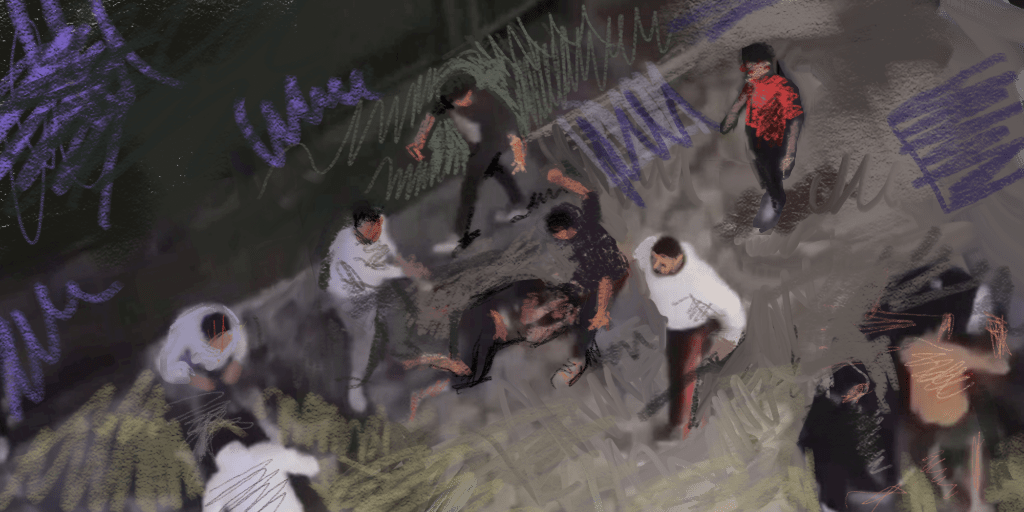
Overnight on May 17-18, hundreds of young Kyrgyz men gathered in eastern Bishkek near a dormitory used by foreign students. The Kyrgyz men were angered by a video posted on popular Kyrgyz social media sites on the morning of May 17 that showed a fight in Bishkek on May 13 between a small group of Kyrgyz and foreigners.

The foreigners in the fight on May 13 turned out to all be Egyptians, and they were all detained. However, some social media posts claimed at least some of the foreigners involved in the fight were Pakistanis.

Many people from Bangladesh, India, and Pakistan come to Kyrgyzstan to study at universities, particularly at medical colleges. More than 90% of foreign students at Kyrgyz universities are from India and Pakistan.

A smaller number, in the low thousands, are working there illegally.

In March, Kyrgyz authorities launched a campaign to find and deport illegal migrant laborers some 1,500 Pakistanis and 1,000 Bangladeshis have been caught.

There have been isolated incidents when Kyrgyz were involved in physical altercations with South Asians in recent years, but nothing on scale of what happened in May 17-18.

Besides bursting into the dormitory and assaulting foreign students, a group of some 60-70 Kyrgyz men broke into a sewing factory in Bishkek early morning May 18 and attacked foreign workers, who mostly from Bangladesh, India, and Pakistan.

At least 41 people were injured, most of them South Asians.

Pakistan in particular reacted, summoning the Kyrgyz Charge d’Affaires in Islamabad while a group of Pakistanis protested outside the Kyrgyz Embassy. Pakistani authorities also sent charter flights to Kyrgyzstan that brought back more than 1,000 Pakistani citizens.

Kyrgyz authorities criticized the police for failing to calm the situation before it went out of control and later 10 policemen were sacked. Deputy Cabinet Chairman Edil Baisalov went to the dormitory to meet with some of the foreign students and apologize for the harm done to them “by a bunch of hooligans.”

The top two people in the government – President Sadyr Japarov and head of security service Kamchybek Tashiyev – were more equivocal in their comments on the violence.

Since coming to power in late 2020, Japarov and his longtime friend Tashiyev have promoted nationalist policies. Their emphasis on respecting Kyrgyz traditions and customs has gained them significant popularity in Kyrgyzstan.

They need such support in a country that has had three revolutions since 2005, including the October 2020 revolution that resulted in them occupying their current positions.

Young Kyrgyz men, like the hundreds who gathered on the evening of May 17, are an important pillar of support for Japarov and Tashiyev.

President Japarov vaguely blamed “forces interested in aggravating the situation,” and added, “The demands of our patriotic youth to stop the illegal migration of foreign citizens and take tough measures against those who allow such activities are certainly correct.”

Tashiyev remarked the “main demands” of the hundreds of Kyrgyz men who were on the streets on May 17-18 “concerned an increase in the number of foreigners working in our country, an increase in the number of students and workers from Bangladesh, Pakistan, India, Egypt and other countries.”

Tashiyev said, “I believe that the demands of the guys who gathered yesterday are, to some extent, correct.”

In Turkmenistan discrimination is clearly part of state policy.

Uch arka,” the practice of checking an individual’s background going back three generations has been enforced since 2000.

This genealogical requirement certifies that individuals’ previous three generations of relatives (parents, grandparents, and great-grandparents) who have not committed any serious crimes. The policy also helps separate ethnic Turkmen from other people living in Turkmenistan.

It is nearly impossible to find a position in a government organization for people who are not ethnic Turkmen.

School children are required to submit uch arka forms when they enroll.

In May 2024, at the graduation ceremony for students in the western city of Balkanabad, school authorities segregated non-Turkmen students out of the group that accepted diplomas in front of the city’s central library.

When the president visits towns and cities, the schoolchildren paraded out to meet him are usually chosen because they meet the uch arka requirements.

It is not only schools.

Balkanabad is the provincial capital of the Balkan Province. Earlier in May, all employees of the Balkan provincial medical facilities had their uch arka credentials checked.

This appears to have also targeted ethnic Turkmen whose recent ancestors may have committed some crime. That would be sufficient grounds for dismissal, but it also ensures ethnic Turkmen occupy the top spots in the medical field.

Kyrgyzstan had long been considered the most democratic of the five Central Asian countries, though that is changing under President Japarov, and Turkmenistan the most repressive. Their brands of ethno-nationalism are a dangerous sign for countries with increasingly authoritarian governments and decreasing possibilities for employment or improvement in the socioeconomic situation of their people.


Bruce Pannier is a Central Asia Fellow in the Eurasia Program at the Foreign Policy Research Institute, the advisory board at the Caspian Policy Center, and a longtime journalist and correspondent covering Central Asia. He currently appears regularly on the Majlis podcast for RFE/RL.

International Flights from Kazakhstan on the Rise

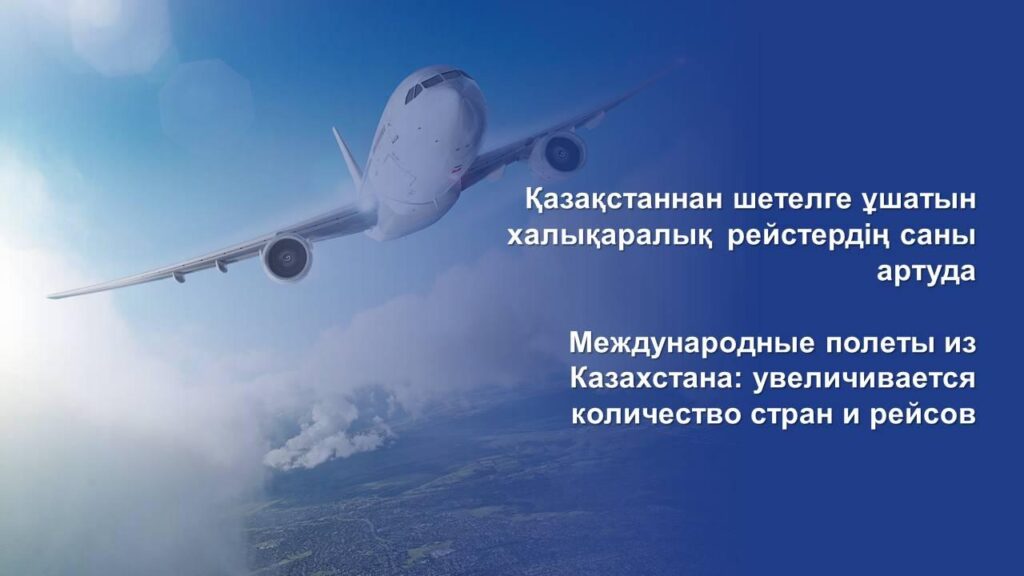
As reported by Kazakhstan’s Ministry of Transport, the country currently operates 567 international flights per week to 28 countries.

The greatest number of flights are destined for Russia with 139 taking off each week to Moscow, St. Petersburg, Yekaterinburg, Mineralnye Vody, Kazan, Sochi, Krasnoyarsk, Novosibirsk, Makhachkala, and Grozny.

Turkey is also a popular destination, with 125 flights per week to Istanbul, Ankara, and Antalya.

The United Arab Emirates receives 58 flights per week in Dubai, Abu Dhabi, and Sharjah.

China has 43 flights per week to Beijing, Urumqi, Xi’an, Hangzhou, and Sanya.

Kazakhstan plans to significantly increase the number of flights to Vietnam, Thailand, Egypt, and Georgia this year.


Kazakhstan Motoring Towards to Fuel Self-Sufficiency

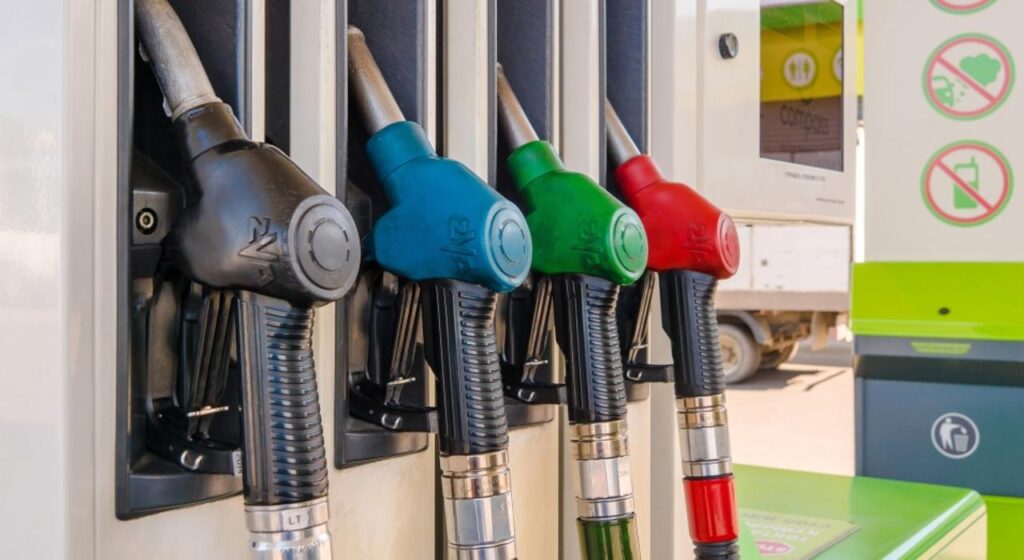
Speaking at a government meeting on May 28, Kazakhstan Energy Minister Almasadam Satkaliev announced a significant rise in the country’s supplies of fuel, raising the potential for its future export.

During the first quarter of the year, oil refined in Kazakhstan amounted to 5.9 million tons; an increase of 5.4% compared to spring 2023. Production of fuel amounted to 4.28 million tons.

To date, reserves of diesel fuel at refineries and oil depots have increased to 612 thousand tons, 38 days’ worth; AI-92 gasoline, to 352 thousand tons, 30 days’ worth, and AI-95 gasoline, to 86 thousand tons, 30 days’ worth.

The depth of oil refining and consequently, the production of light oil products (gasoline) has increased from 85% to 87%.

Kazakhstan plans to increase the production of motor fuel by expanding production at the Shymkent oil refinery from 6 to 12 million tons by 2030, at the Atyrau Oil Refinery from 5.5 to 6.7 million tons by 2027, and at the Pavlodar Petrochemical Plant from 5.5 to 8 million tons by 2030.

According to the minister, the implementation of the above will not only satisfy the domestic market’s growing demands for fuel but also, allow its export to neighbouring countries.


Kazakhstan’s Reservoirs Brimming with 12 billion Cubic Meters of Water

As a result of unprecedented high levels of rainfall this spring, over 12 billion cubic meters of water has collected in Kazakhstan’s reservoirs, 2.5-fold more than last year.

In an announcement on 28 May, Minister of Water Resources, and Irrigation Nurzhan Nurzhigitov said that water accumulated through channelling flood water to estuaries, lakes and reservoirs which have experienced water shortages in previous years, will greatly benefit irrigation, and in turn, the economy.

Looking ahead, Nurzhigitov stated that the ministry is to develop a long-term strategy for flood water management and reducing the consequences of droughts. Plans include the development of an electronic map of the movement of flood waters to indicate populated areas most at risk, and a unified system for accounting, monitoring, and forecasting water resources.

The announcement follows a previous report that since the beginning of the year, the water level in Kazakhstan’s largest lake, Balkhash, fed by the transboundary Ili River that originates in China, has risen by 23 cm.