• KGS/USD = 0.01144 0%
  • KZT/USD = 0.00196 -0%
  • TJS/USD = 0.10899 -0%
  • UZS/USD = 0.00008 -0%
  • TMT/USD = 0.28490 0%
  • KGS/USD = 0.01144 0%
  • KZT/USD = 0.00196 -0%
  • TJS/USD = 0.10899 -0%
  • UZS/USD = 0.00008 -0%
  • TMT/USD = 0.28490 0%
  • KGS/USD = 0.01144 0%
  • KZT/USD = 0.00196 -0%
  • TJS/USD = 0.10899 -0%
  • UZS/USD = 0.00008 -0%
  • TMT/USD = 0.28490 0%
  • KGS/USD = 0.01144 0%
  • KZT/USD = 0.00196 -0%
  • TJS/USD = 0.10899 -0%
  • UZS/USD = 0.00008 -0%
  • TMT/USD = 0.28490 0%
  • KGS/USD = 0.01144 0%
  • KZT/USD = 0.00196 -0%
  • TJS/USD = 0.10899 -0%
  • UZS/USD = 0.00008 -0%
  • TMT/USD = 0.28490 0%
  • KGS/USD = 0.01144 0%
  • KZT/USD = 0.00196 -0%
  • TJS/USD = 0.10899 -0%
  • UZS/USD = 0.00008 -0%
  • TMT/USD = 0.28490 0%
  • KGS/USD = 0.01144 0%
  • KZT/USD = 0.00196 -0%
  • TJS/USD = 0.10899 -0%
  • UZS/USD = 0.00008 -0%
  • TMT/USD = 0.28490 0%
  • KGS/USD = 0.01144 0%
  • KZT/USD = 0.00196 -0%
  • TJS/USD = 0.10899 -0%
  • UZS/USD = 0.00008 -0%
  • TMT/USD = 0.28490 0%
08 December 2025

Relatives of Exiled Tajik Activists Arrested

As per RFE/RL’s Tajik Service, Tajik authorities have apprehended relatives of several self-exiled activists following an incident where President Emomali Rahmon’s vehicle was targeted with eggs during his visit to Berlin last week.

The activists said that family members of Sharofiddin Gadoev, Dilshod Sharifov, Ismoil Mahmadov, Jamshed Sharifov, Behruz Taghoizoda, and Muhammadjon Abdulloev—all affiliated with the opposition Group 24—were taken into custody over the weekend on unspecified charges.

The incident involving Rahmon’s car occurred while he and leaders from four other Central Asian nations were in Berlin on August 29 for discussions with German Chancellor Olaf Scholz.

OSCE Campaign on Youth Crime Prevention and Integrity Reaches 1.5 Million People

The OSCE awareness campaign on youth crime prevention and integrity, launched in June 2023, achieved the milestone of reaching one and a half million young people across Kyrgyzstan, the OSCE has stated in a press release.

Featuring some of Kyrgyzstan’s leading influencers, bloggers, artists, youth activists and athletes, the campaign showcases the stories of these local celebrities and how they pursued their passions, built successful businesses and gave back to their communities, all while adhering to the values of lawfulness and integrity.

The campaign features Aigerim Akylbekova, a Kyrgyz journalist and activist, who reflects on her upbringing and the challenges of her childhood marked by high levels of unemployment. Aigerim shares how in the pursuit of a better life, some people opted for shortcuts, relying on bribery and corrupt activities.

“Since childhood I believed that I could achieve everything on my own without resorting to nepotism or bribes,” Aigerim says. “Often, people choose unjust ways to excel in life. Many do this out of desperation – coming from a life of difficulty. Still, this sets us all back. Change can only begin with zero tolerance for dishonesty and corruption,” she adds.

Meerim Tolepbergen, a Kyrgyz blogger with over one million Instagram followers, is also actively involved in the campaign. She discusses the key factors contributing to youth crime, drawing from her own experience as child of migrants. Children separated from their parents often grapple with self-doubt and may seek support from potentially harmful peer groups, she says, leading to possible involvement in organized crime. Meerim underscores the significance of addressing this issue and choosing a different path.

The stories of Meerim and Aigerim, alongside the others in the campaign, aim to inspire and guide young people in Kyrgyzstan by offering real-life positive examples of those who have achieved their goals through legal, ethical, and productive methods.

IFC Appoints New Country Manager for Uzbekistan and Turkmenistan

According to the website of the International Finance Corporation (IFC), the organization, a member of the World Bank Group, on October 9 said it has appointed Neil McKain as Country Manager for Uzbekistan and TurkmenistanMcKain will spearhead IFC’s strategy and operations to spur private sector development and drive sustainable, inclusive economic growth in these countries.

McKain will be based in Tashkent, Uzbekistan and will lead efforts to grow IFC’s investment and advisory programs, overseeing their operation across sectors, and managing key relationships with clients, partners, and governments.

A British national, McKain brings over 20 years of private sector development experience to his new role. He most recently served as Adviser to the Vice President, Banking, at the European Bank for Reconstruction and Development (EBRD). Prior to that, McKain was regional head for the EBRD in the Kyrgyz Republic, Tajikistan and Turkmenistan, spending 14 years in senior positions in the Caspian Basin and Central Asia.

“I welcome Neil to this important role. I know his technical and leadership skills and knowledge of the region will help expand IFC’s impact, generate new partnerships to meet the countries’ needs, and build a strong foundation for a dynamic and inclusive private sector,” said Wiebke Schloemer, IFC Director for Türkiye and Central Asia.

“Increased private sector investment is critical to help Uzbekistan and Turkmenistan grow and diversify their economies and better harness their immense potentials,” said McKain. “I’m excited to take up my new role and work with our partners in these countries to amplify IFC’s support through private sector-led solutions.”

Before joining the EBRD in 1998, McKain started his professional career with A.T. Kearney in Russia working on post-privatization restructuring. He holds an MBA from the University of Cambridge and an MA in Political Science from the University of Aberdeen.
 
His new role took effect on October 2.

Armenian PM to Stay Away from CIS Summit in Bishkek

As reported by RFE/RL, Armenian Prime Minister Nikol Pashinyan has opted out of the upcoming summit of the Council of the Leaders of the Commonwealth of Independent States (CIS), slated to be held in Bishkek, the capital of Kyrgyzstan, on October 13.

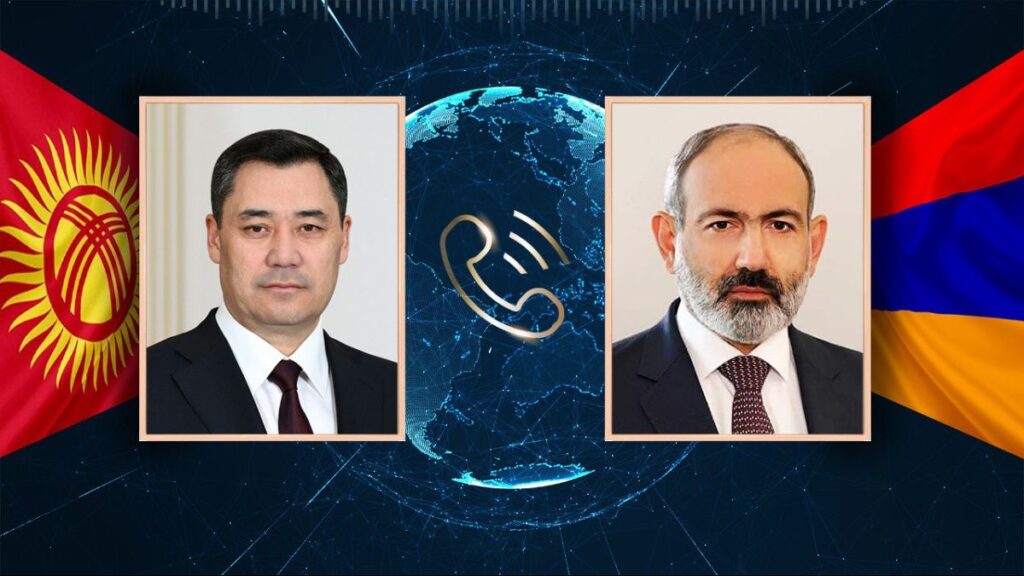
According to the Kyrgyz presidential office on October 10, Pashinyan conveyed to Kyrgyz President Sadyr Japarov his inability to attend the gathering during a phone conversation.

This absence underscores a widening gap between Yerevan and Moscow, particularly as Russian President Vladimir Putin is set to participate in the summit.

Earlier, Armenia had announced the non-participation of its troops in the ongoing military exercises led by the Russia-led Collective Security Treaty Organization (CSTO) in Kyrgyzstan.

Authorities Close Religious Institutions in Batken Region

On October 10th, Kyrgyzstan’s State Committee of National Security – comprising representatives from the State Committee of National Security, the Emergency Ministry, the Interior Ministry, Health Ministry, the Grand Mufti’s office, other state entities and the regional government stated that it had closed 32 mosques and five religious schools in the southern region of Batken. This came following an assessment examining the potential presence of radical Islamic ideology and extremist viewpoints within the religious institutions.

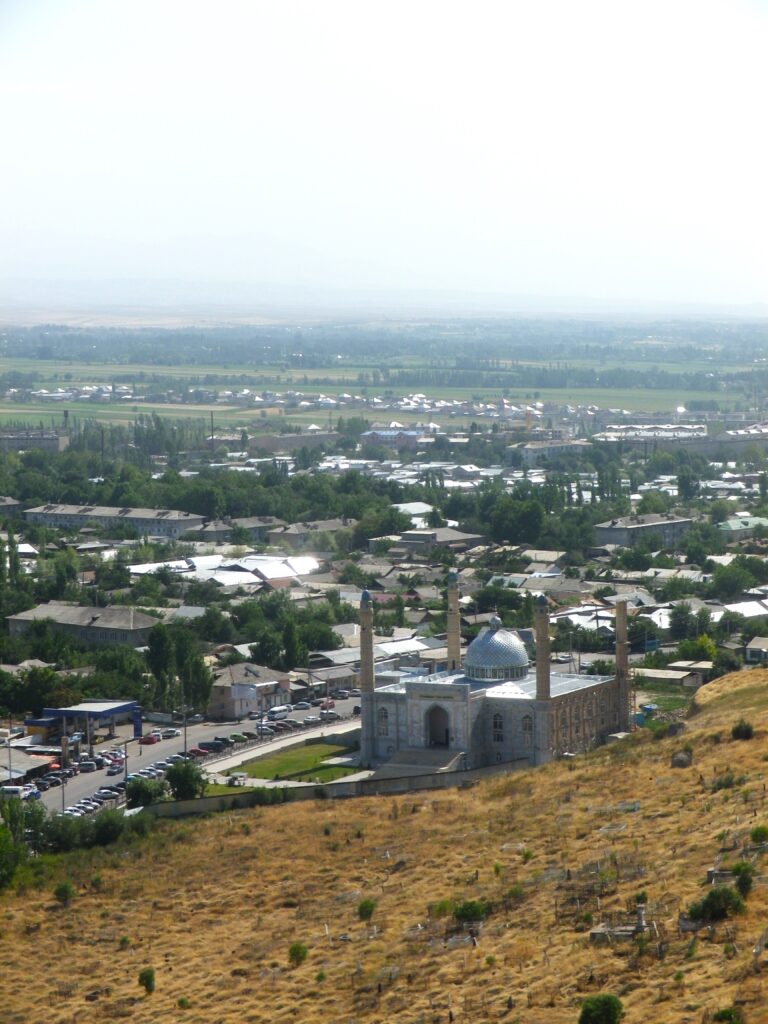
Situated on the southern slope of Solomon’s Throne in Osh, Kyrgyzstan’s largest mosque has the capacity to hold 20,000. Built in the 2010s with funds from Saudi Wahhabis, it was inaugurated by former President Atambayev, who, like other regional leaders before him, had been wooed by promises of Saudi money.

Sunni supremacists wishing to revert to the seventh-century ways of Mohammed, Wahhabi missionaries first arrived in Central Asia in 1912, setting up cells in Tashkent and the Fergana Valley. Declaring holy war not only on the West, but also on other Muslims, the Wahhabis labelled all who disagreed with them heretics. Having suffered lean times under the Communists, now they were back and loaded with oil money. Of the Osama Bin Laden school of thought, their goal is to destroy secularism and create a region-wide caliphate based on Sharia law, this despite the fact there has never been an Islamic state in Central Asia.

Amongst the Wahhabi’s affiliates are the Islamic Movement of Uzbekistan, formed in the early nineties by Tohirijon Yuldashev, a twenty-four-year-old college drop-out, and Juma Namangani, an ex-Soviet paratrooper turned train robber. Raising funds by kidnapping Japanese geologists and American mountaineers, in 2000 the IMU briefly took Osh, holding its mayor for ransom and coming within striking distance of its goal of seizing Tashkent.

With the IMU largely absorbed into the Afghan Taliban, ignored warnings of the impending 9/11 attacks on America are said to have emanated from Yuldashev, who like Namangani, has since been killed. Looking to engage those alienated by state-appointed imams, who as a recent recruit noted, offer only ‘prayers for a bigger cotton harvest and instructions for how to go to the bathroom properly,’ the IMU are currently calling for a jihad in Southern Kyrgyzstan. With the IMU mainly moved into Afghanistan and Pakistan, in June of 2014, after swearing allegiance to ISIS, the organization claimed responsibility for the attack on Jinnah International Airport in Karachi, Pakistan, which left 36 dead. There are currently upwards of two thousand ISIS recruits from Central Asia, with the movement’s hierarchy focused on recruiting more disaffected Uzbeks.

Turkmenistan and China Reaffirm Strategic Partnership

Turkmenistan and China Reaffirm Strategic Partnership

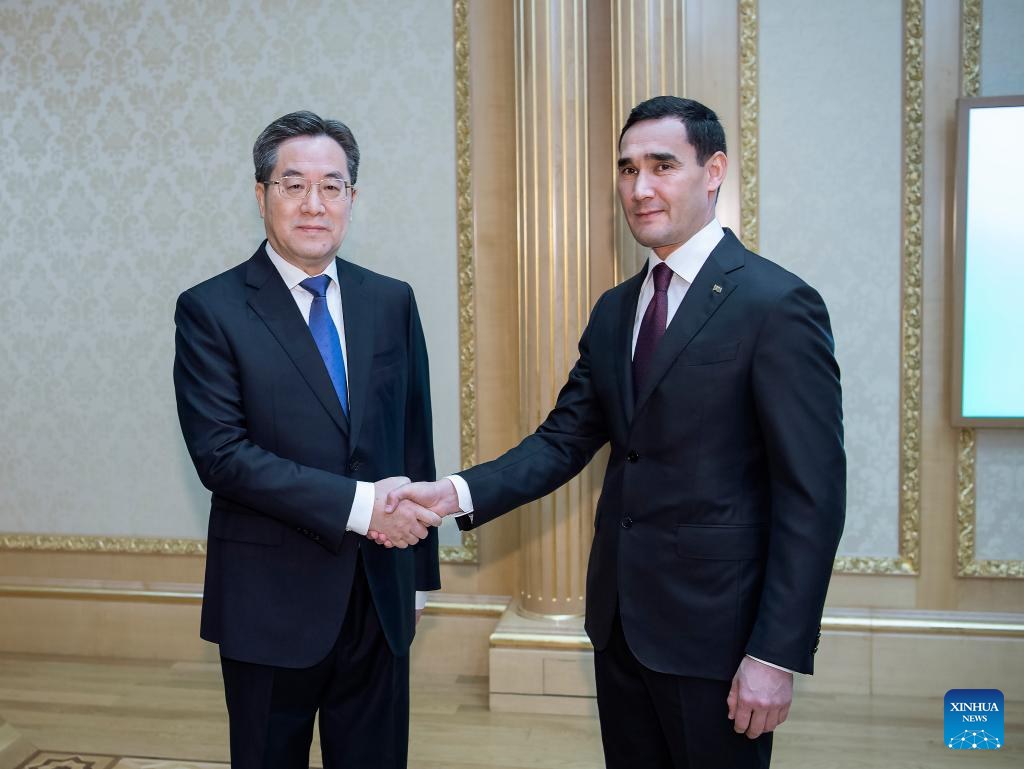
China firmly supports Turkmenistan in safeguarding its sovereignty, independence and territorial integrity and pursuing a development path suited to its national conditions, Chinese Vice Premier Ding Xuexiang said on November 29th in Ashgabat, Xinhua reported.
Ding’s remarks were made following a meeting with Turkmen President, Serdar Berdimuhamedov.

Ding, a member of the Standing Committee of the Political Bureau of the Communist Party of China Central Committee, said that cooperation between China and Turkmenistan has huge potential and future prospects. China is ready to work with Turkmenistan and other Central Asian countries to steadily advance the building of the China-Central Asia cooperation mechanism, he added.

Berdimuhamedov asked Ding to convey his cordial greetings to Chinese President Xi Jinping, and said that cooperation between the two countries is strategic, long-term and special. Turkmenistan stands ready to work with China to enhance strategic communication, deepen cooperation in all fields and promote its comprehensive strategic partnership with China to a new height, he stated.

During his visit, Ding also held talks with Turkmenistan’s Deputy Prime Minister and Foreign Minister, Rashid Meredov, and co-chaired with Meredov the sixth Meeting of the China-Turkmenistan Cooperation Committee. The two sides held an in-depth exchange of views during the meeting, and mapped out priorities for cooperation between the two countries in the next phase. The two sides agreed to further synergize their development strategies, increase the scale of economic, trade and investment cooperation, continue to deepen ties over natural gas, accelerate consultations on the alignment of priority economic projects, and to collaborate further on non-resource projects. The two sides also agreed to ensure the success of activities related to the Year of Culture, and promote the early implementation of projects such as the establishment of cultural centers, the establishment of Luban Workshops and Chinese traditional medicine centers in Turkmenistan.