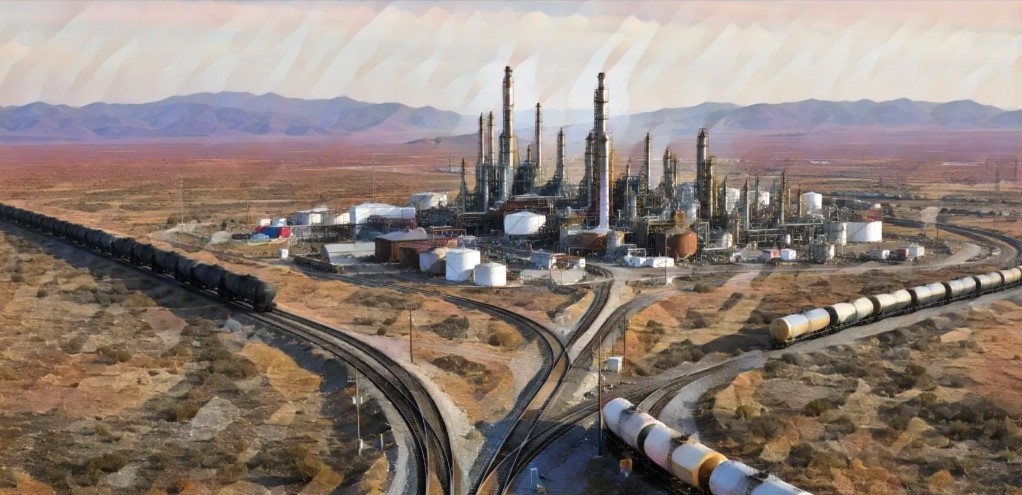
Disruptions at Russian oil refineries are beginning to reshape Central Asia’s established fuel supply routes. Kyrgyzstan is arranging supplies from China; Tajikistan has requested large volumes of crude oil and fuel from Iran, while Kazakhstan plans to more than double its refining capacity and eventually sell more petroleum products to its neighbors.
Kyrgyzstan: The China Route Becomes a Real Option
Kyrgyzstan and Tajikistan have felt the impact of Russia’s disruptions more acutely than other Central Asian countries. Both have limited domestic oil production and depend heavily on imported fuel. Galiya Ibragimova, a Central Asia expert with Carnegie Politika, told Al Jazeera that the two countries had been hit hardest in the region and said the search for new suppliers would continue, although alternative fuel would most likely be more expensive.
For Kyrgyzstan, the Russian supply model had long been the most convenient. As a member of the Eurasian Economic Union (EAEU), Kyrgyzstan can import agreed quantities of Russian fuel duty-free each year. For 2026, Moscow has agreed to supply around 1.5 million tonnes – roughly equivalent to Kyrgyzstan’s total annual demand for petroleum products. More than 90% of Kyrgyzstan’s imported fuel comes from Russia.
This summer, that system began to falter. On August 12, Kanatbek Eshatov, head of Kyrgyzstan’s Oil Traders Association, said Russian refineries were offering virtually no additional volumes. Fuel was already arriving from Belarus, Azerbaijan, Turkey, one European country, and other markets. Eshatov did not expect the situation with Russian supplies to improve before October.
Bishkek has also negotiated directly with China’s largest oil companies. Following talks with Sinopec, a Kyrgyz delegation met CNPC management on August 19. Kyrgyz companies signed contracts with CNPC for petroleum product supplies through Kunlun Logistics, according to Kyrgyz state news agency Kabar. Volumes and prices have not been disclosed.
China is unlikely to displace Russia quickly on price. There is no direct rail connection between China and Kyrgyzstan, while road transport across the mountainous border is more expensive. But direct contacts with Sinopec and CNPC are giving Kyrgyz traders a supply channel that until recently was barely used.
Another option is to refine more oil domestically. The country’s largest refinery, Junda in Kara-Balta, is moving to the next stage of a modernization project valued at $193.75 million. The plant is expected to increase petroleum product output and move to Euro 5 fuel standards. Kyrgyzstan does not produce enough crude to keep the refinery running at capacity, however, so it would still need to import much of the oil it refines.
Bishkek is therefore keeping Russian finished fuel [bit technical] in the mix while purchasing petroleum products from other markets. It is also looking to refine imported crude domestically.
Tajikistan: Iranian Crude Rather Than Just Another Gasoline Supplier
Dushanbe has chosen a larger-scale option. During talks with Iran, Tajikistan requested 2.55 million tonnes of crude oil and petroleum products: 2 million tonnes of crude, 300,000 tonnes of diesel, 150,000 tonnes of gasoline, and 100,000 tonnes of jet fuel. Tajikistan’s Transport Ministry announced the request and the proposed volumes on August 18.
For now, this is a request rather than a finalized supply contract: no price, delivery schedule, or timeframe has been announced. Iran and Tajikistan do not share a border, so shipments would require transit through other countries. The proposed trade also carries increased sanctions risk after U.S. President Donald Trump threatened economic consequences for countries providing support to Iran.
Crude accounts for almost four-fifths of the proposed volume. That suggests Dushanbe may be considering not simply replacing Russian gasoline with Iranian fuel, but also supplying its own refining capacity with imported crude. However, the 2 million tonnes requested exceeds the 1.2 million-tonne annual design capacity of Tajikistan’s largest refinery at Dangara. Deliveries would therefore have to be spread over time or require additional processing capacity.
Instead of relying almost entirely on imports of finished petroleum products, this could allow the country to produce at least part of the fuel it needs domestically.
The problem is the cost of such a shift. There are few readily available alternatives to Russian fuel in the short term, while genuine diversification would require infrastructure investment and would most likely make fuel more expensive.
Kazakhstan: Plenty of Oil, Limited Refining
Kazakhstan faces a different problem. Itself a major oil producer, Astana exports a large share of its production as crude. Russia’s importance is primarily as a transit country: most Kazakh oil exports travel through the Caspian Pipeline Consortium (CPC) system to a terminal near Novorossiysk on the Black Sea.
Disruptions to the CPC in 2026 have again shown how difficult it is to redirect such volumes quickly to alternative routes. Astana is now simultaneously looking for additional export options across the Caspian and seeking to retain more crude for domestic refining. The CPC carries more than 80% of Kazakhstan’s oil exports, highlighting the scale of that dependence.
Kazakhstan produced 99.6 million tonnes of oil in 2025 but refined only 18.4 million tonnes. On August 25, Energy Minister Yerlan Akkenzhenov said the government intends to raise refining capacity to 40 million tonnes a year. The plan includes expanding the country’s three major refineries and building a fourth plant with capacity of up to 10 million tonnes.
Previously, the target of roughly 40 million tonnes had been set for 2040; the government now wants to reach it by 2033. After the expansion, Kazakhstan expects to produce more gasoline, diesel, and jet fuel, including for export to neighboring countries.
Kyrgyzstan has already formally approached Kazakhstan this summer seeking additional gasoline supplies.
Russia’s shortages have produced an even more unusual arrangement. Moscow has proposed supplying crude to the Kondensat refinery in West Kazakhstan Region. The refinery would process Russian oil, retain part of the gasoline and diesel in Kazakhstan, and send the rest back to Russia. Under the current arrangement described by Akkenzhenov, up to 30% would remain in Kazakhstan and around 70% would go to Russia.
Russia Remains, but Backup Routes Are Emerging
It is difficult to predict how long Russia’s fuel problems will last, particularly as federal and regional officials have disputed the extent of the shortages.
On August 25, Reuters reported that Russian authorities planned to extend restrictions on diesel exports through September as domestic shortages persisted and refinery capacity remained offline following repeated Ukrainian attacks. Deputy Prime Minister Alexander Novak, however, said there was no diesel shortage and that no final decision on lifting the restrictions had yet been made.
Russia’s domestic market has found itself in an unusual position. In August, long lines returned even at Moscow gas stations, while the authorities combined export restrictions with imports of petroleum products, an unusual step for one of the world’s largest oil producers. Some Moscow filling stations reintroduced purchase limits while the government began importing fuel to offset the shortfall.
It would nevertheless be premature to describe what is happening as Central Asia moving away from Russia. Russian fuel remains convenient, and in many cases cheaper. Once refinery output recovers, established supply routes may again prove more economical than Chinese or Iranian alternatives.
What is changing is the region’s attitude toward dependence on a single source.
Jennifer Brick Murtazashvili, a nonresident scholar at the Carnegie Endowment and a professor at the University of Pittsburgh, described a similar strategy in her May 14 analysis, Continental Asia and the Rise of Portfolio Politics. She calls it “portfolio politics”: rather than replacing one partner with another, states deliberately spread external relationships across different sectors and partners, preserving room to maneuver.
In Central Asia’s oil trade, that logic is now taking a very tangible form. Russian refineries will most likely restore capacity sooner or later. But the contacts established with new suppliers and the alternative routes tested will remain. So will the investment in domestic refining.