BISHKEK (TCA) — The Times of Central Asia presents to its readers Stratfor’s Global Intelligence, a weekly review of the most important events that happened in the world — from Europe to Middle East to Russia to Central Asia to Afghanistan to China and the Americas.
The Week That Was
The End of an Era and the Beginning of Central Asian Destabilization
Another vestige of the Soviet Empire has fallen with the death of Uzbek President Islam Karimov. It was a weird week: Russian and Uzbek state media adamantly denied his death even as construction crews were quietly scurrying around in Karimov’s hometown in Samarkand to prepare the president’s burial site. With his death now confirmed, much bigger questions come into play.
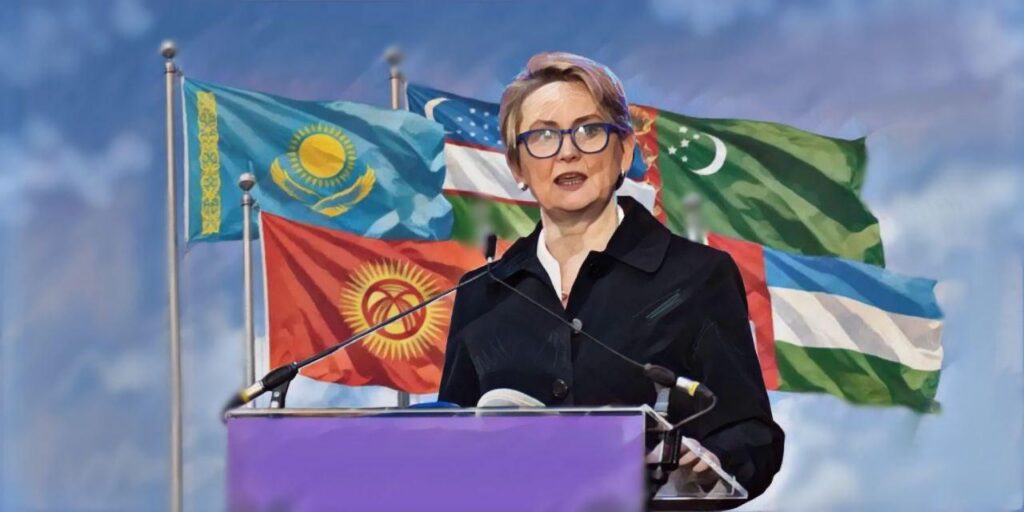
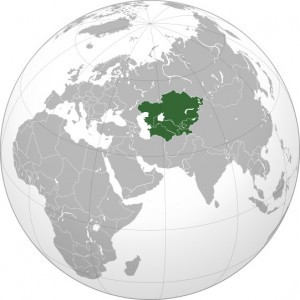
Stratfor has a long-term forecast on the growing destabilization of Central Asia driven by succession uncertainties, Islamist militancy and deep economic and demographic stresses. The higher the instability in this part of the world, the more likely Russia and China can begin to step on one another’s toes. Karimov’s death is the big kick-off to a forecast that will play out over several years. Uzbekistan is the demographic and agricultural heartland of Central Asia and has used its strength to drive an autonomous foreign policy. In tracking the succession, we need to test whether the post-Karimov system can effectively balance between the country’s two dominant clans, the Samarkand (Karimov’s) and the Tashkent. We believe that the succession will put Prime Minister Shavkat Mirziyoyev, who is leader of the Samarkand clan and suspected of being friendlier to Moscow, at the helm while Security Services chief Rustam Inoyatov, who is leader of the Tashkent clan, will play an important role behind the scenes. We will have to keep a close watch on the Fergana clan, which has been largely sidelined from power, but can still cause trouble, for any resistance to the new arrangement. Even though Uzbekistan has had plenty of time to sort out the succession in Karimov’s old age, this is a place with a long history of deeply destabilizing clan wars.
While questions swirled around the Uzbek succession, China got an additional shock when its embassy in Kyrgyzstan was bombed Aug. 30. This was a very rare and quite sophisticated attack; the suicide bomber, a suspected Uighur militant, exploded a car after ramming the gates of the Chinese embassy. China has already been fearful of militant blowback from the substantial number of Uighur militants who have honed their skills on the Syrian battlefield with Islamic State. We can expect China to bolster its security presence in Kyrgyzstan and the surrounding border areas in anticipation of a growing threat. Over time, we will need to see if this starts to raise any complications with Russia, who already has a deep military presence in the region and would rather China keep to its economic sphere of influence in Central Asia.
Venezuelan Default Risk Turns Critical
Though it is no secret that Venezuelan state oil firm Petroleos de Venezuela S.A. (PDVSA) is under severe financial stress and thus under growing threat of defaulting on its foreign debt payments, we have been careful to avoid crying wolf on the default. Given that PDVSA is the regime’s cash cow, a default would pose an existential threat to the ability of Venezuelan President Nicolas Maduro to remain in power. So, the government found every creative way to squeeze enough funds out to pay its debt at the expense of critical imports. It appears that this game may soon be up, however. PDVSA is trying desperately to negotiate a debt swap to avoid defaulting on its next payment in October.
However, we have been picking up signs that major U.S. and European banks may not even be willing to process those payments any longer. The U.S. Department of Justice, the Treasury Department and Drug Enforcement Agency have long been collecting evidence on Venezuelan narco-politicians and the alleged involvement of state-owned institutions in money laundering. The allegations and criminal charges have grown to the point that banks like UBS, Santander Private Banking, HSBC and Banco Safra are no longer willing to risk getting fined for processing what could be illicit funds coming from PDVSA. Debt swap negotiation will become irrelevant if U.S. financial pressure has become heavy enough to deter the banks from even dealing with Venezuela. As the threat of default and thus a political intervention against Maduro grows, we need to keep a close watch on key figures like Venezuelan Defense Minister Padrino Lopez, whose control over the armed forces will be critical to mitigating fallout from a messy transition.
A New Way of Measuring Economic Growth
Japan’s Liberal Democratic Party announced that within the next two months it will establish a committee to reassess how it compiles, calculates and formulates its national accounts, specifically its GDP. The announcement comes at a time when a number of countries have already or are in the process of recalculating their GDP to capture parts of the economy that current tabulation methods struggle to measure. Historically, GDP was a good measure for the value of goods produced, but as countries age and evolve and as economies become increasingly based on the services sector, the sharing economy and other new areas, new ways of measuring national wealth will need to be found. The concept of the “dollar value” of an economy’s overall “output” will likely continue to play a significant role in measuring the strength of an economy, but indicators will evolve as economies become more complex. Japan is a key country to watch in this trend line. As the world oldest nation in demographic terms, the country’s GDP and GDP growth is on continual decline. At the same time, Japan can still maintain and even improve a high standard of living and develop technology to adapt to a shrinking labor pool. Japan will be among the first to figure out a new way of measuring net national wealth.
China Spreads RMB Love
China’s goals of further internationalizing use of the yuan hit another major milestone this week when the International Monetary Fund issued its first bond in China denominated in Special Drawing Rights (SDR) currencies since the early 1980s. For China this plays into their global yuan strategy because the bonds issued on the Chinese market must be purchased in yuan by foreign investors and could lead to other organizations issuing bonds elsewhere in SDR. The move to push the SDR globally also is important ahead of Oct 1 when the yuan formally enters the basket of currencies upon which the SDR is based. Ultimately China’s endgame is to breakdown the dominance of Western countries in global finance, but not necessarily replace the U.S. dollar’s status with the yuan, but rather make it more equitable between the West and the rest of the world. This is a decadeslong process.
Duterte’s Charm Offensive
Every week, a new piece of Philippine President Rodrigo Duterte’s strategy falls in place. Following the July international ruling against Beijing on the South China Sea, Duterte struck a conciliatory tone with Beijing. Now he is taking the next step in asking China to allow Philippine fisherman to fish around the disputed Scarborough Shoal. Duterte said very politiely, “I hope the Chinese may find a place in their hearts for the Filipinos. I hope you treat us (as) your brothers and not enemies and take note of the plight of our citizens.”
China’s response so far has been, effectively, “we’ll talk about it.” The Philippines already knows China is facing limitations in fishing near the Scarborough Shoal since Washington, prior to the court ruling, had made clear that any provocative action, such as land reclamation, would risk a U.S. response. A limited agreement on joint fishing between Manila and Beijing is possible under these circumstances, but without delimiting the area, such an agreement would be very tenuous and prone to breaches, as evidenced by ongoing friction between China and Japan in the East China Sea.
Turkey’s Divide and Conquer Tactics in Syria
As Turkey proceeded with its military operation in northern Syria, splits have begun to emerge within the U.S.-backed the Syrian Democratic Forces. The leader of Liwa Tahrir and most of its fighters defected from the Syrian Democratic Forces to Turkey after strong disagreements with the Kurdish People’s Protection Units (YPG). The schism within the Syrian Democratic Forces, a manifestation of the pre existing ethnic and tribal tension within the force, is important for two reasons. It has the potential to severely undermine the Raqqa campaign, which depends heavily on non-Kurdish elements of the Syrian Democratic Forces to take the overwhelmingly Arab town, and it also creates an opening for Turkey to further pressure a weakened Syrian Democratic Forces. Indeed, it is very likely that Turkey itself facilitated and encouraged the dissent within the Syrian Democratic Forces as a way to contain the Kurdish Kurdish People’s Protection Units.
Mideast Energy Developments
In the Middle East, there were several noteworthy energy developments. In Iraq, the Kurdistan Regional Government and the central government in Baghdad reached a deal to begin jointly exporting oil from Kirkuk, which is under the control of Baghdad’s North Oil Co. The deal paves the way for the full restart of 150,000 barrels per day of production that was shutdown in March by Baghdad after an attack by Islamic State. Prior to that attack, Erbil had sold the oil produced unilaterally.
Though a small step, driven in large part by mutual economic and security interests in the fight against Islamic State, substantial mutual distrust between the two governments remains and this is likely to be a temporary agreement. Meanwhile, Egypt and Cyprus also signed a preliminary deal on building a pipeline from Cyprus’ offshore Aphrodite natural gas field to Egypt that would come online between 2020 and 2022. Cypriot natural gas development remains at least five years away, but the Egyptian route may be the best option for the operators of the Aphrodite field to find a market for the natural gas.
Full Articles
Shipping Giant Hanjin Has Hit a Rocky Shoal
Buffeted by overcapacity in the global shipping market, South Korean giant Hanjin Shipping Co. appears to be sailing toward oblivion. In the past week, creditors pulled the plug after 1 trillion won ($900 million) in support failed to keep the company afloat, forcing Hanjin to file for bankruptcy protection. Seoul Central District Court, which will decide the eventual fate of the company, has set a Nov. 25 deadline for it to develop another restructuring plan, but many experts think liquidation will be the most likely outcome. In the short term, the company’s demise has temporarily raised some shipping rates, which have remained persistently low industrywide thanks to the sluggish global economy. It likely will also cause some supply disruptions during the peak season for orders of holiday goods.
In Uzbekistan, Hints of a Successor Emerge
Few concrete details have been released since the Aug. 29 announcement that Uzbek President Islam Karimov had suffered a brain hemorrhage, but several hints have emerged as to who his successor might be. On Aug. 31, Uzbek Prime Minister Shavkat Mirziyoyev, one of the prime candidates to succeed the longtime leader of the Central Asian republic, laid flowers at an independence monument in Tashkent in a notable symbolic gesture. He is also rumored to be planning to address the country on Sept. 1, its independence day. While there is still no confirmation of how the succession process will play out, or even of the state of Karimov’s health, recent indications point to Mirziyoyev being in the best position to succeed Karimov.
Conflict and Cooperation in the South China Sea
Since its victory, the Philippines has played its hand carefully. Manila knows its position is weak — China’s military is vastly more powerful than its own. But the Philippines has gained an unprecedented (even if chiefly symbolic) win on the international stage. The ruling could cause significant headaches for China, and by conspicuously refraining from touting the ruling, Manila is incentivizing Beijing to offer compromise and accommodation. Philippine President Rodrigo Duterte, for example, has said he will not bring up the ruling at the September summit of the Association of Southeast Asian Nations (ASEAN). By doing so, Manila can preserve its core interests and gain some concessions from China while continuing to cooperate with Japan, the United States and other outside powers. Within the context of this new dynamic, talk of an accord between Manila and Beijing has centered on one topic in particular: fishing.
The Week Ahead
China’s hosting of the G-20 summit this week in Hangzhou is another big opportunity for Beijing to bask in the global spotlight and showcase its influence. China’s wants to focus on positive imagery and set aside any controversy for the big event and we will hear a lot of high-level rhetoric on climate change, corporate governance, global trade and so on. Our attention will mainly be on the bilateral meetings on the sidelines of both the G-20 and the ASEAN summit in Laos.
Chinese President Xi Jinping will meet with Russian President Vladimir Putin, where Central Asian security may come up along with Chinese interest in the privatization of Russian oil firm Rosneft. Xi may hold talks with Japanese Prime Minister Shinzo Abe and is confirmed to be meeting with South Korean President Park. With efforts already underway to develop a high-level trilateral dialogue among China, Japan and South Korea, Beijing wants to emphasize its cooperativeness in the region, even as significant frictions stir beneath the surface. President Park continues to explain her government’s decision to allow the deployment of the U.S. Terminal High-Altitude Area Denial (THAAD) system, amid longer-term concerns by China and Russia that this could represent the expansion of U.S. missile defense to the Asian mainland, thus altering the strategic nuclear balance. Park will not backtrack on THAAD , but is using the issue to emphasize to Russia and China that they could have pre-empted the move if they had only reined in the North Korean missile and nuclear programs. Park is seeking greater cooperation from Russia (and China) to constrain the North, but is also offering increased economic and political cooperation as Seoul looks to expand its options and relations in a volatile region amid uncertainty over future U.S. commitments.
U.S. President Barack Obama will be making his last trip to the Asia-Pacific region as president, although his presence and reassurances alone will only go so far in dispelling doubts in the region when comes to the United States’ commitment to security alliances and major economic initiatives like the Trans-Pacific Partership. Even as the Trans-Pacific Partership remains in political limbo in Washington, signatories like Japan have already expended substantial political capital to wear down its powerful agricultural lobby and will likely keep moving ahead toward ratification while they still have the political leverage to do so. We will be watching closely for any progress makes on negotiating a Bilateral Investment Treaty with China as well as what could be a tense and awkward visit between Obama and President Rodrigo Duterte as the firebrand president of the Philippines works to firm up U.S. security commitments to the region while resisting U.S. lectures on human rights.
During an ASEAN-China Dialogue in Laos, China and the ASEAN states are expected to establish an emergency diplomatic hotline and adopt a joint statement on a Code for Unplanned Encounters at Sea (CUES). This would be an initial step toward multilateral cooperation, but the effectiveness of CUES is already in question since Beijing is reportedly refusing to extend the code to coast guard and fishing fleets, which are responsible for the vast majority of incidents in the South China Sea. Beijing’s exploitation of CUES points to core weakness of ASEAN: its consensus-based principle is ineffective in addressing many of the members’ security concerns. This explains why Vietnam is trying to push for a majority voting structure to replace unanimous rulings. This would require a change in the ASEAN charter, however, and encounter a lot of resistance from China, which counts on the current, diluted structure to maintain divisions within the bloc.
Putin and Obama will have a brief sit-down on the sidelines of the G-20 summit and Syria is expected to be the main topic on the agenda. Technical talks between U.S. and Russian officials on coordinating battlefield logistics are already at an advanced stage and the United States is trying to get Russia to commit to a final agreement. We will be watching for any hints on the Ukraine and sanctions issues for any signs of a quid pro quo between Washington and Moscow. Putin will also be meeting with Erdogan after relations have been noticeably strained over the past few days. Once Turkey got clearance from Russia, it did not waste time in proceeding with its military operation in Syria and is moving full steam ahead in pushing back the Kurdish People’s Protection Unites (YPG). But Russia is still expecting some concessions from Turkey in return for its cooperation in Syria. As Turkey expands its military presence in northern Syria, Ankara will be on alert for any moves by Russia, Syria or Iran to interfere with its operation against the Kurdish YPG. Erdogan will meanwhile work to get assurances from Obama that the US will continue to restrain the YPG east of the Euphrates river. We do not expect any breakthroughs in Erdogan’s meeting with Merkel; the Europeans are not going to convince Turkey to soften its anti-terrorism laws in the midst of the Gulenist purge. Turkey will instead insist that the Europeans mind their own business and deliver on promises of financial assistance for the migrant crisis and movement on the EU visa liberalization deal.
An important meeting for oil markets will be that between Russian President Vladimir Putin and Saudi Arabian Crown Prince Muhammad bin Salman, who heads the Supreme Council for Saudi Aramco. This week continued rumors from unnamed OPEC sources that Riyadh may be willing to entertain a freeze at the informal OPEC meeting later this month. In an interview with Bloomberg, Putin said that a freeze in production would be positive. Saudi Aramco has recently increased production in order to meet domestic electricity demand in the summer, though they may avoid decreasing production if it looks like a freeze agreement is possible. Russia’s production, however, peaked in January at 10.9 million barrels per day and has essentially been frozen ever since. A sticking point may still be whether or not Saudi Arabia would be willing to freeze production without Iran, which has made it clear that it will continue increasing production. Putin, on the other hand, has noted that flexibility for Iran makes sense.
Ahead of the G-20 summit in China, Indian prime minister Narendra Modi stopped in Vietnam on to meet with that country’s four top leaders, including prime minister Nguyen Xuan Phuc and the secretary general of the communist party, Nguyen Phu Trong. Strengthening defense ties was a key part of the visit — the first by an Indian prime minister to Vietnam in 15 years. Additionally, Modi and Phuc likely discussed their shared concerns over China’s posture in the South China Sea (SCS); about 55 percent of India’s seaborne trade passes through that body of water, and India supported an international court’s ruling over the summer challenging China’s South China Sea claims.
Venezuela Protests
The Venezuelan opposition coalition Democratic Unity Roundtable (MUD) will hold demonstrations on Sept. 7 intended to pressure the government into holding a recall referendum to vote out President Nicolas Maduro this year. The protests are scheduled to take place across the country, and will involve demonstrators marching to the regional headquarters of the National Electoral Council, which is the government institution in charge of administering the referendum process. At this point, the two major issues to watch for will be violence at the demonstrations and the government’s reaction to the pressure from the protests. Violence against protesters, particularly violence that results in significant injuries or deaths, would risk inflaming demonstrations. Such a situation would also force government leaders to decide whether they should continue publicly backing the president or whether they feel that a referendum vote is an eventuality they should prepare for.
Hong Kong Vote
Hong Kong will elect a new legislature on September 4. The election, sixth since the handover in 1997 and the most contentious one, will see 289 candidates contesting for the city-state’s 70 legislative seats. The election came two years after Hong Kong was hit by mass protests, and the city continues to undergo a deep transformation marked by slowing economy, rising political polarization and a growing hostility to Beijing.
At this point, it is impossible to predict the outcome. But Beijing will watch closely of the strength of the Pro-Beijing camp to assess its ability to push forward some of the contentious proposals on electoral and political reforms. Both issues have high stakes in Hong Kong and were at center to the disputes with Beijing. Beijing’s greatest fear comes from the growth of Hong Kong nativist parties, composing of young people and known for their open campaign for independence and self-determination. If they gain seats, this could further complicate Beijing’s attempt to manage tensed relation with Hong Kong.