Washington, D.C. – The United States and Kazakhstan have finalized the largest locomotive agreement in history, a $4.2 billion deal that underscores American industrial strength and deepens ties between the two nations. The announcement came following a call between President Donald Trump and Kazakhstan’s President Kassym-Jomart Tokayev, which officials say directly helped bring the deal across the finish line.
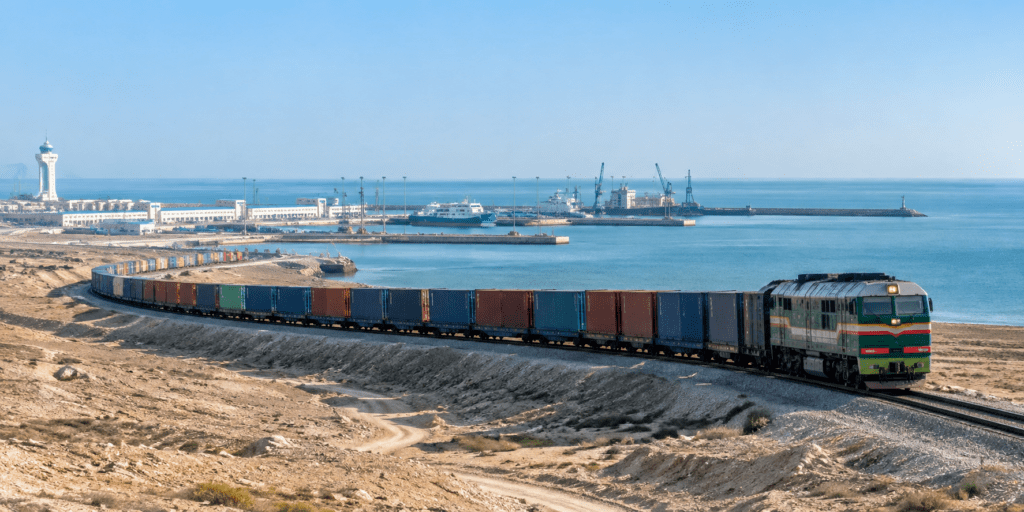
The U.S. Department of Commerce confirmed that Pennsylvania-based Wabtec will supply about 300 Evolution Series locomotives, in kit form, to Kazakhstan’s state railway over the next decade. Commerce Secretary Howard Lutnick emphasized the scale of the export package, writing on X that the deal is “more than just a huge success story. It’s about American innovation leading the world, supporting thousands of jobs in TX & PA, and strengthening the U.S.–Kazakhstan partnership.” For Trump, the Pennsylvania tie is notable — the state is both home to Wabtec and a perennial battleground in presidential politics.
What Trump and Tokayev said
President Trump celebrated the breakthrough personally on Truth Social:
“I just concluded a wonderful call with the Highly Respected President of Kazakhstan, Kassym-Jomart Kemeluly Tokayev. They have signed the largest Railroad Equipment Purchase in History, $4 Billion Dollars Worth of United States Locomotives and Rail Equipment”.
He continued:
“Congratulations to President Tokayev on his great purchase. This Country, and the World, was built on reliable, beautiful Railroads. Now they will be coming back, FAST!”
Earlier in September, Trump had told reporters he had a “great conversation” with Tokayev — a remark that signaled improving ties between Washington and Astana ahead of the deal. On Sept. 22, the Commerce Department formally confirmed the $4.2 billion agreement. Commerce Secretary Howard Lutnick, in a separate statement on X, emphasized that the leaders’ engagement helped pave the way and argued the deal strengthens an enhanced strategic partnership while embedding American technology in Eurasian connectivity.
President Tokayev, for his part, has emphasized transport and logistics as central to Kazakhstan’s role as a “link between Europe and Asia,” calling for expanded rail infrastructure and modern customs systems. In July, amid tariff tensions, he assured Trump in a letter that Kazakhstan was “ready for constructive dialogue” and was confident a compromise could be reached — a posture that laid groundwork for the closer economic cooperation reflected in this deal.
Why It Matters: Unlocking Regional Corridors to the West
The locomotives will reinforce capacity along the Trans-Caspian “Middle Corridor,” a trade route carrying goods from Central Asia through the South Caucasus and into Europe—an alternative to Russian and Iranian transit that governments have accelerated since 2022.
A critical gap in that chain was addressed through U.S.-brokered diplomacy in August 2025, when President Trump hosted Armenian Prime Minister Nikol Pashinyan and Azerbaijani President Ilham Aliyev at the White House. The two leaders signed a peace declaration after decades of conflict and committed to reopening transport links, most notably a 42-kilometer passage through Armenia’s Syunik province, commonly called the Zangezur corridor or the Trump Route for International Peace and Prosperity (TRIPP).
By agreement, Armenia retains sovereignty, while the corridor connects Azerbaijan with its Nakhchivan exclave and onward to Türkiye, at the same time drawing Armenia more directly into east–west trade. Analysts describe TRIPP as the missing link in the Middle Corridor, creating a continuous rail, road, and energy corridor from Central Asia to Europe. In practice, the Armenia–Azerbaijan settlement has enabled not just peace, but the completion of regional corridors critical for linking Eurasia with the West. By reducing political risk and clarifying transit rules under Armenian jurisdiction, the deal lowers costs, increases predictability, and strengthens the overall resilience of Eurasian connectivity.
The United States and Kazakhstan have built a strong foundation of enduring economic ties, anchored by long-term strategic partnerships that date back to the early 1990s. These ties have proven resilient to political and economic shifts, reflecting the depth of mutual commitment. Today, Kazakhstan represents the central footprint of U.S. engagement in Eurasia, serving as the region’s largest recipient of American foreign direct investment, with nearly $45 billion in cumulative stock.
The Bottom Line
Taken together, the Wabtec–Kazakhstan export, Trump–Tokayev engagement, and the Armenia–Azerbaijan peace and transit agreements embed American rail technology and standards into Eurasia’s core infrastructure, while giving Kazakhstan new capacity to advance its ambition of becoming the region’s leading transit hub.