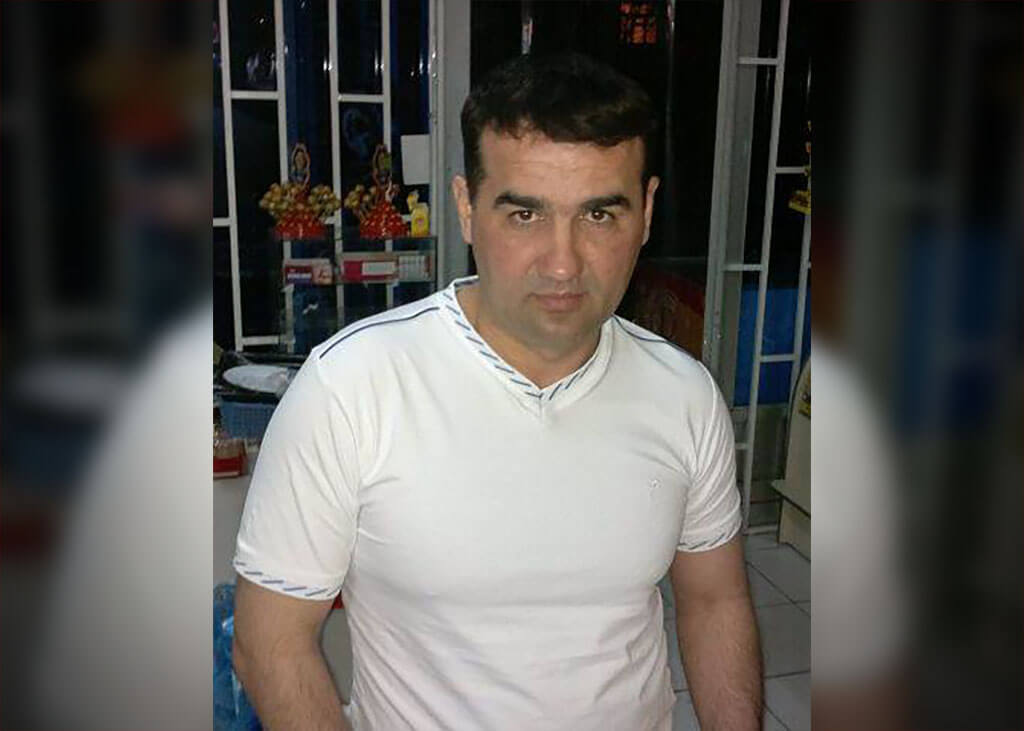
Turkmenistan’s Ministry of Internal Affairs has rejected a request to initiate early release procedures for imprisoned human rights activist Mansur Mingelov, despite his confirmed serious medical diagnosis and the legal provisions that would permit such action.
According to an official response dated October 20, the Department for the Enforcement of Sentences under the Ministry of Internal Affairs concluded there were “no grounds” for early release. The response followed appeals by Mingelov’s family to the Prosecutor General’s Office and the Ministry of Internal Affairs, citing his deteriorating health and referencing multiple legal articles supporting their request.
Mingelov, who has been imprisoned since 2012, was convicted after defending his own rights and those of the Baloch minority in Turkmenistan. His family cited Article 76 of the Criminal Code (“Release from punishment due to serious illness”) and Article 166 of the Criminal Enforcement Code (“Grounds for release from serving a sentence”), as well as Presidential Decree No. 202 of May 11, 2017, which outlines the medical criteria for such releases.
In mid-2024, a commission from the Ministry of Health officially diagnosed Mingelov with tuberculous arthritis in both knees, a condition that, according to doctors, cannot be treated inside Turkmenistan. He is currently being held at the MR-B/15 prison hospital.
Notably, Vepa Hajiyev, Turkmenistan’s permanent representative to the United Nations, publicly acknowledged Mingelov’s diagnosis and affirmed that national legislation provides for the release of prisoners with serious illnesses upon court approval.
Under existing law, a court can only consider such cases after receiving a joint submission from the prison monitoring commission and the sentencing authority – a process Mingelov’s family attempted to initiate but which authorities declined to advance.
Despite the official diagnosis and detailed legal framework, no follow-up medical examination or formal review of Mingelov’s health condition has been conducted, according to the independent outlet, turkmen.news.
Mingelov’s relatives argue that the Ministry’s refusal is not based on medical or legal grounds, but rather political calculation. They note that Mingelov has served more than half of his sentence, one they consider to be politically motivated and unlawful, and that his condition meets all criteria for early release.
In their view, the key decision lies with Turkmen President Serdar Berdimuhamedov. Human rights organizations and family members suggest that releasing Mingelov, along with other political prisoners, could help improve Turkmenistan’s international standing by showing a willingness to respect its own laws and humanitarian obligations.
For now, the contradiction remains stark: the illness is acknowledged, the law is in place, and the legal procedure is defined, yet no action has been taken.