As relations between China and Uzbekistan deepen, cooperation is no longer confined to the traditional pillars of energy and infrastructure. The partnership has begun to branch into new and diverse areas, adding layers of complexity and opportunity to their bilateral ties.
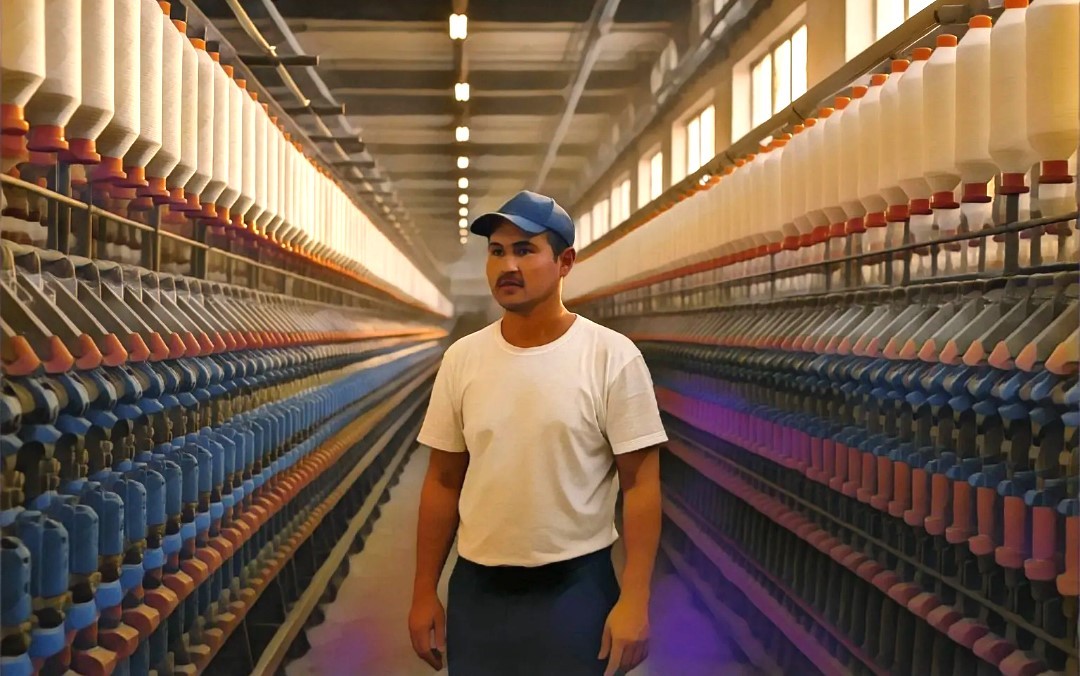
Emerging sectors such as pharmaceuticals and waste-to-energy are gaining traction, signaling a shift toward a more multidimensional relationship. At the same time, the textile industry has become an increasingly important bridge between the two countries, offering fresh avenues for collaboration.
Recent agreements highlight this momentum. In the upstream segment of Uzbekistan’s textile sector, China Hi-Tech Holding has committed to a major investment in synthetic fiber and viscose yarn production. This move is particularly significant for Uzbekistan, as it reduces reliance on cotton and secures inputs essential for modern mixed-fabric production.
Midstream, cooperation is expanding as well. An agreement between Uzbekistan and China’s Fong Group to develop dyeing and finishing facilities for mixed fabrics underscores the practical steps being taken to create a more integrated textile supply chain. These developments also reflect a broader trend of growing Chinese interest in Uzbekistan’s domestic market and its strategic location at the crossroads of the Middle East and Europe.
With its young population and export potential, Uzbekistan is increasingly attractive to Chinese textile companies. The Red Dragonfly Group’s plan to establish a manufacturing base in Uzbekistan by 2026 is a clear example of how Chinese firms see the country not only as a production hub but as a gateway to wider regional markets.
One of the main reasons Uzbekistan is emerging as a crucial destination for Chinese companies is the shifting incentive structure that encourages the relocation of manufacturing capacity abroad. Rising labor costs in China, particularly in the labor-intensive textile sector, are placing companies under pressure amid fierce domestic competition.
In contrast, Uzbekistan offers an appealing alternative where the average monthly wage for a skilled worker is around 200–400 dollars, and energy costs are just 0.04 dollars per kilowatt-hour. Together, these factors significantly lower production costs and make the country highly attractive for firms seeking to maintain competitiveness.
Equally important are Uzbekistan’s proactive regulatory policies, which create a favorable business climate for foreign investors. The government has relied heavily on Special Economic Zones and Small Industrial Zones and offers tiered incentive packages that reward higher commitments. Investors contributing between 3 and 5 million dollars receive three years of income tax holidays, while investments of 5 to 15 million dollars are rewarded with a five-year exemption. Those exceeding 15 million dollars benefit from an unprecedented ten-year tax holiday.
Moreover, starting in September 2025, the social tax rate for textile companies and clusters will be cut to 1% for three years. At the same time, imports of blended fabrics and raw materials for the leather and sericulture industries will be exempt from customs duties. These measures provide Chinese companies with tangible cost advantages that rival opportunities in Southeast Asia.
Another powerful driver is geopolitics. Growing trade tensions between China and the West, particularly the threat of new EU and U.S. tariffs, are prompting Chinese manufacturers to diversify their production networks. In this context, Uzbekistan holds a distinct advantage thanks to its status under the EU’s Generalized Scheme of Preferences Plus. This framework allows around 66% of Uzbek exports to enter European markets duty-free.
For Chinese companies, the incentive is clear. By combining their capital, technology, and management expertise with Uzbek-based production, they can rebrand outputs as being of Uzbek origin. This provides a critical tariff arbitrage opportunity and enables Chinese firms to bypass restrictions that apply to goods exported directly from China.
The growing interest of Chinese textile companies in Uzbekistan also aligns with the state’s own objectives and generates tangible benefits. This cooperation is consistent with the Uzbekistan 2030 Strategy, which prioritizes moving away from raw cotton and yarn exports toward value-added textile production and aims to double textile exports to $7 billion by 2030.
In this regard, investments in synthetic fiber and viscose yarn production will help Uzbekistan climb up the value chain. Moreover, the expanding presence of Chinese companies can open new export opportunities to the Middle East and the EU, while also creating access to the vast Chinese market, thus contributing to long-term export diversification.
However, alongside these benefits, the growing role of Chinese firms also carries risks for Uzbekistan. While Chinese companies are willing to relocate labor-intensive segments of the textile industry, they are far less inclined to transfer technology-driven processes. In this context, Beijing is expected to relocate partial manufacturing to Uzbekistan, while retaining critical intermediate production technologies in order to safeguard its own competitiveness.
As a result, Chinese investment is likely to help Uzbekistan build basic and mid-level capacities (yarns, fabrics, dyeing, some leather finishing, and selected final goods), but the cutting-edge, high-value-added segments – such as advanced fabrics, sustainable innovations, and branded products – will remain concentrated in China.
While this dynamic can support Uzbekistan’s transition from a raw material exporter to a more diversified producer, it also risks locking the country into the role of a basic and mid-level producer. Furthermore, this model could deepen Uzbekistan’s dependence on China, as further integration into the value chain will increase Tashkent’s need to import critical intermediates and technologies from its Chinese partners.
In this regard, Uzbekistan’s deepening textile partnership with China is a double-edged sword. On one hand, it offers capital, markets, and the chance to climb the value chain beyond raw cotton exports. On the other hand, it risks cementing Uzbekistan’s role as a mid-tier producer dependent on Chinese technology and intermediates.
The challenge for Tashkent will be to welcome Chinese investment while pushing for greater technology transfer and local capacity-building. How Uzbekistan manages this balance will determine whether today’s influx of Chinese textile firms becomes a stepping stone toward genuine industrial upgrading or another cycle of dependency dressed in new clothes.