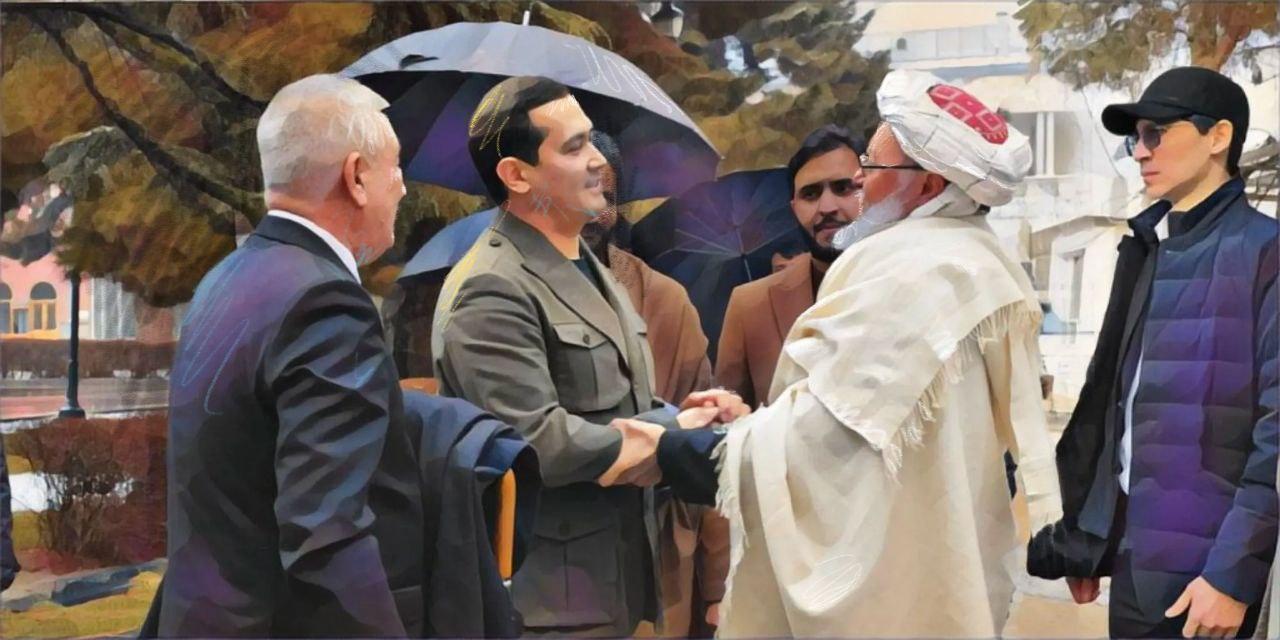
Afghanistan is quickly becoming more important to Central Asia, and the third week of February was filled with meetings that underscored the changing relationship. There was an “extraordinary” meeting of the Regional Contact Group of Special Representatives of Central Asian countries on Afghanistan in the Kazakh capital Astana. Also, a delegation from Uzbekistan’s Syrdarya Province visited Kabul, and separately, Uzbekistan’s Chamber of Commerce organized a business forum in the northern Afghan city of Mazar-i-Sharif.
A Peaceful and Stable Future for Afghanistan
The meeting in Astana brought together the special representatives of Kazakhstan, Kyrgyzstan, Tajikistan, and Uzbekistan for Afghanistan. The group was formed in August 2025. There was no explanation for why the fifth Central Asian country, Turkmenistan, chose not to participate.
The purpose of the Astana meeting was to coordinate a regional approach to Afghanistan.
Comments made by the representatives showed Central Asia’s changing assessment of its southern neighbor.
Kazakhstan’s special representative, Yerkin Tokumov, said, “In the past [Kazakhstan] viewed Afghanistan solely through the lens of security threats… Today,” Tokumov added, “we also see economic opportunities.”
Business is the basis of Central Asia’s relationship with the Taliban authorities. Representatives noted several times that none of the Central Asian states officially recognizes the Taliban government (only Russia officially recognizes that government). But that has not stopped Kazakhstan and Uzbekistan, in particular, from finding a new market for their exports in Afghanistan.
Uzbekistan’s special representative, Ismatulla Ergashev, pointed out that his country’s trade with Afghanistan in 2025 amounted to nearly $1.7 billion. Figures for Kazakh-Afghan trade for all of 2025 have not been released, but during the first eight months of that year, trade totaled some $335.9 million, and in 2024, amounted to $545.2 million. In 2022, Kazakh-Afghan trade reached nearly $1 billion ($987.9 million).
About 90% of trade with Afghanistan is exports from Kazakhstan and Uzbekistan. For example, Kazakhstan is the major supplier of wheat and other grains to Afghanistan, and Uzbekistan is the biggest exporter of electricity to Afghanistan. Kyrgyzstan’s trade with Afghanistan is significantly less, but from March 2024 to March 2025, it came to some $66 million. To put that into perspective, as a bloc, the Central Asian states are now Afghanistan’s leading trade partner, with more volume than Pakistan, India, or China.
Kazakhstan’s representative, Tokumov, highlighted Afghanistan’s strategic value as a transit corridor that could open trade routes between Central Asia and the Indian Ocean. Kyrgyzstan’s representative, Turdakun Sydykov, said the trade, economic, and transport projects the Central Asian countries are implementing or planning are a “key condition for a peaceful and stable future for Afghanistan and the region as a whole.”
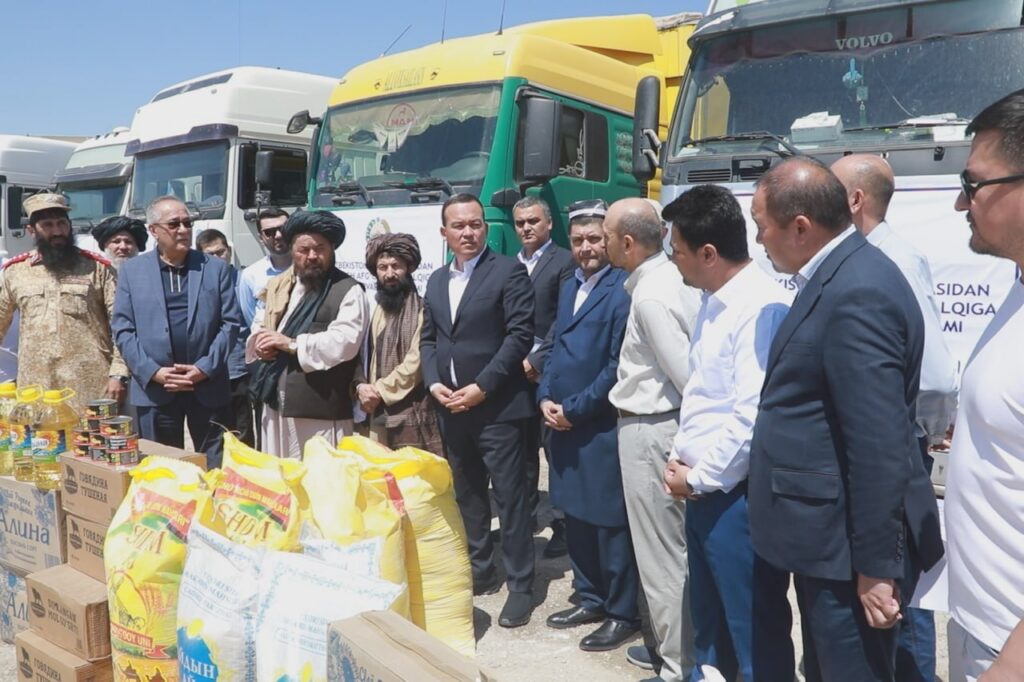
The group also discussed humanitarian aid for Afghanistan. All four of these Central Asian states have provided humanitarian aid to their neighbor since the Taliban returned to power in August 2021.
Regional security was also included on the agenda in Astana, but reports offered little information about these discussions.
A few days before the opening of the meeting in Astana, Russian Ambassador to Kyrgyzstan Sergei Vakunov spoke about the airbase in Kant, Kyrgyzstan, used by the Russian-led Collective Security Treaty Organization (CSTO). Vakunov said the base was capable of handling any “security threat to member states along the southern flank.” Vakunov was almost certainly referring to Tajikistan, which is the southern flank of the CSTO and shares a 1,350-kilometer border with Afghanistan.
Since last summer, there have been several deadly clashes along a section of the Tajik-Afghan border, including two incidents that left at least five Chinese workers in the area dead. Tajikistan’s Counter-Narcotics Agency reported in early February that drug interdiction efforts along the border with Afghanistan in 2025 led to the seizure of 2.742 tons of narcotics, more than 50% higher than in 2024.
The other Central Asian countries, including Turkmenistan, have engaged with the Taliban leadership since the first days after the group’s return to power. Tajikistan has taken a slower, cautious path in its relations and remains the only country in Central Asia where the ambassador from the Ashraf Ghani government that preceded the Taliban is still occupying the embassy.
However, the Afghan consulate in the eastern Tajik border town of Khorog is staffed by Taliban representatives. Tajikistan’s embassy in Kabul remains open, and the Tajik ambassador met with Taliban Foreign Minister Amir Khan Muttaqi at the start of February to discuss border security.
The presence of the Tajik representative at the Astana meeting is a further encouraging sign that Tajikistan is joining with its Central Asian neighbors to create a common policy toward Afghanistan.
Business with Uzbekistan
A delegation from Uzbekistan’s Syrdarya Province visited Kabul for a February 16-18 business forum. Syrdarya Governor Erkinjon Turdimov led the delegation. Deputy advisor to the Uzbek president, also director of the International Institute for Central Asia, Javlon Vahabov, was also there.
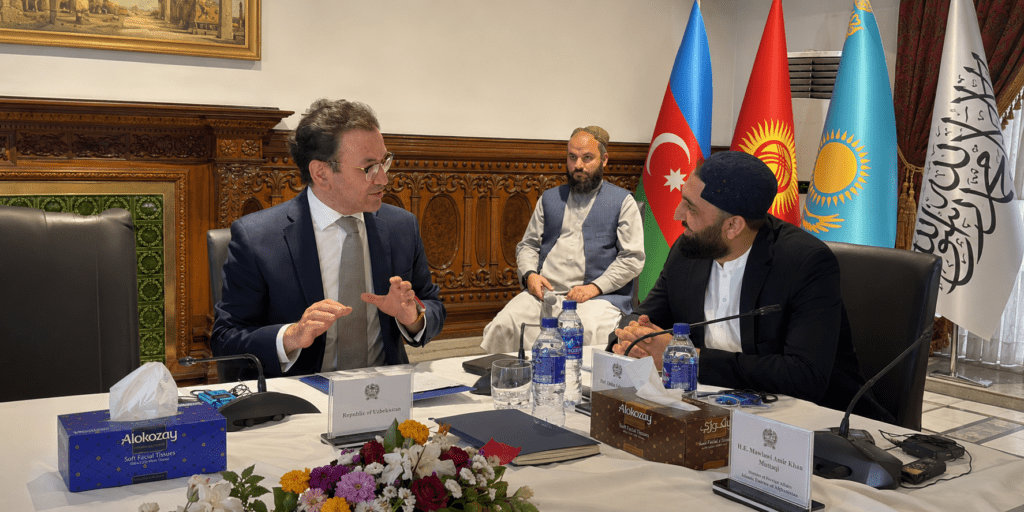
The Uzbek delegation met with several top Taliban officials, including Foreign Minister Muttaqi and Minister of Industry and Trade Nuriddin Azizi. Governor Turdimov also met with the governor of Afghanistan’s northern Balkh Province, Muhammad Yusuf Wafa, to discuss trade. Balkh is the only Afghan province that directly borders Uzbekistan.
Wafa is becoming a point man for the Taliban’s relations with Central Asia. The Balkh governor visited Tajikistan in October 2025 and met with Tajik security chief Saymumin Yatimov.
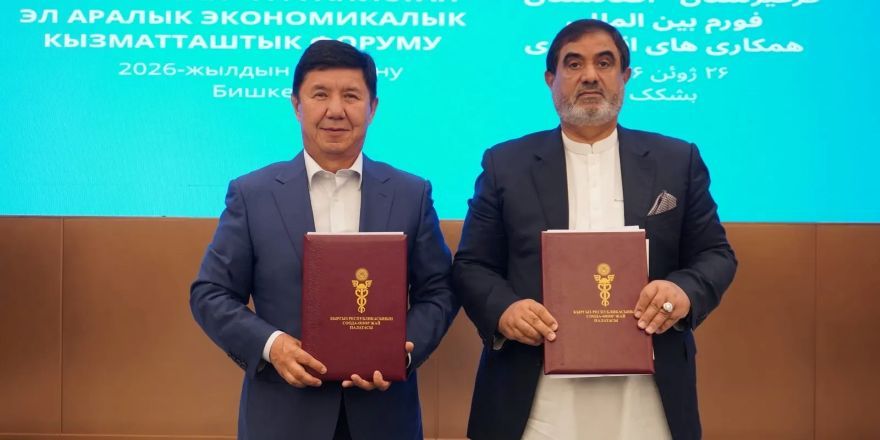
The forum ended with Uzbek and Afghan representatives signing 25 deals worth some $300 million. The agreements covered “construction, food products, agriculture, furniture production, textiles, and pharmaceutical cooperation.”
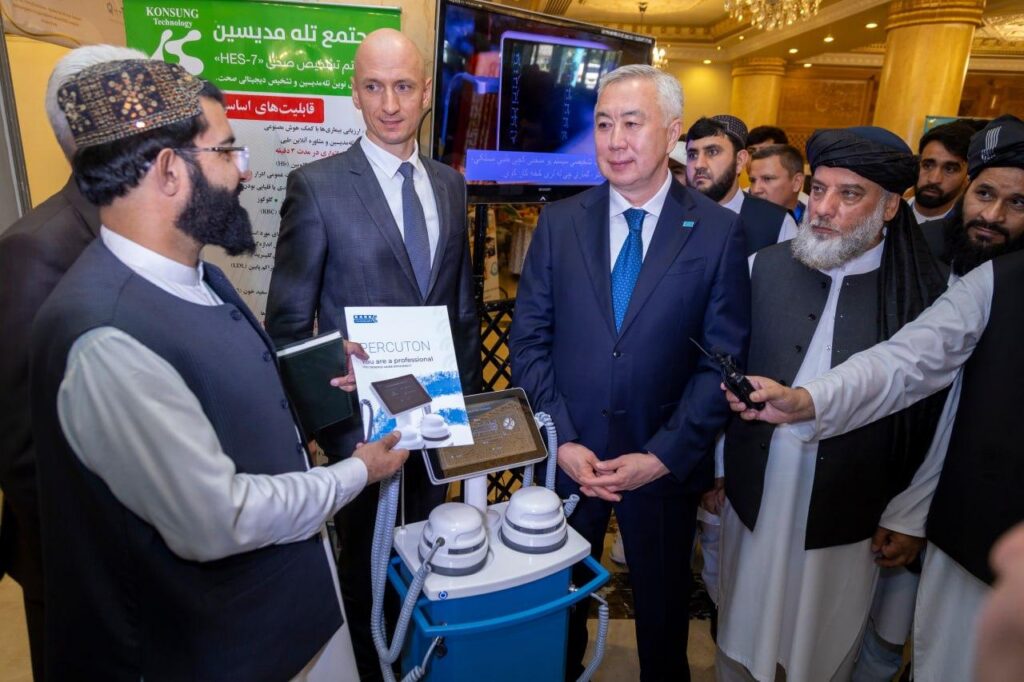
The provincial capital of Balkh is Mazar-i-Sharif. Uzbekistan’s Chamber of Commerce brought together more than 150 Afghan businessmen and representatives from more than 50 companies from Uzbekistan for a business forum in Mazar-i-Sharif, also conducted from February 16-18. Preliminary agreements worth potentially more than $200 million were signed.
A Window of Opportunity
The Central Asian states share the goals of increasing trade with Afghanistan and opening up routes through that country that connect them to Pakistani ports on the Arabian Sea. Afghanistan’s northern neighbors are also well aware that security and stability in Afghanistan are important in Central Asia. Since the five Central Asian countries became independent in late 1991, they have been contending with instability and uncertainty along the southern border.
The situation in Afghanistan currently, while far from ideal, is nonetheless the most stable it has been in all the years of independence in Central Asia. Figures for Kazakh-Afghan and Uzbek-Afghan trade demonstrate for all of Central Asia the potential of engaging with Afghanistan.