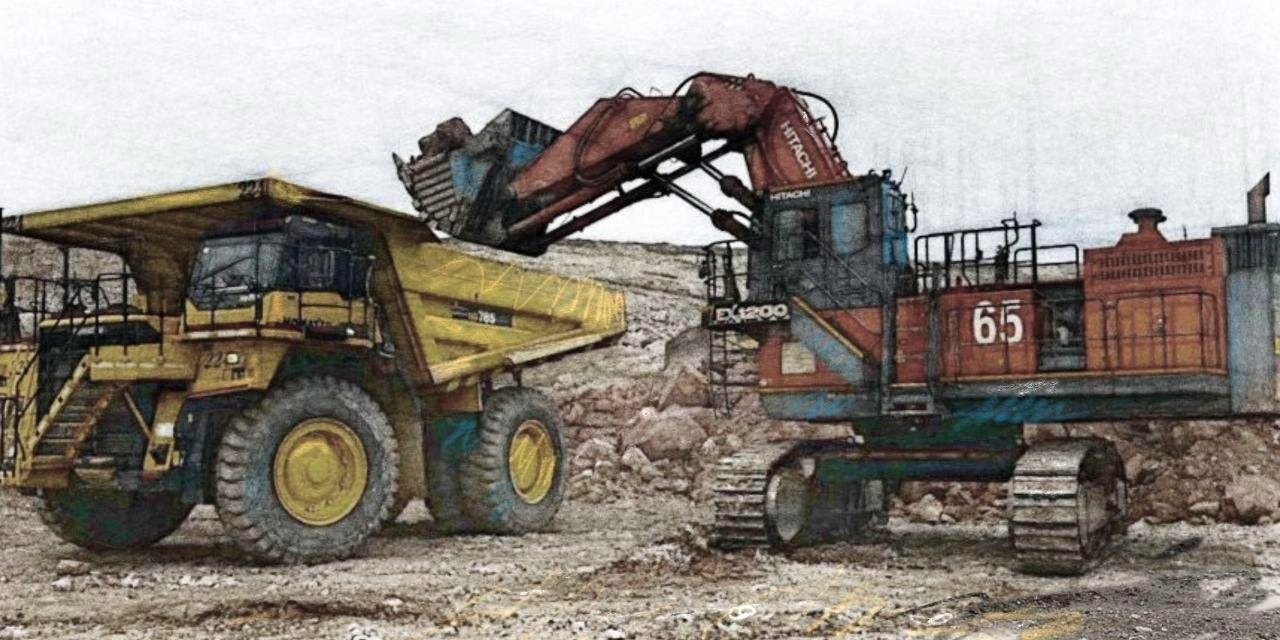
A U.S.-linked critical minerals venture in Kazakhstan is moving forward with plans to develop one of the world’s largest undeveloped tungsten resources, strengthening cooperation between Washington and Astana at a time of growing demand for secure mineral supply chains and greater Western interest in Central Asia’s strategic minerals base.
Skyline Builders Group Holding Ltd. and Cove Kaz Capital Group LLC have announced a merger agreement that would create Kaz Resources Inc., a Nasdaq-listed company focused on tungsten, rare earths, and other critical minerals. The combined company is expected to trade under the ticker symbol “KAZR,” subject to shareholder and regulatory approvals and other closing conditions.
The transaction builds on cooperation between Cove Kaz Capital and Kazakhstan’s national mining company, Tau-Ken Samruk. Cove Kaz has acquired a majority interest in Severniy Katpar LLP, which holds licenses for the Northern Katpar and Upper Kairakty tungsten projects in Kazakhstan’s Karaganda mining district, while Tau-Ken Samruk retains a minority stake, giving Kazakhstan’s state mining sector continued participation in the project.
The Financial Times has reported that Donald Trump Jr. and Eric Trump held indirect stakes in Skyline Builders, the Nasdaq-listed company that has agreed to combine with Cove Kaz Capital. The reported investments were made through a Dominari-affiliated vehicle before the business combination. The report has drawn scrutiny because of the project’s connection to U.S. critical minerals policy and potential U.S. government-backed financing.
The report cites no evidence that the Trump sons influenced the project award or the financing process. A spokesperson for Donald Trump Jr. said he is a passive investor, has no operational role, and does not engage with the federal government on behalf of companies in which he invests or advises. Eric Trump did not respond to requests for comment reported by the Financial Times.
The Export-Import Bank of the United States and the U.S. International Development Finance Corporation have issued letters of interest indicating potential financing support for the project. Such letters are preliminary expressions of interest, not final loan approvals, binding commitments, or government contracts, and any financing would remain subject to due diligence, agency approvals, and other conditions.
The projects are strategically significant because tungsten is widely used in defense, aerospace, industrial manufacturing, and advanced technologies. The United States has identified tungsten as a critical mineral and has sought to diversify supply chains amid heavy global dependence on China.
Kazakhstan’s tungsten deposits hold significant potential, but many remain at an early stage of development, requiring substantial investment and time before production can scale. Even so, the country has begun to emerge as a meaningful producer, with public and industry estimates pointing to Kazakhstan becoming a top-three producer in 2025 after the launch of the Boguty deposit, behind China and Vietnam. The Association of Mining and Metallurgical Enterprises has cited production of around 2,400 tons of tungsten in 2025.
The country’s rising role in the global market coincides with a sharp increase in tungsten prices. Following export restrictions imposed by China in February 2025, prices rose sharply through 2025 and into 2026, with market reporting describing record or near-record pricing for key tungsten products.
Kazakhstan also began exporting tungsten concentrates for the first time, shipping 3,700 tons worth $71 million in 2025, all of which was sent to China, underscoring both strong external demand, Kazakhstan’s exposure to a single downstream market, and Astana’s interest in developing more domestic processing capacity.
Russian and Chinese companies have previously sought to develop Kazakhstan’s tungsten deposits. Earlier efforts involving Russian and Chinese counterparties, including prior discussions tied to Xiamen Tungsten and a Tatneft-related memorandum, underscore broader international interest in Kazakhstan’s tungsten base and the strategic importance of the Severny Katpar area.
For Kazakhstan, the project supports efforts to attract international investment, develop its role as a supplier of strategic minerals, and expand value-added processing at home. For the United States, it offers a potential path to diversify critical mineral supply chains and reduce reliance on concentrated sources of tungsten.
The deal highlights Kazakhstan’s growing role in U.S. supply-chain strategy, the intensifying global competition over critical minerals, and the heightened public scrutiny surrounding the financing of strategic resource projects.
Follow our interactive critical minerals timeline tracing the partnerships, investments, and policies reshaping U.S. engagement with Central Asia.