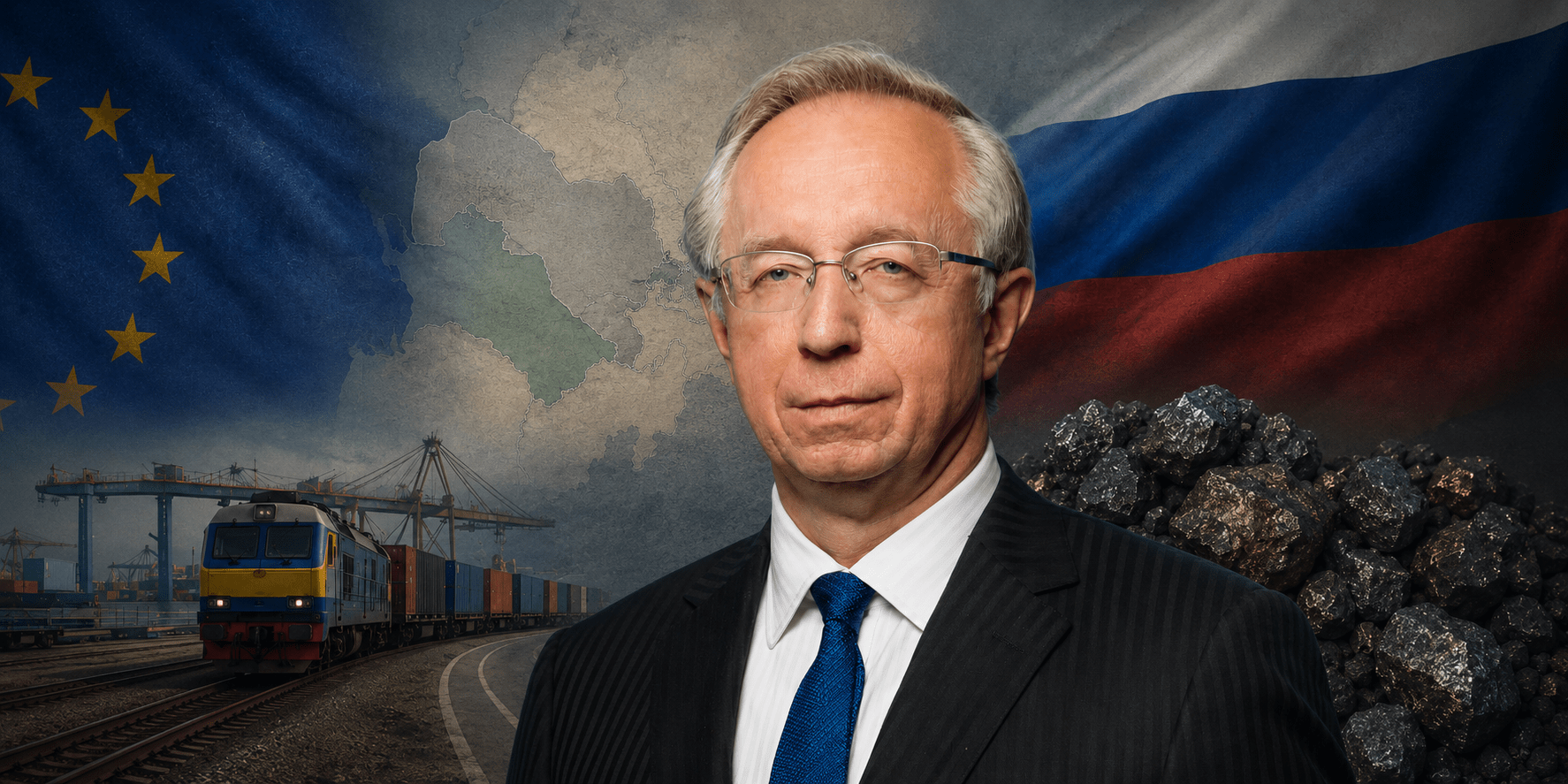
Russia’s Deputy Foreign Minister Mikhail Galuzin has accused Western countries of attempting to weaken Russia’s position in Central Asia by expanding their economic and strategic influence across the region, according to an interview published by the Russian newspaper Izvestia.
Galuzin said the United States and the European Union are seeking greater control over key transport corridors and natural resources in Central Asia, presenting their engagement as efforts to diversify economies and strengthen regional resilience. However, he argued that such initiatives are driven by broader geopolitical objectives.
“We note the desire of the United States and the European Union to take control of key transport corridors and natural resources in the region,” Galuzin told Izvestia. He added that Moscow is concerned by what it sees as Washington’s growing involvement in agreements related to critical minerals and rare earth metals.
“This is not simply economic competition, but an attempt to push Russia out and create Western-controlled infrastructure near our borders,” Galuzin said.
The remarks reflect Moscow’s concern over Central Asia’s multi-vector diplomacy, as Kazakhstan, Uzbekistan, and their neighbors expand ties with the European Union, China, the United States, and Gulf countries while maintaining longstanding relations with Russia.
Galuzin also claimed that Western governments are promoting narratives portraying Russia as a security threat in an effort to influence regional policymakers.
“We observe how the United Kingdom and some EU states systematically advance the narrative of an alleged danger coming from Moscow,” he said.
According to the Russian diplomat, the aim is to encourage Central Asian governments to move away from cooperation with Russia in favor of political and economic incentives offered by Western countries. He argued that regional states are unlikely to support such a shift.
“Neither Russia nor our historical friends and strategic partners in Central Asia are interested in such scenarios,” Galuzin said, adding that countries in the region “do not want to become pawns in someone else’s game.”