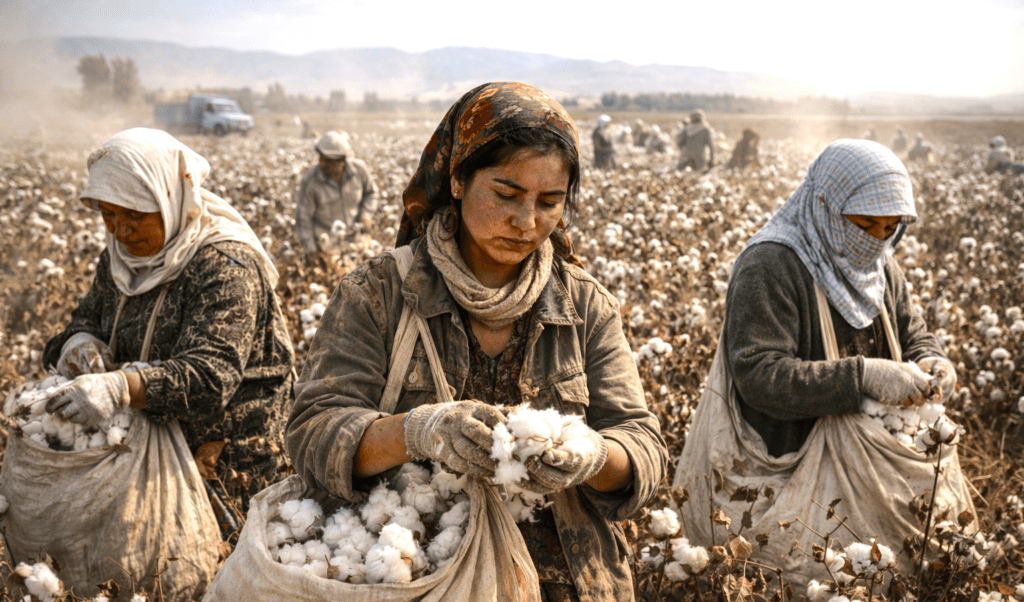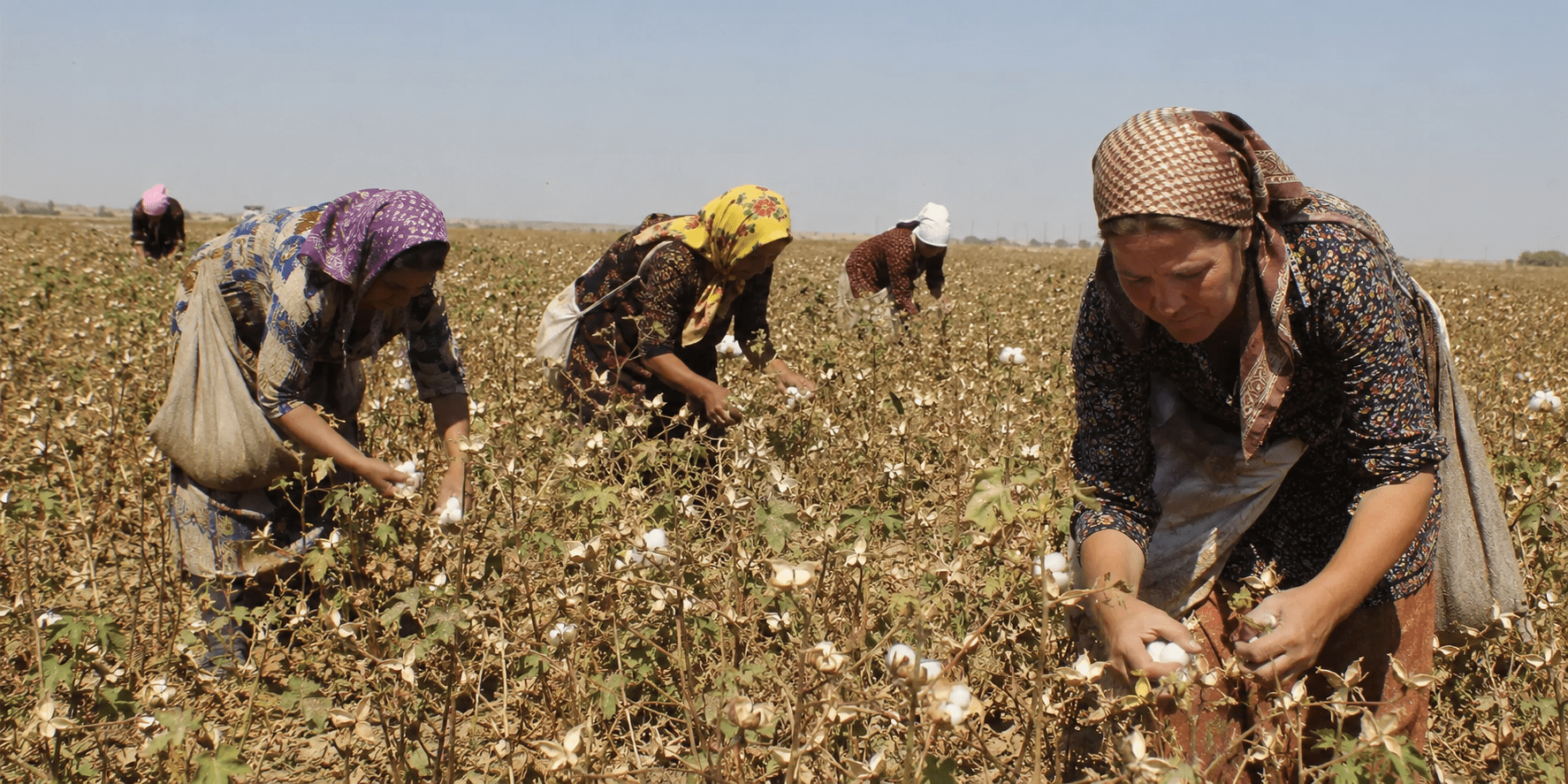
The authorities in Turkmenistan have again mobilized public-sector employees for the annual cotton harvest, forcing teachers, doctors, municipal workers, and other state employees either to work in the fields or pay for replacement laborers from their own salaries. The renewed campaign comes as international brands continue to face growing risks that what activists describe as “toxic” Turkmen cotton may still be entering global supply chains.
According to Dialectic, the authorities have abandoned even the limited relaxations introduced in some regions during previous harvest seasons.
Cotton remains one of Turkmenistan’s key export commodities. Each year, the state sets a harvest target of roughly 1.25 million tons of raw cotton from approximately 580,000 hectares of farmland. State procurement prices for farmers remain extremely low. The government currently pays around 5,000 manat per ton of first-pass medium-fiber cotton, about $256 using the unofficial exchange rate.
Against a backdrop of deteriorating agricultural infrastructure, soil degradation, and declining yields, the authorities are continuing to compensate for structural problems in the sector through the mobilization of state employees.
According to the report, the system remains largely unchanged. Employees of schools, hospitals, utility services and cultural institutions are ordered either to participate personally in the cotton harvest or hire replacement workers using their own wages. Refusal, sources say, can result in dismissal, financial penalties, or other administrative consequences.
Monitors also report the continued use of child labor. Although Turkmen law prohibits involving anyone under the age of 18 in cotton harvesting, poverty and quota pressure push some families to bring children into the fields.
The harvested cotton subsequently enters international supply chains through third countries. Turkey and Pakistan remain the largest transit and processing hubs for Turkmen cotton products.
According to the publication, Turkish enterprises alone imported $96.6 million worth of Turkmen cotton products in 2024, while Pakistani companies imported an additional $33.8 million. After processing, both raw materials and finished textile products are exported to European Union markets, including Italy, Poland, Portugal, and Bulgaria.
International experts say this stage of the supply chain presents the greatest risks for global apparel brands. Despite commitments by more than 140 international companies to avoid Turkmen cotton, products made with such raw materials may still be entering the supply chains of some of the world’s largest clothing manufacturers.
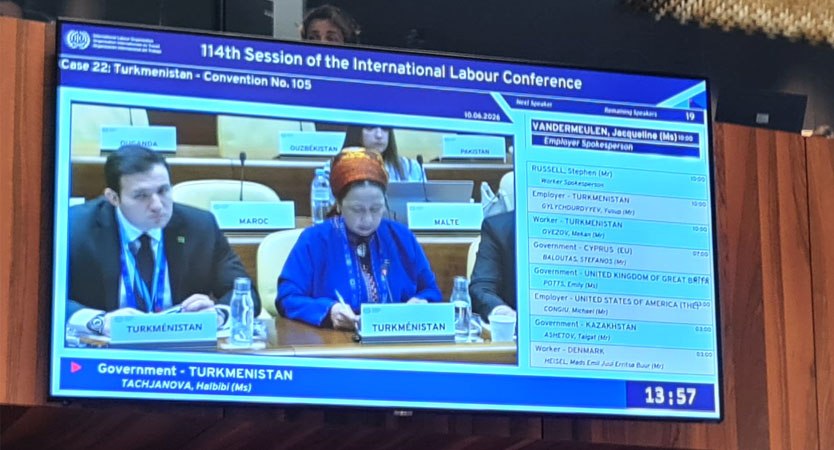
The government in Ashgabat continues to deny allegations of forced mobilization, insisting that participation in the cotton harvest is voluntary. However, according to the report, attempts by the International Labour Organization (ILO) to conduct independent monitoring during 2024-2025 were accompanied by route restrictions and carefully staged official demonstrations.
International pressure on Turkmenistan’s cotton sector has nevertheless continued to increase. The United States banned imports of Turkmen cotton and cotton products in 2018. In addition, the EU’s Forced Labour Regulation is due to apply from December 2027, banning products made with forced labor from the EU market regardless of origin.
Inside Turkmenistan, however, little appears to be changing for public-sector workers. The annual autumn cotton campaign remains a heavy burden for those forced to choose between keeping their jobs, paying for replacement labor, or participating in compulsory agricultural work.
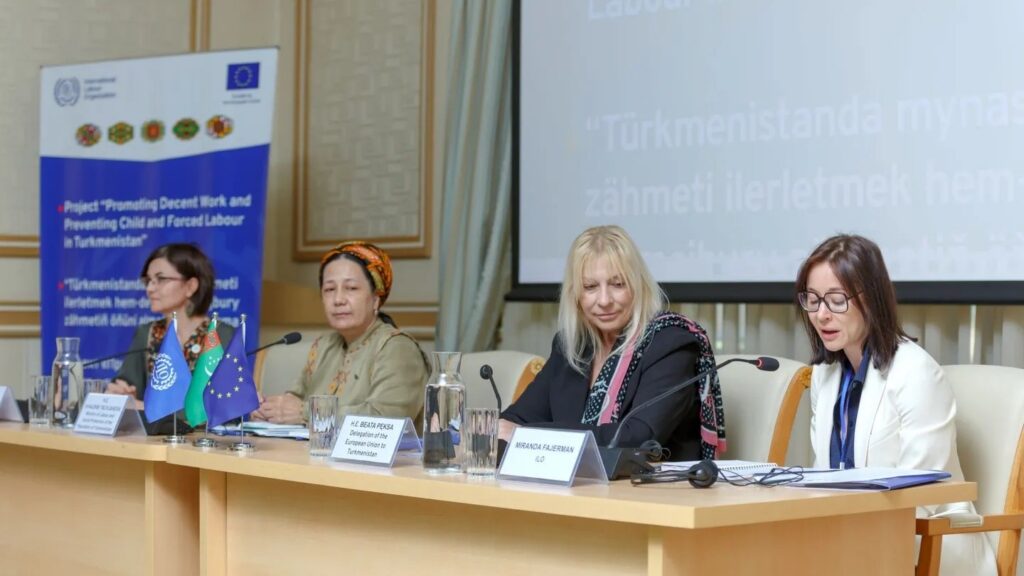
The Times of Central Asia previously reported that the ILO and the EU have launched a 2026-2027 project aimed at promoting decent work and preventing child and forced labor in Turkmenistan. The program, announced by the ILO on May 13, is focused in part on the cotton sector, where independent monitors say state-imposed forced labor remains entrenched.