A major international symposium dedicated to the Golden Horde opened this week in Kazakhstan’s capital, underscoring the country’s growing effort to redefine its historical narrative and national identity through the legacy of the Great Steppe.
The symposium, held under the patronage of UNESCO and titled “The Golden Horde as a Model of Steppe Civilization: History, Archaeology, Culture and Identity,” brought together more than 300 scholars, including 120 foreign researchers from over 20 countries.
The event reflects Kazakhstan’s effort to align its national narrative with a growing body of scholarship that treats nomadic societies not as a “backward” alternative to sedentary civilizations, but as a distinct and highly sophisticated model of statehood shaped by the economic realities of the Eurasian steppe.
Opening the symposium, President Kassym-Jomart Tokayev declared that “no historian today questions the power of the Golden Horde, the empire that ruled the Great Steppe and occupied vast expanses of Eurasia. The empire that connected East and West and exerted a profound influence on the development of civilizations and the formation of states was unquestionably one of the largest political structures in history,” Tokayev said.
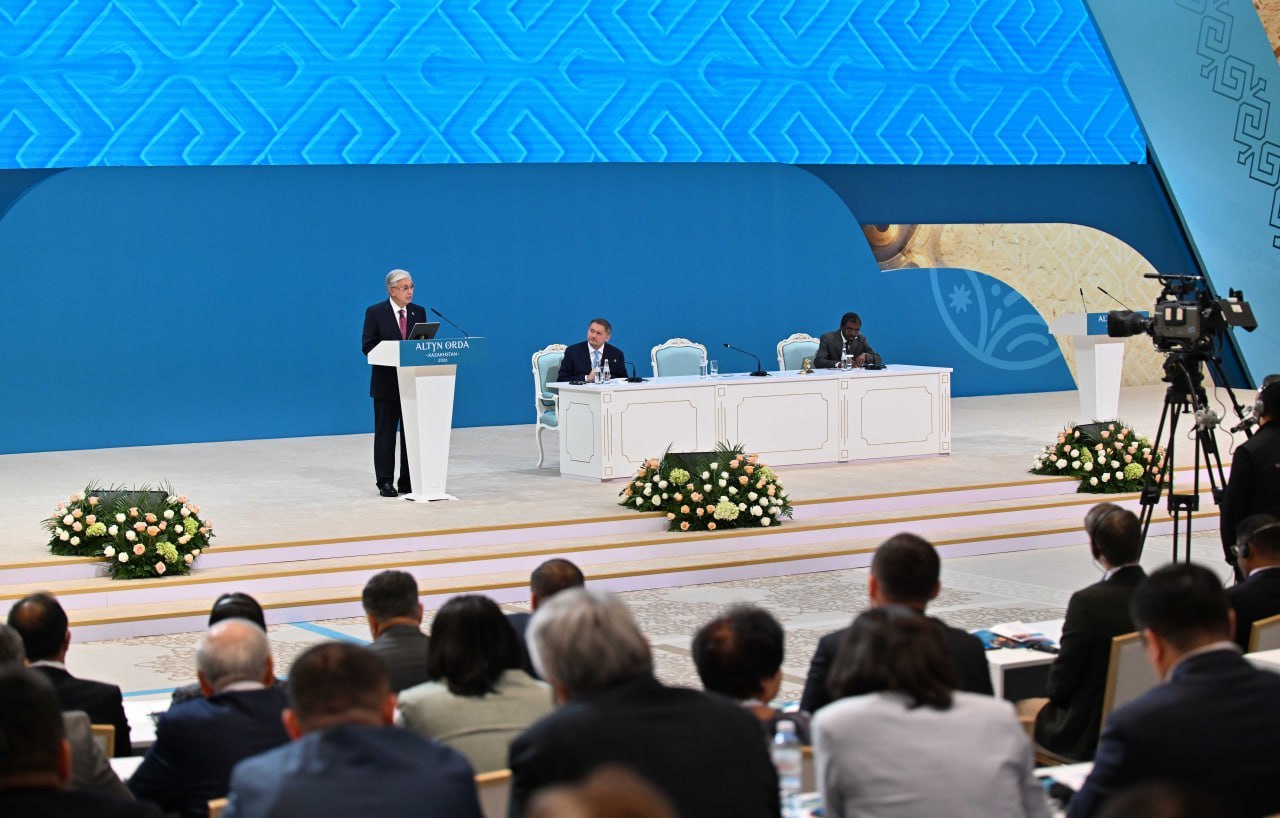
Image: Akorda
The Legacy of the Great Steppe
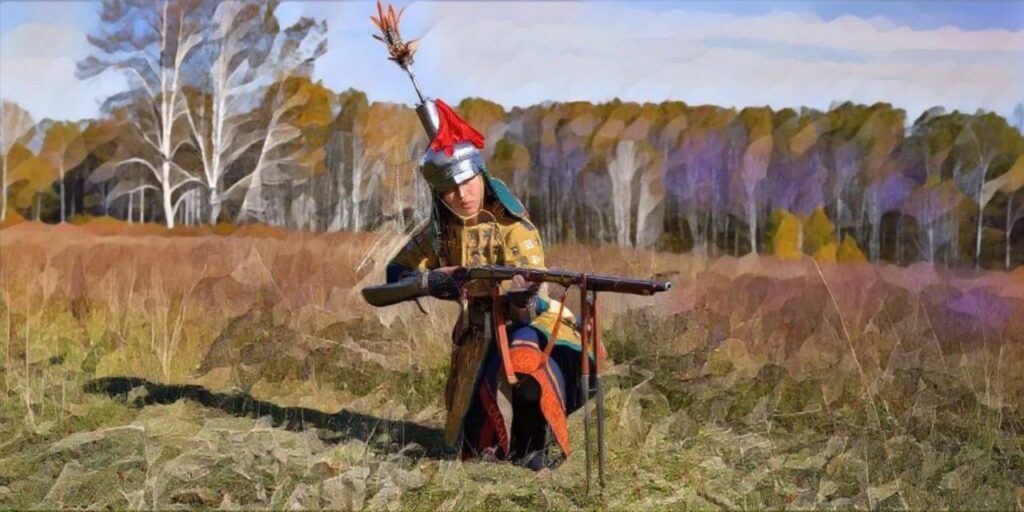
The Golden Horde, also known as the Ulus of Jochi, emerged from the empire created by Genghis Khan across the Eurasian steppe. The wider Eurasian steppe stretched from Eastern Europe toward Mongolia, while the Golden Horde controlled a vast western portion of that world. The region long served as home to Indo-European, Turkic and Mongol nomadic peoples. Its open geography, largely free of impassable mountain barriers, enabled the large-scale movement of herds of horses, sheep and cattle in search of pastures and water sources.
It was in this region, on the territory of present-day northern Kazakhstan, that horses were first domesticated about 5,500 years ago near the settlement of Botai. The archaeological Botai culture dates back to roughly 3700-3100 BCE.
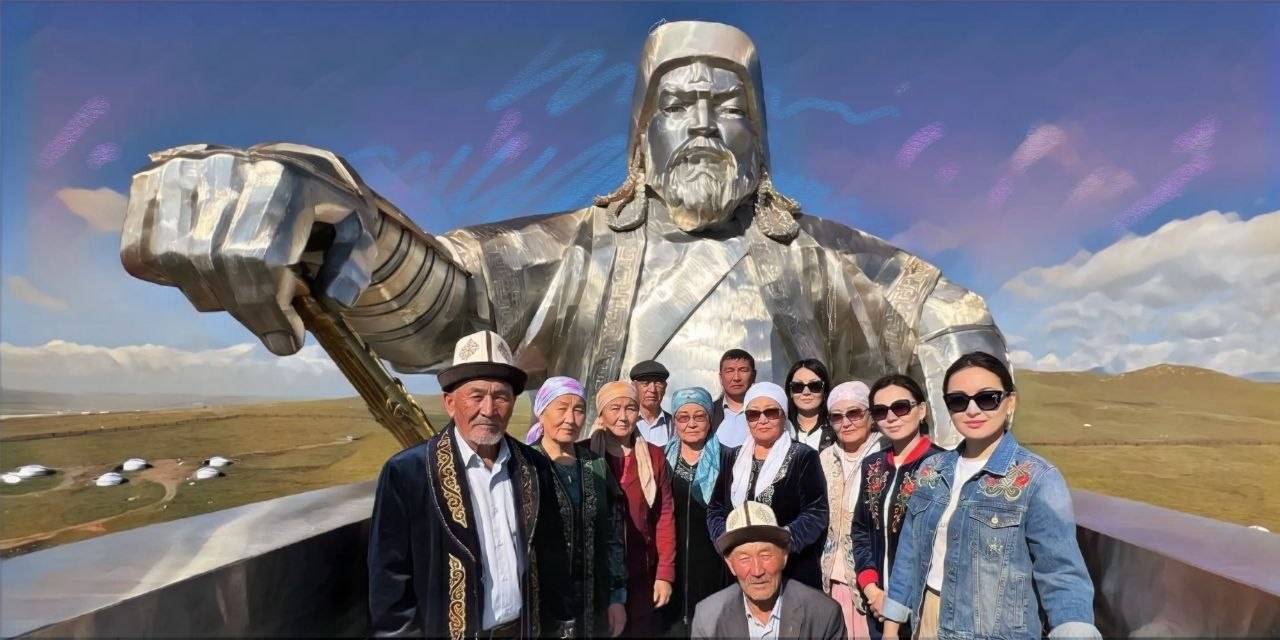
The Golden Horde itself traces directly to Jochi, the eldest son of Genghis Khan, whose descendants ruled the Ulus of Jochi across a vast territory from the Irtysh to the Danube. Over time, the Ulus of Jochi was divided between Jochi’s sons into western and eastern wings known respectively as the White Horde (Ak-Orda) and the Blue Horde (Kok-Orda).
By the middle of the 15th century, the Ulus of Jochi had fragmented into successor polities, including the Siberian, Uzbek, Kazan, Crimean, and Kazakh khanates, as well as the Nogai Horde. Moscow’s rise also unfolded in the shadow of this post-Horde order before it later became the core of the Russian Empire.

Image: Akorda
Between Myth and Statehood
Because written sources on the Golden Horde remain fragmented, much of its legacy survived through oral traditions, epics, myths, and legends. In Kazakh tradition, for example, khans continued to be chosen from among the Chinggisids, direct descendants of Genghis Khan, and elevated on a white felt carpet during coronation ceremonies.
The period also produced oral epics preserved through the tradition of the zhyrau, steppe bards sometimes compared to Homeric storytellers.
Perhaps most importantly, the legal and administrative traditions associated with Genghis Khan endured long after the collapse of the Golden Horde itself. Tokayev noted in his speech that some historians describe the Golden Horde as “the Rome of the Steppe.” Tokayev argued that the Golden Horde’s legal culture drew on the Great Yassa of Genghis Khan and older Turkic traditions, while its administrative practices influenced later Eurasian states.
Rewriting Kazakhstan’s Historical Narrative
Yet the symposium is about far more than medieval history. In his address, Tokayev outlined what he described as “the contours of further scientific inquiry” that could help Kazakhstan move beyond a narrow military-political interpretation of the Golden Horde and rethink its broader civilizational significance.
“We clearly understand the task before us: without changing public consciousness, society will not be renewed and the state will not develop. This is an axiom,” Tokayev said.
Efforts to reshape Kazakhstan’s national consciousness did not begin under Tokayev. In April 2017, former President Nursultan Nazarbayev published his influential essay “Looking to the Future: Modernization of Public Consciousness,” which led to the launch of the Rukhani Zhangyru (“Spiritual Renewal”) program. Its stated goal was to preserve and strengthen Kazakhstan’s spiritual and cultural values while transforming the country into one of the world’s 30 most developed nations.
By that stage, however, Kazakhstan’s political elite had entered a period of deep stagnation. Social discontent was also spreading, including protests by mothers from families with multiple children over housing, benefits, and childcare. Amid mounting pressure, Nazarbayev resigned in March 2019 and transferred the presidency to Tokayev.
Under Tokayev, the focus on historical identity deepened. In 2019, he called for the 750th anniversary of the Golden Horde to be commemorated, and the government later moved to establish the Institute for the Study of the Ulus of Jochi. The institute was legally formalized in 2022 and began receiving funding in 2023.
In 2025, the institute presented a series of scholarly works on the Kazakh Khanate, with distribution to libraries, educational institutions, and research centers expected in 2026.
The current symposium, therefore, fits into Tokayev’s broader effort to push Kazakhstan’s historical narrative further into the past, rejecting older Soviet-era interpretations that treated modern Kazakh statehood as a Soviet administrative creation rather than the continuation of earlier forms of steppe statehood.
That makes the Golden Horde more than a medieval subject. For Kazakhstan, it has become a way to move national history beyond Soviet categories and into a deeper Eurasian past. The challenge is to do so without turning shared history into exclusive ownership. Tokayev himself warned against that danger, saying history should not be distorted for self-admiration or used to claim a monopoly over a common inheritance.