Kazakhstan expects to complete the roughly 323-kilometer Moyynty-Kyzylzhar railway across the Karaganda and Ulytau regions of central Kazakhstan by the end of 2026. The new line will shorten the Middle Corridor by 149 kilometers and ease congestion on the existing route via Zharyk. Kazakhstan Temir Zholy said in July that 202.5 kilometers of track had been laid.
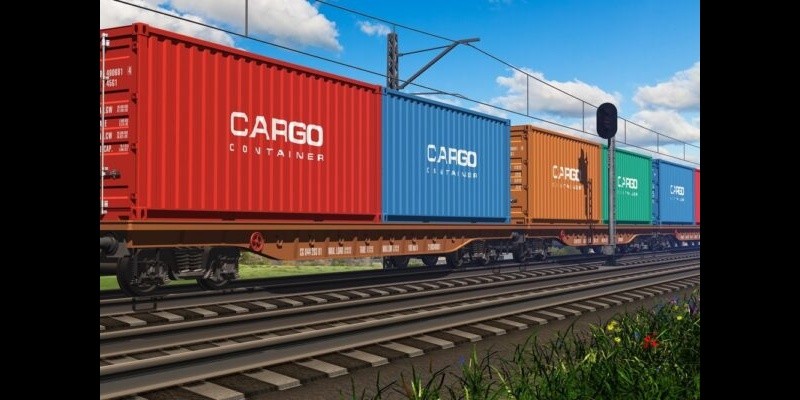
For the China-Europe route, however, the next test is the Caspian Sea. Containers must be transferred from trains at ports in Kazakhstan to ships bound for Azerbaijan, then returned to rail. The speed and regularity of these transfers will determine whether the hours saved within Kazakhstan translate into shorter delivery times.
What the New Line Changes
Moyynty-Kyzylzhar will give transit trains a more direct route from the Chinese border toward the Caspian and ease pressure on the Moyynty-Zharyk section, where east-west freight competes with domestic traffic.
The project is designed to accommodate double-stack container trains and includes provisions for future expansion and electrification. The World Bank projects that capacity on the section will rise from 14 to 28 pairs of freight trains per day, while transit time via the new route is targeted to fall from eight hours to six by 2031.
In February, the World Bank approved an $846 million guarantee intended to mobilize $1.41 billion in commercial financing for the project.
Across Kazakhstan, the time savings will be more modest. Transit from Dostyk, on the Chinese border, to Aktau is expected to fall from about 72 hours to 68 hours by 2031. Farther west, the country is also modernizing the Shalkar-Beineu and Beineu-Mangystau sections leading toward the Caspian ports.
The Caspian Remains a Bottleneck
The European Union (EU) aims to reduce transit time along the Trans-Caspian route to no more than 15 days.
The European Bank for Reconstruction and Development (EBRD) has estimated that the route has the potential to move cargo between China and Europe in around 18 days, but infrastructure and connectivity constraints have produced transit times ranging from 14 to 60 days. For shippers, reliability is as important as speed.
Freight Is Growing Faster Than Caspian Capacity
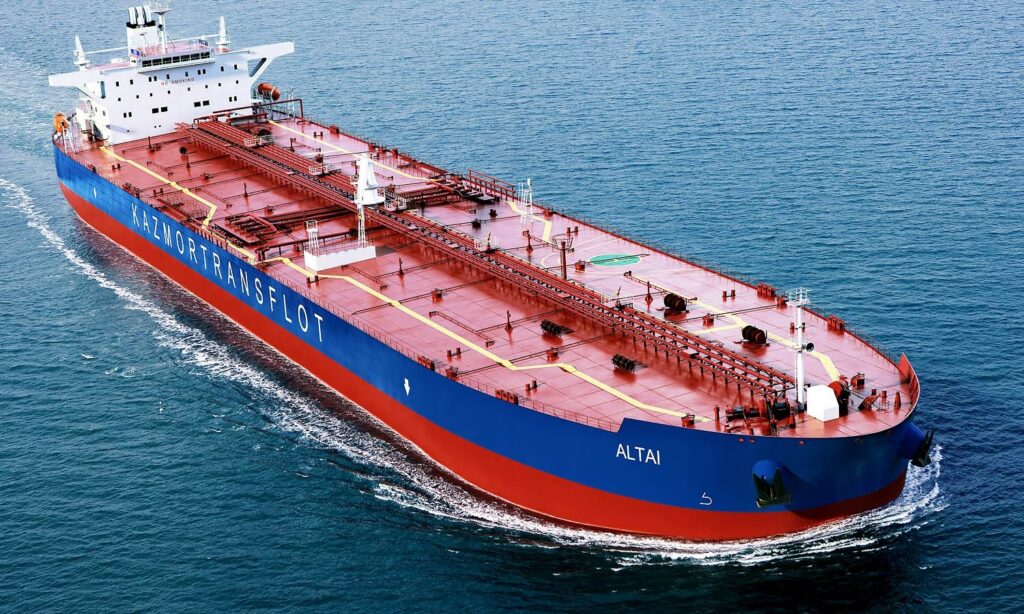
Pressure on the Caspian section is already increasing. In 2025, Kazmortransflot carried 59,400 twenty-foot equivalent units (TEU) on the Aktau-Baku-Aktau feeder route, more than 15% above the 2024 level of 51,400 TEU.
In May 2026, container traffic between Aktau and Azerbaijan reached a company record of 7,451 TEU.
Kazakhstan is expanding its port infrastructure as well. The EBRD and the EU are financing upgrades at Aktau, including two dedicated container berths and new handling equipment. The project is expected to double the port’s container-handling capacity.
Caspian fleet capacity is another constraint as rail freight grows. Falling Caspian Sea levels are also limiting how fully some vessels can be loaded.
From an Alternative to Russia to a Commercial Route
After 2022, geopolitics increased demand for the Middle Corridor. It offered Europe a route to Central Asia and China that bypasses Russia, while providing Kazakhstan with another connection to European markets. The corridor increasingly has to compete on commercial terms.
Sea freight remains cheaper for many types of cargo, while Russia’s railway network has decades of experience handling transcontinental traffic. Farther south, construction has begun on the China-Kyrgyzstan-Uzbekistan railway, which could eventually compete for some east-west freight.
The Middle Corridor’s niche lies in cargo for which sea transport is too slow or routes through Russia are undesirable. Its competitiveness therefore depends heavily on predictable delivery times.
European support is also shifting toward faster, more predictable trade procedures. In December 2025, the EU announced another €15 million for trade facilitation and customs digitalization.
Moyynty-Kyzylzhar should make one part of the Middle Corridor faster and less congested. The harder test is whether those gains survive the Caspian crossing. Operators regularly publish freight volumes and their fastest transit times, but provide much less data on average port waits and schedule reliability. Without those figures, international shippers cannot easily assess actual end-to-end delivery times.