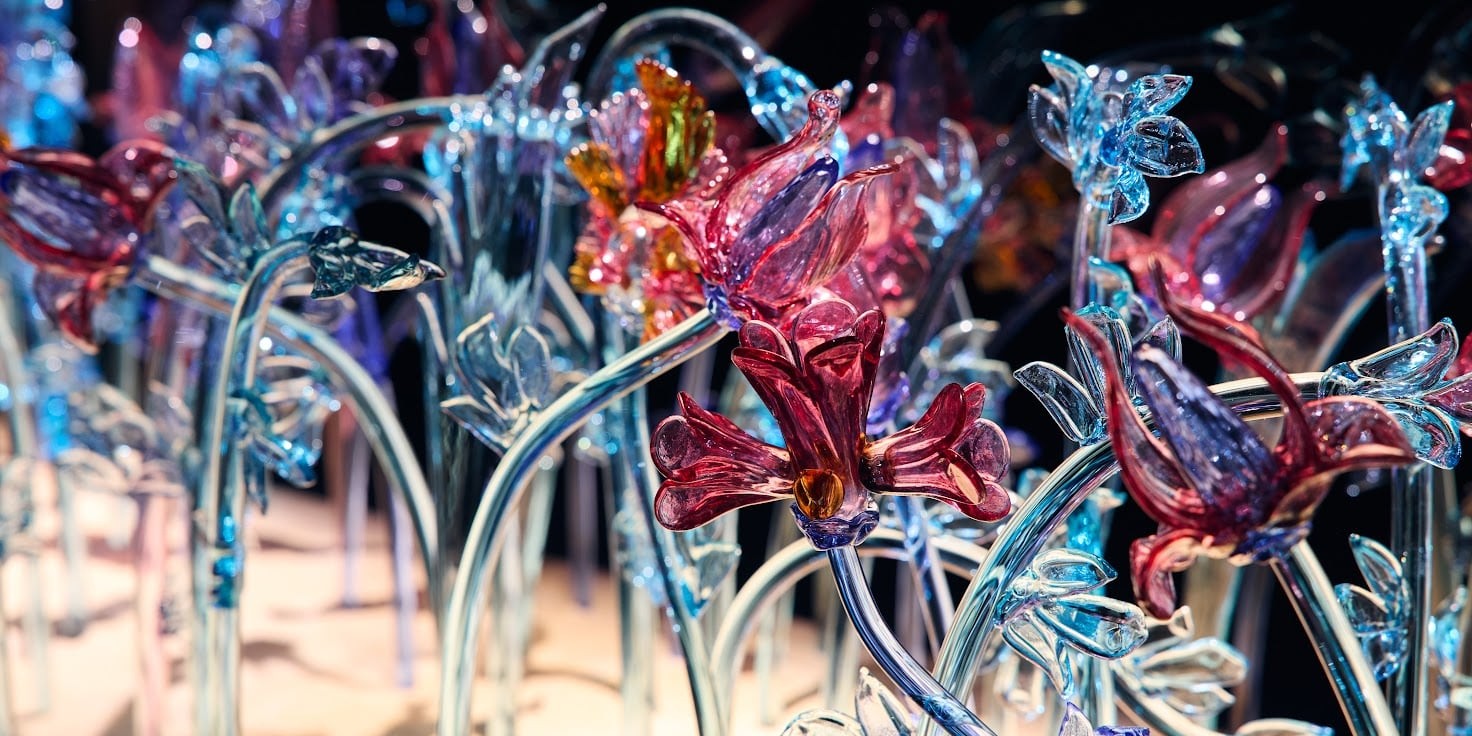
Rather than attempting to sculpt realistic botanical specimens, Tashkent-based artist Ruben Saakyan used the stylized geometry of Bukharan embroidery as his blueprint—imagining what those flat, stitched blossoms would look like if they stepped off the cloth and entered physical space.
His installation of blown and sculpted glass flowers rests over a bed of fine glass sand in the historic courtyard space.
This autumn, his work features in A Leaf from the Rose Garden, an ambitious exhibition at the second Design Doha Biennial in Qatar. Organized by the Uzbekistan Art and Culture Development Foundation (ACDF), the showcase brings together three distinct voices from Uzbekistan’s contemporary art and craft landscape: Tashkent-based installation artist Ruben Saakyan, master embroiderer Madina Kasimbaeva, and Davlat Toshev.
Opened on November 5, 2026, and running through January 31, 2027, the exhibition is housed within a traditional courtyard dwelling in Fereej Al Asmakh, one of Doha’s oldest historic districts.
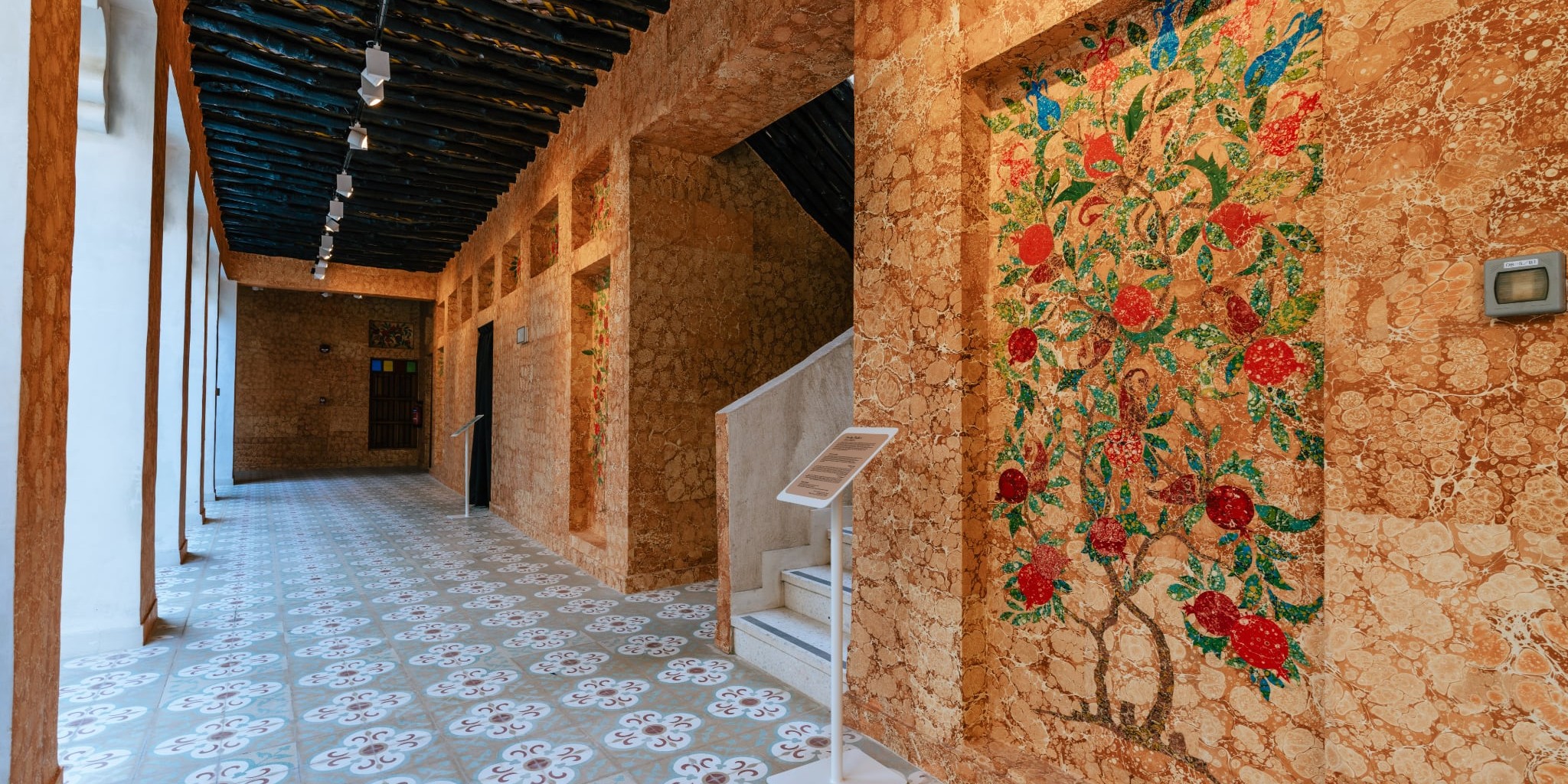
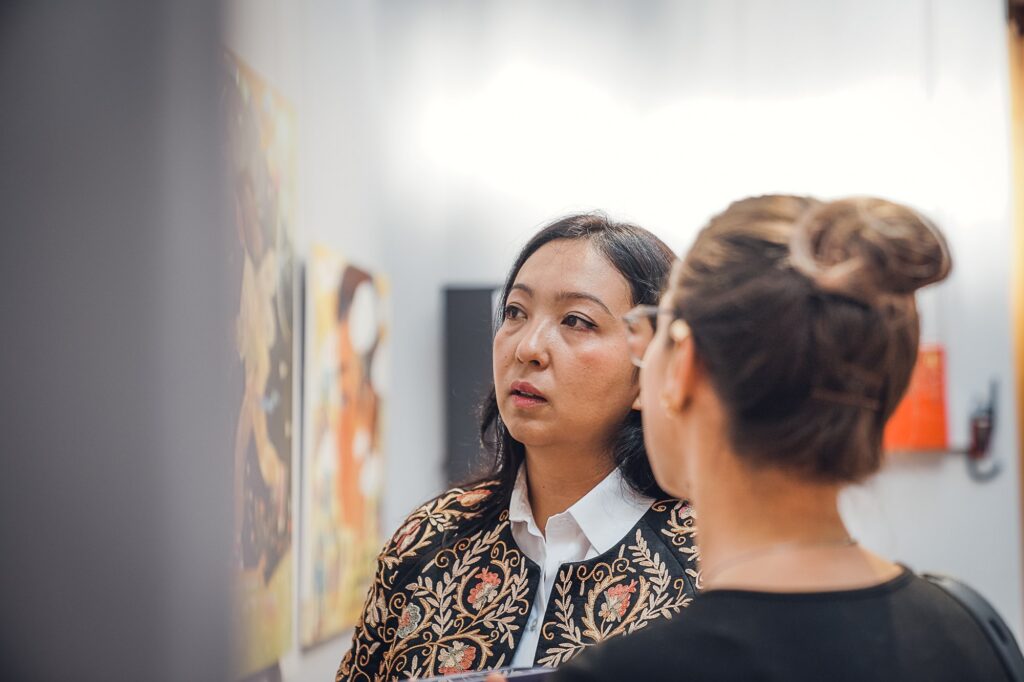
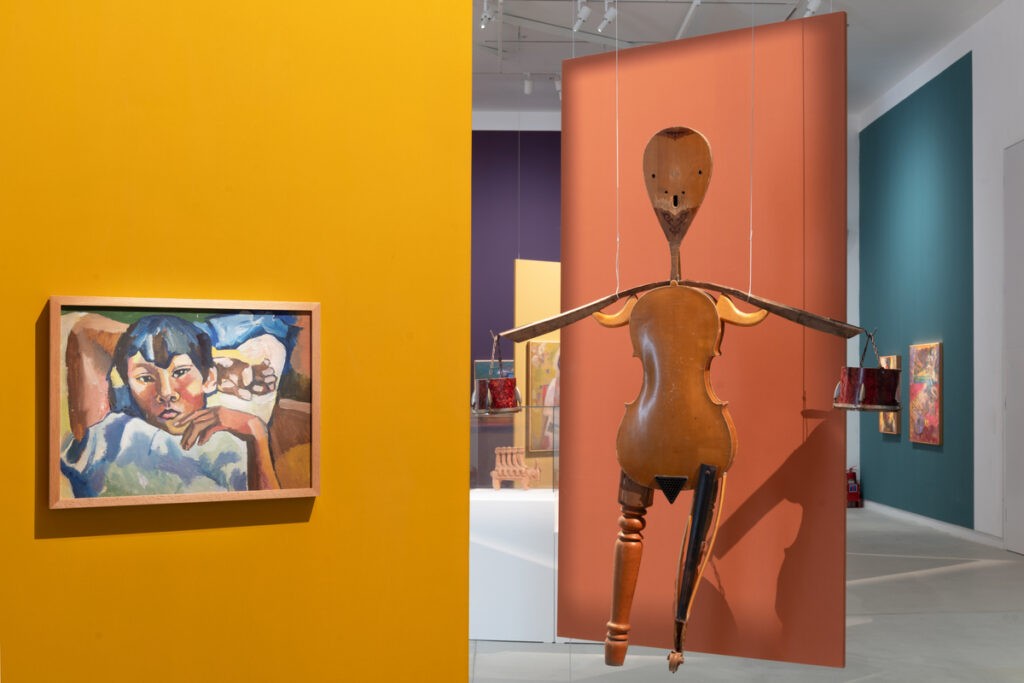
The exhibition inside a traditional courtyard dwelling in Doha’s historic Fereej Al Asmakh district, November 2026. Image: ACDF
At the conceptual heart of the exhibition lies Gulistan (The Rose Garden), the 1258 literary masterpiece by the Persian poet Saadi Shirazi. In the preface to his collection of moral tales and reflections, Saadi meditates on the fleeting nature of a cut flower compared to the enduring life of a garden preserved on the written page. A Leaf from the Rose Garden takes this metaphor and translates it into physical space, tracing how a single botanical motif—the flower—can migrate across mediums, hands, and generations without losing its soul.
In conversations with The Times of Central Asia, the three participating artists reflected on the quiet alchemy of their collaboration, the dialogue between literature and craft, and what it means to carry the artistic memory of Bukhara and Tashkent onto an international design stage.
Davlat Toshev: Painting with Water and Memory
A renowned practitioner of the Bukhara school of miniature painting, Toshev has spent decades studying historical manuscripts, natural pigments, and the contemplative discipline required to render intricate worlds in miniature. For A Leaf from the Rose Garden, however, he expanded his practice onto a monumental scale, creating a mural titled Abru–Bahor (Abru–Spring) that sets the visual and philosophical tone for the exhibition.
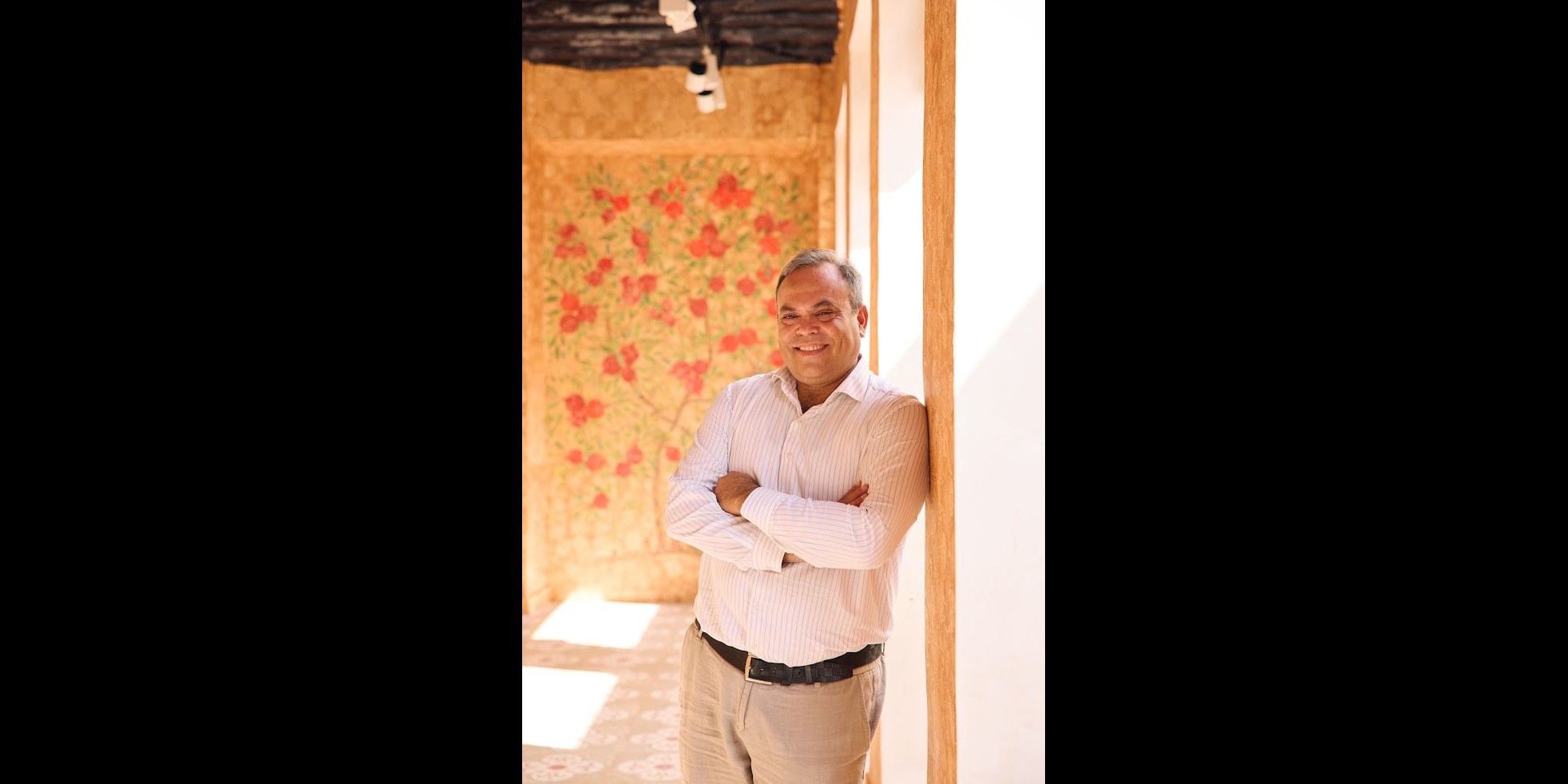
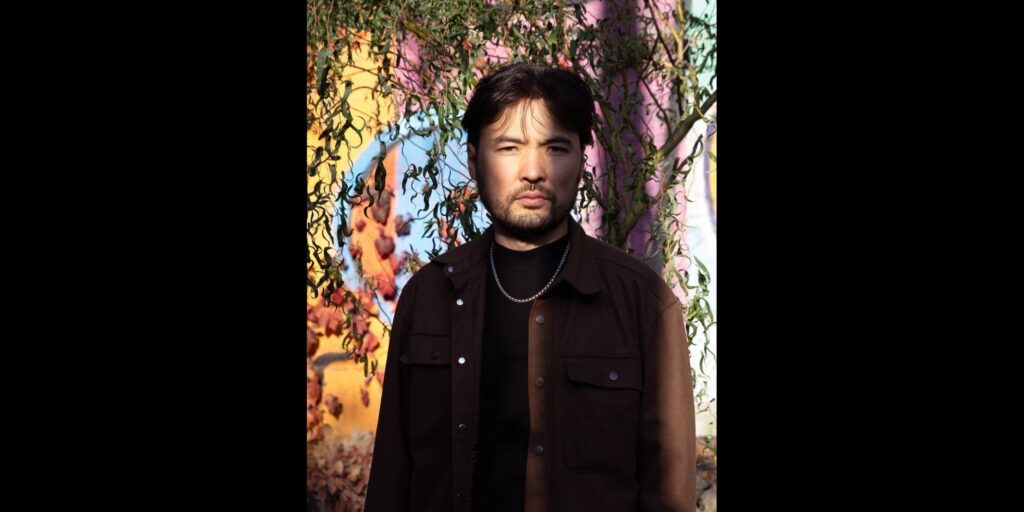
Uzbek miniature painter Davlat Toshev at the Design Doha Biennial, November 2026. Image: ACDF
Working with abru (also known as ebru), the ancient Central Asian and Middle Eastern art of paper marbling, Toshev drops mineral and plant-based pigments onto water, guiding them gently before allowing the surface tension to dictate the final, unrepeatable swirl.
“It is no coincidence that I chose the name ‘Abru–Bahor’ (Abru–Spring). For me, spring is not simply a season of nature. It is a symbol of renewal, awakening, the continuity of life, and the rebirth of beauty. In the art of abru, the colors and patterns that appear on the surface of the water, much like the landscape of spring, blend with one another to create a scene that can never be repeated. Every pattern is unique, and every color has a voice of its own. In this work, I tried to express not only the outward beauty of spring but also its inner spirit: the feelings of hope and goodness that it awakens in the human heart.”
That sense of organic authenticity is rooted in Toshev’s strict adherence to natural materials. Long before a brush touches water or paper, the artist prepares pigments ground from minerals, semi-precious stones, and botanical extracts—a painstaking process that connects his studio directly to the earth.
“Natural materials form the foundation of my work. For me, natural paints are not merely a means of adding color. They are a living bond between nature and art,” Toshev told TCA. “Minerals, plants, and natural pigments give a work its own breath, depth, and distinctive spirit. Each of them has its own history and natural character.”
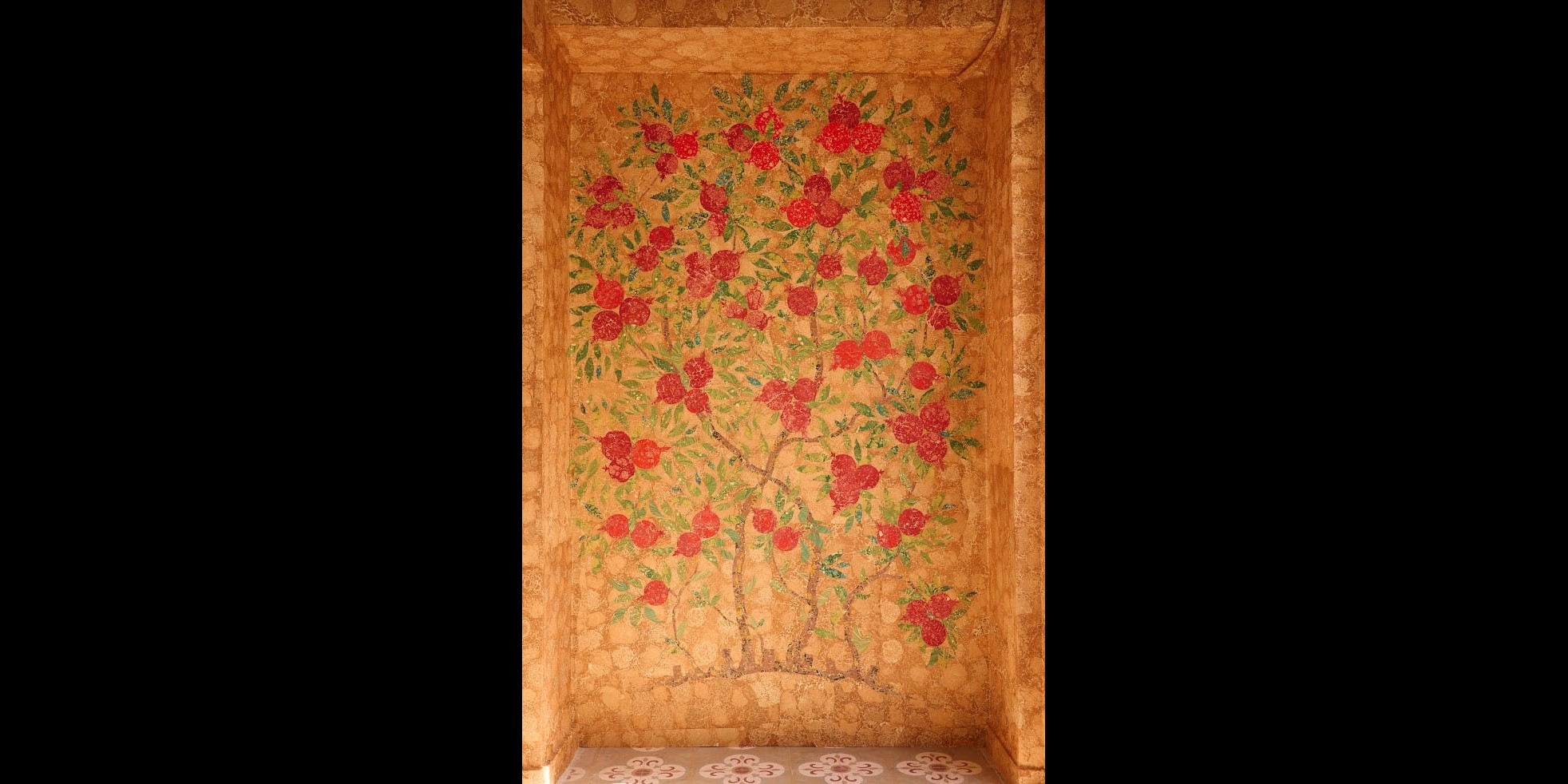
Detail of Davlat Toshev’s Abru–Bahor (Abru–Spring) mural in Doha, November 2026. Image: ACDF
Translating Saadi’s 13th-century text into visual form required moving beyond literal illustration. Rather than depicting specific scenes from Gulistan, Toshev sought to capture the emotional resonance of Saadi’s verse through the movement of pigment on water.
“The flowers, gardens, natural landscapes, and human relationships of Gulistan became a source of inspiration for me in creating visual images,” he noted. “Through the fluid, free forms of abru, I sought not to illustrate Saadi’s ideas literally but to convey their spirit, symbolic meaning, and emotional resonance.”
Working with abru also demands a willingness to surrender absolute control, a quality that sets it apart from the meticulous precision of traditional miniature brushwork.
“One of the most fascinating and mysterious aspects of abru is that it can never be fully predicted in advance. The artist places colors on the surface of the water and gives them direction, yet the final result does not always obey the artist’s will. In this process, nature itself becomes a co-creator,” Toshev reflected. “I see this as a unique kind of dialogue between humans and nature. Sometimes an unplanned movement or an unexpected harmony of colors becomes the most beautiful moment of a work. I believe a true artist knows not only how to control, but also how to observe, to feel, and to welcome unexpected beauty.”
For Toshev, exhibiting in Doha is also an opportunity to challenge how viewers outside the region categorize Central Asian art.
“In my experience, international audiences look at Central Asian art with great interest. Its richness of color, intricate patterns, symbolic imagery, and centuries-old traditions amaze many people. Sometimes, however, Eastern miniature painting and traditional decorative art are perceived only as historical heritage or decorative craft,” he said. “I would like to change this perception. Central Asian miniature painting embodies deep philosophy, a worldview, the relationship between humans and nature, and a delicate attitude toward life.”
Madina Kasimbaeva: Stitching Generations Together
One of Uzbekistan’s leading masters of suzani—the monumental hand-embroidered wall hangings that have long served as the centerpiece of Uzbek domestic life and dowry traditions—Madina Kasimbaeva created five new works specifically for the Doha biennial.
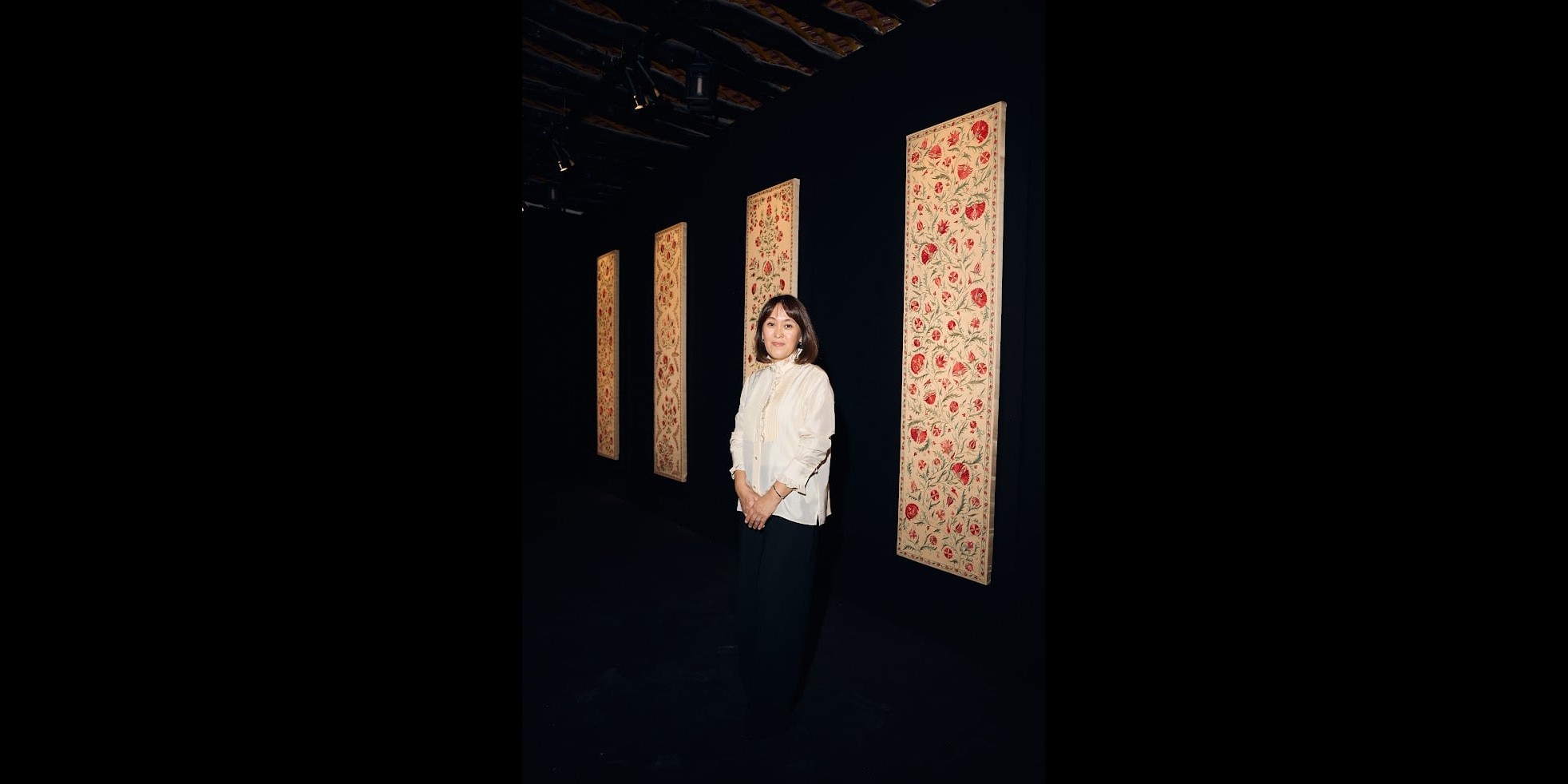
Master embroiderer Madina Kasimbaeva alongside her suzani works in Doha, November 2026. Image: ACDF
“Above all, the main source of inspiration for the five pieces I created for this project was the traditional suzani embroidery passed down to us by our grandmothers. I revisited their patterns, floral motifs and symbolism, exploring this rich artistic heritage,” Kasimbaeva explained. “Nature has also always been one of my greatest sources of creative inspiration. If you look closely at traditional suzani embroidery, you will notice that every flower, pattern and color is deeply connected to the natural world. Our grandmothers drew inspiration from their surroundings, from flowers, trees and the beauty of nature, reflecting these elements in their embroidery.”
“Suzani embroidery has its own distinctive schools and traditions across the different regions of Uzbekistan. Each school is characterised by its particular patterns, floral motifs, color combinations and compositions,” she told TCA. “For this project, I drew primarily on the traditional floral motifs and patterns associated with the Nurata school of embroidery.”
The Nurata school of embroidery is centered in the town and oasis of Nurata.
“What makes these five works new is that each has its own individual character,” she said. “I paid particular attention to ensuring that no two pieces were alike, giving each a unique composition and artistic interpretation. I aimed to unite all five works through a shared concept and artistic vision, while allowing each to stand independently as a distinctive and original creation.”
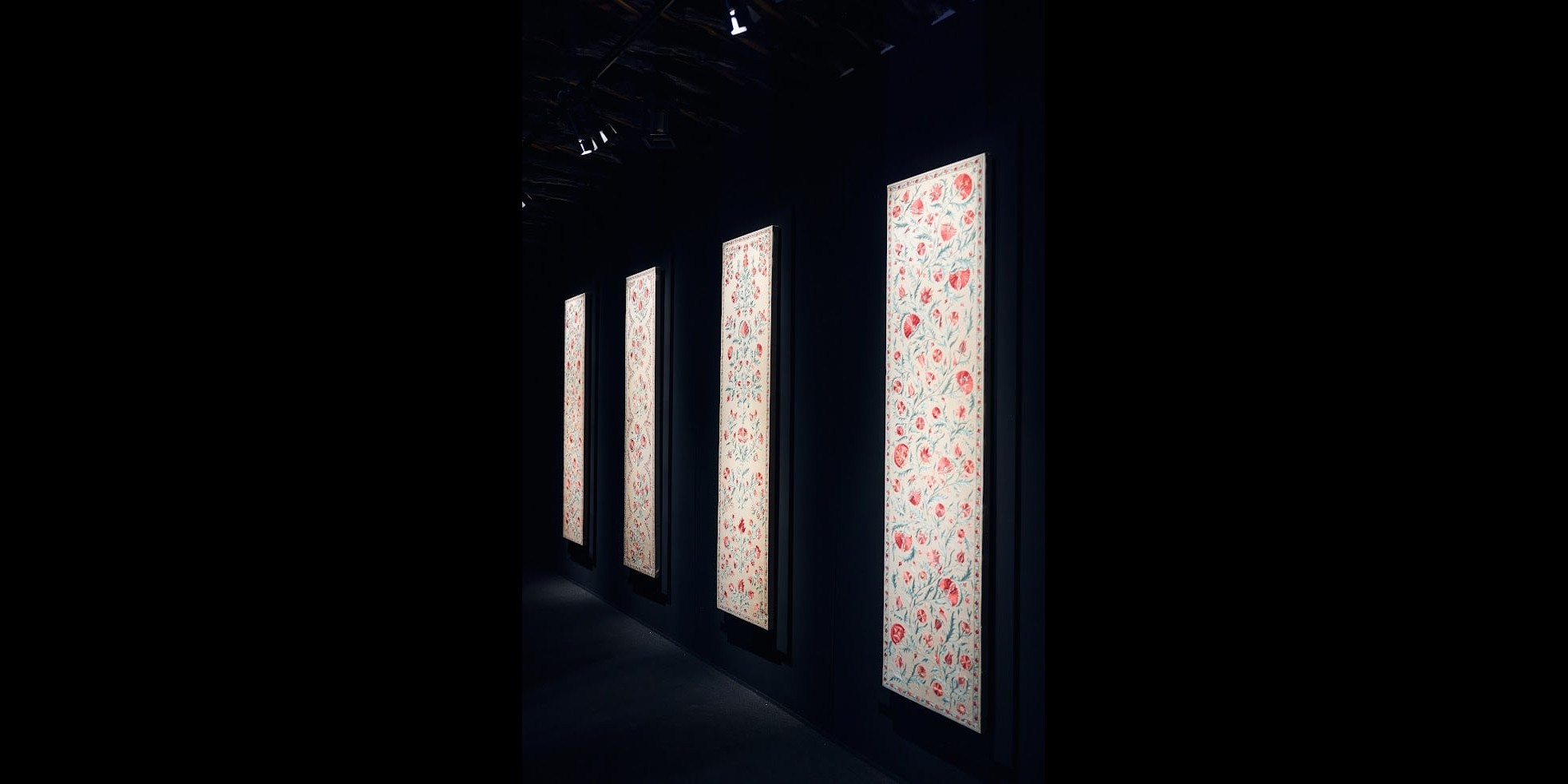
Hand-embroidered suzani panels by Madina Kasimbaeva, inspired by the Nurata school of Uzbek embroidery. Image: ACDF
Like Toshev, Kasimbaeva found a natural kinship between her craft and Saadi’s 13th-century reflections on beauty and human wisdom.
“Saadi Shirazi’s work was a profound source of spiritual and artistic inspiration for me. The title itself, Gulistan, meaning ‘Rose Garden’, immediately resonated with my embroidery practice and my creative relationship with nature,” she said.
Behind every stitch lies an uncompromising commitment to slow, manual labor, a stark contrast to the speed of modern industrial production.
“One of the most important and distinctive qualities of our work is that every piece is created entirely by hand. Each creation carries the dedication, warmth and care of the person who made it,” Kasimbaeva emphasized. “The process begins with drawing the patterns onto the fabric by hand. Even the fabrics we embroider are handwoven. We use natural silk fabrics, silk threads and natural dyes.”
“Above all, I would like audiences to understand that suzani is far more than decorative embroidery on fabric. It embodies the memory of generations, the cultural heritage of our people and a living art form that has been preserved and passed down through the hands of women to the present day.”
Ruben Saakyan: Releasing the Flower into Three-Dimensional Space
“The flower is the central figure in my artistic practice. I primarily work with living and natural materials: flowers, plants and other elements of the natural world. For me, a flower is not simply an artistic image, but the principal material I engage with when creating my work,” Saakyan told TCA.
The Doha installation builds upon Saakyan’s earlier project, Fragile Garden, presented in Venice in 2024, for which motifs drawn from Bukhara embroidery were transformed into more than 500 individual glass flowers. Yet in Qatar, the work took on a deeply collaborative dimension, directly responding to the two-dimensional interpretations created by Toshev and Kasimbaeva.
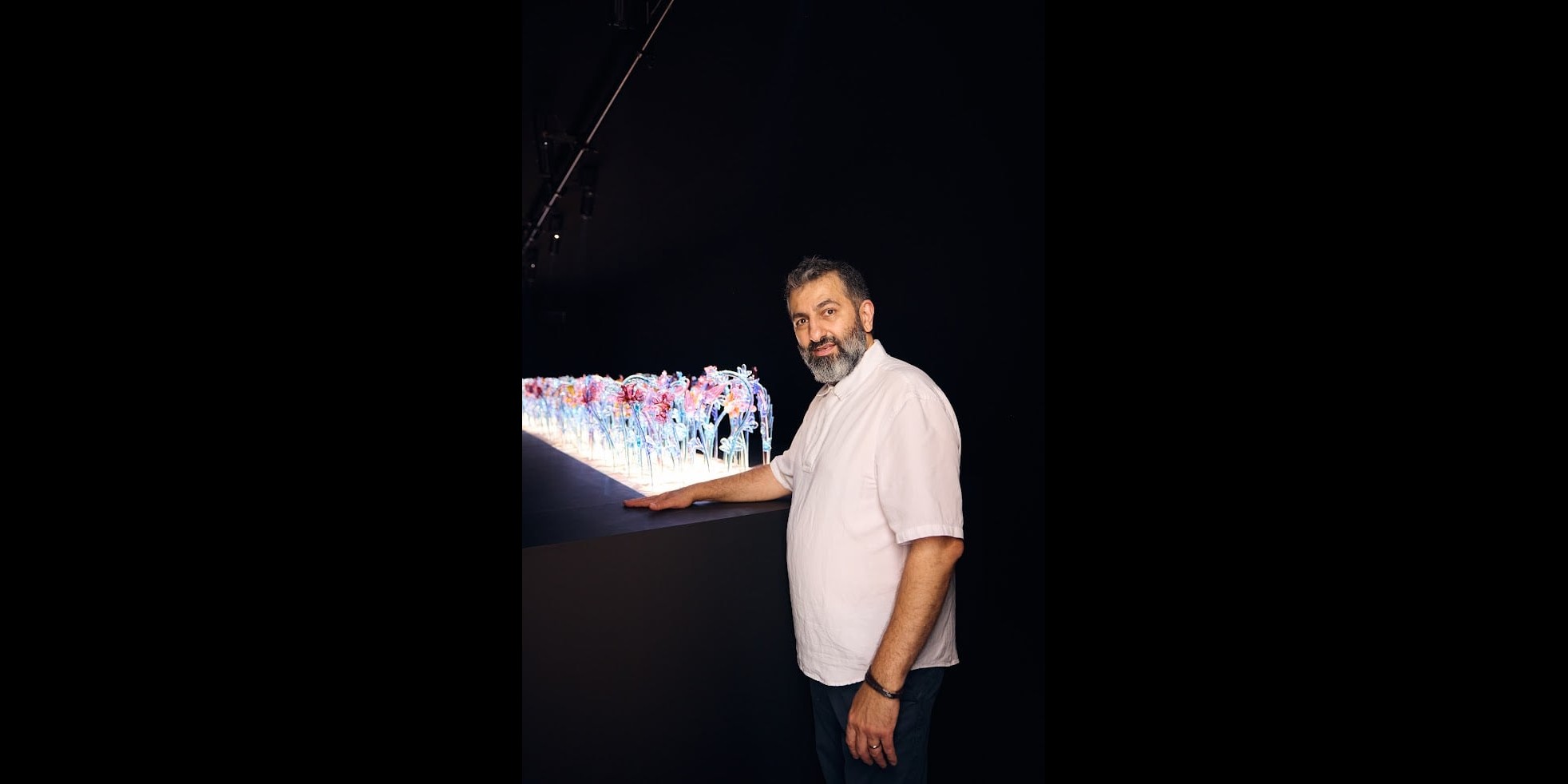
Artist Ruben Saakyan beside his glass installation at the Design Doha Biennial, November 2026. Image: ACDF
“The title Fragile Garden was suggested by the curators of the project in Venice, and it captured the visual character of the work rather accurately. For the installation in Doha, I wanted to develop this idea further and explore how the image of a flower changes depending on the medium and the way a two-dimensional or three-dimensional object is interpreted,” he said. “What makes this project distinctive is that my installation represents the culmination of a flower’s journey from the surfaces of works by two other artists, each of whom approaches floral motifs through their own artistic practice and means of expression.”
“It was this traditional Bukharan embroidery that became the principal source of inspiration for my installation. My aim was to reverse the process; to bring the flower out of the two-dimensional world of embroidery and return it to three-dimensional space,” Saakyan told TCA. “At the same time, it was essential for me to preserve the embroiderer’s artistic vision. I didn’t want to correct the stylized forms or make them more botanically accurate. On the contrary, I wanted to imagine what the flowers depicted in suzani embroidery might look like if they acquired volume while retaining all the distinctive qualities of their artistic interpretation. Some of the floral motifs were easily recognizable, while others were almost impossible to associate with any particular plant. In those cases, I tried to imagine how they might exist in reality, taking the forms created by the embroiderer as my starting point.”
The choice of glass—luminous, rigid, yet inherently delicate—creates a striking material contrast with the soft, matte textures of handwoven silk.
“Traditional Bukharan embroidery, despite its use of silk fabric, has a predominantly matt and understated texture. Glass, by contrast, is characterised by its brilliance, transparency and ability to interact with light,” he said. “This contrast helps to emphasise one of the central ideas of my installation — the separation of the flower from its original representation. The properties of glass create the impression that the flowers are literally emerging from the surface of the embroidery and returning to three-dimensional space. The shadows cast by the transparent flowers onto a surface covered with glass sand reinforce this sense of separation, as though the flowers are being released from the flat surface they have occupied for generations. These traces become a kind of memory of the original image, while the flowers themselves now exist as independent three-dimensional objects.”
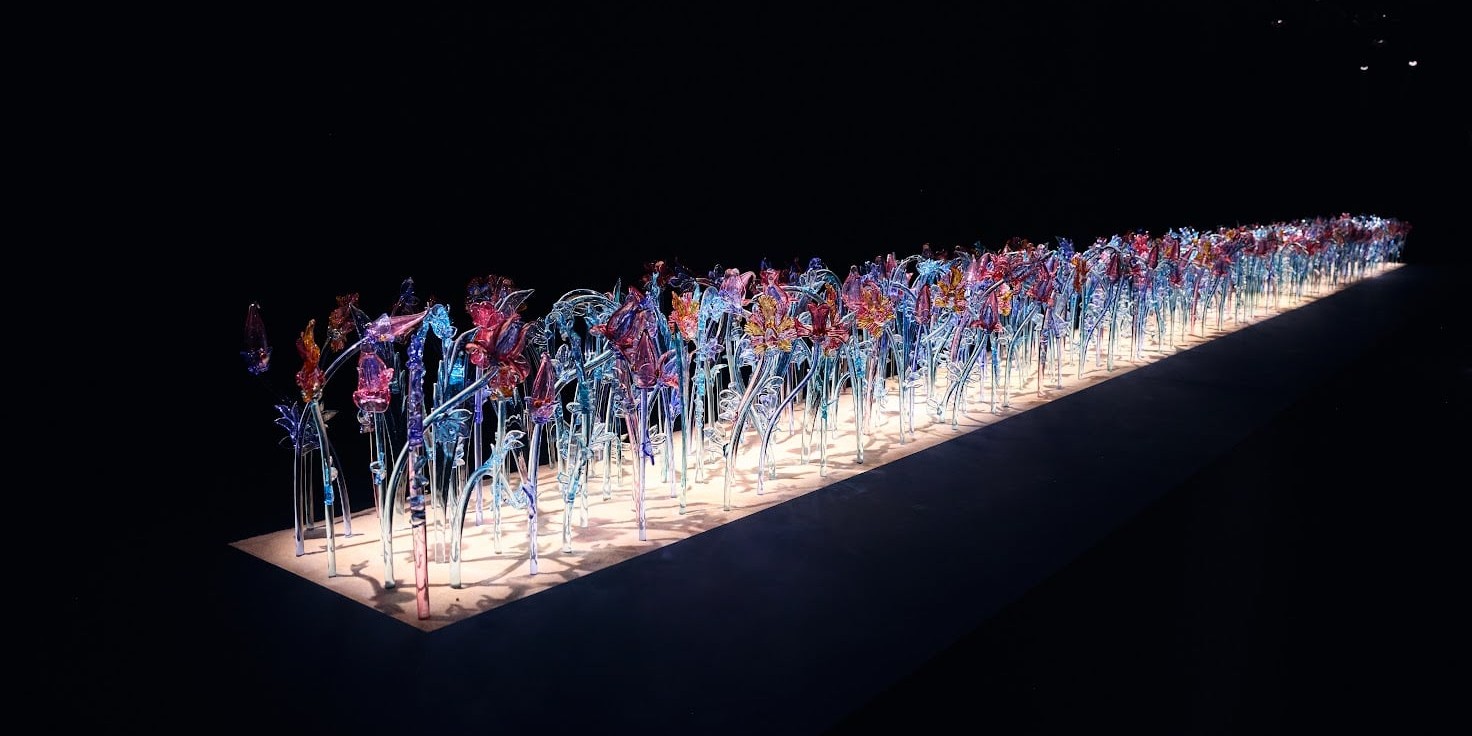
Saakyan’s reimagining of Fragile Garden transforms traditional Uzbek embroidery motifs into three-dimensional glass flowers. Image: ACDF
For Saakyan, watching visitors interact with the piece during the opening days in Doha confirmed that this subtle transition resonated even without curatorial wall text. “During the exhibition opening, I was interested to observe how visitors responded to the installation. Many recognized this idea independently and shared their own interpretations with me. I must admit that this was a pleasant surprise, as I had assumed that certain artistic decisions might require further explanation. Instead, I discovered that visitors were able to sense and understand them intuitively.”
Reflecting on the exhibition’s title, Saakyan pointed out the double meaning embedded in the word “leaf”—both a botanical fragment and the page of an illuminated book—which ties all three artists back to Saadi’s 13th-century text.
“In the preface to Saadi’s Gulistan, there is a beautiful poetic image in which the author suggests taking a leaf from his garden rather than an armful of roses. This idea became one of the starting points for our exploration of the exhibition’s concept,” he said. “When discussing the title A Leaf from the Rose Garden with the curators, we were drawn to its ambiguity. For us, the leaf represented not only part of a plant, but also a page of a manuscript containing a text, a story or a narrative. This interpretation allowed us to bring three entirely different artistic practices together within a single concept. We did not set out to create a rose garden in the literal sense. What interested us far more was the idea of a garden as a space in which a story unfolds, with the flower becoming the central character of that narrative.”