South Korea is proposing a substantial funding increase for a museum in Tashkent dedicated to the history of ethnic Koreans in Central Asia. Its Overseas Koreans Agency is seeking $6.44 million for 2027, more than three times the $1.89 million allocated for 2026.
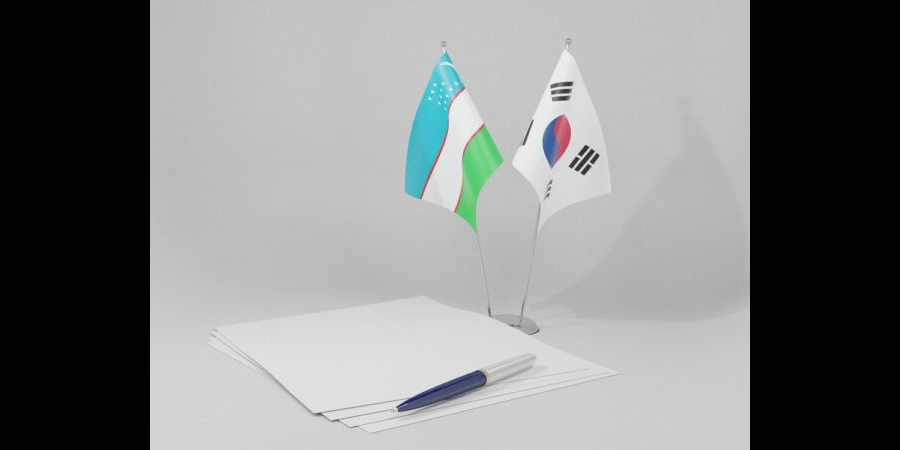
The museum is intended to commemorate two anniversaries in 2027: 90 years since the Soviet deportation of ethnic Koreans to Central Asia and 35 years of diplomatic relations between South Korea and Uzbekistan.
Despite support from both governments, construction has yet to begin. On November 23, South Korea’s Public Procurement Service issued a construction tender, with bids due on December 10 and a schedule that casts doubt on completion during the anniversary year.
Why Tashkent?
In 1937, Soviet authorities forcibly deported 171,781 ethnic Koreans from the Soviet Far East, primarily to Kazakhstan and Uzbekistan. More than 95,000 were sent to Kazakhstan, while roughly 74,000 had been settled in Uzbekistan by 1938.
Their descendants, known as Koryo-saram, have developed distinct cultural and linguistic traditions over generations in the former Soviet Union.
Of the approximately 310,000 Koryo-saram living in Central Asia, the largest community is in Uzbekistan. Estimates range from 170,000, according to Overseas Koreans Agency head Kim Kyung-hyup, to 180,000, according to Yonhap News Agency.
Kazakhstan is home to around 120,000 ethnic Koreans. Its Korean community is also preparing commemorative initiatives for the 90th anniversary of the deportation.
Five Years of Negotiations
The museum was first proposed in December 2021, when Uzbek President Shavkat Mirziyoyev suggested to his South Korean counterpart, Moon Jae-in, that the countries pursue its construction in 2022 to mark the 85th anniversary of the deportation.
That proposal did not lead to construction. During South Korean President Yoon Suk Yeol’s tenure, reports in June 2024 identified 2027 as the new target, although the bilateral joint statement expressed support for the initiative without specifying a completion date.
The two governments reaffirmed their commitment at the September 14, 2026, summit in Seoul. On November 9, South Korean President Lee Jae Myung and Uzbek Senate Chair Tanzila Narbaeva discussed the museum and the implementation of agreements reached at the summit. The following day, South Korean National Assembly Speaker Cho Jung-sik urged Narbaeva to support construction.
The museum is to be located at Tashkent’s House of Korean Culture and Arts, itself the product of several years of bilateral cooperation.
The countries agreed to build the cultural center in June 2014 during Park Geun-hye’s presidency. It was completed in 2018 and opened in April 2019. Uzbekistan provided a 30,000-square-meter site, while South Korea allocated $7.71 million for the building, which includes a 478-seat auditorium.
A Growing Budget and a Shrinking Timeline
The Overseas Koreans Agency’s 2024 schedule called for a feasibility study, design work in 2025, construction in 2026, and completion in 2027. The Association of Korean Cultural Centers of Uzbekistan was expected to manage the museum.
Following a design competition in late 2025, the agency established an advisory committee including ten experts in February 2026. Design work was rescheduled for the first half of 2026, with construction expected to begin in the second half.
At an April 7 meeting, Kim Kyung-hyup and Uzbek Ambassador Alisher Abdusalomov discussed plans to begin construction in September or October, a target the project missed.
The tender describes a two-story, 2,033-square-meter museum with an estimated construction cost of 6.46 billion won (approximately $4.8 million). The 420-day construction period, if used in full, would extend into 2028 even if work began immediately after bidding closes.
Funding has increased considerably since the project was revived in 2024. The agency’s allocation for the museum rose from $262,000 in 2025 to $1.89 million in its 2026 budget, approved in December 2025.
The proposed 2027 increase amounts to 239.7% in South Korean won. By comparison, the agency’s overall proposed budget would rise by 21.4%, to $102.49 million.
Preserving 160 Years of History
The museum is intended to document approximately 160 years of Koryo-saram history, including the deportations of 1937 and earlier Korean migration.
South Korean museum specialists are working with representatives of Uzbekistan’s Korean community to develop the exhibitions. The advisory committee’s members include Kim Byeong-hak, director of the Wolgok Koryoin Culture Museum, and Kim Sang-yeol, director of the Incheon Urban History Museum.
A delegation including committee members visited Tashkent in early July to meet local diaspora representatives and discuss multimedia exhibitions incorporating historical documents, photographs, family heirlooms, and eyewitness accounts.
Most information about the museum’s development has come from South Korean officials and diaspora publications. Uzbek government agencies and local associations have released few details about their role.
At the April 7 meeting, Abdusalomov said Uzbekistan would “spare no government-level support” to ensure construction proceeds smoothly, according to South Korean media.
Regional specialists on the Koryo-saram diaspora contacted for this article declined to comment publicly on the project.
For Seoul and Tashkent, the museum offers an opportunity to commemorate a shared history through a permanent cultural institution. But with the construction contract still to be awarded and the 2027 budget awaiting parliamentary approval, completing the museum by the end of next year appears increasingly challenging.