BISHKEK (TCA) — At the 15th Central Asia Regional Economic Cooperation (CAREC) Ministerial Conference in Islamabad, Pakistan on October 26, CAREC Ministers agreed to formulate a new long-term strategy for CAREC to enhance its relevance in the context of changing economic and development conditions, the Asian Development Bank’s press service said.
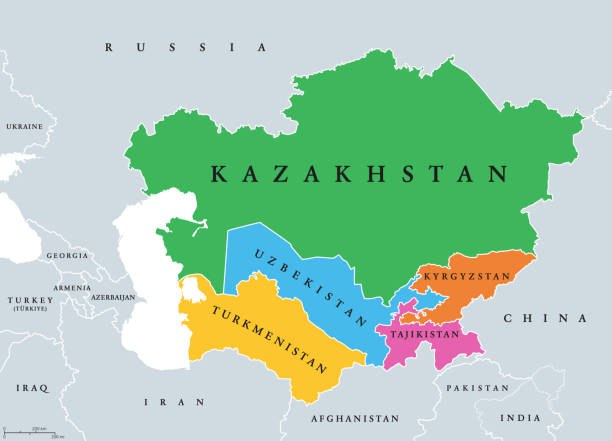
The CAREC Program is a partnership of 10 countries (Afghanistan, Azerbaijan, China, Kazakhstan, Kyrgyz Republic, Mongolia, Pakistan, Tajikistan, Turkmenistan, and Uzbekistan), supported by 6 multilateral institutions, working together to promote development through cooperation. CAREC helps Central Asia and its neighbors realize their significant potential by promoting regional cooperation in four priority areas: transport, trade facilitation, energy, and trade policy.
The Conference welcomed Georgia as CAREC’s 11th member.
In a special address at the meeting, Asian Development Bank (ADB) President Takehiko Nakao said CAREC had made a valuable contribution to the region’s development but its future will depend on how it adapts to changing economic and development conditions in the region and beyond.
“Regional infrastructure and trade facilitation will likely remain the core of the program but an expanded agenda and new approaches need to be considered,” he said. “With our experience promoting regional cooperation in other parts of Asia and Pacific, ADB is well placed to support CAREC in any new directions the program identifies.”
ADB functions as the Secretariat of the CAREC Program, which promotes regional cooperation in transport, energy, trade facilitation, trade policy, and other key sectors of mutual interest. Cumulatively, the CAREC Program has mobilized $28.9 billion of investments since it was set up in 2001 until end of September 2016, over a third, or $10.1 billion, of which was financed by ADB.
ADB has helped CAREC countries adapt to changing economic conditions. ADB provided countercyclical support to Kazakhstan and policy-based lending to improve the business climate in the Kyrgyz Republic and Tajikistan, and to promote domestic resource mobilization in Georgia.
In a joint statement, the CAREC Ministers noted progress on transport, having reached 93% of their road building or upgrading target to 2020 and adopting a road safety strategy for 2017-2030 that aims to at least halve road fatalities in CAREC by 2030 compared to 2010 levels. This will save an estimated 23,000 lives.
Along the six CAREC transport corridors, 7,230 kilometers of road and more than 4,500 kilometers of rail have been built or rehabilitated. The ministers also adopted a railway strategy to 2030, prioritizing six railway corridors aligned with trade routes.
They were pleased with the status of the Almaty-Bishkek Corridor Initiative as the pilot corridor for CAREC economic corridor development and endorsed an investment framework for the corridor.
They also noted progress on major energy projects coming on stream. 3,835 kilometers of power transmission lines have been constructed during 2013-2015, supporting the expansion of energy trade between Central Asian countries endowed with surplus energy and energy deficit countries in South Asia, including Afghanistan, Pakistan, and beyond. Countries are jointly planning and constructing energy infrastructure. One important example is the Turkmenistan-Uzbekistan-Tajikistan-Afghanistan-Pakistan interconnection program funded by ADB.
Meanwhile, Central Asian countries have identified power investment needs of about $94 billion to 2023, according to an ADB-commissioned study presented at the 1st Energy Investment Forum (EIF) of CAREC held on October 24 in Islamabad. Also, the financing gap that the private sector has to fill in the same period amounts to about $38 billion.
The EIF was held to highlight investment opportunities in the CAREC region by bringing together key government officials, project developers/sponsors, project financiers, equipment manufacturers, and engineering, procurement, and construction contractors. More than 150 high-level government officials and business leaders from 10 countries attended the forum.