• KGS/USD = 0.01144 0%
  • KZT/USD = 0.00193 -0%
  • TJS/USD = 0.10851 0%
  • UZS/USD = 0.00008 0%
  • TMT/USD = 0.28571 0%
  • KGS/USD = 0.01144 0%
  • KZT/USD = 0.00193 -0%
  • TJS/USD = 0.10851 0%
  • UZS/USD = 0.00008 0%
  • TMT/USD = 0.28571 0%
  • KGS/USD = 0.01144 0%
  • KZT/USD = 0.00193 -0%
  • TJS/USD = 0.10851 0%
  • UZS/USD = 0.00008 0%
  • TMT/USD = 0.28571 0%
  • KGS/USD = 0.01144 0%
  • KZT/USD = 0.00193 -0%
  • TJS/USD = 0.10851 0%
  • UZS/USD = 0.00008 0%
  • TMT/USD = 0.28571 0%
  • KGS/USD = 0.01144 0%
  • KZT/USD = 0.00193 -0%
  • TJS/USD = 0.10851 0%
  • UZS/USD = 0.00008 0%
  • TMT/USD = 0.28571 0%
  • KGS/USD = 0.01144 0%
  • KZT/USD = 0.00193 -0%
  • TJS/USD = 0.10851 0%
  • UZS/USD = 0.00008 0%
  • TMT/USD = 0.28571 0%
  • KGS/USD = 0.01144 0%
  • KZT/USD = 0.00193 -0%
  • TJS/USD = 0.10851 0%
  • UZS/USD = 0.00008 0%
  • TMT/USD = 0.28571 0%
  • KGS/USD = 0.01144 0%
  • KZT/USD = 0.00193 -0%
  • TJS/USD = 0.10851 0%
  • UZS/USD = 0.00008 0%
  • TMT/USD = 0.28571 0%
21 December 2025

Viewing results 7 - 12 of 281

New Flight to Link Almaty and Kyrgyzstan’s Karakol Ski Resort

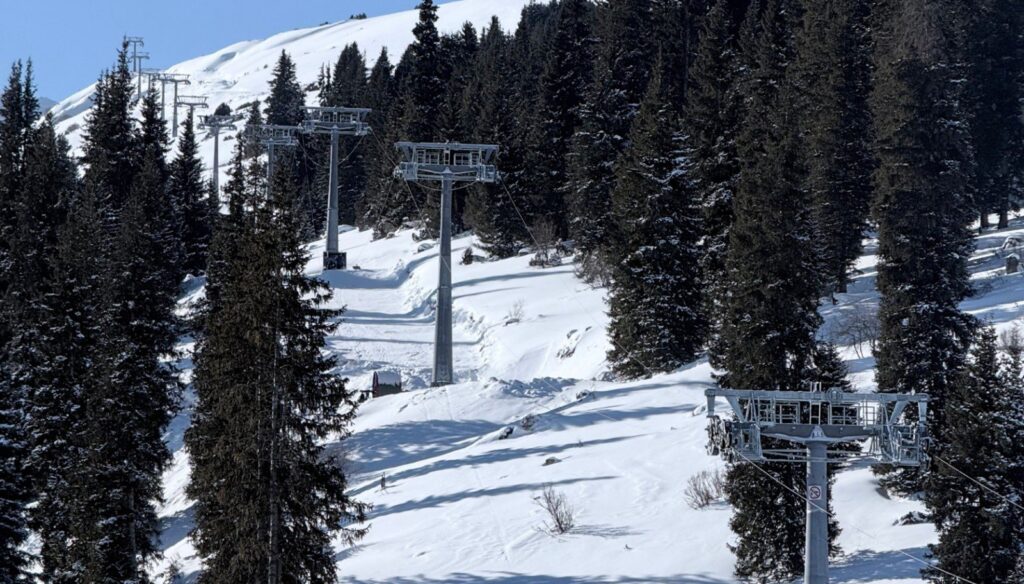
As the winter tourism season approaches, Kyrgyzstan’s state-owned Asman Airlines has announced the launch of a new regular flight connecting Almaty, Kazakhstan’s largest city, with the Kyrgyz town of Karakol, home to the country’s most popular ski resort. The Karakol-Almaty-Karakol route is set to begin operations on December 5, with flights scheduled every Friday and Sunday. The flight time is approximately 35 minutes. Asman Airlines will operate the Dash 8 Q400, a Canadian-made short-haul turboprop aircraft that can carry up to 80 passengers and has a range of up to 2,000 kilometers. Karakol is the highest ski resort in Central Asia, located at an altitude of 3,040 meters in the Tien Shan Mountains. The resort offers panoramic views of the surrounding peaks and nearby Lake Issyk-Kul. Situated just 7 kilometers from Karakol and 400 kilometers from Bishkek, it features ski trails suitable for both professional athletes and beginners. The ski season runs from December to March. The new air route is expected to significantly improve access to Karakol for weekend travelers from Kazakhstan’s commercial capital. In a related development, Kazakhstan and Kyrgyzstan have further enhanced air connectivity with the launch of a direct flight linking their capitals, Astana and Bishkek. On November 10, Kazakhstan’s Vietjet Qazaqstan operated its inaugural flight on the Astana-Bishkek route. The service runs twice a week, on Mondays and Thursdays. Officials anticipate that the new flights will promote tourism, business, and cultural exchange between the two neighboring countries.

Central Asia’s Longevity Boom: More People Living Past 100

The number of people living beyond 100 continues to rise across Central Asia. Experts attribute the trend to better medical care, declining infant mortality rates, and overall improvements in living standards. However, the distribution of centenarians across the region remains uneven. Tajikistan: A Steady Increase According to the Social Insurance and Pension Agency, 415 citizens over the age of 100 are currently registered in Tajikistan. The country’s average life expectancy has reached 76.6 years. Among Tajikistan’s oldest residents are 120-year-old Marziyamoh Ibodova from Darvaz and 117-year-old Gulrakhat Nazarova from Dangara. Experts say rising life expectancy is closely linked to economic progress, advances in cardiovascular treatment, and improved access to healthcare. Uzbekistan: A Record-Breaking Claim Uzbekistan leads the region with 514 centenarians as of January 1, 2024, comprising 404 women and 110 men. The highest concentration is in the Kashkadarya Region, which is home to 92. One extraordinary case has drawn global attention. Khuvaydo Umarova (Toshmatova), a resident of Karakum mahalla in the Buvayda District, was officially recognized by Uzbekistan’s Ministry of Justice in September 2025 as having turned 130. [caption id="attachment_39103" align="aligncenter" width="680"] Khuvaydo Umarova; image: Uzbekistan Ministry of Justice[/caption] Born on January 1, 1895, her birth had gone unregistered for decades. Following verification of her documents, Khuvaydo-mum is now slated for entry into the Guinness Book of Records as the world’s oldest living person. Kazakhstan and Kyrgyzstan: Moderate Numbers Kazakhstan’s oldest known resident is a 115-year-old woman from the Ulytau Region. Most of the country’s centenarians live in Almaty (58), followed by the Turkestan Region (53) and the Almaty Region (37). In Kyrgyzstan, Deputy Health Minister Bubuzhan Arykbaeva reports approximately 300 citizens over 100 years old. This places the country fourth in Central Asia in terms of centenarian population. A Global Phenomenon Globally, an estimated 630,000 people are over the age of 100, according to recent United Nations data. Japan tops the list, accounting for one in five of the world’s centenarians. Life expectancy in Japan is 88 years for women and 82 for men, followed by the United States, China, and India. Doctors emphasize that longevity is often the result of consistent habits: regular physical activity like walking, sufficient sleep, a balanced diet, and routine medical check-ups. Avoiding smoking and alcohol is equally critical. Genetics also play a significant role, those with long-lived relatives have a higher chance of living to an advanced age.

World Happiness Index: Central Asian Countries Stand Out With “Warm Social Climate”

Kazakhstan has been named the happiest country in Central Asia, according to the World Happiness Report 2025 published by the Oxford Wellbeing Centre. Ranking 43rd globally, Kazakhstan outperformed its regional neighbors in metrics such as social support, trust, and freedom of choice.  The report evaluates national well-being based on six key indicators: GDP per capita Social support (help from family, friends, and society) Healthy life expectancy Freedom to make life choices Generosity (willingness to help others) Perceived absence of corruption Kazakhstan scored 6.38 out of 10, demonstrating especially strong performance in trust and honesty. The country ranked 30th globally for the likelihood of returning a wallet to a neighbor and 42nd for returning it to a stranger. Uzbekistan followed at 53rd place with a score of 6.2. The country stood out for its high levels of charitable giving (29th) and public trust in law enforcement (19th). Kyrgyzstan ranked 75th with 5.9 points and was recognized as the regional leader in helping strangers. Tajikistan placed 90th with a score of 5.4 but made the global top four in volunteering, an indicator linked to longstanding traditions of mutual aid. Turkmenistan was excluded from the ranking due to insufficient data. The report highlights that Central Asian countries exhibit some of the world’s highest levels of kindness. The region's mutual aid index ranges from 0.30 to 0.36, compared to the global average of 0.33. “Despite economic differences, the region maintains strong social ties and a culture of collectivism, where helping others and participating in community life remain important values,” the report notes. According to the authors, happiness is influenced less by income than by trust, stability, and personal freedom. Central Asia, they conclude, fosters a “warm social climate,” where interpersonal kindness often offsets institutional shortcomings and economic hardship. Globally, Finland topped the 2025 rankings, followed by Denmark, Iceland, Sweden, and the Netherlands. At the bottom of the list were Sierra Leone (146th) and Afghanistan (147th), where happiness levels remain the lowest worldwide.

The Artistic Brilliance of Central Asia Takes Center Stage at Sotheby’s

On October 29, Sotheby’s will host its Arts of the Islamic World and India sale, featuring a dazzling selection of manuscripts, ceramics, metalwork, and jewelry that together trace the creative reach of Central Asia across six centuries. The auction highlights how the region’s artists shaped Islamic visual culture from the early medieval period to the Timurid age. Among the most important works is a rare page from the monumental Baysunghur Qur’an, produced around 1400 in Herat or Samarkand. Another piece connects to the earlier Samanid Dynasty, whose rule from Bukhara and Tashkent fostered a flourishing of calligraphic pottery in the ninth and tenth centuries. The Arab geographer al-Maqdisi once praised the “large bowls from Shash,” an early name for Tashkent, noting their reputation throughout the Islamic world. [caption id="attachment_38298" align="aligncenter" width="1797"] A line from the 'Baysunghur Qur'an', attributed to 'Umar al-Aqta, Herat or Samarkand, circa 1400; image: Sotheby's[/caption] Two colorful Timurid mosaic tiles from the fourteenth or fifteenth century illustrate the architectural splendor of Samarkand and Herat. Their glazed patterns in cobalt, turquoise, and white once formed part of vast decorative panels in mosques and mausoleums. The geometric interlace and stylized foliage that define them became a visual signature of Timurid architecture, a style that spread from Central Asia to Persia and India. [caption id="attachment_38301" align="aligncenter" width="1346"] A Golden Horde turquoise and pearl-set gold belt or necklace, Pontic-Caspian Steppe, 14th century; image: Sotheby's[/caption] The Times of Central Asia spoke with Frankie Keyworth, a specialist in Islamic and Indian Art at Sotheby’s, for a closer look. TCA: How did manuscripts like the Baysunghur Qur’an serve as symbols of power and faith in the Timurid court, and what does its immense scale - a Qur’an so vast it took two people to turn a page - reveal about the empire’s ambition, artistry, and self-image? Keyworth: The manuscript was a hugely ambitious and challenging project, even just by the tools it would take to create, with monumental sheets of paper measuring 177 by 101cm., and a large pen whose nib would have to measure over 1cm. Displayed on a magnificent marble stand, the manuscript would be a staggering visual representation of the patron’s wealth and piety. Their subsequent use during public recitation reinforced the elite’s religious aspirations. The fact that this manuscript is unsurpassed by any other medieval Qur’an and remains so valued centuries after it was produced at the turn of the 15th century reveals the key role manuscripts played in the establishment of the Timurid dynastic image. [caption id="attachment_38299" align="aligncenter" width="1346"] A Timurid brass jug (mashrabe), Herat, Afghanistan, 15th-early 16th century; image: Sotheby's[/caption] TCA: A brass jug from Herat shaped like a Chinese vase, a ceramic bowl from Tashkent inscribed in Arabic script - these objects tell of traders, scholars, and artists linking worlds from Samarkand to Beijing long before globalization had a name. What can you tell us about how this trade transpired, and are there similarities to modern transport corridors? Keyworth: Trade via the so-called Silk Road endured for...

New Partnerships Aim to Turn Kyrgyz Students into Entrepreneurs

On October 20, the investment fund Central Asia Capital signed strategic cooperation agreements with Jusup Balasagyn Kyrgyz National University (KNU) and the Kyrgyz-Russian Slavic University (KRSU) to promote practice-oriented education, support student startups, and create new employment opportunities. The partnerships aim to bridge the gap between academia and industry by providing students with hands-on business experience, mentorship, and pathways to entrepreneurship. “Our agreements with KNU and KRSU are a major step toward creating conditions where students not only gain knowledge but also apply it in real business settings. This is a strategic investment in the future of Kyrgyzstan’s economy,” said Anton Sobin, Chairman of the Board of Directors at Central Asia Capital. A flagship initiative under the agreements will be the launch of an Acceleration School, where students can develop business projects, receive expert mentorship, and compete for investment grants. “We want young people to see that they can build successful businesses in Kyrgyzstan without going abroad,” Sobin emphasized. Under the agreement with KNU, the fund will support curriculum modernization, scholarship programs, and internship placements within its subsidiaries and partner firms. The KRSU partnership emphasizes innovation and startup support, along with infrastructure development. Planned upgrades include a new innovation lab, enhanced sports facilities, and improvements to the university campus. Central Asia Capital will also assist in the renovation of KRSU’s educational and recreational complex at Lake Issyk-Kul.

Kyrgyzstan Warns of Potential Fuel Shortage

Kyrgyzstan’s Antimonopoly Regulation Service has urged oil traders to avoid unjustified price increases and to ensure continuous fuel supplies, amid concerns about dwindling gasoline reserves. According to participants in a recent meeting convened by the Antimonopoly Regulation Service, including representatives from the presidential administration, the country’s current gasoline reserves are sufficient for only one month. Oil traders attributed recent price hikes at gas stations to rising wholesale prices at Russian refineries and a reduction in fuel shipments from Russia, Kyrgyzstan’s primary supplier. “Following the meeting, proposals were prepared to stabilize the situation on the fuel market, which will be sent to the Ministry of Economy and Commerce,” the Antimonopoly Regulation Service said in a statement. The regulator called on market players to “maintain fair competition,” refrain from unjustified price increases, and prevent disruptions in fuel availability. Traders reportedly pledged to maintain uninterrupted supplies through the end of the year, despite ongoing challenges in Russia. Kyrgyzstan relies heavily on Russian fuel imports, which it receives at preferential rates and without export duties. However, deliveries have fallen due to scheduled maintenance at Russian refineries and recent attacks on oil infrastructure. Fuel industry representatives said a new supply agreement with Russia for 2026 is expected to be signed by the end of this year.