China is expanding another dimension of its presence in Kazakhstan – training specialists for industry. The country’s first Ban Mo Workshop will open in Almaty, where students will be trained to work with modern manufacturing technologies and equipment.
Ban Mo is a Shandong-backed vocational education initiative designed to link technical training with the needs of companies operating overseas. The center will be established at Satbayev University in partnership with Shandong University of Engineering and Vocational Technologies, after an agreement was reached during a visit by a Kazakh delegation to Shandong Province.
The workshop aims to give students practical experience with industrial equipment while still at university. Satbayev University explicitly links the program to the needs of companies developing manufacturing operations in Kazakhstan.
“It is important to us that future engineers work with modern equipment while they are still studying, participate in technology projects, and gain hands-on experience in production. The Ban Mo Workshop will allow us to train students with the technologies and real-world needs of our industrial partners in mind,” said Sapar Shalabayev, vice rector of Satbayev University, in the university’s announcement of the project.
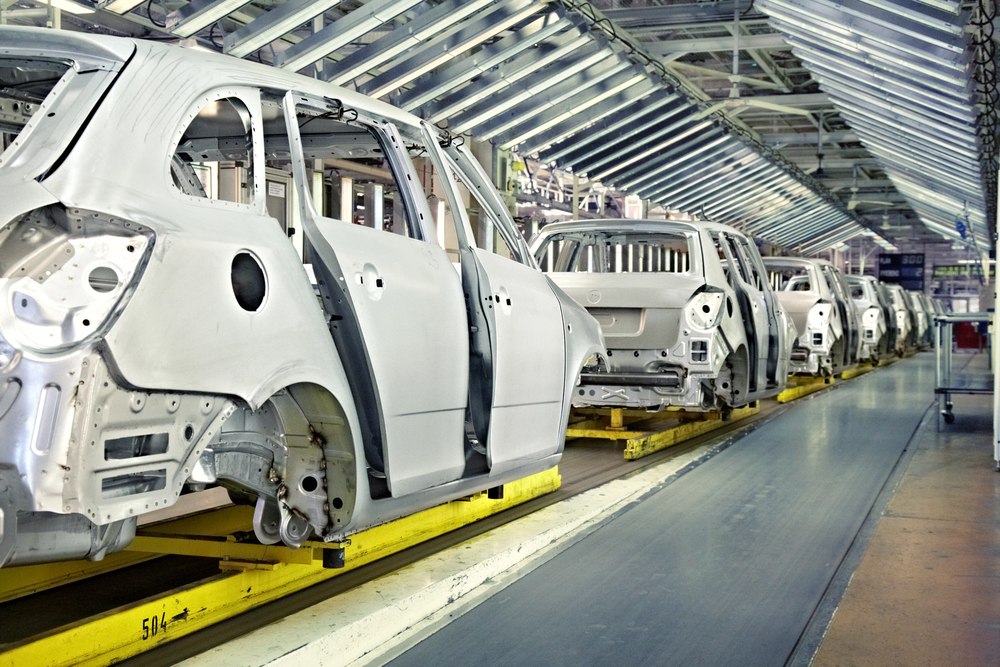
The wider industrial context is particularly visible in the automotive sector. Astana Motors Manufacturing Kazakhstan, a car plant that opened in Almaty’s industrial zone in September 2025, can produce up to 120,000 vehicles a year, with welding, painting, and assembly carried out at the site. The plant makes Chery, Changan, Haval, and Tank vehicles for Chinese manufacturers.
Against this backdrop, Chinese education projects address a very practical need: along with production lines and equipment, new factories need local specialists who know how to operate them.
Ban Mo is a relatively new Shandong model for taking vocational education overseas. The province launched its overseas Ban Mo College initiative in 2023, with programs based on cooperation between educational institutions and companies with operations abroad.
The name combines two figures from ancient China: Lu Ban, the legendary craftsman and inventor associated with building and engineering, and Mozi, a philosopher whose work encompassed logic, optics, mechanics, and military engineering. Together, the two figures represent the combination of practical craftsmanship and technical knowledge that the program seeks to promote.
One of the first overseas projects was Ban Mo College in Zambia, established with the participation of Weihai Vocational College, Copperbelt University, and China Civil Engineering Construction Corporation. An agreement to establish it was signed in January 2024, and an official launch ceremony was held in July that year. The program combines vocational skills, Chinese-language instruction, and training for industry. Its focus is construction engineering, with students moving between university study and practical training linked to the Chinese company’s operations in Zambia.
For Kazakhstan, this model is not emerging in a vacuum. The country already has three Luban Workshops, part of a better-known Chinese vocational education initiative. The first opened in 2023 at East Kazakhstan Technical University, followed by centers at Eurasian National University in Astana and ALT University in Almaty.
For Kazakhstan, this model offers a way to train workers directly for new manufacturing operations and increase the share of local specialists at enterprises with Chinese participation. For China, vocational education is increasingly becoming a complement to its exports: companies gain access abroad to workers already familiar with the systems they use.
The model also has a longer-term implication. The Luban Workshops, in particular, use Chinese equipment and technical systems. That gives students practical experience with technologies increasingly present in Kazakhstan, but it can also embed Chinese technological platforms more deeply in the country’s industrial and educational infrastructure.
As TCA has previously noted, training specialists on particular Chinese systems can make it easier to localize production, while also increasing reliance on the suppliers of the corresponding equipment, components, and technical know-how.