• KZT/USD = 0.00219
  • TJS/USD = 0.10860
  • UZS/USD = 0.00008
  • TMT/USD = 0.29850
  • KZT/USD = 0.00219
  • TJS/USD = 0.10860
  • UZS/USD = 0.00008
  • TMT/USD = 0.29850
  • KZT/USD = 0.00219
  • TJS/USD = 0.10860
  • UZS/USD = 0.00008
  • TMT/USD = 0.29850
  • KZT/USD = 0.00219
  • TJS/USD = 0.10860
  • UZS/USD = 0.00008
  • TMT/USD = 0.29850
  • KZT/USD = 0.00219
  • TJS/USD = 0.10860
  • UZS/USD = 0.00008
  • TMT/USD = 0.29850
  • KZT/USD = 0.00219
  • TJS/USD = 0.10860
  • UZS/USD = 0.00008
  • TMT/USD = 0.29850
  • KZT/USD = 0.00219
  • TJS/USD = 0.10860
  • UZS/USD = 0.00008
  • TMT/USD = 0.29850
  • KZT/USD = 0.00219
  • TJS/USD = 0.10860
  • UZS/USD = 0.00008
  • TMT/USD = 0.29850
22 November 2026

Viewing results 55 - 60 of 14137

Kyrgyzstan Presidential Election Draws Eleven Applicants, Including Japarov

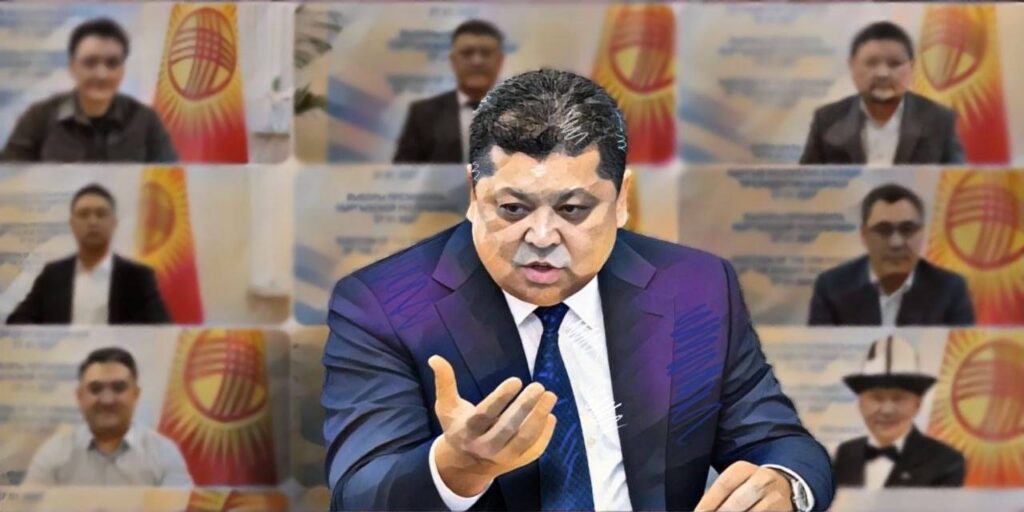
Eleven people, including President Sadyr Japarov, have applied to run in Kyrgyzstan’s presidential election on January 27, 2027. By November 16, two had collected the 30,000 voter signatures required for registration. The Central Election Commission (CEC) confirmed the number of applicants on November 13. Applicants have until December 8 to collect enough signatures, after which the commission will verify their submissions before deciding who qualifies for registration. Japarov was the first to finish collecting signatures, reaching the maximum of 60,000 that may be submitted to the CEC. By November 15, Syimyk Zhapykeyev, former head of the State Service for Combating Economic Crimes, commonly known as the Financial Police, had collected 31,140 signatures. By that evening, Aimen Kasenov, a former board member of the Russian Kyrgyz Development Fund, was approaching the threshold with 28,257 signatures. Former lawmakers Iskhak Masaliyev and Baktybek Kalmamatov had collected 26,089 and 14,140, respectively. Klara Sooronkulova, a former Constitutional Chamber judge, had 13,613. Former State Migration Service head Bakytbek Adylov and former CEC chairman Mambetzhunus Abylov are among the remaining applicants. Azamat Esenbekov, a former Finance Ministry official, is also seeking to run. The other two are logistics entrepreneur Akai Kydyrov and businessman Amur Aiba Meder. These five had collected between 3,446 and 15,263 signatures by November 15. Masaliyev has held office for multiple parliamentary terms and participated in opposition politics. Sooronkulova has publicly criticized government decisions. Zhapykeyev became widely known during the political crisis of October 2020, before his appointment to lead the Financial Police. For the first time in a Kyrgyz presidential election, signatures can be collected through Tunduk, the government’s digital platform for public services. Voters may support more than one applicant. A signature supports a person’s registration as a candidate and does not commit the voter to choosing that person in the election. By November 16, the electronic system had recorded more than 227,000 signatures. Under the new rules, applicants were required to pay a nonrefundable electoral deposit of 1 million soms (approximately USD 11,400) before submitting their nominations. They must also demonstrate proficiency in Kyrgyz, the state language, and meet other legal requirements. Remaining registration documents will be accepted until December 13, and the CEC must complete registration by December 23, when official campaigning begins. According to preliminary CEC figures, 4,467,040 citizens are included on the voter rolls. Japarov came to power following mass protests against the results of Kyrgyzstan’s parliamentary elections in October 2020. In January 2021, he won an early presidential election with 79.2% of the vote on a turnout of 39.16%. Several months later, Kyrgyzstan adopted a new Constitution, replacing its mixed parliamentary-presidential system with a presidential system. The head of state gained direct control over the executive branch, while the number of seats in the Jogorku Kenesh, Kyrgyzstan’s parliament, was reduced from 120 to 90. The reform replaced a single six-year presidential term with a limit of two five-year terms. In February 2026, the Constitutional Court clarified Japarov’s eligibility, ruling that his current six-year mandate counts as his...
SIBUR Sanctions Test Kazakhstan’s Petrochemical Ambitions

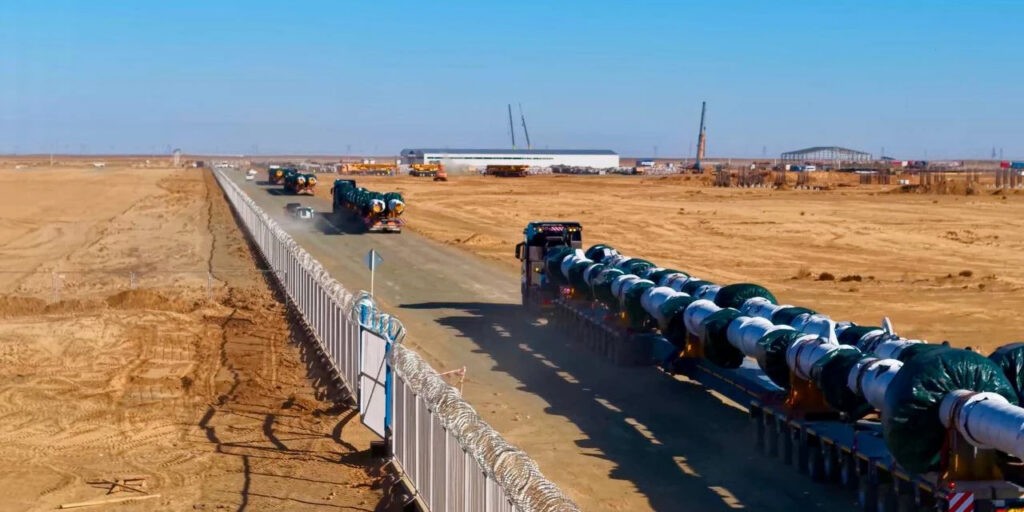
Two days before the UK sanctioned Russia’s SIBUR, Kazakhstan’s national oil company announced a major delivery to its Silleno petrochemical project. Eight reactor sections, weighing more than 600 tons, had reached the construction site in Atyrau region. The equipment marked progress toward a plant intended to turn Kazakh gas into higher-value industrial exports. The November 10 delivery preceded a decision that could complicate the international partnerships supporting that ambition. SIBUR owns 30% of Silleno, a $7.4 billion polyethylene complex, and 40% of Kazakhstan Petrochemical Industries (KPI), which operates a nearby polypropylene plant. The UK’s November 12 designation imposed an asset freeze alongside restrictions on trust services, company directorships and transport. The British authorities cited SIBUR’s business in Russia’s strategically important energy sector as grounds for the measures. SIBUR rejected the decision on November 13. The company called the sanctions “neither legitimate nor justified” and reserved its right to challenge them, Reuters reported. For Kazakhstan, the central issue is whether the two ventures can maintain financing and commercial relationships involving a sanctioned shareholder. Neither plant automatically falls under UK asset freezes merely because SIBUR holds a minority stake. Nevertheless, KazMunayGas’s experience with another Russian partner shows how insurance and lending difficulties can threaten projects beyond Russia’s borders. Financing at a Critical Stage Silleno is particularly exposed to uncertainty because it remains under construction. KazMunayGas’s 2025 annual report says the venture attracted $2 billion in bridge financing that year. Key long-term project investments were expected in 2026–2027, placing the sanctions decision within an important funding period. The report lists KazMunayGas’s stake at 40%, alongside 30% each for SIBUR and China’s Sinopec. The plant’s planned annual capacity is 1.25 million metric tons, with production scheduled for 2029. KazMunayGas has said shareholder equity and international bank loans would finance the development. It expects the plant to replace imported polyethylene and expand exports of manufactured goods. Polyethylene is used in products ranging from pipes and packaging to automotive components and medical equipment. Those ambitions depend on an industrial chain extending well beyond the factory. Silleno’s project outline shows gas from the Tengiz field passing through a separation complex operated by KMG PetroChem. Pipelines will carry ethane to Karabatan, where it will be converted into ethylene and then polyethylene. The annual report separately estimates investment of about $2.1 billion in the gas separation unit and $470 million in ethane and propane pipelines. The technology is international, too. Silleno identifies U.S. company Lummus as the supplier of its steam-cracking technology. Its polymerization and associated processes involve Chevron Phillips Chemical and Univation Technologies of the U.S., and France’s Axens. Oil and gas analyst Oleg Chervinsky has warned that SIBUR’s designation could complicate dealings with banks, insurers and equipment licensors. According to Kursiv, he described additional compliance and payment difficulties rather than an automatic shutdown of the Kazakh ventures. Keeping Exports Moving KPI has a business to protect. The plant exported 326,000 of the 377,000 tons of polypropylene it produced in 2025. Its ability to sell abroad and receive...

Kazakhstan Security Chief Replaced After High-Profile Corruption Arrests

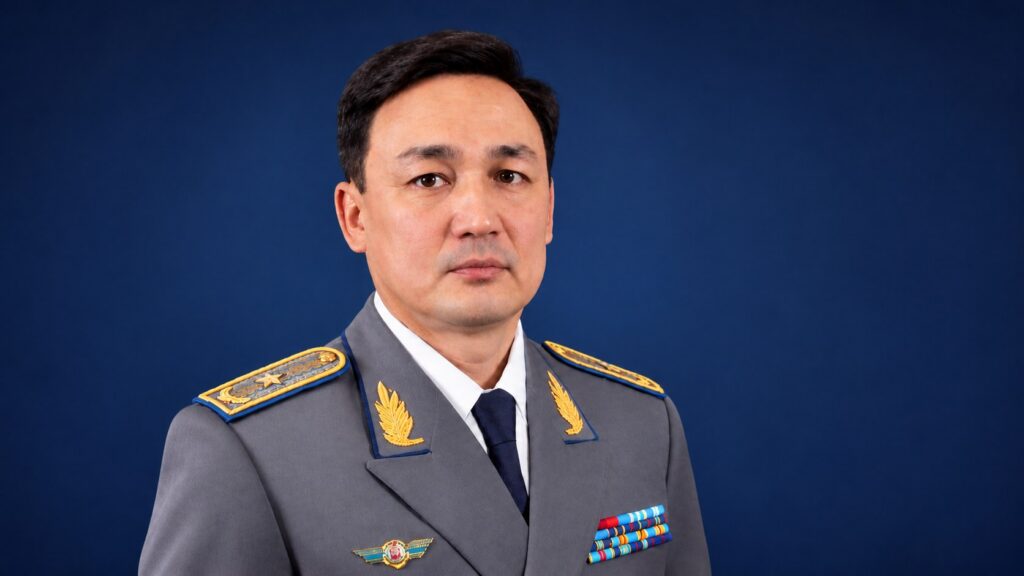
Kazakh President Kassym-Jomart Tokayev appointed a new chairman of the National Security Committee (KNB), the country's main intelligence and security agency, on November 16. Marat Irmenov replaced Yermek Sagimbayev, who had led the agency for nearly five years. The reshuffle came five days after the detention of the heads of the Samruk-Kazyna sovereign wealth fund and national railway company Kazakhstan Temir Zholy (KTZ). No official reason has been given for Sagimbayev's dismissal. Sagimbayev took charge of the KNB in January 2022 during the events known in Kazakhstan as Qantar, or "Bloody January." The mass protests, initially triggered by a sharp rise in liquefied petroleum gas prices, escalated into unrest and armed clashes. According to official figures, 238 people died. He replaced Karim Massimov, who was arrested during the unrest and subsequently convicted of treason. Sagimbayev was reappointed as chairman in August 2026. Just three days before his dismissal, he met Tokayev to report on the KNB's work. His replacement, Irmenov, had been deputy chairman of the KNB since October 2025. He joined Kazakhstan's national security services in 1996 and held operational and senior management positions before receiving the rank of major general in 2019. On the day of Irmenov's appointment, Tokayev held a meeting with the KNB leadership. The president called for reforms to the security service and greater protection of Kazakhstan's economic interests. He also ordered improvements in staff recruitment and anti-corruption efforts, including preventive measures in government programs. On November 11, the KNB's Anti-Corruption Service detained Samruk-Kazyna chief executive Nurlan Zhakupov and KTZ chief Yelzhas Otynshiyev on suspicion of a corruption-related offense. Several other individuals were also taken into custody. The following day, the committee confirmed the detentions but did not disclose details of the investigation. At a Security Council meeting on November 13, Tokayev described the detentions as "an extremely serious signal of large-scale corruption in state-owned companies." He stressed the importance of protecting Kazakhstan's international reputation and maintaining the trust of foreign companies and financial institutions. Samruk-Kazyna manages Kazakhstan's largest state-owned assets in energy, including oil and gas, as well as transportation. KTZ operates the country's railway network, handling domestic freight and cargo transit between China and Europe, including shipments along the Middle Corridor, a route crossing the Caspian Sea through Azerbaijan and Georgia. Personnel changes in the transportation sector began before the detentions. On November 3, Tokayev dismissed Nurlan Sauranbayev as minister of transport. He was replaced by Assel Zhanassova, who was appointed deputy prime minister and transport minister. Zhanassova had previously headed the national postal operator Kazpost. She had also been a presidential adviser and deputy head of the Presidential Administration. Sauranbayev had led KTZ before becoming transport minister in June 2025. The presidential decree announcing his dismissal did not specify the reasons. Another management change involved the joint-stock company Passenger Transportation, a KTZ subsidiary responsible for passenger rail services in Kazakhstan. The appointment of its new chief became public on November 16. Sultan Shabidinov, previously the company's deputy head, was appointed chairman of...

Opinion: Charging Cars from Balconies – The Gaps in Kyrgyzstan’s Green Transition

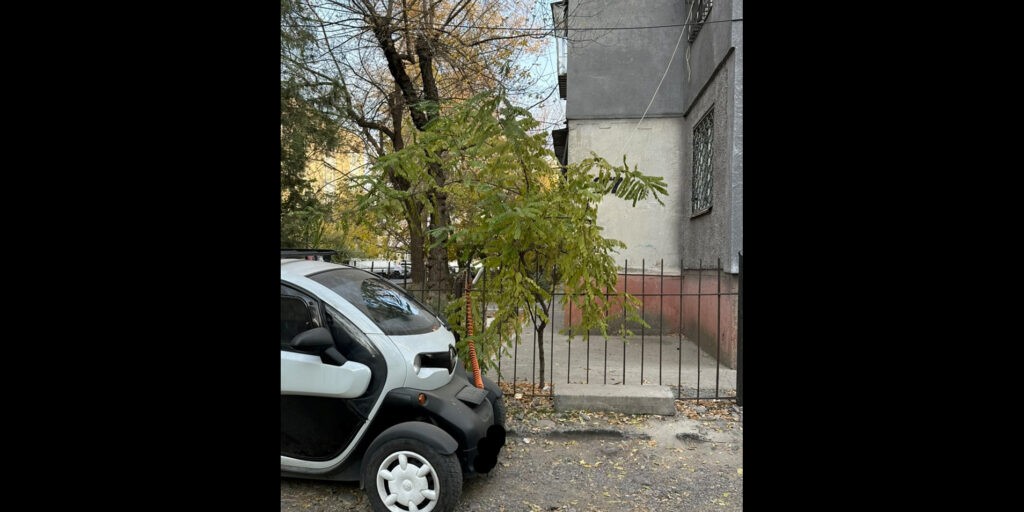
Striving to be at the forefront of the climate transition, Kyrgyzstan is taking active steps toward renewable energy deployment, including the adoption of the Renewable Energy Development Program for 2026–2030. However, compared to other Central Asian states, Kyrgyzstan has been going through a paradoxical green transformation in a few key aspects. On the one hand, state strategies, commitments to green transformation, and quotas to import electric vehicles (EVs) create the impression of active promotion of eco-friendly vehicles. On the other hand, a comprehensive shift has been impeded by inadequate infrastructure, a lack of charging stations, and technical and regulatory gaps. As a result, incentives to import and use EVs have outpaced the expansion of the country’s charging infrastructure. Driving through Bishkek, one thing becomes clear about EV ownership: owners of private houses usually gain more practical benefits than apartment residents because they can install charging stations in their garages or yards. Nevertheless, according to statistics, Bishkek's housing stock is characterized by a predominance of multi-apartment buildings: for 205,000 registered apartments there are only about 90,000 individual residential buildings (a ratio of more than 2.2 to 1). For apartment residents, the absence of dedicated infrastructure in residential parking areas can limit access to convenient and safe charging. The lack of appropriately installed charging stations can lead to unsafe, “do-it-yourself” solutions. Many EV owners resort to workarounds, running long extension cords directly from apartment windows down to the street to their parked vehicles. When citizens have to resort to hazardous solutions and overload the outdated electrical wiring in homes, this unsafe charging method also features the aesthetic signs of infrastructural poverty. An EV dealer who asked not to be named told us, “The primary concern is a high fire hazard: these extension cords are not designed to handle the sustained, high-power transmission required for charging, which can cause the cables to overheat. Furthermore, given our climate characterized by dry, hot summers and significant temperature fluctuations in winter, there is an increased risk of short circuits, which could damage not only the electric vehicle’s battery but also the building’s internal electrical wiring”. Given these issues, we believe clear regulatory frameworks could mitigate those risks, but for now there is a loophole around homemade charging spots. There are no uniform rules among Bishkek’s homeowners' associations and property management companies regarding the installation of outdoor electric vehicle (EV) chargers. Consequently, the courtyards of apartment buildings have become flashpoints for conflict, with residents arguing over the appropriation of parking spaces, the use of communal electricity, and the installation of makeshift, improvised wiring. A logical solution to this impasse would be to incorporate charging infrastructure into the design phase of new residential developments. However, our observations of current construction projects in Bishkek reveal a discouraging reality: developers are largely ignoring the trend toward electrification. Neither in the architectural planning stages nor during the laying of foundations do they incorporate basic infrastructure for electric vehicles, effectively offloading this challenge onto future residents. [caption id="attachment_60709" align="aligncenter" width="1946"] New construction...

Gorno-Badakhshan Faces a Population Exodus

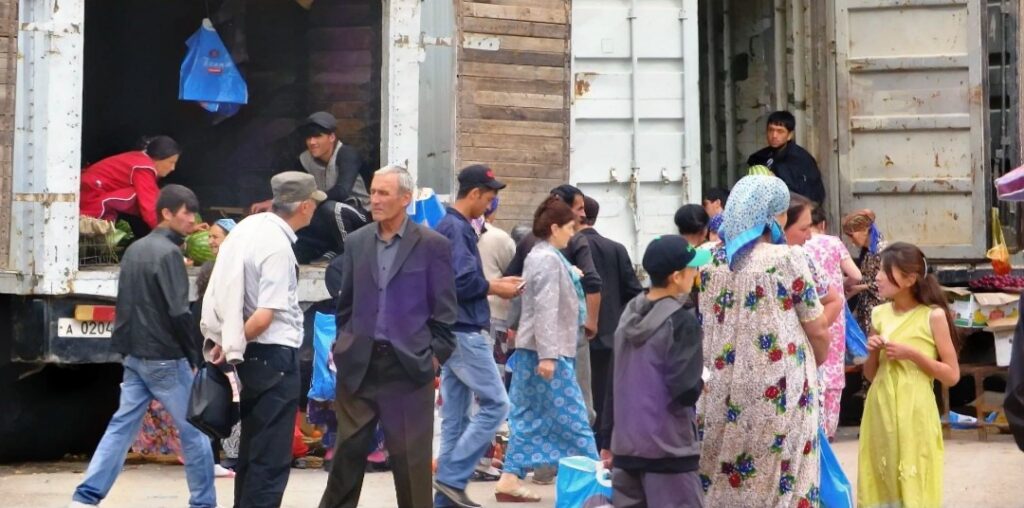
Tajikistan’s eastern Gorno-Badakhshan Autonomous Oblast (GBAO) has frequently been described as sparsely inhabited. According to the human rights organization ADC Memorial, tens of thousands of people have left this sparsely inhabited region since the Tajik government’s crackdown in 2021–2022. The estimated departures amount to more than 20% of GBAO’s pre-crackdown population, and conditions continue to worsen, so the exodus looks set to continue. Life at the Rooftop of the World GBAO makes up about 45% of Tajikistan; nearly all of the region is mountainous, with some peaks climbing to more than 7,000 meters. What is now GBAO was one part of a network of communities in the Pamir Mountains that stretched into present-day China, Afghanistan, and Kyrgyzstan. People have lived there for thousands of years. The ancient fortresses of Yamchun, built in the 3rd century BC, and Kaakha, built in the 2nd century, are the remains of a network of fortresses that once guarded trade through this area. [caption id="attachment_60717" align="aligncenter" width="2048"] White Horse Pass in Tajikistan’s Pamir Mountains. Image: Stephen M. Bland.[/caption] The small population was scattered across river valleys of the Pamir Mountains and developed in isolation from one another, so, unsurprisingly, there are several different languages spoken in the region. The GBAO capital is Khorog, at an elevation of some 2,200 meters, which is also the biggest town in GBAO with a population of some 30,000. Russia established Khorog as a garrison town at the end of the 19th century. The town looks down on the Pyanj River, and on the other side of the river is Afghanistan. Only two roads connect Khorog to the outside world: one leading to the Tajik capital Dushanbe to the west, and now to the Chinese border in the east, and another road that comes from southern Kyrgyzstan and passes through GBAO’s second-largest city, Murgab, at an elevation of some 3,650 meters, and with a population somewhere between 7,500 and 8,000. [caption id="attachment_60715" align="aligncenter" width="2048"] Murgab Bazaar; image: Stephen M. Bland.[/caption] Both roads face sudden and sustained closures during winter months due to avalanches and snowfall. Storms in the mountains can prevent planes from travelling to or from GBAO for weeks at a time. Despite these challenges and more, by 2021, the population in GBAO had grown to some 230,000, which is still only about 2% of Tajikistan’s population. Not Fully Part of Tajikistan Customs and language distinguish “Pamiris” of GBAO from Tajiks, but perhaps the most important difference is religion. The Pamiris are Ismailis, Shi’ites, followers of the Aga Khan. Most Tajiks are Sunni Muslims. After the collapse of the Soviet Union, Tajikistan declared independence on September 9, 1991. In spring 1992, a civil war broke out that pitted Tajik government forces backed by Russia and Uzbekistan against the United Tajik Opposition (UTO), a coalition of domestic opposition groups that included the Islamic Renaissance Party of Tajikistan (IRPT), the Democratic Party of Tajikistan, and La’li Badakhshan (Rubies of Badakhshan), a Pamiri group seeking greater autonomy for GBAO. The UTO established...

Explorers Club Launches Kazakhstan-Based Central Asia Chapter

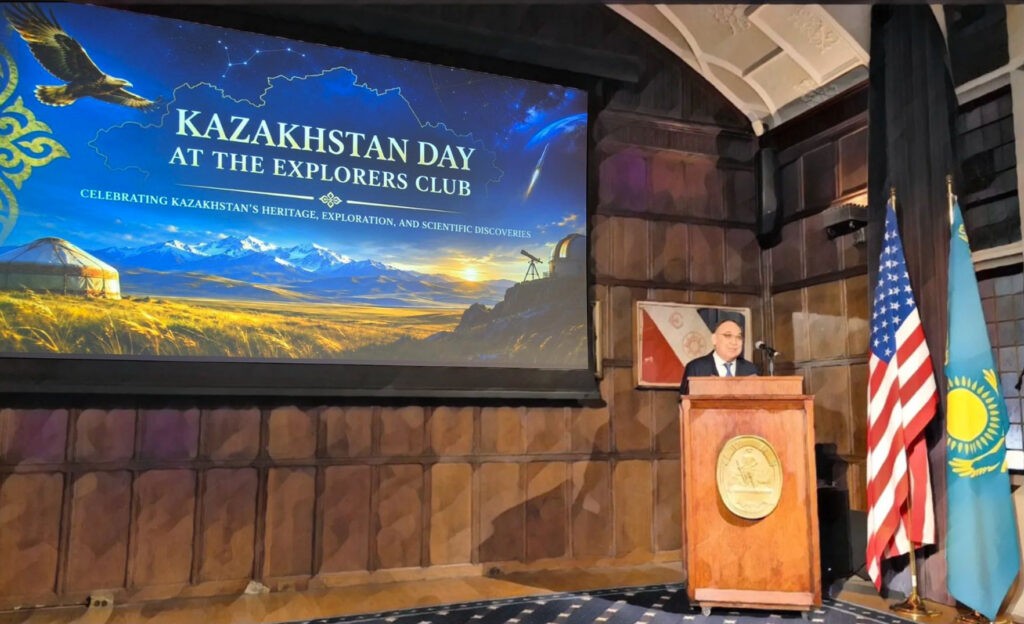
The Explorers Club celebrated the launch of its Central Asia chapter at its New York headquarters on November 12, with former president Richard Wiese predicting that the qualifications of its inaugural members would make it one of the organization’s leading international chapters. “I was blown away, and I don’t say this lightly,” Wiese said, describing his review of around 30 applicants. “I’d say it’s going to be one of our top international chapters in the world. I mean, the qualifications are just stunning.” The club announced its approval of the Kazakhstan-based Central Asia chapter’s formation on October 23, naming Meiram Begentayev as its chair. The New York gathering brought together explorers, conservationists and diplomats to discuss Kazakhstan’s contribution to scientific discovery and opportunities for future expeditions. Founded in 1904, the Explorers Club has counted among its members pioneers involved in the first ascent of Mount Everest, the deepest ocean descent and the first Moon landing. Its history includes figures such as Sir Edmund Hillary, Jacques Piccard and Neil Armstrong. Its current honorary chair is Jeff Bezos, founder of Amazon and the space exploration company Blue Origin. Welcoming guests, former president Ted Janulis said the organization now had more than 4,000 members across 39 chapters, including 19 outside the United States. He emphasized that exploration should lead to knowledge that helps people become better stewards of the planet. Yerzhan Kazykhan, President Kassym-Jomart Tokayev’s special representative for negotiations with the United States, traced the initiative to discussions with Wiese about a year and a half earlier. He thanked the club’s leadership for helping turn the proposal into an established chapter. “We want Kazakhstan to become a meeting point of explorers from around the world,” Kazykhan said. Kazykhan pointed to Baikonur’s role in human spaceflight and the opportunities for research offered by Kazakhstan’s archaeological sites, mountains and grasslands. Kazakhstan’s ambassador to the United States, Magzhan Ilyassov, said the chapter could help bring the country’s history and scientific significance to audiences unfamiliar with the region. He also emphasized that relationships formed through exploration could endure beyond changes in political administrations. “You’re building these long-lasting relations between people,” he told club members. Former club president Richard Garriott brought some humor to the proceedings, recalling how he launched into space from Kazakhstan in 2008, only to discover upon landing that he needed a second entry visa. Ambassador Ilyassov joined the joke, reassuring him that Kazakhstan had since relaxed its visa requirements. British explorer and author Nick Fielding presented a longer history of encounters between Kazakhstan and Western travelers, drawing on his research into Thomas and Lucy Atkinson’s nineteenth-century journeys and his own expeditions. Fielding is undertaking a three-part journey following the Syr Darya river system from its headwaters in Kyrgyzstan through Uzbekistan and Tajikistan into Kazakhstan. The project examines the settlements and archaeological remains along a route connecting the mountains of Central Asia with the Aral Sea. “Don’t let anybody tell you that Kazakhs are only a nation of nomads,” he said. Drawing on visits to...