• KGS/USD = 0.01144 0%
  • KZT/USD = 0.00212 0%
  • TJS/USD = 0.10432 -0.29%
  • UZS/USD = 0.00008 0%
  • TMT/USD = 0.28571 0.28%
  • KGS/USD = 0.01144 0%
  • KZT/USD = 0.00212 0%
  • TJS/USD = 0.10432 -0.29%
  • UZS/USD = 0.00008 0%
  • TMT/USD = 0.28571 0.28%
  • KGS/USD = 0.01144 0%
  • KZT/USD = 0.00212 0%
  • TJS/USD = 0.10432 -0.29%
  • UZS/USD = 0.00008 0%
  • TMT/USD = 0.28571 0.28%
  • KGS/USD = 0.01144 0%
  • KZT/USD = 0.00212 0%
  • TJS/USD = 0.10432 -0.29%
  • UZS/USD = 0.00008 0%
  • TMT/USD = 0.28571 0.28%
  • KGS/USD = 0.01144 0%
  • KZT/USD = 0.00212 0%
  • TJS/USD = 0.10432 -0.29%
  • UZS/USD = 0.00008 0%
  • TMT/USD = 0.28571 0.28%
  • KGS/USD = 0.01144 0%
  • KZT/USD = 0.00212 0%
  • TJS/USD = 0.10432 -0.29%
  • UZS/USD = 0.00008 0%
  • TMT/USD = 0.28571 0.28%
  • KGS/USD = 0.01144 0%
  • KZT/USD = 0.00212 0%
  • TJS/USD = 0.10432 -0.29%
  • UZS/USD = 0.00008 0%
  • TMT/USD = 0.28571 0.28%
  • KGS/USD = 0.01144 0%
  • KZT/USD = 0.00212 0%
  • TJS/USD = 0.10432 -0.29%
  • UZS/USD = 0.00008 0%
  • TMT/USD = 0.28571 0.28%

Kyrgyzstan Moves to Tighten Vehicle Emissions Rules as Air Pollution Worsens

Kyrgyzstan is preparing to tighten environmental regulations on motor vehicles as part of a broader effort to combat rising air pollution in its major cities. A draft bill currently under public discussion proposes mandatory requirements for the presence and proper functioning of catalytic converters in vehicles originally manufactured with them.

The initiative targets one of the most persistent sources of urban air pollution: an aging vehicle fleet in which catalytic converters are frequently removed. The absence of these devices significantly increases toxic emissions and fuel consumption, with direct consequences for public health.

Under the proposed amendments, vehicles that do not meet environmental standards could be prohibited from operating. Driving a vehicle without a functioning catalytic converter would result in fines of approximately $114 for private individuals and about $400 for legal entities.

According to the bill’s explanatory note, the measures aim primarily to reduce pollution in urban centers such as Bishkek and Osh. Lawmakers emphasize that the widespread removal of catalytic converters contributes to both higher emissions and increased fuel use.

Data from the Ministry of Natural Resources, Ecology, and Technical Supervision show that motor vehicles, particularly older models lacking emissions control systems, account for roughly 30% of air pollution in Bishkek.

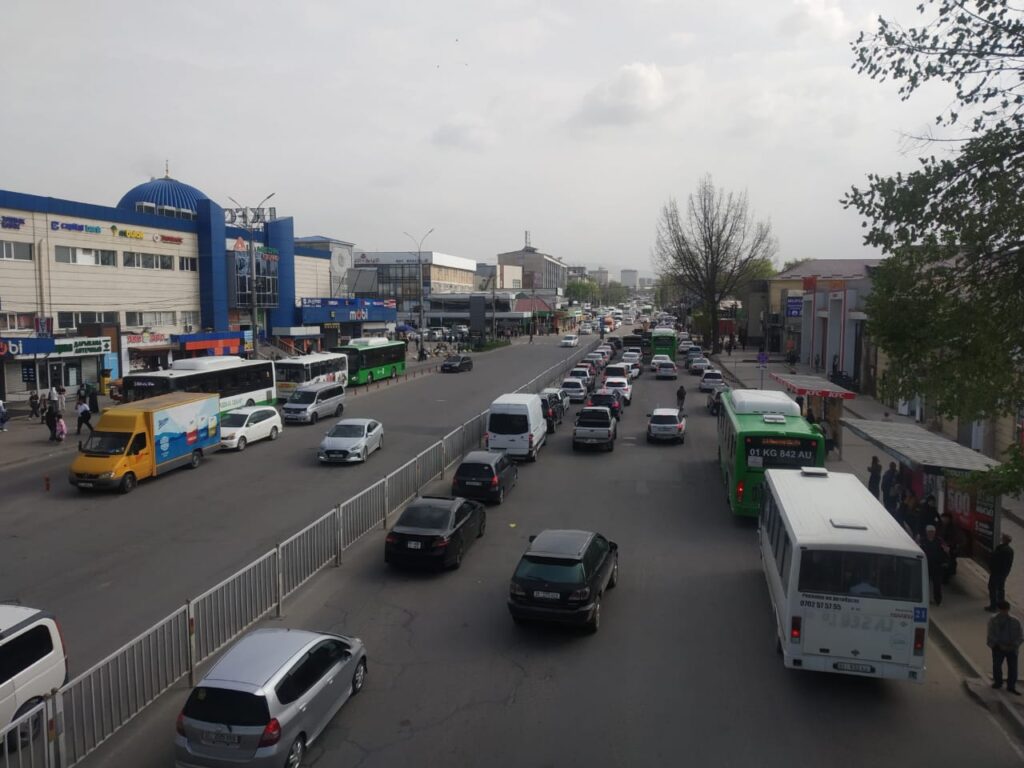
Vehicle numbers in the capital have surged in recent years. Bishkek now has more than 600,000 registered vehicles, nearly double the estimated road infrastructure capacity of 350,000. Over 300,000 of these vehicles are more than 15 years old, making them a major contributor to harmful emissions.

Air quality in the city of more than one million residents remains a persistent concern, especially in winter, when coal-burning for residential heating, responsible for an estimated 40% of pollution, intensifies. Seasonal spikes frequently push Bishkek into the global rankings of the most polluted cities.

The draft legislation could also pave the way for a regulated system to dispose of non-functioning catalytic converters, which contain valuable materials such as platinum group metals, rhodium, and cerium. The presence of these metals has fueled a gray market, with online advertisements and repair shops offering to remove converters for resale.

Lawmakers argue that formal regulation would help curb theft and establish a legal recycling sector. In September 2025, the Cabinet of Ministers imposed a six-month ban on the export of catalytic converters and other waste containing precious metals, in an effort to limit illegal outflows and stabilize domestic oversight.

The bill’s authors describe catalytic converter enforcement as a concrete step toward meeting Kyrgyzstan’s commitments under the Paris Agreement and reducing transport-sector greenhouse gas emissions.

However, the effectiveness of the new rules will depend on enforcement capacity. With a significant portion of the current fleet already non-compliant, and the average vehicle age remaining high, implementation may face resistance unless supported by effective inspection systems and realistic compliance pathways.

Kyrgyzstan’s proposed emissions crackdown signals a shift toward more enforceable environmental policy. If properly implemented, the measures could meaningfully reduce air pollution and curtail illicit trade in precious metals. Their success, however, will hinge on the state’s ability to enforce standards while integrating a large


AIIB Supports Almaty Railway Bypass with $150 Million Loan

The Asian Infrastructure Investment Bank (AIIB) has signed a landmark $150 million loan agreement to finance the Almaty Railway Bypass Project in Kazakhstan. The funding will be provided to Kazakhstan Temir Zholy (KTZ), the national railway operator, under a non-sovereign loan structure.

The AIIB loan forms part of a broader international financing package of up to $300 million, denominated in Swiss francs. The package is jointly arranged by the International Finance Corporation (IFC), AIIB, and the Multilateral Investment Guarantee Agency (MIGA), with IFC and AIIB providing investment and MIGA offering risk guarantees. According to AIIB, the structure reflects robust international confidence in Kazakhstan’s transport modernization efforts and in KTZ’s strategic role in national infrastructure.

The project will support the construction of a new single-track, electrified freight railway bypass along the northern perimeter of Almaty, Kazakhstan’s largest city. The bypass will extend approximately 75 kilometers, connecting Zhetygen station in the east with Kazybek Bek station in the west. Its primary objective is to redirect freight traffic away from Almaty’s city center by establishing a dedicated cargo corridor. The scope also includes new stations, bridges, overpasses, and upgrades at both terminal points.

According to AIIB, the bypass is expected to alleviate congestion on Almaty’s current rail network, enhance passenger service efficiency, and reduce freight delays. By separating passenger and cargo rail lines, the project aims to lower emissions caused by congestion and improve operational safety.

AIIB emphasized the project’s role in strengthening Kazakhstan’s position as a regional transit hub by boosting rail efficiency along key Eurasian corridors, including the Middle Corridor. “Strengthening Kazakhstan’s transport backbone is essential for supporting the country’s long-term growth and its role as a key connectivity hub across Eurasia,” said Konstantin Limitovskiy, AIIB’s Chief Investment Officer. He noted that the Almaty bypass addresses a major bottleneck in the national rail system, enabling “faster, cleaner, and more reliable freight movement.”

IFC also underscored the regional significance of the initiative. “By addressing key bottlenecks and improving network reliability, the project is expected to generate positive spillovers for trade facilitation, private sector competitiveness, and the overall logistics ecosystem,” said Laura Vecvagare, IFC’s Regional Head of Industry for Infrastructure and Natural Resources.

Kazakhstan, a founding member of AIIB, is one of the bank’s most active clients in Central Asia. AIIB stated that the project aligns with its strategic focus on connectivity and regional cooperation. Implementation will be led by Kazakhstan Temir Zholy, with construction set to begin following the conclusion of final procurement procedures.

In July of last year, Kazakhstan Temir Zholy secured a separate syndicated loan of up to 480 million Swiss francs (approximately $540 million) for a three-year term. Arranged by Abu Dhabi Commercial Bank and Deutsche Bank, the loan supports infrastructure development along the Trans-Kazakhstan Railway Corridor.

Kazakhstan Debates Parliamentary Reform as Inflation Pressures Living Standards

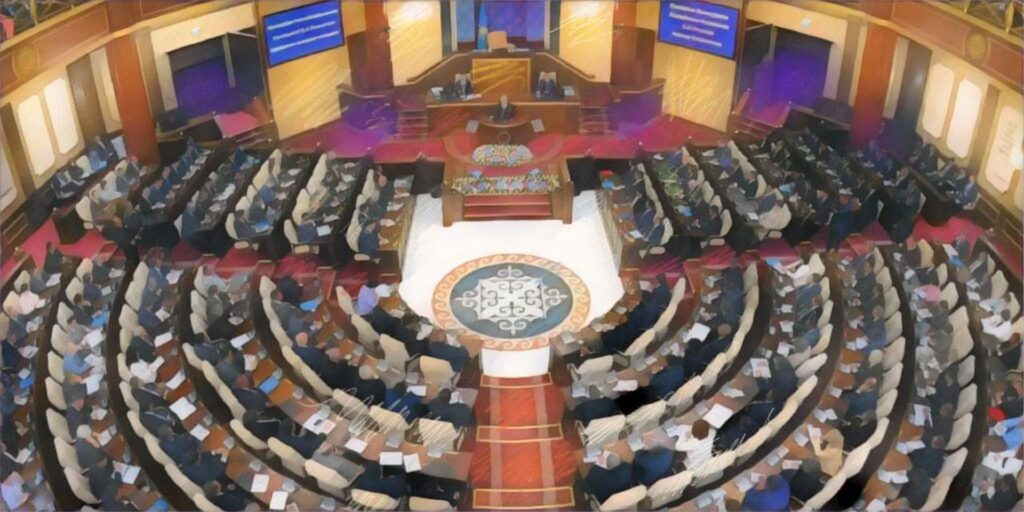
The Kazakh government is actively developing the framework for a future unicameral parliament, working to define its status, powers, and functions. Currently, Kazakhstan’s legislative branch consists of two chambers: the Senate and the Mazhilis. 

The proposed transition to a unicameral system has been positioned by authorities as a step toward democratization. However, many citizens remain unclear about the details and implications of the reform, particularly as inflation and declining living standards dominate public concern.

Uncertain Details of Reform

In September 2025, President Kassym-Jomart Tokayev proposed holding a nationwide referendum on transitioning to a unicameral parliament in 2027. While some analysts have speculated about a faster timeline, no official acceleration beyond 2027 has been announced.

“The establishment of a parliamentary republic is not under consideration. The foundational model of a ‘Strong President, Influential Parliament, Accountable Government’ remains unchanged,” Tokayev previously stated.

According to political analyst Gaziz Abishev, pivotal developments are expected on January 20, when the National Kurultai (Assembly) convenes. He believes this meeting will outline the contours of constitutional reform and potentially signal a date for the referendum.

“If the decree on holding a referendum is signed during the Kurultai, the vote could be held on March 22 [2026],” Abishev stated.

Under the current system, the Senate represents regions and appointive quotas, reviewing legislation passed by the Mazhilis and serving as a constitutional buffer. Any move to unicameralism would require redefining how regional interests are represented and how legislative oversight is maintained without an upper chamber.

The National Kurultai serves as a platform for dialogue between the government and society, addressing national identity, economic development, social justice, and improving the quality of life. Historically, the Kurultai was a gathering of Turkic and Mongol tribes.

Over 500 Public Proposals Submitted

Public discussion around the proposed unicameral parliament has been active. Since the launch of a dedicated “Parliamentary Reform” section on the state portals e-Otinish and Egov, over 500 proposals have been submitted by citizens, experts, and public organizations.

Despite this engagement, tangible benefits for ordinary citizens remain vague, aside from a potential reduction in government spending.

Globally, more than half of national parliaments operate as unicameral systems. According to IPU Parline, 107 out of 188 legislatures follow this model, primarily in unitary states with smaller populations. Unicameral systems are often praised for faster legislative processes, lower administrative costs, and increased transparency.

Kazakhstan previously had a unicameral legislature under the 1993 Constitution. Following the invalidation of the 1994 elections, the Supreme Council was dissolved. In 1995, the country transitioned to its current bicameral system. The Senate, as the upper house, plays a stabilizing and arbitration role. Analysts caution that without a second chamber, legislative processes may be vulnerable to hasty or populist decisions.

Potential for Early Elections

Abishev suggests that a referendum in March 2026 could prompt an early electoral cycle.

“Under the current schedule, the next Mazhilis elections are set for January 2028. However, they could be moved up to summer 2026 if Parliament adopts a constitutional amendment package in April or May following the referendum,” he noted, adding that a new legislative structure would need to be implemented.

He also emphasized the link between political stability and Kazakhstan’s economic outlook. “Oil prices could decline due to global oversupply, and sanctions pressures, stemming from the ongoing war, will increase, affecting both primary targets and surrounding states,” Abishev warned. “The budget deficit and new tax policies will continue to strain the economy.”

He argues that if the medium-term economic forecast for 2027-2028 remains unfavorable, an early reset of parliamentary mandates extending through 2031 may be a rational choice.

Public Skepticism Grows

On social media, public reaction to the proposed parliamentary reform has been tepid. Many citizens argue that the government should prioritize the economy, not constitutional changes. The central concern remains inflation and its impact on living standards.

In 2025, inflation in Kazakhstan reached 12.3%. The sharp rise in prices has persisted since 2022, when the war in Ukraine disrupted supply chains and subjected Kazakhstan to indirect sanctions pressure. Many consumer goods in Kazakhstan are imported from Russia, where sanctions have directly influenced pricing.

Adding to public concern, a new Tax Code came into effect on January 1. The most controversial change is a hike in the value-added tax (VAT) from 12% to 16%.

Economists warn that the first quarter of 2026 will bring another surge in prices. This prediction has already begun to materialize: retailers across Kazakhstan are posting notices attributing higher prices to the VAT increase. In this climate, most Kazakhs are more preoccupied with daily survival than with parliamentary restructuring.

Uzbekistan’s Supreme Court Updates List of Banned “Extremist” Online Content

Uzbekistan has released an updated list of sources and materials banned for promoting extremism and terrorism, according to the press service of the Supreme Court. The revised register, current as of 10 January 2026, includes online content deemed to pose a threat to public safety and the country’s constitutional order.

The Supreme Court reported that the updated list contains 1,593 profiles, channels, and other materials, most of which are linked to content distributed via social networks and messaging platforms. The listed materials were found to promote extremist ideologies, justify violence, or encourage terrorist activity.

Telegram was the most frequently cited platform, with 790 channels, groups, and materials included. Facebook followed with 249 entries, while 265 profiles were identified on Instagram. The list also includes 167 YouTube channels and videos, 53 TikTok profiles, and 36 entries from the Odnoklassniki network.

Beyond social media, the register includes 13 websites and standalone digital materials classified as prohibited sources. Additionally, 20 books, lectures, and religious chants were assessed as promoting religious extremism or violent ideology.

At the same time, some legal experts and human rights advocates caution that broadly defined extremism regulations carry risks of misuse. They argue that vague or expansive interpretations of what constitutes extremist or unconstitutional content could potentially be applied to suppress political dissent, independent journalism, or peaceful criticism of state policies, particularly in online spaces where contextual nuance is often limited.

Concerns have also been raised about the potential impact on religious freedom. Critics note that religious materials or sermons not aligned with officially approved interpretations could be vulnerable to restriction, even when they do not explicitly call for violence. Without transparent judicial oversight and clear public access to decisions, observers warn that such measures may unintentionally marginalize lawful religious expression or discourage open theological discussion.

The court stated that all materials were evaluated using clear criteria, such as promoting extremist ideas, justifying violence or terrorism, or seeking to undermine the constitutional system. Materials meeting these thresholds were formally recognized as prohibited.

Legal grounds for these designations are provided under Uzbekistan’s Criminal Code. Article 244-1 covers extremist content promoting terrorism and allows for criminal prosecution, including prison terms of up to eight years for the preparation, storage, or dissemination of such materials. Article 244-3 addresses the unlawful distribution of religious content that breaches legal standards without directly inciting terrorism. Initial violations under this article result in administrative penalties such as fines and equipment confiscation but repeat offenses may escalate to criminal charges.

These actions are part of Uzbekistan’s National Strategy to Counter Extremism and Terrorism for 2021–2026. Under this strategy, state agencies are tasked with identifying and curbing the spread of extremist and terrorist materials online, while enhancing legal, technical, and informational capabilities to counter growing digital recruitment activities.

Central Asian Airlines Reroute Flights During Iranian Airspace Closure 

Iran closed its airspace to most international flights for several hours, disrupting flights of some airlines from Central Asia and other regions amid concerns about conflict between Iran and the United States.

On Thursday morning, the Flightradar24 website, which provides live tracking of flights around the world, showed a number of civilian aircraft again operating in Iranian airspace after it was reopened.

However, many planes were skirting Iran because of safety concerns after U.S. President Donald Trump said the United States was considering strikes on Iran because of the government’s deadly crackdown on nationwide protests. On Wednesday, Trump said he had received assurances that the killings of demonstrators had stopped, possibly signaling that the two adversaries were moving toward de-escalation.

Kazakhstan’s Air Astana was among the airlines affected by the temporary disruption to flight paths over Iran.

“Air Astana informs about changes in the routes of some regular and charter flights due to the closure of Iranian airspace,” the airline said. “Flights to Sharm el-Sheikh, Dubai, Doha and Medina will be carried out in a detour around Iranian airspace.”

The Uzbekistan Airports company said some flights were forced to return to airports from which they had departed. It listed six flights traveling between Uzbekistan and Kuwait, as well as Medina and Jeddah in Saudi Arabia, that were not able to complete their journeys. The affected airlines were FlyOne Asia, Jazeera Airways, Sam Air, Fly Khiva and Uzbekistan Airways.

U.S. to Pause Immigrant Visa Processing; Central Asia Affected

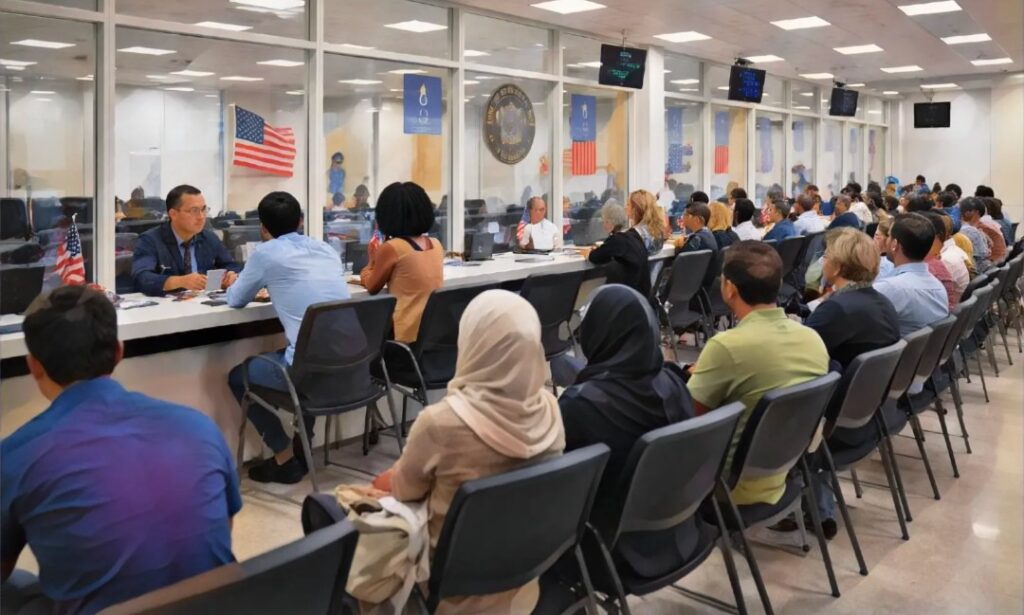
The U.S. State Department said on Wednesday that it will stop immigrant visa processing from 75 countries, and some reports said the affected nations include several in Central Asia.  

The measure is part of a broad crackdown on immigration that has unfolded during the second term of U.S. President Donald Trump, who has said many people from other countries are threatening U.S. security and taking advantage of American resources. Critics say immigration raids and some other administration initiatives have gone too far, actually making U.S. cities less safe and violating basic rights.  

“The State Department will pause immigrant visa processing from 75 countries whose migrants take welfare from the American people at unacceptable rates. The freeze will remain active until the U.S. can ensure that new immigrants will not extract wealth from the American people,” the U.S. agency said on X. 

“The pause impacts dozens of countries – including Somalia, Haiti, Iran, and Eritrea – whose immigrants often become public charges on the United States upon arrival,” the State Department said. “We are working to ensure the generosity of the American people will no longer be abused.”

The statement did not list all the countries affected by the new measure, which takes effect on January 21. Nor did it say how long the pause will last. 

However, Fox News Digital, which reported that it had seen a State Department memo about the new policy, published a list of what it said were the 75 affected countries. It included Kazakhstan, Kyrgyzstan, and Uzbekistan. Tajikistan and Turkmenistan were not on the list. Some other media outlets reported the same information. 

The State Department policy appeared to be partly linked to a Minnesota scandal in which dozens of people, including many Somali-Americans, were convicted of defrauding the state of welfare funds. Minneapolis, Minnesota’s biggest city, is currently a flashpoint for tension and protests over U.S. Immigration and Customs Enforcement (ICE) operations.  

The new State Department measure does not apply to non-immigrant visas, which would include people traveling to the United States for tourism or business. But additional restrictions are also in place for people seeking those temporary visas. 

Nationals from 38 countries, including Kyrgyzstan, Tajikistan, and Turkmenistan, are subject to U.S. visa bonds under a State Department policy. The policy took effect for citizens from Turkmenistan on January 1 and will be implemented for nationals from Kyrgyzstan and Tajikistan starting on January 21.