• KGS/USD = 0.01144 0%
  • KZT/USD = 0.00209 0%
  • TJS/USD = 0.10617 1.05%
  • UZS/USD = 0.00008 0%
  • TMT/USD = 0.28490 0%
  • KGS/USD = 0.01144 0%
  • KZT/USD = 0.00209 0%
  • TJS/USD = 0.10617 1.05%
  • UZS/USD = 0.00008 0%
  • TMT/USD = 0.28490 0%
  • KGS/USD = 0.01144 0%
  • KZT/USD = 0.00209 0%
  • TJS/USD = 0.10617 1.05%
  • UZS/USD = 0.00008 0%
  • TMT/USD = 0.28490 0%
  • KGS/USD = 0.01144 0%
  • KZT/USD = 0.00209 0%
  • TJS/USD = 0.10617 1.05%
  • UZS/USD = 0.00008 0%
  • TMT/USD = 0.28490 0%
  • KGS/USD = 0.01144 0%
  • KZT/USD = 0.00209 0%
  • TJS/USD = 0.10617 1.05%
  • UZS/USD = 0.00008 0%
  • TMT/USD = 0.28490 0%
  • KGS/USD = 0.01144 0%
  • KZT/USD = 0.00209 0%
  • TJS/USD = 0.10617 1.05%
  • UZS/USD = 0.00008 0%
  • TMT/USD = 0.28490 0%
  • KGS/USD = 0.01144 0%
  • KZT/USD = 0.00209 0%
  • TJS/USD = 0.10617 1.05%
  • UZS/USD = 0.00008 0%
  • TMT/USD = 0.28490 0%
  • KGS/USD = 0.01144 0%
  • KZT/USD = 0.00209 0%
  • TJS/USD = 0.10617 1.05%
  • UZS/USD = 0.00008 0%
  • TMT/USD = 0.28490 0%

Central Asian Airlines Reroute Flights During Iranian Airspace Closure 

Iran closed its airspace to most international flights for several hours, disrupting flights of some airlines from Central Asia and other regions amid concerns about conflict between Iran and the United States.

On Thursday morning, the Flightradar24 website, which provides live tracking of flights around the world, showed a number of civilian aircraft again operating in Iranian airspace after it was reopened.

However, many planes were skirting Iran because of safety concerns after U.S. President Donald Trump said the United States was considering strikes on Iran because of the government’s deadly crackdown on nationwide protests. On Wednesday, Trump said he had received assurances that the killings of demonstrators had stopped, possibly signaling that the two adversaries were moving toward de-escalation.

Kazakhstan’s Air Astana was among the airlines affected by the temporary disruption to flight paths over Iran.

“Air Astana informs about changes in the routes of some regular and charter flights due to the closure of Iranian airspace,” the airline said. “Flights to Sharm el-Sheikh, Dubai, Doha and Medina will be carried out in a detour around Iranian airspace.”

The Uzbekistan Airports company said some flights were forced to return to airports from which they had departed. It listed six flights traveling between Uzbekistan and Kuwait, as well as Medina and Jeddah in Saudi Arabia, that were not able to complete their journeys. The affected airlines were FlyOne Asia, Jazeera Airways, Sam Air, Fly Khiva and Uzbekistan Airways.


U.S. to Pause Immigrant Visa Processing; Central Asia Affected

The U.S. State Department said on Wednesday that it will stop immigrant visa processing from 75 countries, and some reports said the affected nations include several in Central Asia.  

The measure is part of a broad crackdown on immigration that has unfolded during the second term of U.S. President Donald Trump, who has said many people from other countries are threatening U.S. security and taking advantage of American resources. Critics say immigration raids and some other administration initiatives have gone too far, actually making U.S. cities less safe and violating basic rights.  

“The State Department will pause immigrant visa processing from 75 countries whose migrants take welfare from the American people at unacceptable rates. The freeze will remain active until the U.S. can ensure that new immigrants will not extract wealth from the American people,” the U.S. agency said on X. 

“The pause impacts dozens of countries – including Somalia, Haiti, Iran, and Eritrea – whose immigrants often become public charges on the United States upon arrival,” the State Department said. “We are working to ensure the generosity of the American people will no longer be abused.”

The statement did not list all the countries affected by the new measure, which takes effect on January 21. Nor did it say how long the pause will last. 

However, Fox News Digital, which reported that it had seen a State Department memo about the new policy, published a list of what it said were the 75 affected countries. It included Kazakhstan, Kyrgyzstan, and Uzbekistan. Tajikistan and Turkmenistan were not on the list. Some other media outlets reported the same information. 

The State Department policy appeared to be partly linked to a Minnesota scandal in which dozens of people, including many Somali-Americans, were convicted of defrauding the state of welfare funds. Minneapolis, Minnesota’s biggest city, is currently a flashpoint for tension and protests over U.S. Immigration and Customs Enforcement (ICE) operations.  

The new State Department measure does not apply to non-immigrant visas, which would include people traveling to the United States for tourism or business. But additional restrictions are also in place for people seeking those temporary visas. 

Nationals from 38 countries, including Kyrgyzstan, Tajikistan, and Turkmenistan, are subject to U.S. visa bonds under a State Department policy. The policy took effect for citizens from Turkmenistan on January 1 and will be implemented for nationals from Kyrgyzstan and Tajikistan starting on January 21.

Kazakhstan Calls on Partners to Ensure Safe Transportation of Caspian Oil

Kazakhstan’s Ministry of Foreign Affairs has expressed deep concern over recent drone attacks on oil tankers en route to the Caspian Pipeline Consortium’s (CPC) marine terminal in the Black Sea.

During emergency consultations with ambassadors from several European countries, as well as discussions with the U.S. and other foreign partners, Kazakh diplomats urged the adoption of effective measures to safeguard hydrocarbon transport routes, including maritime corridors, in full compliance with international law.

The Foreign Ministry emphasized that Kazakhstan is not a party to any armed conflicts and plays a crucial role in supporting global and European energy security by ensuring uninterrupted oil supplies in accordance with its international obligations. It was noted that all the targeted tankers were operating legally, with the required permits and standard identification systems.

According to the ministry, the rising number of such incidents signals a growing threat to the integrity of international energy infrastructure. Kazakhstan called for deeper cooperation with partner countries to develop joint mechanisms aimed at preventing future attacks.

Earlier, the Ministry of Energy stated that export volumes had not been directly affected: some of the vessels were empty, and others remained seaworthy. However, the fact that these attacks occurred near one of Kazakhstan’s key export hubs has increased concerns among market participants about the reliability of supply chains.

Reuters, citing unnamed sources, reported that up to three tankers may have been hit. Among the affected vessels were ships operated by the U.S. energy giant Chevron and others flying Greek flags, raising the stakes in what is becoming a significant geopolitical issue.

Kazakh MP Aidos Sarym remarked that ensuring the security of the CPC, where Russia is a major shareholder, should be a shared responsibility.

“I believe Chevron is one of the largest shareholders. We also know Ukraine relies heavily on U.S. support. Chevron is not a minor player globally. I think the U.S. and our other partners must jointly urge Ukraine to reconsider its targeting priorities,” Sarym said.

Amid these developments, Bloomberg reported that Kazakhstan’s oil exports via the CPC could fall by as much as 45% in January due to ongoing disruptions at the terminal.

Kazakhstan Makes Its Biggest Bet on Geological Exploration in Decades

Kazakhstan is embarking on its most ambitious geological exploration program in over 15 years. Over the next three years, the government plans to invest more than $470 million in the study of mineral resources, a figure that surpasses the total investment in the sector over the previous decade and a half.

According to the government, a central element of this strategy is the shift toward more detailed mapping of mineral resources, aligned with international standards.

In 2025, new-generation geological survey projects were launched, covering an area of approximately 100,000 square kilometers. These territories will later be divided into the most promising sites for in-depth exploration and analysis.

This initiative is not merely a budgetary expansion but a long-term effort to lay the foundation for Kazakhstan’s future resource base. Detailed mapping helps reduce geological uncertainty and significantly influences private investors’ readiness to commit to early-stage projects.

The total funding, set at $470 million, will cover a range of activities, including geological surveys, seismic studies in underexplored sedimentary basins, and the development of modern geological infrastructure. For context, total investment in Kazakhstan’s geological exploration from 2010 to 2025 amounted to $469 million.

The program incorporates remote sensing, aero geophysical and geochemical studies, and large-scale fieldwork. In identifying high-potential sites, authorities considered factors such as reserve depletion, low activity by current subsoil users, and the strategic value of specific minerals.

The government has highlighted regions with strong potential for copper, gold, lead, zinc, rare earth elements, barite, and bauxite. A dedicated portion of the program will focus on seismic exploration in the largely understudied oil and gas basins in the north and south of the country.

Plans also include modernizing laboratory and analytical capabilities and digitizing geological data. The shift to high-resolution mapping, already standard practice in countries such as Canada, Australia, and EU member states, is expected to improve forecasting accuracy and reduce investment risks.

As previously reported by The Times of Central Asia, Kazakhstan has emerged as a global leader in proven reserves of rare earth metals, driving renewed interest from international companies in the country’s expanding geological exploration sector.

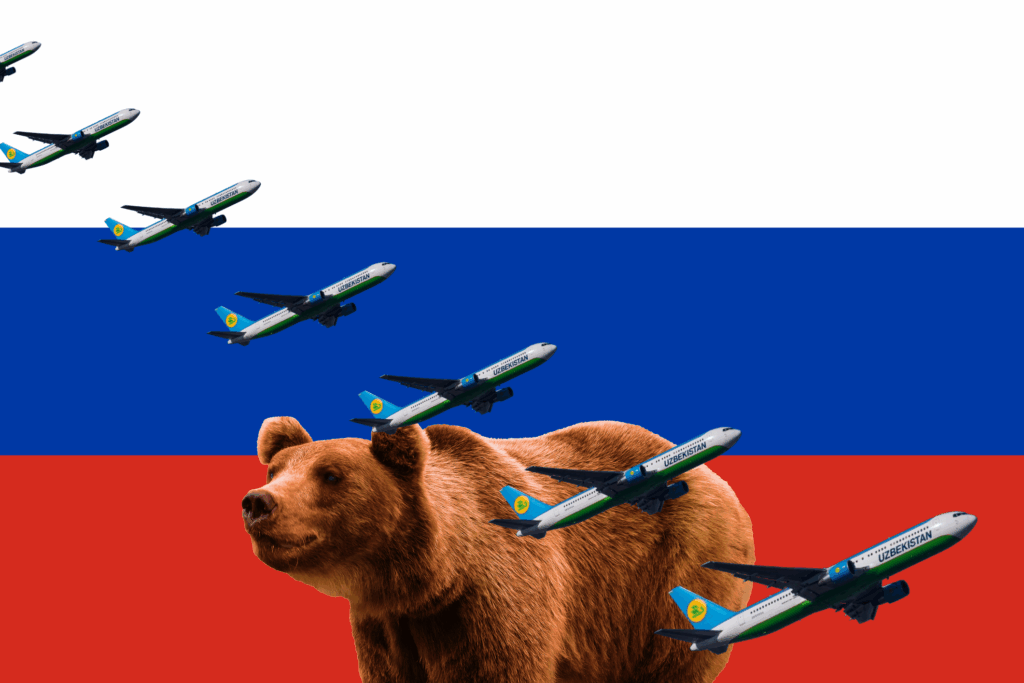
Kazakhstan’s Transport Ministry to Investigate “Serious Aviation Incident” Involving Russian and Uzbek Flights

A serious aviation incident involving Russian and Uzbek commercial aircraft occurred in the airspace over southern Kazakhstan, according to Kazakhstan’s Department for the Investigation of Transport Accidents and Incidents. The incident was first reported by Kazinform, citing official comments from the agency.

The event took place on the morning of January 10, within the area of responsibility of the Shymkent regional air traffic control center. At approximately 05:42 Astana time, air traffic controllers were managing two international flights when the incident occurred. The aircraft involved were Pobeda Airlines flight PBD997, en route from Moscow’s Vnukovo airport to Samarkand, and Uzbekistan Airways flight UZB9609, flying from Termez to Moscow.

“In the A2I sector of the Shymkent regional dispatch center, during the handling of Pobeda Airlines flight PBD997 and Uzbekistan Airways flight UZB9609, an aviation event occurred,” the department stated, as quoted by Kazinform. The incident was classified as a “serious aviation incident” under national regulations, triggering a mandatory investigation by the relevant authorities.

Kazakhstan’s Ministry of Transport has announced the formation of a special commission to investigate the case. According to the ministry’s press service, the standard duration for such investigations, from the establishment of the commission to the approval of the final report, is typically no more than three months, barring the need for additional analysis or technical assessments.

At this stage, no information has been released regarding injuries, aircraft damage, or specific operational details, as the investigation remains ongoing.

This incident follows a similar near-miss that occurred in September 2025, when an Uzbekistan Airways passenger jet narrowly avoided a collision with a private business aircraft in Russian airspace near Serpukhov, south of Moscow.  That event took place shortly after midnight on September 29, during descent into Vnukovo airport. It involved an Uzbekistan Airways Airbus A320 arriving from Samarkand and an Embraer Legacy 650 business jet flying from Bodrum in Turkey.

Investigators later attributed the incident to radio miscommunication, which resulted in a breach of the minimum required separation between the two aircraft.

Mandatory Participation in Elections Proposed in Kyrgyzstan

On January 13, Marlen Mamataliev, a member of Kyrgyzstan’s parliament, the Jogorku Kenesh, introduced a bill proposing mandatory participation in elections and referendums, along with penalties for non-participation and incentives to encourage voting.

The draft legislation has been submitted for public discussion.

According to the bill, all Kyrgyz citizens registered as eligible voters would be required to participate in elections. However, the proposal affirms that freedom of political expression remains protected: voters would retain the right to support any candidate or to vote “against all”, as currently allowed on the ballot.

The bill outlines several exemptions. Citizens over 70 years old, those legally deemed incapacitated, individuals outside Kyrgyzstan on election day, and voters who fail to appear due to valid reasons, such as illness, natural disasters, military service, or other emergencies, would not be penalized.

Proposed penalties for non-participation without a valid excuse include:

  • A written warning for the first offense;
  • An administrative fine for repeat violations;
  • A temporary ban of up to five years on running for elected office or holding public service positions for systematic evasion (defined as three or more violations).

The bill also proposes incentives to boost voter engagement, including discounts on state and municipal services, and awarding additional points for candidates seeking public sector employment.

Notably, the legislation includes a provision for issuing a lottery ticket along with each ballot, with the Central Commission for Elections and Referendums tasked with organizing state-sponsored lotteries and prize drawings during election periods.

The bill’s explanatory note highlights declining voter turnout as one of the most serious challenges facing Kyrgyzstan’s electoral system.

Turnout statistics illustrate a steady drop over the past 15 years. In the 2011 presidential election, participation was 61.28%; it fell to 56.11% in 2017, and to 39.16% in 2021. Parliamentary election turnout followed a similar trend: 59.19% in 2010, 39.78% in 2015, 54.38% in the contested 2020 vote, 34.61% in 2021, and just 36.9% in the most recent parliamentary elections held on November 30, 2025.

The bill’s authors point to international examples of compulsory voting, in countries such as Belgium, Australia, Turkey, Singapore, and several Latin American nations, where turnout regularly exceeds 80-90%.

This initiative follows concerns voiced by President Sadyr Japarov about low voter participation in the 2025 parliamentary elections. The president addressed the issue at the fourth People’s Kurultai (National Assembly), a national forum for direct dialogue between citizens and the state, held in Bishkek in December 2025, one month after the election.