Opinion: Abraham Accords Can Help Kazakhstan Reshape Its Energy Future

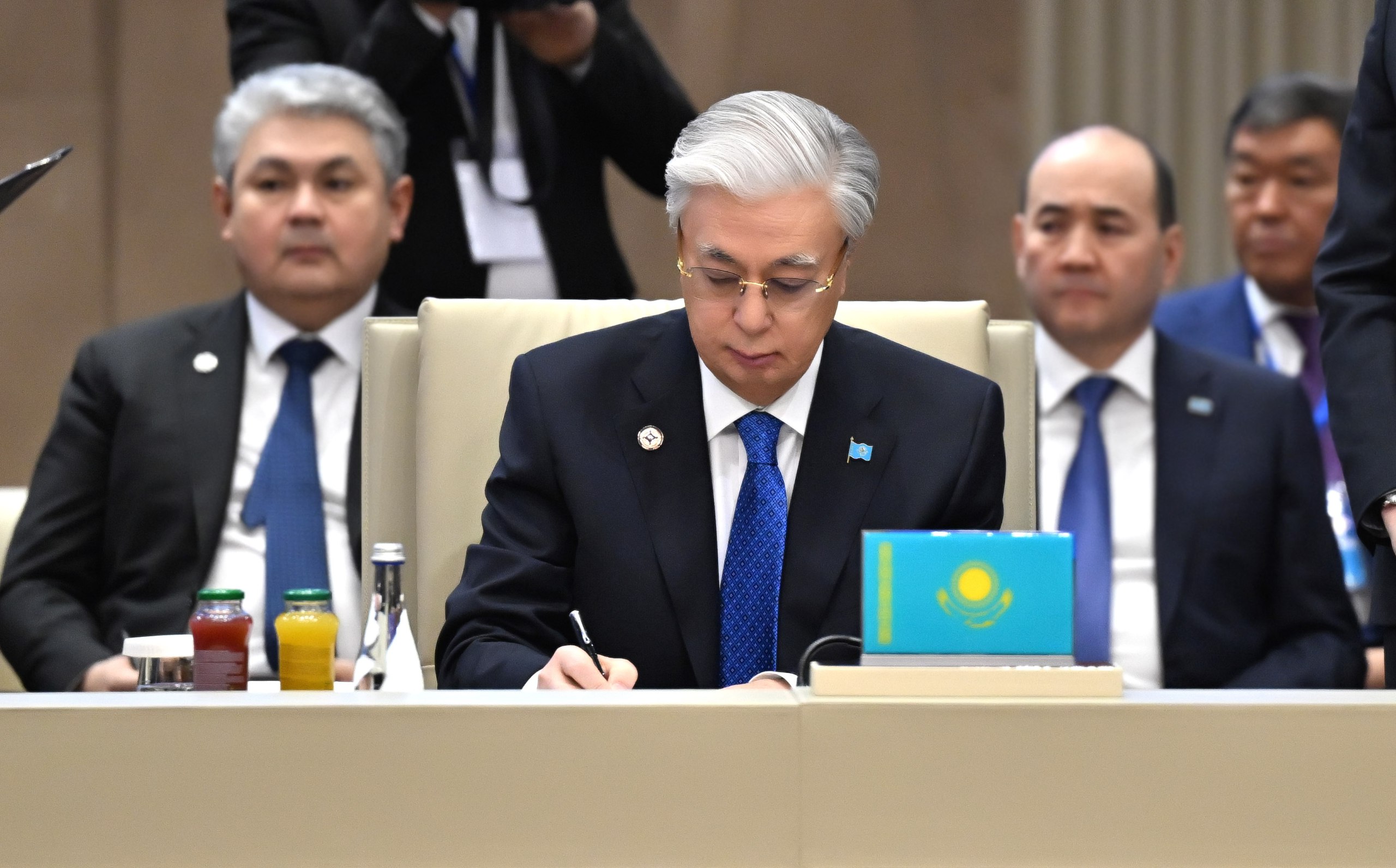
On 6 November 2025, after speaking with Kazakhstan’s President Kassym-Jomart Tokayev and Israel’s Prime Minister Benjamin Netanyahu, U.S. President Donald Trump announced that Kazakhstan would join the Abraham Accords. Astana and Jerusalem have maintained full diplomatic relations since 1992, but Kazakhstan’s entry pushes the Accords beyond the Middle East and North Africa and into the Eurasian heartland. This matters at a time when Washington wants to re-energize the initiative and deepen its C5+1 engagement with the region.
Kazakhstan’s decision fits its multi-vector policy. The decision also builds on the country’s role as a key component of the Trans-Caspian International Transport Route (TITR, “Middle Corridor”), which links Chinese production to European markets. Cargo volumes reached about 4.5 million tons in 2024 and are expected to rise to around 5.2 million tons in 2025. A recent report by Boston Consulting Group expects rail freight through the Middle Corridor to quadruple by the decade’s end.
The Accords do not change Kazakhstan’s formal status with Israel. The question is, rather, whether they unlock deeper economic cooperation. The Times of Central Asia has already reported on clear opportunities for cooperation in sectors such as water and agricultural efficiency, grid and industrial productivity, and cybersecurity and administrative modernization. In the energy sector, like the others, the Accords give Israeli companies a clearer political and legal framework for working with Kazakhstan’s energy and infrastructure sectors. Gulf Cooperation Council states, and the United Arab Emirates (UAE) in particular, could provide project finance as well.
Hard Energy, Nuclear Fuel, and Israeli Technology
Astana’s principal concern in the energy sector is how to raise net revenue: the goal here is to make the sector more resilient to external pressure without incurring prohibitive capital costs. Israeli firms can address that problem at an operational level. The PrismaFlow sensing system developed by Prisma Photonics is a proven technology that uses existing optical fiber as a sensing system. Thousands of kilometers of pipeline can be monitored in real time for leaks, third-party interference, and attempted theft, without having to install physical sensors along the route. KazTransOil and Prisma Photonics could develop a program through an Abraham Accords framework to overlay this technology on selected trunk network segments and on the systems that deliver crude to export pipelines.
Energy-sector cybersecurity is another area where Israeli companies can help Kazakhstan’s hard-energy system. The Israeli firm Radiflow specializes in operational-technology (OT) cybersecurity for oil and gas installations, tailored to pipeline and production environments. Its systems provide continuous network visibility and better anomaly detection. Its risk-based threat management reduces both the likelihood and the cost of cyber incidents that might interrupt flows or force precautionary shutdowns. KazMunayGas, KazTransOil, and their joint ventures could implement a structured audit and remediation program with Radiflow as a strategic partner.
The uranium sector presents another opportunity for Kazakhstan–Israel cooperation, potentially a more strategic one. OT security systems can provide monitoring and control layers for uranium mining, in-situ leaching fields, and logistics chains. Kazakhstan accounts for over 40% of the world’s uranium mine output. Kazatomprom maintains at least a 20% share of global primary production through an asset base of 14 uranium mining operations. Under an Abraham Accords umbrella, a partnership linking Kazatomprom, selected Israeli technology providers, and interested Gulf or U.S. utilities would strengthen Kazakhstan’s access to premium markets and long-term contracts.
Energy Transition, Water, and Critical Minerals
Kazakhstan has set medium and long-term targets for a structural shift in its power mix. The official goal is that renewables should reach roughly 15% of generation by 2030 and 50% by 2050. Progress has been uneven, though, and coal still dominates. Grid operator KEGOC, a subsidiary of the Samruk-Kazyna sovereign wealth fund, is planning multibillion-dollar upgrades and new transmission lines. These will integrate large volumes of wind and solar while connecting the western power zone more tightly to the unified system. The UAE company Masdar has already entered Kazakhstan’s market through a 1-gigawatt wind farm with a 600 MWh battery in the Zhambyl region. Israeli technology could slot into ongoing Gulf-financed projects under the Abraham Accords umbrella in other regions as well.
Israel’s renewable-energy sector has several company types that fit Kazakhstan’s needs right now. Consortia could be structured as Kazakhstan–Israel operational partnerships with the UAE or wider GCC financing under an Abraham Accords label. A “Middle Corridor Renewables Integration Program” under KEGOC and Samruk-Energy, for instance, could invite Israeli firms to co-design grid-friendly solar and wind clusters near key rail and logistics nodes. Israeli control systems and forecasting tools would reduce curtailment and help balance variable output. Ecoppia, another Israeli company, deploys water-free robotic cleaning systems that would be useful in Kazakhstan’s arid regions for large solar fields.
Kazakhstan’s position in critical minerals rounds out the opportunity. These minerals sit upstream of the clean-energy and electronics supply chains central to Israel’s technology economy and to Western industrial policy. Abraham Accords cooperation could mean joint feasibility studies and demonstration plants for low-carbon processing of battery and magnet materials. Potential Kazakhstani partners include Eurasian Resources Group, Kazgeology, and Tau-Ken Samruk. On the Israeli side, numerous firms are involved in process optimization, AI, and environmental engineering. UAE and Saudi investors want secure, ESG-compliant feedstock. A cooperative structure would let Kazakhstan host higher-value industrial operations drawing on Israeli know-how and Gulf capital.
Finance, Gulf Capital, and Multi-vector Diplomacy
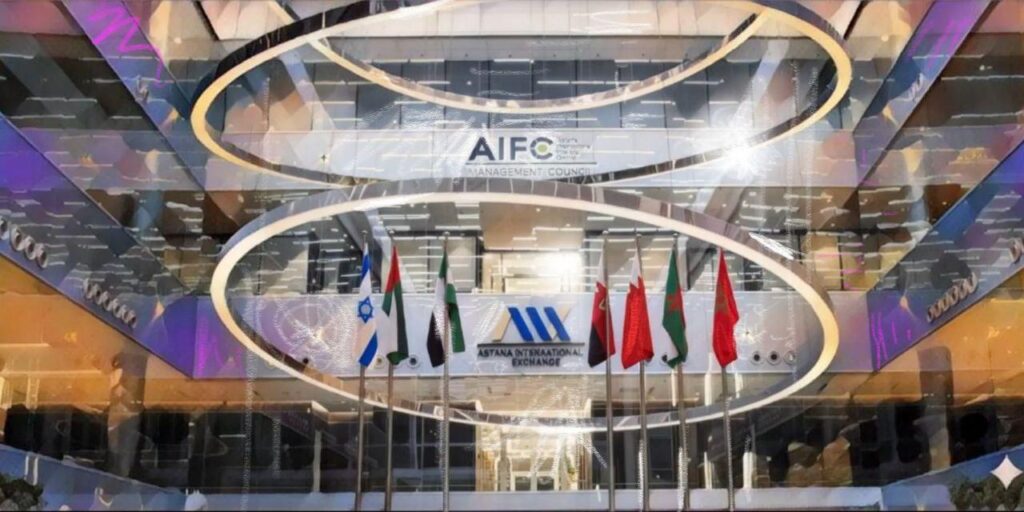
The financial architecture for Kazakhstan–Israel cooperation under the Abraham Accords already exists, at least in outline. Using this would, by itself, be an expression of Tokayev’s diplomatic method. The Astana International Financial Centre (AIFC) operates under a common-law framework and hosts the Astana International Exchange, which has attracted several billion dollars in capital to Kazakhstan’s economy. Within it, the AIFC Green Finance Centre has become a regional reference point for green and sustainability-linked instruments. This institutional design was not accidental. The separate Astana International Forum (AIF), which developed from the Astana Economic Forum and has its own history, increasingly works in parallel with AIFC where appropriate. These structures were developed by Tokayev as instrumentalities for bringing in diversified capital and signaling regulatory compatibility with global markets.
Institutional investors and venture platforms on the Israeli side have already used the Abraham Accords framework to identify opportunities in the Gulf and North Africa. An “Abraham Accords Energy Window” at AIFC could structure bonds for projects in Kazakhstan and help raise long-dated capital for complex infrastructure less expensively. In such AIFC-registered projects, Masdar or other Gulf developers might lead construction while Israeli firms supply equipment and software, and Kazakhstani companies serve as long-term off-takers and operators. Tokayev could point to this arrangement to show how his decision to enter the Accords translates into actual investment flows, channeled through institutions Kazakhstan itself has built.
Tokayev has framed the new initiatives primarily as tools for economic modernization, climate resilience, and better regional connectivity. These opportunities still fit within a non-aligned foreign-policy framework that remains explicitly multi-vector. The expansion of Kazakhstan–Israel cooperation under a U.S.-brokered framework, backed by Gulf capital, weaves together three vectors: two Middle Eastern, one trans-Atlantic. It shows Kazakhstan’s diplomacy under Tokayev playing a leading role in raising Central Asia’s profile in the international system.
Kazakhstan Adjusts Its Multi-vector Diplomacy
Kazakhstan’s decision to enter the Abraham Accords is about upgrading its relationship with Israel, but it is also Astana’s way of updating multi-vectorism for a new era. Cooperation with Israel and the UAE can extend Kazakhstan’s Caspian energy and technology corridor not just through the South Caucasus, but all the way to the Gulf and the eastern Mediterranean. Tokayev wants to use institutions like the AIFC to structure this cooperation, embedding the corridor in rules and practices that global capital markets recognize and trust.
For Central Asia as a whole, Kazakhstan’s move sets a benchmark. If the Abraham Accords yield a modest but concrete portfolio of projects over the next several years – in hydrocarbons, nuclear fuel, renewables, and critical minerals – the decision will look like an early step toward a more diversified regional energy order. Other states in the region will draw their own conclusions about whether and how to engage, and they may test their own versions of energy and technology partnerships with Israel and the Gulf. For now, the initiative underlines that Kazakhstan remains Central Asia’s principal node where Eurasian transit, energy transition, and cross-regional diplomacy converge.
For Tokayev personally, joining the Abraham Accords fits how he has governed since taking office. It is another incremental move that shifts Kazakhstan’s position in a changing world without breaking old relationships. In recent months, he has become more active in the C5+1 process and launched a targeted search for technological partners in fields that determine long-term competitiveness, all while preserving the formal language of multi-vectorism. By choosing to connect Kazakhstan’s energy system to Israeli innovation and Gulf capital inside a U.S.-brokered framework, he is exploring whether a more fragmented world economy will limit the strategic options of a medium-sized state.
The views expressed in this article are those of the author and do not necessarily reflect the official policy or position of the publication, its affiliates, or any other organizations mentioned.