• KGS/USD = 0.01144 0%
  • KZT/USD = 0.00196 -0%
  • TJS/USD = 0.10899 -0%
  • UZS/USD = 0.00008 -0%
  • TMT/USD = 0.28490 0%
  • KGS/USD = 0.01144 0%
  • KZT/USD = 0.00196 -0%
  • TJS/USD = 0.10899 -0%
  • UZS/USD = 0.00008 -0%
  • TMT/USD = 0.28490 0%
  • KGS/USD = 0.01144 0%
  • KZT/USD = 0.00196 -0%
  • TJS/USD = 0.10899 -0%
  • UZS/USD = 0.00008 -0%
  • TMT/USD = 0.28490 0%
  • KGS/USD = 0.01144 0%
  • KZT/USD = 0.00196 -0%
  • TJS/USD = 0.10899 -0%
  • UZS/USD = 0.00008 -0%
  • TMT/USD = 0.28490 0%
  • KGS/USD = 0.01144 0%
  • KZT/USD = 0.00196 -0%
  • TJS/USD = 0.10899 -0%
  • UZS/USD = 0.00008 -0%
  • TMT/USD = 0.28490 0%
  • KGS/USD = 0.01144 0%
  • KZT/USD = 0.00196 -0%
  • TJS/USD = 0.10899 -0%
  • UZS/USD = 0.00008 -0%
  • TMT/USD = 0.28490 0%
  • KGS/USD = 0.01144 0%
  • KZT/USD = 0.00196 -0%
  • TJS/USD = 0.10899 -0%
  • UZS/USD = 0.00008 -0%
  • TMT/USD = 0.28490 0%
  • KGS/USD = 0.01144 0%
  • KZT/USD = 0.00196 -0%
  • TJS/USD = 0.10899 -0%
  • UZS/USD = 0.00008 -0%
  • TMT/USD = 0.28490 0%
08 December 2025

As UN’s Guterres Returns to Central Asia, Kazakhstan Advances Its Role as Regional Convenor

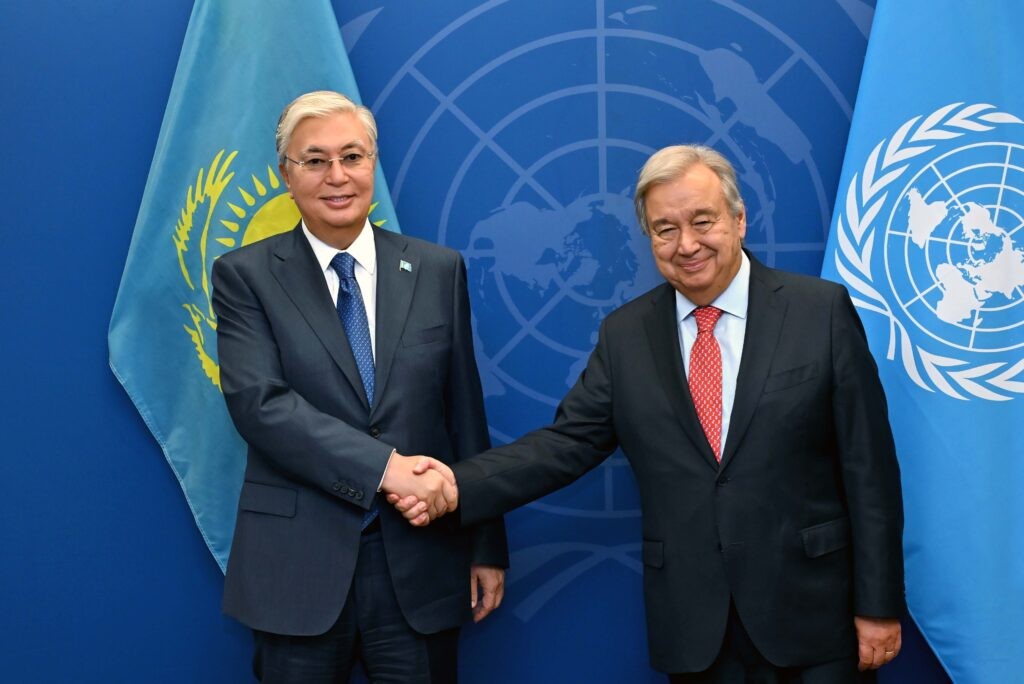
UN Secretary-General António Guterres returned to Central Asia this weekend, joining President Kassym-Jomart Tokayev in Astana to inaugurate a new UN Regional Center for Sustainable Development Goals (SDGs), with a scope covering Central Asia and Afghanistan. The initiative is meant to support regional economies, ease migration pressures, and introduce a framework for incremental political stabilization in Afghanistan. After Astana, Guterres is expected in Awaza, Turkmenistan, where he will address a UN conference focused on the challenges facing landlocked developing countries (LLDCs), notably trade, infrastructure, and regional resilience.

It is Guterres’s first visit to the region since July 2024, when he visited all five Central Asian republics. This time, the context has shifted. Long considered a peripheral space, or merely a corridor between larger powers, Central Asia has now become integral to multilateral thinking. The SDG Center in Almaty and the LLDC forum in Ashgabat reflect that change. Institutions are catching up to geography.

Kazakhstan’s role is pivotal. Under Tokayev’s presidency, it has moved steadily into a position of structural convenor. That position rests on four broad dynamics: the diplomatic adjustments in the region following Russia’s war in Ukraine; the emergence of the Middle Corridor; Afghanistan’s reentry into regional frameworks via development; and the UN’s own internal recalibrations.

The first is strategic drift away from Moscow. Since 2022, Kazakhstan has maintained a working relationship with Russia while expanding cooperation with China, the EU, and the Gulf. The tone has been restrained, but the implications are more consequential. This is a definitive move that has allowed the country to present itself as a non-aligned anchor for multilateral initiatives.

The second is logistical. The Trans-Caspian International Trade Route (TITR, Middle Corridor) connects China to Europe across Kazakhstan, the South Caucasus, and Turkey. Its significance has grown as Russian routes become riskier. Almaty’s selection as the SDG Center’s home is no coincidence: it manifests the marriage of infrastructure with diplomacy.

The third dynamic centers on Afghanistan. Direct diplomacy remains difficult here, but the need to address such issue-areas as humanitarian need, border tension, and migration does not go away. The SDG Center’s inclusion of Afghanistan in its mandate offers a different path: containment through technical coordination. That model works only where the host is both stable and neutral and Kazakhstan, under Tokayev’s reforms, fits that bill.

Fourth is the institutional side. Since 2020, Guterres has promoted what he calls “networked multilateralism,” which seeks to shift in how the UN extends itself into contested spaces. The idea is to move from template-based programming drawn up in central bureaucratic offices to regionally adapted coordination centers. The Almaty SDG Center fits that mold. It is not a field office but a mechanism for structured interdependence in a space that resists more direct approaches.

On August 3, Guterres and Tokayev signed the host-country agreement. The legal formalities were expected, but the clear signal given is that the UN is willing to treat Central Asia not simply as a collection of national teams, but as a zone where development and diplomacy must be integrated. The inclusion of Afghanistan in the center’s remit underlines the shift.

Guterres, in his remarks, praised Kazakhstan under Tokayev’s leadership as “a symbol of peace, dialogue, a bridge builder, and an honest broker.” He added that Kazakhstan, once defined by its landlockedness, now acts as a crossroads, citing its fiber-optic and transport corridors. The convergence of neutrality and infrastructure is not new, but the changing international environment together with Tokayev’s established reputation has now permitted the country to command a degree of institutional trust.

Tokayev’s foreign policy has emphasized institutionalism over flair. It is a style rooted in his professional diplomatic background. As a former senior diplomat in the UN system, he brings fluency in the mechanics of multilateralism. Kazakhstan hosts but does not direct. It anchors, but it avoids center stage.

The current positioning builds on earlier strategies and institutional participation including the Astana International Forum, OSCE summits, active SCO participation, and others. Tokayev has not replaced these structures but he has adjusted their operating tempo. It is the search by global actors for dependable platforms, especially outside crisis zones, that has made Kazakhstan’s predictability a form of leverage for the country.

Guterres’s visit is not isolated; it belongs to a broader sequence. In June, Astana hosted the third China–Central Asia Summit, with a focus on corridors and digital connectivity. In April, the EU pledged over €13 billion in Central Asian infrastructure investment at a summit in Samarkand. The message is consistent: the region is being treated as a coherent strategic zone.

The UN’s deepened presence falls into this pattern. Even if its focus remains developmental, the choice to embed a regional coordination node in Almaty is a structural decision, not just a programmatic one.

Guterres’s address at the Ashgabat LLDC conference included all the expected messaging about trade, climate, digital equity. Turkmenistan’s hosting was ceremonial, and deliberately so. It maintains a symbolic profile without deepening operational ties. Kazakhstan, by contrast, has made itself functionally available. 

The SDG Center will not resolve such long-standing regional challenges as water management, labor migration, and structural governance issues; nor will it prevent geopolitical rivalry. But it offers a space where technical cooperation and development planning can proceed steadily amid regional volatility. This is neither glamorous nor headline-worthy, and that is probably one reason why it works.

If Kazakhstan is now recognized as a regional platform, that recognition owes much to Tokayev’s personal imprint. His diplomatic background gave him credibility with the UN. But, even more key, his disciplined, deliberate, and institutionally fluent style of leadership has suited the moment.

He has not tried to convert Kazakhstan’s strategic location into unilateral leverage. Instead, he has worked to make the country available to multilateral needs. Tokayev’s model goes against the current fashion that mistakenly equates visibility with influence. This restraint, combined with political capacity and his formidable reputation, has given Kazakhstan a different kind of presence in the region: one that is not dominant or reactive, but central.

Will the Port of Aktau Become the Logistical “Heart” of the Trans-Caspian Route?

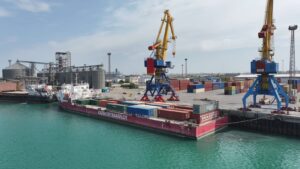
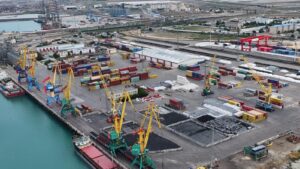
In June of this year, the first phase of a new container hub at the seaport of Aktau on the Caspian Sea was launched. This hub is one of Kazakhstan’s largest transportation projects in recent years.

But will it truly become a strategic anchor point for the transport corridors passing through the port, or will it instead become a “bottleneck,” reducing overall throughput? And will the port’s own capacity decline during the hub’s construction? Let’s explore these questions.

A step towards transit growth

A container hub is a specialized complex offering a full range of services for container handling, railcars, storage, and more. The project involves constructing a container terminal, establishing a container yard at the seaport, expanding container transport, and acquiring modern transshipment equipment.

Scheduled for completion in 2025, it carries an estimated cost of 20.7 billion tenge (about $38 million). Once completed, the hub will increase the port’s container handling capacity from 140,000 twenty-foot equivalent units (TEU) to 240,000 TEU.

The project is expected to become a key link in the supply chain along the Trans-Caspian International Transport Route, as well as other transport corridors passing through the port.

@”KTZ Express”

From terminal to logistics hub

Asem Mukhamedieva, Managing Director for New Projects and Marketing at KTZ Express JSC, told TСA that the container hub project based at the port of Aktau is part of Kazakhstan’s strategy to develop its transport and logistics sector and is being implemented as part of China’s Belt and Road Initiative.

“Given that the project falls within the scope of this initiative, we attracted a Chinese investor in the form of the port of Lianyungang, which is one of the largest players in the Chinese market, not only in terminal operations but also in maritime infrastructure and seaport management,” said Mukhamedieva.

According to her, the Port of Lianyungang has been a longtime partner of Kazakhstan. The national railway company, Kazakhstan Temir Zholy (KTZ), has been cooperating with Lianyungang for 10 years. Their first joint project was the Kazakhstan-China terminal at the Port of Lianyungang, launched in 2014.

In 2017, they opened the largest dry port in Central Asia, KTZE-Khorgos Gateway, at Kazakhstan’s border with China. The third joint venture, constructing the Caspian’s largest container hub at Aktau Port, began in late 2024.

Construction is being carried out by a consortium consisting of Integra Construction KZ LLP and China Harbor Engineering Company, a subsidiary of China Communications Construction Company, which ranks 63rd on the Fortune Global 500 list.

The container hub is also part of a larger project to develop alternative routes to traditional maritime trade lanes. According to Mukhamedieva, the Port of Lianyungang, with its vast experience in shipping and port operations, not only shares its expertise with Kazakh partners but also ensures cargo flow toward Kazakhstan and further westward.

This integrated model will connect the three joint terminals into a “hub-to-hub” transport system, unified by a shared digital platform for data exchange and improved cargo management efficiency.

“KTZ Express”

A flagship project

The implementation of the container hub project will create a freight distribution center in the Caspian region, handling cargo flows not only from East to West but also from North to South. For example, the rapidly growing importance of the Trans-Caspian International Transport Route (TITR) is underscored by a 33-fold increase in freight volumes along this corridor last year, according to analysts.

For 2025, a plan has been approved to transport 600 transit container trains along this route (compared to 358 in 2024). In the long term, under agreements with Chinese partners, container transit from China along the route is expected to grow to as many as 3,000 trains.

According to KTZ Express, container transit volumes on the TITR for the first six months of this year reached 20,544 TEU, which is nearly double the volume for the same period last year. This demonstrates strong positive dynamics and growth.

To support this increasing freight flow, Kazakhstan is not only constructing the container hub at Aktau but also expanding the capacity of its two Caspian ports, Aktau and Kuryk, and modernizing key railway sections along the route within the country.
Regarding the hub’s construction and its impact on Aktau Port’s throughput, Mukhamedieva explained that the hub is being built on a 19-hectare section of the Aktau Seaport Special Economic Zone.

“The seaport continues to perform all operations, including those related to container handling. There are no overlaps or disruptions. After the project is completed and commissioned, it will expand the seaport’s container processing capacity. For now, construction does not cause any inconvenience or operational issues for Aktau Port,” Mukhamedieva said.

Moreover, the completion of the first phase of the hub, together with Aktau Port’s existing capacity, has already increased container handling capacity at the port by an additional 100,000 TEU. The second phase will further raise capacity to 240,000 TEU. This will make it possible to handle not only current cargo flows but also the future volumes anticipated along the TITR and the North-South transport corridor.

Aktau Port’s ambitious development and modernization program includes upgrading port equipment, dredging operations, and reclaiming land south of the harbor using dredged material. These efforts will expand the port’s territory from 60 to 100 hectares. According to KTZ Express, this comprehensive approach will prevent the infrastructure from becoming a “bottleneck.”

Thus, as an integral part of Kazakhstan’s key transit corridors, the container hub is also a significant element of the country’s broader strategy for expanding its global trade, a footprint strengthening not only its transit potential but also its export capacity.

UN’s Guterres Back in Central Asia for Meetings About Development

United Nations Secretary-General António Guterres is traveling to Central Asia this weekend to help promote stability and transformation in the region, his office says. 

Guterres will be in Kazakhstan on Sunday to witness, alongside President Kassym-Jomart Tokayev, the signing of a host country agreement for a U.N. regional center for sustainable development goals for Central Asia and Afghanistan. Kazakhstan’s envoy to the U.N., Kairat Umarov, has said that the initiative aims to strengthen regional economies and trade networks, create jobs and cut migration flows.  

“We are confident that over time, economic stability will pave the way for a gradual political transformation of Afghanistan, including progress in the field of women’s rights,” Umarov has said. 

Trade between Central Asia and Afghanistan is increasing, but there are international concerns about Taliban-ruled Afghanistan’s humanitarian crisis, the threat of terrorism and human rights violations, particularly toward women and girls. 

After the stop in Kazakhstan, Guterres will go to Awaza, Turkmenistan, to attend a U.N. conference on landlocked, developing countries. 

“He will reaffirm the need to help the landlocked developing countries overcome physical barriers and connect to global markets, including by leveraging artificial intelligence to strengthen early warning systems,” said Farhan Haq, deputy spokesman for Guterres. 

The August 5-8 conference will explore ways to expand the economic potential of countries that lack direct ocean access and rely on transit nations, thereby facing obstacles to trade and development. Countries that are classified as landlocked and developing by the conference include Afghanistan, ​Kazakhstan, Kyrgyzstan, Tajikistan, Turkmenistan and Uzbekistan.

Opinion: Ghosts of the Gulag – A View From the Ground

Recently, The Times of Central Asia published an article titled Ghosts of the Gulag: Kazakhstan’s Uneasy Dance With Memory and Moscow. While it is essential to consider outside opinions, it is equally important to articulate how this perspective looks from within.

In Kazakhstan, there are three large museums dedicated to the memory of the victims of the communist regime. These are the infamous ALZHIR (Akmolinsk Camp for Wives of Traitors to the Motherland), the museum dedicated to the memory of victims of political repression, KARLAG (Karaganda camp), and a smaller memorial complex to the victims of political repression at Zhanalyk, located about 40 kilometers from Almaty. Historians believe that around 2,500 people are buried there, including prominent members of the Kazakh intelligentsia, such as Akhmet Baitursynov, Mukhamedzhan Tynishpaev, Saken Seifullin, Ilyas Jansugurov, and Beimbet Maily.

In addition to these museums, there are monuments to the victims of political repression and the famine of the 1920s–30s in many cities across the country. But it’s not just about the number of museums and monuments. What matters most is that the memory of these events is preserved, and it is being carefully studied. In 2020, a state commission for the full rehabilitation of victims of political repression was established by the government. Over several years, 425 scholars, researchers, and experts have participated in its work. More than 2.6 million documents and materials have been declassified.

Most importantly, this commission has rehabilitated more than 311,000 victims of political repression within the framework of existing legislation. The results of this work are documented in 72 volumes. There are no sections in these research materials divided by nationality. The approach is the same for everyone: justice and fairness for all. This calls into question the “collective amnesia that obstructs historical reckoning” referred to by Guillaume Tiberghien, a specialist in dark tourism at the University of Glasgow.

Regarding any “emphasis on what the prison system ‘contributed’ to the nation” mentioned by Margaret Comer, a memory studies expert at the University of Warsaw, there are conflicts of interest and truths people would rather not face. One of the main purposes of Karlag was to serve as a major base of food supplies for Kazakhstan’s growing coal and metallurgical industries. In addition to industrial development, by 1941 the camp had 70 sheep farms, 45 cattle farms, one horse farm, and two pig farms. By 1950, 4,698 people worked on these farms, including 13 academic scientists. The communist system of corrective labor camps was an integral part of economic development, achieved through what was essentially slave labor. This is the full cynicism of the regime on display: prisoners were expected to “work off” their guilt.

“The country is walking a tightrope,” Tiberghien suggests, pointing to President Tokayev’s speech on May 31, the official Day of Remembrance for Victims of Political Repression. “It wants to keep things calm, to avoid upsetting Russia.” In this speech, while calling for the rehabilitation of victims and greater access to archives, Tokayev also condemned the “instrumentalization” of history and urged the nation to look forward. But Tokayev also explicitly addressed the rehabilitation of victims of political repression. The National Day of Remembrance for Victims of Political Repression is commemorated annually across the country.

When Tokayev spoke of “instrumentalization,” he meant that today there are many “history buffs” who attempt to turn history into a tool for political games. This would be unacceptable in any country, but especially in a multi-ethnic nation.

Comer argues that “It’s sometimes easier to mourn victims than to identify perpetrators.” However, the perpetrators are well-known. We know the names of those who wrote denunciations, who advanced their careers by accusing others of insufficient loyalty to the authorities or of dissent. Among both the victims and perpetrators of the Soviet Union were people of all nationalities in this vast country. The narrative persists that power in the USSR belonged to Russians while the victims were from the national republics. This is simply untrue. Everyone suffered under Bolshevism. The “Red Terror” and famine were supranational phenomena, as was Bolshevism itself.

In Kazakhstan and the other countries of Central Asia, this fact is remembered. Family ties are hugely important in Central Asia, and this is why the stories of our parents and grandparents are so well-known to us. Yefim Rezvan, a professor and editor-in-chief of the international journal Manuscripta Orientalia, once said: “The Kazakhs have a very deep historical memory. Even today, they mourn the heroes of the 17th and 18th centuries as if they had passed away only yesterday.” And this is true. The Kazakhs even have a whole genre called Zhoktau – the lamentation of the departed.

It is pointless to seek revenge for the past. But remembering and studying it is vitally important. Websites with names such as dark-tourism.com attract visitors, but all of the dark sites listed there are open to the public, except, for obvious reasons, facilities near military bases.

As for the “Soviet nuclear past that is quietly disappearing,” in Kazakhstan, there is an Institute of Radiation Safety and Ecology that monitors the situation at the former nuclear test site.

In Almaty, monuments to Soviet leaders were removed and relocated to a single park. I think this was a wise decision. Whatever the history, it is our history. It should remind us of what happened.

Uzbek Critic, Jailed for a Decade After Disputed Conviction, Dies

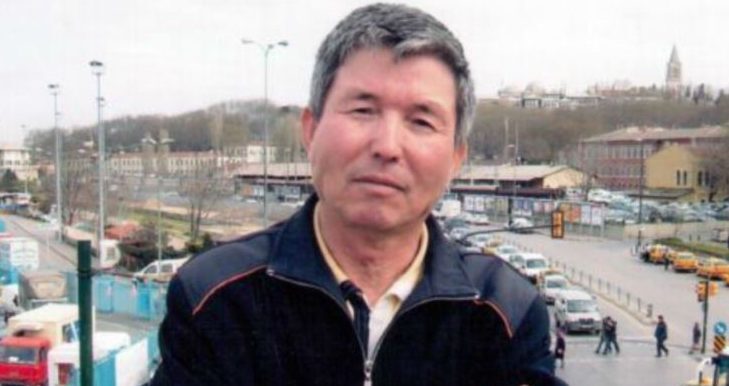
Salijon Abdurakhmonov, an Uzbek journalist and activist who was jailed for nearly a decade in Uzbekistan after being convicted on drug charges that he said were fabricated, has died in Germany at the age of 75.

Abdurakhmonov was released in 2017 at a time when President Shavkat Mirziyoyev, who had taken office in the previous year, was promising a new openness in the Central Asian country following a long clampdown on dissent and criticism by his predecessor, Islam Karimov. However, Abdurakhmonov campaigned in vain to have his conviction overturned and clear his name in Uzbekistan.

The writer had longed to be acquitted in his case, said Abdurakhmon Tashanov, head of the Ezgulik human rights group in Uzbekistan.

“Goodbye, good man!” Tashanov said on Facebook on July 26.

Abdurakhmanov was an “outspoken” journalist who wrote about issues including human rights, corruption, and the legal status of Karakalpakstan, a politically sensitive, autonomous part of Uzbekistan where protests have occurred over the years, according to a Human Rights Watch statement in 2008 that called for his release. It said he had worked with the online news agency UzNews and did freelance assignments for Radio Free Europe/Radio Liberty, Voice of America, and the Institute for War and Peace Reporting.

Koshkarbay Toremuratov, a blogger and activist who is originally from Karakalpakstan, expressed sorrow at Abdurakhmonov´s death.

“I first met him in 2004, when, as a correspondent for Radio Ozodlik, he came to my office regarding issues faced by Christian students from Nukus,” the capital of Karakalpakstan, Toremuratov said on X. “Our paths crossed again later, when we were both imprisoned… Our prison zones were separated by a common ´restricted area.´”

In June 2008, Abdurakhmonov was arrested after police said they found a stash of marijuana and opium in his car and accused him of selling illegal drugs. Several months later, he was sentenced to ten years in prison. He alleged that the drugs were planted in his vehicle and that the case amounted to retaliation for reporting that was critical of officials.

Several international human rights groups said Abdurakhmonov didn’t receive a fair trial and campaigned for his release. His family and supporters said he suffered from stomach ulcers while in jail, and he moved to Germany after he was released. He remained active there, speaking publicly about what he said was an unjust imprisonment and establishing a YouTube channel to discuss issues about Uzbekistan.

From Tashkent to Tennessee: Uzbek Stories Bridge Worlds in Nashville Debut

Uzbekistan’s literary luminaries will make their first appearance at the Southern Festival of Books in Nashville, Tennessee. Now in its 37th year, this iconic event is one of the biggest and most celebrated literary festivals in the U.S., and this year, attendees will get a taste of Uzbek storytelling. Avid readers will dive into the vibrant and poetic world of Uzbek literature, where Southern hospitality meets Central Asian artistry.

“Nashville is a publishing powerhouse — we love our books here,” Mark Reese, the organizer behind the showcase, told The Times of Central Asia. “I’m proud that my city has come together to support this exciting cultural exchange and open the door to new literary voices.”

Reese partnered with Akbar Toshtemurov, founder of Booktopia in Tashkent, to bring the vision to life. “Booktopia is a natural ally in the effort to spread awareness of Uzbek literature abroad through professional translation,” Reese said. “Akbar Toshtemurov has sponsored the translation of over fifty English-language titles into Uzbek and brings deep expertise to the table.”

Mark Reese – image courtesy of the subject

Among the featured writers is Abdulla Qodiriy, one of Uzbekistan’s most revered authors. His novel Oʻtkan Kunlar (Bygone Days) — a cornerstone of Uzbekistan’s literary heritage — will be central to the presentation. “Qodiriy will certainly be a focal point,” Reese said, “but I expect other authors, both past and contemporary, to have a seat at my table.”

Reese has spent over 30 years bridging cultures. He has created education programs across Central Asia and the U.S., spearheaded eLearning, curriculum reform, and translation projects. As the founding director of the Center for Regional Studies at the U.S. Naval Academy, he crafted top-tier academic content, cementing his legacy in cultural diplomacy. His efforts to promote the Uzbek language and culture, including his English translation of Oʻtkan Kunlar, earned him Uzbekistan’s Presidential Order of Doʻstlik.

“My career in Uzbekistan started with the Peace Corps in 1994,” Reese told TCA. “I served in Kokand as one of the first volunteers in the city as an English teacher.

“What has always fascinated me and that I’ve admired are the layers of culture that inform each other – Uzbekistan’s rich ecumenical heritage — it has everything from petroglyphs, Zoroastrianism, Buddhism, Christianity, and Islam. Being able to witness the birth of a republic is an extremely rare experience as well. I’ve been a student of Uzbekistan ever since.”

TCA: How did you come across Uzbek literature, and what universal themes might appeal to a U.S. audience?

“Kokand is known as the center of literary Uzbek, which is mainly attributed to Umar Khon and Nodira. So, I learned the Kokand dialect of Uzbek. The University of Washington’s graduate program in Near Eastern Languages and Civilizations, as well as Tashkent’s Sharqshunoslik University, underpinned my academic knowledge.”

TCA: What inspired you to feature Abdulla Qodiriy’s work at the festival?

“Uzbekistan suffers from a structured soft power presence abroad. Thirty-plus years of independence, and their narrative still remains relatively obscure, even among experts who travel there. I was shocked that post 9/11, the U.S. built whole programs to understand radicalization, women in Islam, Islam and governance, and the cultural landscape, yet no one read any of the region’s literature. Can we understand the formation of English identity without reading Shakespeare? Defoe? That said, I don’t really feel that Uzbekistan’s diplomats understand American culture either. New York City and Washington DC ain’t America.

“Qodiriy’s work is a historical novel that reflects his views of the past and his present reform agenda. I love how, at times, he speaks directly to the reader, meaning me, and that holds a special emotional value to me. Also, the historical events depicted in the novel occurred – the ethnic cleansing of the Qipchaks and Musulman Kul happened.

“Despite the extensive commentary on Ferghana, we have a literary artifact that captures those events. It begs the question: if O’tkan Kunlar is the first full-length novel in the Uzbek language, does the Massacre of the Qipchaks mean it is the first depiction of ethnic cleansing in Ferghana? How did those events and the novel influence historical memory? Imperial types, I’m thinking of Ernst Renan here, further a polemic that there is no basis for human rights in Islam, yet we have a novel that furthers the value of human life and dignity.

“We know that Qodiriy was greatly influenced by one of the fathers of Arab nationalism – Jurji Zaydan. Could O’tkan Kunlar be a spin on Arab or Turkic nationalism? It’s hard to say without primary sources, but these questions have always fascinated me. I also love Qodiriy’s humor! He was a brilliant comedic writer, and his Uzbek is laugh-out-loud funny. Comedy is the hardest literary form of them all.”

TCA: I read that DOGE cuts threatened the festival this year — any comments?

“As much as I hate it… much of what DOGE did represents the will of many American voters. It made me want to go expat again, but it’s a real sentiment that goes back a century or more.

“Nashville is the center of publishing in America, and has been the center of Bible printing for at least a century. From that grew music, printing, and now, content development. Many iconic albums were recorded in Nashville. Amazon made Nashville its third choice as a center after its expansion from Seattle, and the city is one of the largest centers of medical data in the world. Taylor Swift and many others have homes here for a reason. I think of New York City as the storefront, and Nashville is where the business gets done. So, when DOGE made their cuts, a number of Nashville orgs came forward.”

The Southern Festival of Books takes place in Nashville on October 18 (9 a.m.–6 p.m.) and October 19 (10 a.m.–5 p.m.), 2025, at the Bicentennial Mall, Tennessee State Museum, and Tennessee State Library.