• KGS/USD = 0.01144 0%
  • KZT/USD = 0.00192 -0%
  • TJS/USD = 0.10849 0.37%
  • UZS/USD = 0.00008 0%
  • TMT/USD = 0.28571 0.28%
  • KGS/USD = 0.01144 0%
  • KZT/USD = 0.00192 -0%
  • TJS/USD = 0.10849 0.37%
  • UZS/USD = 0.00008 0%
  • TMT/USD = 0.28571 0.28%
  • KGS/USD = 0.01144 0%
  • KZT/USD = 0.00192 -0%
  • TJS/USD = 0.10849 0.37%
  • UZS/USD = 0.00008 0%
  • TMT/USD = 0.28571 0.28%
  • KGS/USD = 0.01144 0%
  • KZT/USD = 0.00192 -0%
  • TJS/USD = 0.10849 0.37%
  • UZS/USD = 0.00008 0%
  • TMT/USD = 0.28571 0.28%
  • KGS/USD = 0.01144 0%
  • KZT/USD = 0.00192 -0%
  • TJS/USD = 0.10849 0.37%
  • UZS/USD = 0.00008 0%
  • TMT/USD = 0.28571 0.28%
  • KGS/USD = 0.01144 0%
  • KZT/USD = 0.00192 -0%
  • TJS/USD = 0.10849 0.37%
  • UZS/USD = 0.00008 0%
  • TMT/USD = 0.28571 0.28%
  • KGS/USD = 0.01144 0%
  • KZT/USD = 0.00192 -0%
  • TJS/USD = 0.10849 0.37%
  • UZS/USD = 0.00008 0%
  • TMT/USD = 0.28571 0.28%
  • KGS/USD = 0.01144 0%
  • KZT/USD = 0.00192 -0%
  • TJS/USD = 0.10849 0.37%
  • UZS/USD = 0.00008 0%
  • TMT/USD = 0.28571 0.28%
11 December 2025

U.S. Waiver of Sanctions on Iran’s Chabahar Port is Good News for Central Asia

U.S. sanctions on Iran’s Chabahar Port on the Gulf of Oman have been on again/off again since 2013, when the U.S. Congress passed the Iran Freedom and Counter-Proliferation Act (IFCA) to curb Iran’s regional influence and strategic capabilities through targeted economic pressure, aka sanctions.

In the decade following IFCA’s passage, Washington’s sanctions on Chabahar had a negative impact on Central Asia, largely by complicating its efforts to deepen economic ties with South Asia and the Gulf. But geopolitics are shifting. Washington is increasing its involvement in Central Asia and India, and is doing the same in Afghanistan. These factors may well induce the U.S. Department of State to keep the waiver in place.

Washington first waived its sanctions on Chabahar in 2018—a strategic move to support India’s role in Afghanistan’s post-war development and to provide a crucial trade route for that landlocked country. Six years later, India’s Indian Ports Global Limited secured a 10-year deal with Iran to manage Chabahar port, in part, to offset Pakistan’s Gwadar port at the end of the China-Pakistan Economic Corridor, a mere 100 miles from Chabahar. For all the fanfare, Central Asia held little real priority in Washington in those years.

Seven years later, the U.S. changed course. It announced on September 16, 2025, much to Central Asia’s surprise and concern, that “the State Department has revoked the sanctions exception issued in 2018 under the IFCA”, making individuals involved in Iran’s Chabahar port operations subject to penalties, resulting in another snag in Central Asia’s desire for a southern breakout route.

And then, in a swift reversal, the U.S. restored India’s sanctions waiver some six weeks later, on October 30.

Whatever might explain the sudden change, Central Asia breathed a sigh of relief, and, by all accounts, now feels confident that the waiver will be evergreened. Time will tell if this confidence is justified.

The U.S. waiver enables India to work to enhance Chabahar’s infrastructure and functionality, offering Central Asian exporters a more direct and profitable trade route than those via China, Russia, or the Middle Corridor, which stretches from East Asia to Europe via Kazakhstan, the Caspian Sea, Azerbaijan, Georgia, and Türkiye. As a result, goods like minerals, cotton, and energy products can reach regional and global markets faster.

Central Asian capitals are quietly reveling in Washington’s flexible realpolitik in the face of convulsive U.S.-Iranian relations and heated Indo-Pakistan tensions. Without fear of punitive measures, India can now continue its work at Chabahar.  To be sure, the waiver affirms India’s rising global presence and accelerates New Delhi’s drive into Central Asia, including Afghanistan.

Washington’s decision signaled to traders, investors, and think tankers that it has no intention of spoiling India’s export ambitions and Central Asia’s desire for north-south economic integration. The waiver shows Washington’s pragmatism—and is welcomed by those who have little or no use for Washington’s penchant for foreign policy moralism.

Chabahar Port complements not only the Trans-Caspian corridor—a multimodal trade route connecting Asia and Europe by linking China to Europe through Central Asia, the Caspian Sea, and the Caucasus—but also existing trade routes with Russia, China, and Pakistan.

Eldor Aripov, Director of the Institute for Strategic and Regional Studies under the President of Uzbekistan, told The Times of Central Asia that “the waiver removes a major bottleneck to reliable access to the Indian Ocean, giving Uzbekistan and our neighbors one more route for our exports and imports. Diversification—which does not mean exclusivity—strengthens Central Asia’s strategic autonomy.”

Afghanistan and Central Asia

The waiver comes at a time when Central Asian nations are looking for new trade opportunities with regional partners across South Asia. As trade between Afghanistan and Pakistan sputters, Kabul is looking for alternative routes for its commerce via Iran and India. Central Asia welcomes this.

On November 20, 2025, Afghan minister Alhaj Nooruddin Azizi and India’s External Affairs Minister Jaishankar met in New Delhi to deepen commercial cooperation and explore Chabahar’s potential to lessen Kabul’s dependence on Pakistan. In Doha, Ambassador Yerkin Tokumov, Kazakhstan’s Special Representative for Afghanistan, met with Ambassador Faisal bin Abdullah Al Hanzab of Qatar to discuss shared political, security, and humanitarian issues, including trade issues and further economic connectivity.

The U.S. sanctions waiver also invigorates the development of various other transport corridors, including the much-ballyhooed Lapis Lazuli transport route (Afghanistan-Turkmenistan-Azerbaijan-Georgia-Turkey) and the Five Nations Railway Corridor (China-Afghanistan-Tajikistan-Kyrgyzstan-Iran).

The waiver has also given impetus to the 2016 Ashgabat Agreement, a multimodal transport pact between Kazakhstan, Uzbekistan, Turkmenistan, Iran, India, Pakistan, and Oman to develop transit connectivity, despite geopolitical challenges, and link Central Asia, via Chabahar, to the Persian Gulf. As noted by India’s Embassy in Ashgabat in its “Unclassified Brief on India-Turkmenistan Relations” (Nov. 26), trade dominates the agenda of the agreement’s signatories— and Chabahar plays a role in broader connectivity efforts, though the brief does not describe it as the agreement’s central element.

The opening of a direct maritime gateway via Chabahar for landlocked Central Asian nations makes them less reliant on Pakistan and enhances their strategic room for maneuver. It lowers political exposure while expanding their economic autonomy. In doing so, it strengthens a cooperative geoeconomic vision built on mutual benefit and shared opportunity.

It would seem that the Chabahar sanctions waiver is a fresh tailwind for Central Asia’s future economic development and Eurasian integration. That is good news for Central Asia.


Kyrgyzstan Early Parliamentary Elections See 36.9% Voter Turnout

Kyrgyzstan held early parliamentary elections on November 30, with voter turnout reaching 36.9%, according to the Central Election Commission (CEC). Of the 4,294,000 registered voters, more than 1.5 million cast their ballots.

Polling stations across the country and abroad closed at 8:00 p.m. local time. While an automated accounting system (AAS) was used during the voting process, Kyrgyz electoral law requires that electronic results be verified against manual counts. Members of precinct commissions conducted manual ballot counts after the polls closed.

The CEC reported receiving 269 complaints regarding potential violations of electoral law during the campaign. These included 124 reports of campaign violations, 37 of the dissemination of defamatory information about candidates, eight related to the alleged use of administrative resources, 46 concerning possible vote buying, and 54 involving other types of violations.

There were also reports of equipment malfunctions at several polling stations. Nevertheless, the CEC declared the elections valid. Elected candidates began receiving congratulations on December 1.

The 2025 early elections marked a significant change in Kyrgyzstan’s electoral process. Party-list voting was fully abolished, and all candidates ran in single-mandate constituencies.

President Sadyr Japarov cast his vote in Bishkek. He noted that the fully automated voting process this year significantly reduced opportunities for human interference in election outcomes. Japarov emphasized that citizens could vote using digital passports via the Tunduk app, and biometric registration took only a few minutes.

While acknowledging that vote buying remains a challenge, Japarov stated that relevant authorities are responding quickly to any such incidents. He also noted that efforts to ensure the participation of Kyrgyz citizens abroad included doubling the number of overseas polling stations. A total of 100 polling sites were opened internationally, including in Russia, the United States, Kazakhstan, and several European countries.

Tensions Between Kazakhstan and Ukraine Rise After Oil Infrastructure Attack

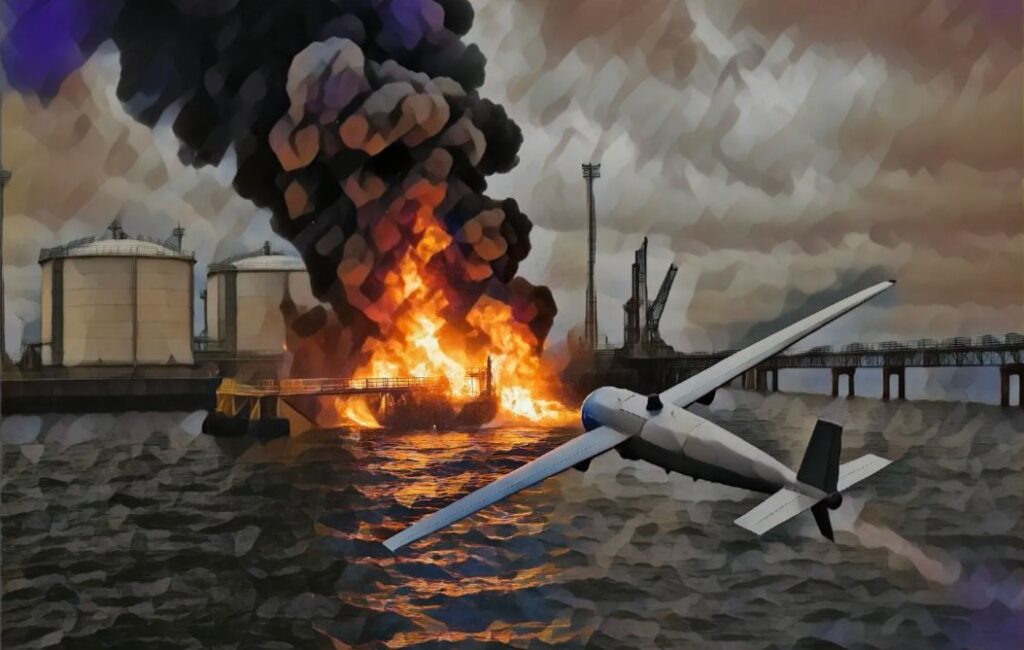
Escalating Ukrainian attacks on the Russian port of Novorossiysk on the Black Sea have caused significant damage to energy infrastucture there, drawing a sharp rebuke from Kazakhstan, which relies heavily on the facility for the transhipment of oil from Kazakh fields to international markets. In response, Ukraine said it was not targeting Kazakhstan but trying to undercut “full-scale Russian aggression” as part of a campaign that has stirred concern about global oil prices and supply.

An attack by “unmanned boats” on Saturday damaged a mooring device at the Caspian Pipeline Consortium’s marine terminal on Saturday, leading to the suspension of loading operations and other activities, the consortium said. While there were no casualties among its workers nor any immediate indication that oil entered Black Sea waters, some pipelines were closed and the normal resumption of oil shipments at Novorossiysk appeared to be in question because of security concerns.

“Shipments at the terminal will be carried out in accordance with established rules upon cancellation of threats from unmanned surface vessels and drones,” said the consortium, which includes energy companies from Russia, Kazakhstan, the United States and several Western European countries.

Kazakhstan has tried to project neutrality in the war between Russia and Ukraine, maintaining close trade and diplomatic ties with Moscow while also, on occasion, speaking in support of Ukrainian sovereignty. But Ukraine’s latest attack on Novorossiysk, aimed at weakening Russia by targeting its oil facilities nationwide, drew an uncharacteristically blunt protest from Kazakhstan’s Ministry of Foreign Affairs.

“This incident marks the third act of aggression against an exclusively civilian facility whose operation is safeguarded by norms of international law. As a responsible participant of the global energy market, Kazakhstan consistently advocates for maintaining the stability and uninterrupted supply of energy resources,” the ministry said.

It also said: “We view what has occurred as an action harming the bilateral relations of the Republic of Kazakhstan and Ukraine, and we expect the Ukrainian side to take effective measures to prevent similar incidents in the future.”

Russian Foreign Ministry Spokeswoman Maria Zakharova also weighed in, describing the Ukrainian attack as “terrorist” and noting that “our friends in the Kazakh Ministry of Foreign Affairs” had already protested.

Ukraine said it had taken into account Kazakhstan’s concerns about the pipeline consortium’s infrastructure.

“We emphasize that no actions by the Ukrainian side are directed against the Republic of Kazakhstan or other third parties – all efforts of Ukraine are focused on cutting off the full-scale Russian aggression within the framework of the right to self-defense guaranteed by Article 51 of the UN Charter,” Ukraine’s Ministry of Foreign Affairs said.

The Ukrainian statement also noted that Kazakhstan had not condemned Russian attacks on Ukrainian civilians, residential buildings and energy systems, including nuclear power plant substations. Russia launched a full-scale invasion of Ukraine in February 2022.

In a statement about the attack, the Caspian Pipeline Consortium said it had not been subjected to sanctions and played a significant role in “safeguarding the interests of the company’s Western shareholders.”

The consortium transports oil from three major Kazakh fields: Tengiz, Kashagan and Karachaganak. About 63 million tons of oil were shipped in 2024, with about 74% of that amount belonging to foreign shippers, including Tengizchevroil (Chevron), ExxonMobil, KazMunayGas, Eni, and Shell, according to the consortium.


Critical Baikonur Launch Pad Hit by Damage After Soyuz MS-28 Liftoff

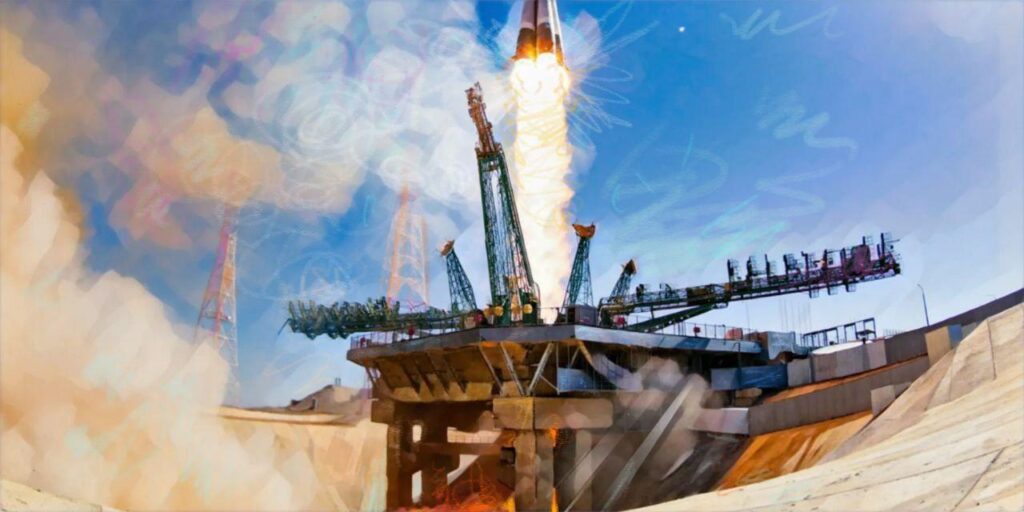
Russia’s space agency has confirmed that a launch pad at the Baikonur Cosmodrome in Kazakhstan was damaged during the liftoff of a Soyuz spacecraft that carried three crew to the International Space Station, raising questions about the near-term launch schedule at the site that Russia has relied on for more than six decades.

Roscosmos reported that the Soyuz MS-28 mission lifted off from Baikonur on November 26 and reached orbit without problems. The spacecraft carried Russian cosmonauts Sergey Kud-Sverchkov and Sergey Mikayev, and NASA astronaut Christopher Williams. The crew docked with the station about three hours later. Roscosmos said in a statement on its official Telegram channel that the crew was healthy and the spacecraft worked as planned.

Soon after the launch, engineers inspected Launch Pad 31/6, which served as the departure point for the flight. The agency said the inspection found damage to several structural elements on the pad and that repair work would start soon. Roscosmos said all required parts were on hand and the pad would be restored in the near future.

Both The Moscow Times and Russian state media, including RIA Novosti, reported that the pad sustained damage but did not identify specific components. Roscosmos confirmed that “damage to several elements of the launch pad was detected.”

Independent analysts have stated the damage might be more serious than Roscosmos has suggested, with Anatoly Zak, who publishes technical assessments of Russian space activity at RussiaSpaceWeb, reporting that a mobile service platform may have collapsed into the flame trench below the pad during or shortly after liftoff. Zak noted that the available launch pad for Russian crew missions might be unusable until engineers confirm the structure’s stability, and that it was unclear how soon crews or cargo could fly from Baikonur if the pad requires major work.

Roscosmos has not confirmed a collapse of the platform, and it has not provided further details about the condition of the pad. The agency said the accident did not affect the MS-28 mission itself, which it described as nominal. But any impact on the pad is notable because Russia depends on Baikonur for its Soyuz crew launches. Russia leases the site from Kazakhstan through 2050 and continues to use its Soviet-era pads because Vostochny Cosmodrome in Russia’s Far East is not yet certified for crew flights.

Russian outlets noted that future launches could face adjustments, but none reported a confirmed delay of a Progress mission. Roscosmos has neither confirmed the schedule nor said whether that mission will move to a later date. NASA has not issued a public statement about the status of joint operations after the incident.

Russia and the United States continue to exchange seats on Soyuz and SpaceX vehicles under a 2022 agreement that allows both sides to maintain a sustained presence on the International Space Station. NASA has said the arrangement reduces risk because each side can reach the station even if one spacecraft type is grounded for technical reasons.

The new damage at Baikonur highlights the strain on Russia’s space infrastructure. The site dates to 1955 and hosted the launch of both Sputnik and Yuri Gagarin. The two crewed launch pads, known as Site 1 and Site 31, have aged under constant use and limited modernization. Russia retired Site 1 from crew flights in 2019 after heavy wear, with Site 31/6 becoming the sole pad for Soyuz crew missions.

For a number of years, Russian media have noted the need for upgrades at Baikonur. In 2019, reports citing a Baikonur source said Roscosmos was preparing to conserve Gagarin’s Start because there were no funds to modernize the pad for Soyuz-2 launches.

The new damage comes as Roscosmos operates under tighter budgets and reduced access to some imported components, according to open reporting by Russian and international outlets, with Western sanctions having limited the country’s access. Roscosmos has scaled back some science missions and shifted focus to low-cost hardware that can be built with domestic parts.

The International Space Station is also moving toward the end of its planned life. NASA, Roscosmos, ESA, JAXA, and CSA have agreed to continue operations through 2030, though Russia has previously signaled it may withdraw earlier if it finishes work on a proposed national station. So far, Russia has continued its ISS commitments and has launched regular Soyuz and Progress missions despite internal budget pressure.

The Soyuz MS-28 flight used the standard three-person configuration and carried a limited set of equipment and experiments, as is typical for crewed Soyuz missions. NASA has reported that Chris Williams and the Russian cosmonauts arrived safely at the International Space Station on Thursday, with Williams having joined the Expedition crew to take part in maintenance, science work, and cargo handling.

The two Russian cosmonauts are set to support internal maintenance and research in station modules operated by Roscosmos. The Russian segment relies on Progress cargo ships for fuel, water, and oxygen deliveries. Any significant launch delay caused by repairs at Baikonur could affect resupply timing, though NASA and Roscosmos both maintain reserve stocks aboard the station that can cover short gaps.

The nature of the structural failure remains under review. Launch pads absorb large forces during liftoff as exhaust from the rocket enters the flame trench and vents sideways. Engineers inspect the pad after each launch to check for signs of wear, such as cracks or loose fittings. Many issues in past launches have been minor. A collapse of a mobile service platform would be unusual, since such structures are normally retracted before ignition.

Roscosmos said the damage does not pose a safety threat to personnel. There were no immediately available public comments from Kazakhstan’s space agency. Previous incidents at Baikonur have sometimes prompted joint inspections, as Kazakhstan owns the land and infrastructure while leasing the site to Russia.

The damaged pad lifts the stakes for Vostochny, where Russia hopes one day to shift crew flights. Roscosmos has launched a few Soyuz rockets and an Angara vehicle from Vostochny, but the site still lacks the full set of systems needed for human missions. Russia had planned the first crewed launch from Vostochny in the early 2020s, but delays in construction and testing pushed the target date back several years.

Until Vostochny is ready, Baikonur remains essential. Russia conducts all Soyuz crew launches there and most Progress cargo missions. Any long outage would increase pressure on station partners who rely on a steady chain of arrivals. NASA relies on SpaceX for most U.S. crew transport, while Progress spacecraft supply propellant used by the Russian segment to help maintain the station’s orbit. Without regular Progress visits, controllers would need to ration maneuvers.

Roscosmos said it would release more information after inspectors complete a full review. The agency said the next Soyuz and Progress spacecraft remain in preparation halls at Baikonur. Rus

The MS-28 crew is expected to stay aboard the station for about six months. Their mission continues as ground teams assess the situation at Baikonur and decide how soon the damaged pad can return to service.

Turkmenistan Included as Trump Tightens U.S. Immigration Ban After D.C. Shooting

President Donald Trump has announced a sweeping crackdown on immigration following a deadly shooting near the White House this week, placing new scrutiny on immigrants from certain countries – including Turkmenistan. Trump vowed to “permanently pause migration” from what he called “Third World” countries after two National Guard members were shot in Washington, D.C., one of them fatally. In response, U.S. immigration authorities are re-examining green cards and visa approvals for people from 19 countries deemed “countries of concern,” a list that features Turkmenistan alongside nations in Asia, Africa, and the Middle East.

New Immigration Review Follows D.C. Attack

The policy shift comes in the wake of an ambush-style attack on Wednesday in which an Afghan national allegedly opened fire on U.S. service members outside the White House. Army Specialist Sarah Beckstrom, 20, died from her injuries, and another Guardsman was critically wounded. Authorities arrested Rahmanullah Lakanwal, a 29-year-old Afghan man who arrived in the U.S. in 2021, as the suspect. Trump condemned the shooting as “an act of terror” and highlighted that the suspect entered under a Biden-era Afghan resettlement program. By Thursday, Trump directed U.S. Citizenship and Immigration Services (USCIS) to conduct a “full-scale, rigorous reexamination” of all current green card holders from every “country of concern.” USCIS Director Joseph Edlow said the review was ordered “at the direction of the President” and stressed that “American lives come first.”

When pressed on which nations fall under the “countries of concern,” USCIS officials pointed to Trump’s June 4, 2025, presidential proclamation on foreign entry restrictions, which identified 19 countries with deficient security vetting or high visa overstay rates. It imposed a full travel ban on 12 nations and partial visa bans on 7 others.

Turkmenistan’s Status in Trump’s Travel Ban

Turkmenistan is one of seven countries under partial U.S. travel restrictions, meaning certain visa categories for Turkmen nationals have currently been suspended or tightened. According to the Trump administration, Turkmenistan was flagged due to security screening gaps and a high rate of U.S. visa overstays by its citizens. U.S. officials noted that about 15.35% of Turkmen visitors on tourist visas overstayed their permitted time in recent years. Turkmenistan has also been cited for limited cooperation on repatriating its citizens who are deported from the U.S. Under the June proclamation, Turkmen nationals were barred from obtaining immigrant visas or tourist and student visas for the U.S., though other travel may be allowed on a case-by-case basis.

By invoking what he called a “permanent pause” on migration, Trump signaled that even more sweeping immigration restrictions could be ahead. He wrote on social media that anyone who is “not a net asset to the United States, or is incapable of loving our Country” will be removed. For Turkmenistan, inclusion in the U.S. ban list marks a rare spotlight on the country in American immigration policy. Turkmenistan, where emigration is tightly controlled, sees low numbers of its citizens entering the U.S. Department of Homeland Security data for Fiscal Year 2023 indicates that the total number of Turkmen nationals on B-1/B-2 (business/tourist) visas expected to depart the U.S. was 925. Turkmen green card holders already in America are also subject to the ongoing USCIS review.

Fallout and Reactions

The aftermath of the D.C. shooting has reignited debate in Washington over the vetting of immigrants and refugees. Trump administration officials argue that tougher measures are necessary to prevent potential terrorists or criminals from entering the country. “The protection of this country and of the American people remains paramount,” USCIS Director Edlow said Friday, defending the crackdown. However, immigrant advocates note that broad-brush policies can disrupt families and that studies have found no link between immigrants and higher crime rates.

For now, the U.S. government has halted new immigration processing for Afghan nationals and is moving forward with reviewing existing permanent residents from the 19 flagged countries. The White House emphasized that the June proclamation’s exceptions still apply – meaning people from banned countries who already have asylum or refugee status in the U.S. are not affected.

Kyrgyzstan’s Renewable Pivot and the Strategic Weight of China’s Rising Role

China’s energy engagement in Central Asia has undergone a quiet but decisive transformation since 2018. What was once a relationship built almost entirely on pipelines, hydrocarbons, and state-backed fossil fuel projects is now expanding into a much more diversified portfolio in which renewable energy plays an increasingly central role. Kazakhstan and Uzbekistan were the first to attract large-scale Chinese commitments in solar and wind power, yet Kyrgyzstan is quickly emerging as the newest frontier in this shift.

Recent agreements demonstrate how Bishkek is rapidly positioning itself within China’s clean energy expansion. In 2022, Kyrgyzstan signed an agreement with Chinese investors to build a 1-gigawatt solar plant in Issyk-Kul. Furthermore, the government concluded another agreement with Shenzhen Energy Group for the construction of two additional power plants, one solar and one wind.

The Energy Ministry has also reached an investment deal with States Technology Co. and San Energy Co. for a 250-megawatt solar facility in Batken. These projects indicate that Chinese capital is not only filling Kyrgyzstan’s immediate energy gaps, but is also beginning to reshape the country’s long-term energy structure.

This push toward solar and wind arrives at a critical moment. Kyrgyzstan remains overwhelmingly dependent on hydropower, which generates more than 90% of the country’s electricity. Yet this climate-sensitive resource is now far less stable than in the past.

Shifts in water levels driven by changing weather patterns have introduced new uncertainties into the country’s ability to meet domestic demand. At the same time, electricity consumption has surged at an unprecedented rate, rising by nearly one billion kilowatt hours in a single year due to newly launched industrial enterprises and rapid residential construction.

The combination of climate volatility and soaring consumption has placed the energy system under severe strain. The government has declared a three-year energy emergency and introduced consumption restrictions designed to save approximately 40 kilowatt hours per month. Under these conditions, diversifying away from near-total reliance on hydropower is no longer optional but an urgent strategic necessity.

Solar and wind investments offer a viable path forward. Expanding renewable capacity will give Kyrgyzstan a more predictable and resilient energy base, enabling the country to better manage seasonal shortages and climate-driven disruptions.

Kyrgyzstan also imports all of its fossil fuels. As renewable capacity expands and the use of electric vehicles increases, the country could gradually reduce its dependence on oil imports from Russia, easing both financial pressures and geopolitical exposure.

For this reason, cooperation with China represents more than a set of commercial transactions. It is evolving into a strategic pillar of Kyrgyzstan’s broader effort to strengthen energy security and modernize its power system. Chinese companies bring financing, technology, and implementation speed, all of which are essential for a country facing immediate and long-term energy risks.

The benefits may extend beyond the domestic market. With sufficient renewable capacity, Kyrgyzstan could eventually re-enter regional electricity trade as an exporter. Some estimates suggest that cross-border energy sales could generate up to 220 million dollars annually in foreign currency earnings, providing a significant boost to the economy.

However, cooperation with China also carries risks that Kyrgyzstan must manage carefully. A heavy reliance on Chinese firms may deepen the trade imbalance, since most renewable energy components will need to be imported from China for the foreseeable future.

As cooperation expands, Kyrgyzstan may also find itself increasingly tied to Chinese technical standards, which would integrate the country more deeply into a China-centered technological ecosystem. This could reduce Kyrgyzstan’s flexibility and limit its ability to adopt alternative technologies in the future.

These concerns highlight the need for a broader and more diversified approach. As Kyrgyzstan develops its diversification strategy for electric vehicles, Bishkek should also actively seek partnerships with a variety of countries on renewable energy rather than depending predominantly on China. Expanding the pool of technology providers would give Kyrgyzstan greater room to maneuver while strengthening resilience across the entire energy sector.

Kyrgyzstan should also prioritize negotiations on the localization of renewable energy components. By working with China and other international partners to establish local manufacturing of selected components, the country could increase renewable capacity while also expanding its own industrial base. This approach would allow Kyrgyzstan to maximize the economic benefits of the green transition rather than functioning mainly as an importer of foreign technologies.

With its current strategy, Kyrgyzstan’s cooperation with China brings substantial advantages in the form of energy diversification, improved energy security, and the potential for future electricity exports. Yet the same partnership also creates long-term risks that could deepen the country’s dependence on a single external actor. The ultimate success of Kyrgyzstan’s energy transition will therefore depend on its ability to balance these opportunities with a clear economic policy that prioritizes diverse partnerships and protects national autonomy.