• KGS/USD = 0.01144 0%
  • KZT/USD = 0.00196 -0%
  • TJS/USD = 0.10899 -0%
  • UZS/USD = 0.00008 -0%
  • TMT/USD = 0.28490 0%
  • KGS/USD = 0.01144 0%
  • KZT/USD = 0.00196 -0%
  • TJS/USD = 0.10899 -0%
  • UZS/USD = 0.00008 -0%
  • TMT/USD = 0.28490 0%
  • KGS/USD = 0.01144 0%
  • KZT/USD = 0.00196 -0%
  • TJS/USD = 0.10899 -0%
  • UZS/USD = 0.00008 -0%
  • TMT/USD = 0.28490 0%
  • KGS/USD = 0.01144 0%
  • KZT/USD = 0.00196 -0%
  • TJS/USD = 0.10899 -0%
  • UZS/USD = 0.00008 -0%
  • TMT/USD = 0.28490 0%
  • KGS/USD = 0.01144 0%
  • KZT/USD = 0.00196 -0%
  • TJS/USD = 0.10899 -0%
  • UZS/USD = 0.00008 -0%
  • TMT/USD = 0.28490 0%
  • KGS/USD = 0.01144 0%
  • KZT/USD = 0.00196 -0%
  • TJS/USD = 0.10899 -0%
  • UZS/USD = 0.00008 -0%
  • TMT/USD = 0.28490 0%
  • KGS/USD = 0.01144 0%
  • KZT/USD = 0.00196 -0%
  • TJS/USD = 0.10899 -0%
  • UZS/USD = 0.00008 -0%
  • TMT/USD = 0.28490 0%
  • KGS/USD = 0.01144 0%
  • KZT/USD = 0.00196 -0%
  • TJS/USD = 0.10899 -0%
  • UZS/USD = 0.00008 -0%
  • TMT/USD = 0.28490 0%
08 December 2025

Trump’s Tariffs May Hurt Kazakhstan’s Economy, Expert Warns

On July 7, U.S. President Donald Trump informed Kazakh President Kassym-Jomart Tokayev that Washington will impose a 25% tariff on goods from Kazakhstan, effective August 1, 2025. Tokayev responded on July 10, affirming Kazakhstan’s commitment to “developing fair, predictable, and mutually beneficial trade relations” with the United States. He emphasized Kazakhstan’s readiness for “constructive dialogue aimed at finding a rational solution to trade issues,” expressing his hope that a compromise will be reached.

While officials and analysts in Kazakhstan have downplayed the potential economic impact, citing limited trade volume and the exclusion of key exports such as oil and metals, economist Olzhas Baidildinov has challenged this optimism. In an interview with The Times of Central Asia, he outlines the potential long-term damage to Kazakhstan’s economy and investment climate.

TCA: What is the situation following the announcement of the increased tariffs?

Baidildinov: The immediate damage is minimal, which is why many in the media and expert circles remain optimistic. Kazakhstan exports about $2 billion in goods to the U.S., of which $1.8 billion are raw materials, oil, metals, rare earth elements, silver, and precious metals, all previously exempt from duties. The remaining $200 million, mostly manufactured goods and agricultural products, will now be subject to the 25% tariff. Though small in macroeconomic terms, this is a significant blow to exporters and a deterrent for future investors.

TCA: What are the broader implications of these tariffs for Kazakhstan?

Baidildinov: The most serious consequence will be on investment. Domestic experts often lack a long-term view, rarely looking beyond a few months. But consider this: if you were an investor planning to produce in Kazakhstan and export to the U.S., would you proceed under these conditions? A 25% tariff today could become 50% or 100% tomorrow. This unpredictability will scare off potential investors.

Trump’s message is clear: produce in the U.S. or face penalties. For Kazakhstan, there is little upside. The country’s oil and gas sector has made strides in localizing production of goods that could replace Western imports, but these products will now face higher entry barriers into the U.S. market. American companies may also become more cautious about engaging with Kazakh suppliers.

More broadly, this signals that the U.S. does not regard Kazakhstan as a partner in high-tech manufacturing. Even American firms considering setting up production in Kazakhstan to benefit from low costs would now find the economics less favorable. Other countries, including EU members, may follow the U.S. example, reinforcing the perception of Kazakhstan as merely a source of raw materials.

TCA: Do you expect further pressure from the U.S. or its allies?

Baidildinov: This marks the beginning of a global tariff war. Other countries will likely adopt similar protectionist policies to defend their industries, especially in light of escalating U.S.-China trade tensions. European manufacturers, for example, may pressure their governments to implement similar tariffs. This trend could shape global trade for years to come, with Kazakhstan potentially caught in the crossfire.

TCA: In your opinion, is the U.S. tariff increase on Kazakhstan justified?

Baidildinov: No, it is not. For decades, Kazakhstan has supplied vital raw materials to the U.S., including oil. Trump claims the tariffs are aimed at correcting trade imbalances, but this does not reflect the broader economic relationship. U.S. oil companies in Kazakhstan enjoy preferential terms and pay fewer taxes than local firms, reaping billions in profits. Imposing duties on our nascent non-resource exports, which rely on government support, is deeply unfair. This policy underscores the perception that the U.S. values Kazakhstan only for its raw materials, not its industrial or technological potential.

TCA: Are the tariffs compatible with World Trade Organization (WTO) rules?

Baidildinov: Not entirely. The WTO discourages protectionist measures, and Trump’s tariffs often bypass both WTO regulations and U.S. legal standards. There are ongoing legal challenges to his trade policies in Congress and several U.S. states. When Kazakhstan joined the WTO, the promise was of equal access to global markets. In reality, we’re facing discriminatory practices that contradict the spirit of free trade.

Ancient Khuttal in Tajikistan Added to UNESCO World Heritage List

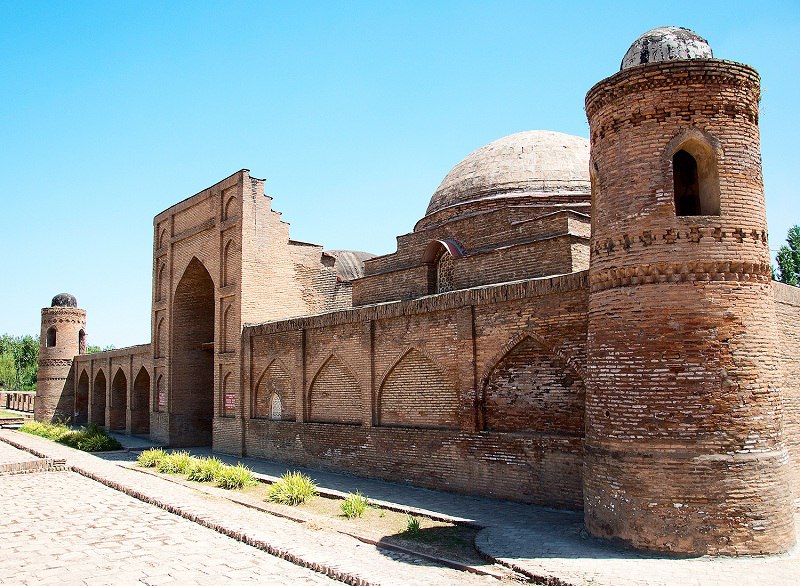
On July 12, Tajikistan celebrated a major cultural milestone: at the 47th session of the UNESCO World Heritage Committee in Paris, the ancient monuments of Khuttal were officially inscribed on the UNESCO World Heritage List.

This marks the fifth site in Tajikistan to receive such international recognition.

A Historical Crossroads of Culture and Architecture

The newly recognized World Heritage site encompasses 11 archaeological and architectural monuments across the districts of Vose, Danghara, Jaloliddin Balkhi, Farkhor, and Khovaling in Tajikistan’s Khatlon region.

Among these are Kalai Khulbuk, Adzhina-Teppa, Khishtepa, Shakhratepa, Manzarteppa, the Mausoleum of Mavlon Tojiddin, and the ancient fortresses of Zoli Zard and Kofirkala. The Kalai Khulbuk complex, once the residence of Khuttal’s rulers, is of particular historical importance.

The medieval state of Khuttal flourished from the 7th to the 16th century in southern Tajikistan and played a key role in cross-border trade along the Great Silk Road. According to UNESCO, the monuments “illustrate the diversity of the region’s culture and its significant role in the exchange of cultural values.”

At its peak, Khuttal included up to 12 cities. Its capital, Khulbuk, featured advanced infrastructure in the 9th-12th centuries, including a palace, citadel, and urban systems well ahead of their time. As Tajik archaeologist Tatyana Filimonova has noted, “the urban culture of Hulbuk was several centuries ahead of Europe,” citing innovations such as centralized heating, sewage systems, and water supply.

The listed monuments span various historical periods and artistic traditions from the 7th-century Buddhist monastery Ajina-Teppa, where a 13-meter-long reclining Buddha statue was discovered, to the intricately carved gancha and frescoes of the Hulbuk Palace. Other highlights include Zoli Zard, believed to be the legendary fortress of the Persian hero Rustam, and Manzarteppa, where archaeological excavations continue to yield pottery fragments and cultural artifacts.

A Collaborative Effort in Preservation and Recognition

The nomination of Khuttal began in 2023, spearheaded by the Ministry of Foreign Affairs and the Ministry of Culture of Tajikistan, in collaboration with the Institute of History of the National Academy of Sciences, the International Institute for Central Asian Studies, and the CAAL project at University College London. UNESCO commended the scientific rigor and collaborative approach of the submission.

Restoration efforts have been ongoing since the early 2000s. Kalai Khulbuk was opened to visitors in 2006, and Ajina-Teppa underwent restoration with UNESCO support in 2008. These sites, along with Kofirkala, Zoli Zard, and Manzarteppa, remain active locations for archaeological and conservation work under the State Program for the Protection of Cultural Heritage.

The inscription of Ancient Khuttal on the World Heritage List not only affirms its global significance but also paves the way for increased cultural tourism, international research cooperation, and long-term development of Tajikistan’s rich historical legacy.

Kyrgyzstan Shutters April TV as President Signs New Media Law

A district court in Bishkek has ordered the liquidation of April TV, one of Kyrgyzstan’s few remaining independent broadcasters, intensifying what some observers are calling an ongoing campaign to silence dissenting voices in the country’s media landscape. The decision, handed down by the Oktyabr District Court on July 9, followed a lawsuit brought by state prosecutors who alleged that the broadcaster’s content was “biased, one-sided, destructive and manipulative,” and posed a threat to the constitutional order. In a related development, on July 11, President Sadyr Japarov signed a new law clamping down on media freedom into force.

In the district court, prosecutors argued that April TV’s content risked inciting mass unrest and undermining the authority of the state. The court’s ruling cited assessments conducted by the State Committee for National Security (GKNB), which claimed that the broadcaster’s video reports negatively influenced public opinion, insulted government officials, and could provoke calls for the seizure of power.

Over the past two years, President Japarov’s administration claims to have successfully thwarted several attempted coups and assassination plots targeting high-ranking officials. These incidents, according to the government, highlight ongoing challenges to political stability in Kyrgyzstan, which has framed its efforts as critical to ensuring the country’s continued progress amidst a complex regional and domestic landscape.

In addition to terminating April TV’s legal status, the court also authorized the blocking of its online platforms and affiliated channels, including the popular YouTube-based partner channel Next TV.

Editor-in-chief of April TV, Dmitriy Lozhnikov, rejected the government’s claims, defending the station’s critical tone and stating that “criticizing the government isn’t a crime, but one of the core functions of the press.” In a final message before going offline, the outlet declared it was taking “a vacation from which [we] might never return.” At least ten current and former staff members of April TV were summoned for questioning by the GKNB as part of a broader criminal probe. No specific charges have been disclosed.

The closure of April TV mirrors actions taken against other prominent independent outlets in Kyrgyzstan over the past two years. In February 2024, a Bishkek court approved the liquidation of Kloop, a media organization known for its investigative reporting on corruption – a ruling later upheld by the Supreme Court. The authorities claimed that its charter did not permit Kloop to engage in journalism, and objected to what they described as the “negative tone” of its reporting.

In late May, the security forces conducted coordinated raids on the homes of eight current and former Kloop employees in Bishkek and Osh — detaining two on charges of “public calls for mass unrest” and compelling the others to sign non-disclosure agreements.

Kloop has relocated its operations abroad, maintaining access to its content in Kyrgyzstan through mirror sites and launching a new podcast studio in Georgia. Despite mounting pressure, the outlet’s leadership remains defiant, vowing to continue producing the “most incisive investigations, the most objective news, and the boldest commentary.”

In a similar vein, the investigative media outlet Temirov Live, founded by journalist Bolot Temirov, has faced sustained pressure from the authorities. As previously reported by The Times of Central Asia, in January 2024, security forces raided the outlet’s Bishkek office and detained eleven of its current and former journalists. The group was later charged with inciting mass disorder through a satirical video published on social media.

In October 2024, editor-in-chief Makhabat Tazhibek Kyzy was sentenced to six years in prison, while another journalist, Azamat Ishenbekov, received a five-year term, drawing condemnation from press freedom advocates. Two other journalists were sentenced to three years of probation, whilst the remaining seven were acquitted. Temirov, who was deported from Kyrgyzstan in 2022 under controversial circumstances, characterized the court ruling as “revenge” for the outlet’s corruption investigations, calling it a “punitive decision to scare journalists and our citizens.”

These developments come against the backdrop of a growing legal arsenal being deployed against independent media. On July 11, just two days after the April TV ruling, President Japarov signed a new law targeting “false information,” which allows the police to fine individuals and organizations for publishing or sharing content deemed to be misleading. The Committee to Protect Journalists called the measure part of a “spiraling press freedom crisis” and urged Kyrgyzstan’s international partners, including the European Union, to hold the country accountable. Jeanne Cavelier, Reporters Without Borders’ Eastern Europe and Central Asia director, described the April TV case as “emblematic of a broader assault on the media.”

In response to the growing wave of closures, a coalition of Kyrgyz journalists and civil society groups has denounced what it sees as the criminalization of public interest journalism. Statements from the Media Action Platform and other domestic press associations have called on the authorities to reverse course, arguing that dismantling independent media undermines both Kyrgyzstan’s democratic institutions and its international credibility.

The forced closure of April TV marks the latest instalment in a dramatic shift in Kyrgyzstan’s once-diverse media environment. Japarov and his administration have denied that the closures amount to censorship. In a social media post earlier this year, the president stated that “freedom of speech has always been and will be [upheld] in Kyrgyzstan” while stressing that falsehoods and incitement should not be confused with journalism.

Environmentalists Urge Relocation of Hyrasia One Green Hydrogen Project

Kazakhstan’s Ministry of Ecology and Natural Resources is facing growing pressure from environmental experts to alter the course of the country’s flagship green hydrogen initiative. The Public Council under the Ministry has recommended relocating key infrastructure of the €50 billion ($55 billion) Hyrasia One project, citing threats to biodiversity in the Mangistau region.

Developed by the Swedish-German company Svevind Energy Group, Hyrasia One is poised to become Kazakhstan’s largest green hydrogen production facility, with plans to generate up to two million tonnes annually by 2030 using solar and wind power. But environmental groups argue that parts of the planned development risk causing irreversible ecological damage.

In an official statement, the Public Council advised that the proposed “Rahim” and “Kanagat” renewable energy clusters be relocated to previously industrialized zones, such as former oil and gas fields, rather than pristine ecosystems home to endangered species.

“It would be more practical for the company as well, as such territories already have existing infrastructure, including roads, power lines, and cellular coverage,” the council noted in its published protocol.

Ecologists warn that the current project layout intersects with the habitat and migratory routes of the goitered gazelle, a species listed in Kazakhstan’s Red Book of endangered fauna. The installation of wind turbines, solar panels, roads, and transmission lines in these areas could fragment ecosystems and disrupt transboundary conservation initiatives involving Kazakhstan, Uzbekistan, and Turkmenistan.

The development risks affecting several protected areas, including the Ustyurt Nature Reserve (and its proposed “Southern Ustyurt” extension), Kyzylsai Nature Park in Kazakhstan, Uzbekistan’s “South Ustyurt” National Park, and Turkmenistan’s Gaplangyr Reserve, home to the Sarykamysh and Shasenem wildlife sanctuaries.

Council members also raised legal and procedural issues, alleging that land allocations for the project were made without proper legal oversight and that public consultations during the environmental impact assessment (EIA) process were inadequate. They further claim that Hyrasia One representatives have declined to attend two separate council sessions dedicated to the project.

The council has formally submitted its findings and relocation proposal to the Presidential Administration, the Government of Kazakhstan, and regional authorities in Mangystau.

As previously reported by The Times of Central Asia, Hyrasia One is central to Kazakhstan’s ambitions to become a key exporter of green energy to the European Union. The project may also benefit from emerging energy cooperation with China, further raising the stakes for its execution and environmental impact.

Russia to Measure Russian Language Influence Abroad, Focus on Uzbekistan

Russia’s Ministry of Foreign Affairs has commissioned a new research initiative to evaluate the effectiveness of its global Russian language promotion efforts, with a particular focus on Uzbekistan and Azerbaijan. According to the Russian daily Vedomosti, the state-funded All-Russian Public Opinion Research Center (ARPOR) secured the contract, valued at 34.8 million rubles (approximately $390,000).

ARPOR Director Valery Fedorov confirmed that the study has not yet begun, as the contract is still being finalized. When asked whether recent diplomatic strains between Russia and Azerbaijan might affect the initiative, Fedorov replied, “Escalations come and go.”

While the focus includes several post-Soviet states, the survey will also encompass countries such as India, China, Venezuela, and the United Arab Emirates. ARPOR previously conducted a similar study in 2024 in Israel, Kazakhstan, China, Cuba, Egypt, and India.

The current research will survey at least 1,500 people online and a minimum of 1,000 participants via phone or in-person interviews in each country. A ten-member expert team specializing in linguistics, international relations, culture, and media will analyze the results. The initiative will culminate in a roundtable discussion in Moscow.

Rossotrudnichestvo, the Russian government agency responsible for promoting cultural and educational ties abroad, told Vedomosti that more than 14,000 individuals studied Russian at its “Russian House” cultural centers across 71 countries in 2024. Uzbekistan remains one of the agency’s core focus areas, alongside Armenia, Belarus, Kazakhstan, Kyrgyzstan, Moldova, Tajikistan, and Turkmenistan.

In Uzbekistan, over 1,000 schools offer instruction in Russian or in bilingual formats. In contrast, Kazakhstan has more than 3,600 such schools.

Russian retains official language status in Kazakhstan and Kyrgyzstan, while in Tajikistan it is designated as a “language of interethnic communication.” In Uzbekistan and Turkmenistan, however, Russian does not have any official legal status.

In Kazakhstan, the use of Russian has been in gradual decline, largely due to demographic shifts. As of January 1, 2024, ethnic Russians made up 14.89% of the population, down sharply from nearly 40% in 1989. Nevertheless, Russian remains widely spoken and is supported by educational institutions and strong bilateral ties with Moscow.

Experts cited by Vedomosti noted that conditions for Russian language education are significantly more challenging outside urban centers like Tashkent and Baku. In many schools across Uzbekistan, Russian is taught for just two hours per week, insufficient to meet growing demand, they argue.

While interest in the Russian language remains steady, analysts say this is driven more by pragmatic factors, such as aspirations to study at Russian universities or pursue employment with Russian firms, than by cultural affinity or the effectiveness of Moscow’s soft power outreach.

Kazakhstan Engaged in Legal Disputes with 20 Foreign Companies

Kazakhstan is currently involved in 20 legal disputes with foreign companies, a decrease from 26 cases in 2023, according to Yerlan Musabayev, Acting Director of the Department for the Protection of State Property Rights under the Ministry of Justice.

“As of now, the Ministry is handling 20 cases involving claims totaling more than $7.5 billion,” Musabayev stated during a briefing in Astana. Of these, 13 are under review in international arbitration, five are in foreign courts, and two are in the pre-litigation stage. The reduction in the number of disputes reflects progress made over the past year, he noted.

Among the Ministry’s recent successes, Musabayev highlighted a key ruling by the High Court of Justice in London in favor of Kazakhstan in a case filed by Canadian uranium company World Wide Minerals (WWM). The dispute originated from Kazakhstan’s 1997 decision to deny WWM an export license for uranium and terminate a trust management contract for the Tselinograd Mining and Chemical Plant (now the Stepnogorsk Mining and Chemical Plant).

The High Court ruling, issued on February 28, 2025, overturned a 2024 decision that had awarded WWM approximately $65 million.

“Under the 2025 decision, the Republic of Kazakhstan has no obligations toward World Wide Minerals. It’s worth noting that the bar for appeals in UK courts is exceptionally high, fewer than 2% succeed,” Musabayev said.

Another legal victory came in a case involving the Kazakh-Italian construction joint venture Todini Impregilo Kazakhdorstroy. The company had sought $20 million in claims, but the International Chamber of Commerce Arbitration Court in Paris dismissed all demands and ordered the joint venture to reimburse $277,000 in legal costs. Enforcement of the ruling required compulsory measures.

“The Ministry of Justice is actively working to further reduce the number of disputes with foreign entities. Through coordinated efforts with other state bodies and the Government’s legal advisors, we’ve saved considerable budgetary resources, preserved Kazakhstan’s investment attractiveness, and strengthened the country’s international reputation,” Musabayev concluded.

As previously reported by The Times of Central Asia, Kazakhstan resolved a long-standing legal battle with Anatolie and Gabriel Stati’s Tristan Oil in 2024, following protracted litigation over the nationalization of oil assets. Meanwhile, early reviews of certain production-sharing agreements in the oil sector could lead to new legal proceedings in the near future.