• KGS/USD = 0.01144 0%
  • KZT/USD = 0.00211 0%
  • TJS/USD = 0.10526 0%
  • UZS/USD = 0.00008 0%
  • TMT/USD = 0.28530 0%
  • KGS/USD = 0.01144 0%
  • KZT/USD = 0.00211 0%
  • TJS/USD = 0.10526 0%
  • UZS/USD = 0.00008 0%
  • TMT/USD = 0.28530 0%
  • KGS/USD = 0.01144 0%
  • KZT/USD = 0.00211 0%
  • TJS/USD = 0.10526 0%
  • UZS/USD = 0.00008 0%
  • TMT/USD = 0.28530 0%
  • KGS/USD = 0.01144 0%
  • KZT/USD = 0.00211 0%
  • TJS/USD = 0.10526 0%
  • UZS/USD = 0.00008 0%
  • TMT/USD = 0.28530 0%
  • KGS/USD = 0.01144 0%
  • KZT/USD = 0.00211 0%
  • TJS/USD = 0.10526 0%
  • UZS/USD = 0.00008 0%
  • TMT/USD = 0.28530 0%
  • KGS/USD = 0.01144 0%
  • KZT/USD = 0.00211 0%
  • TJS/USD = 0.10526 0%
  • UZS/USD = 0.00008 0%
  • TMT/USD = 0.28530 0%
  • KGS/USD = 0.01144 0%
  • KZT/USD = 0.00211 0%
  • TJS/USD = 0.10526 0%
  • UZS/USD = 0.00008 0%
  • TMT/USD = 0.28530 0%
  • KGS/USD = 0.01144 0%
  • KZT/USD = 0.00211 0%
  • TJS/USD = 0.10526 0%
  • UZS/USD = 0.00008 0%
  • TMT/USD = 0.28530 0%

Kazakhstan’s Foreign Minister Visits Caucasus to Expand Trade and Transit Ties

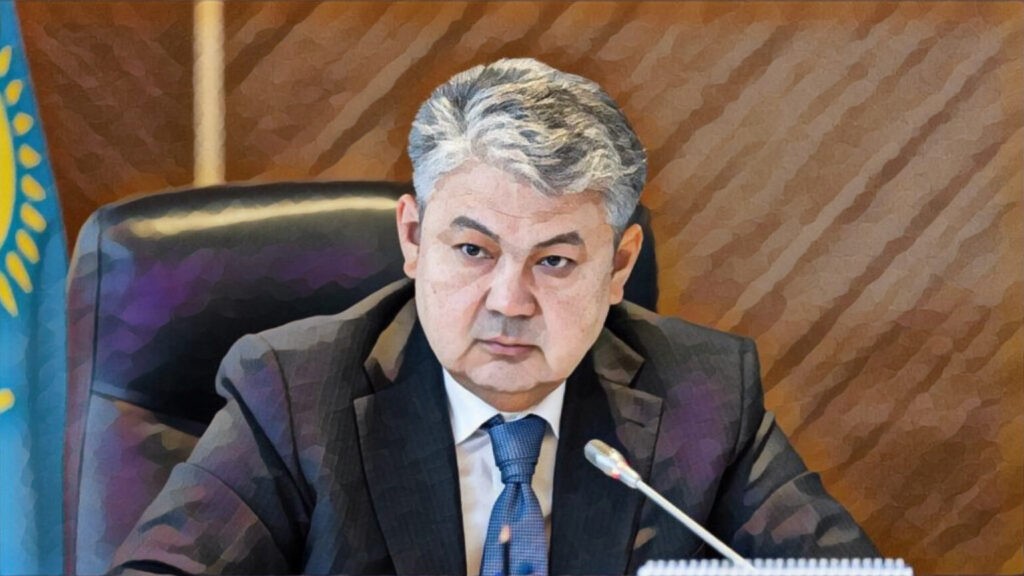
Kazakhstan’s Foreign Minister, Yermek Kosherbayev, conducted a diplomatic tour of the South Caucasus, Armenia, Azerbaijan, and Georgia, as part of Astana’s efforts to strengthen trade and economic ties, expand investment cooperation, and develop key transit routes between Central Asia and Europe.

Armenia: Trade, Investment, and Digitalization

In Yerevan, Kosherbayev held meetings with Prime Minister Nikol Pashinyan, President Vahagn Khachaturyan, and Foreign Minister Ararat Mirzoyan. He conveyed greetings from Kazakh President Kassym-Jomart Tokayev and highlighted the high level of bilateral cooperation.

“Thanks to the efforts of the leaders, bilateral relations between Kazakhstan and Armenia have reached a qualitatively new level,” Kosherbayev said.

He noted that the evolving geopolitical situation creates new opportunities for both economies. Kazakhstan reaffirmed its interest in long-term supplies of agricultural products, including grain and meat, as well as in expanding transport links and launching direct flights.

The two sides discussed the implementation of the Roadmap for Trade and Economic Cooperation for 2026-2030. More than 100 enterprises with Kazakh capital are registered in Armenia, while over 400 Armenian companies operate in Kazakhstan, indicating growing business activity.

Artificial intelligence, digitalization, nuclear energy, pharmaceuticals, higher education, and healthcare were identified as priority areas for cooperation. Particular attention was given to the establishment of a branch of the TUMO educational center in Astana.

Azerbaijan: Energy and Transport Corridors

In Azerbaijan, Kosherbayev met with President Ilham Aliyev and Foreign Minister Jeyhun Bayramov. Discussions focused on strengthening allied relations and expanding cooperation in energy, industry, and logistics.

“Kazakh-Azerbaijani relations are characterized by steady and progressive development and possess significant potential. We express our firm commitment to further strengthening our alliance with brotherly Azerbaijan,” the minister said.

Bilateral trade has increased sharply over the past five years, reaching $470.7 million in 2025. The two sides agreed to work toward raising this figure to $1 billion.

Particular attention was paid to the development of the Trans-Caspian International Transport Route, a key element in diversifying Kazakhstan’s export routes. For Astana, Azerbaijan is the pivotal Caspian link in the westward corridor connecting Kazakhstan to the South Caucasus and on to European markets. The parties also discussed projects to lay a fiber-optic communication line and a subsea power cable across the Caspian Sea to strengthen regional energy and digital connectivity. These projects fit a broader strategy to connect Central Asian energy and data infrastructure more closely with Azerbaijan and, through it, with Europe.

In addition, both sides highlighted opportunities to expand the transit of Kazakh energy resources through Azerbaijani territory, alongside growing cultural, humanitarian, and educational exchanges.

Georgia: Investment and a Logistics Hub

The final stop was Georgia, where the minister met with President Mikheil Kavelashvili and Foreign Minister Maka Bochorishvili.

“Kazakhstan views Georgia as a reliable political and economic partner in the South Caucasus,” Kosherbayev said.

The officials noted positive momentum in economic cooperation. Kazakh investment in Georgia has exceeded $600 million, with companies active in logistics, energy, and finance. Georgia’s importance to Kazakhstan lies not only in bilateral trade and investment, but in its role as the Black Sea gateway for cargo moving along the Middle Corridor.

The development of the Trans-Caspian route remains a central priority. Following the talks, the ministers signed a Cooperation Program for 2026-2027 aimed at further institutionalizing bilateral dialogue.

Regional Significance of the Visit

The visit highlights Kazakhstan’s effort to deepen its role in the South Caucasus, a region of growing importance for trade and for the development of transport routes between Asia and Europe. The expansion of the Middle Corridor is intended to reduce reliance on traditional logistics routes and broaden access to international markets. That goal has taken on greater urgency since regional governments and transport operators began seeking more reliable alternatives to northern routes and other vulnerable chokepoints.

More broadly, the tour reflects Astana’s push to expand investment ties and political dialogue with regional partners, with the aim of supporting closer economic integration across Central Asia and the Caucasus.

Investments, Resources, and Digital Transformation: How Central Asia Can Preserve Its Strategic Balance

Rising global demand for critical resources, the accelerating green transition, and the digitalization of the economy are turning Central Asia from a peripheral region into one of the key arenas of geoeconomic competition. Kazakhstan and its neighbors are increasingly in the focus of the United States, China, the European Union, and the Gulf states—as sources of raw materials, sites for infrastructure projects, and markets for the implementation of digital solutions.

Under these conditions, the key question is no longer the volume of investment, but control over its quality, structure, and long-term consequences.

The resource factor: from raw materials to a geoeconomic asset

Central Asia is now becoming a strategic storehouse for the global green transition and high-tech industries. The region possesses enormous reserves of critical raw materials: Kazakhstan leads the world in uranium production, at about 40% of the global market, while deposits of copper, lithium, cobalt, uranium, and rare metals across Kazakhstan and the wider region are making Central Asia an increasingly important link in clean-energy and high-tech supply chains.

Investment activity in the extractive sector is stimulating the development of related high-tech industries within the region. Global players are increasingly coming not simply for raw materials, but with proposals to localize processing. Thus, in November 2024, Kazakhstan’s first tungsten processing plant began operating at the Boguty deposit in the Almaty region. The project, valued at $300 million, is being implemented by Aral Kegen, a subsidiary of Jiaxin International Resources Investment.

In addition, in the East Kazakhstan region, with the participation of the German mining company HMS Bergbau AG, two new industrial enterprises specializing in lithium extraction and processing are planned by 2029. Work is underway on the construction of a mining and processing plant, as well as a pegmatite ore processing facility.

This allows the countries of the region to move away from the “quarry” model toward the model of a technological hub, where natural wealth becomes leverage for gaining access to Western and Eastern innovation.

Investment transformation: from capital to ecosystems

The traditional model, focused on extraction, is gradually giving way to the formation of value-added ecosystems. This presupposes the development of processing, the creation of high-tech production, and the formation of a scientific base.

Kazakhstan’s national companies, such as Tau-Ken Samruk, Kazatomprom, and KazMunayGas, act as a strategic “anchor” for foreign capital, taking on the primary risks and bureaucratic burden. They absorb part of the early project risk, from licensing and exploration to infrastructure and coordination with the state, making entry into Kazakhstan easier for major foreign investors. This allows the state to retain control over strategic assets while using private capital for accelerated modernization of the sector.

The main emphasis today is shifting from raw material extraction to the localization of higher value-added stages. Through the creation of joint ventures, national companies are introducing Western technologies and building plants with high added value, from the production of nuclear fuel assemblies to the manufacture of polyethylene and metal refining. In this way, they integrate Kazakh business into global supply chains, transforming the country from a raw-material donor into a technological partner with substantial local content.

The digital dimension: the struggle for data and infrastructure

Digital transformation in Kazakhstan has outgrown the stage of simply introducing software and has become the full-fledged foundation of a new infrastructure. Data has become a critical resource linking public administration and the economy. In cities such as Almaty, Smart City systems are integrating data on transport, utilities, and public safety into more unified decision-making platforms.

In traditional sectors, such as energy and resource extraction, a physical fusion of the industrial and digital agendas is taking place. New energy facilities are designed from the outset using digital twins and intelligent monitoring systems (Smart Grid). This makes it possible to analyze equipment status and balance network loads in real time, which is critically important when integrating renewable energy sources whose generation volumes constantly fluctuate.

Industrial giants such as KazMunayGas are implementing the concept of “Intelligent Fields”. Artificial intelligence is being used to analyze large volumes of geological and operational data more precisely, while sensors at wells transmit information to control centers in real time. This reduces reliance on manual intervention, lowers accident risk, and helps companies extract resources more efficiently while cutting operating costs.

Logistical infrastructure managed by the national company, Kazakhstan Temir Zholy, is also being upgraded as part of Kazakhstan’s push to become a full-fledged transit and logistics hub. In official planning, this is tied to the development of the Trans-Caspian corridor and new rail infrastructure, rather than Kazakhstan serving only as a geographic passageway.

Digital sovereignty and technological dependence

For Kazakhstan and the countries of Central Asia, the question of digital sovereignty has become a critical challenge: it is necessary to balance the speed of modernization with the risk of falling into long-term dependence on foreign vendors. The active attraction of global giants such as Microsoft, Amazon (AWS), Huawei, and Google provides immediate access to advanced cloud computing and AI algorithms. However, this creates the risk of vendor lock-in, when switching platforms becomes economically impossible and critically important state data becomes dependent on the policies of foreign companies.

A key element of sovereignty is the development of the country’s own data storage infrastructure and national platforms. Kazakhstan’s leadership has repeatedly stressed the need to build modern data centers and expand national digital infrastructure, while platforms such as eGov have become central to the delivery of public services. Together, these measures strengthen national jurisdiction over critical digital systems and reduce institutional dependence on external providers.

Parallel work is underway on intellectual sovereignty—the development of domestic competencies in AI and programming. Projects to develop domestic large language models in Kazakh, such as KazLLM, and support for IT hubs such as Astana Hub are intended to ensure that the country does not simply consume foreign products, but creates its own. The formation of a pool of local developers capable of supporting and improving complex systems is the main insurance against technological lag and a guarantee that the country’s “digital brain” will have local roots.

Otherwise, the countries of Central Asia risk remaining not only suppliers of raw materials, but also consumers of foreign digital ecosystems.

The regional dimension: from competition to coordination

A lack of coordination among the countries of Central Asia would pose a risk of a “race for survival” in foreign investment. In such a situation, states are forced to endlessly lower taxes, offer excessive incentives, and sacrifice environmental standards to lure an investor away from a neighbor. This “race of concessions” drains revenues from national budgets and puts global corporations in a position of strength, allowing them to dictate terms that are advantageous for business but do not always meet the long-term development interests of the region as a whole.

By contrast, the transition to a single market with common rules of the game turns the region from five fragmented economies into a powerful bloc with a population of more than 80 million people. Unified technical-regulation standards, simplified customs procedures, and joint logistical projects, such as the development of the Middle Corridor, make Central Asia a comprehensible and large-scale target for investment. When countries act as a united front, their negotiating position is strengthened many times over: they can dictate conditions on production localization and technology transfer in exchange for access to a huge integrated market.

The project of the International Center for Industrial Cooperation “Central Asia” on the border of Kazakhstan and Uzbekistan is a flagship cross-border project intended to combine production, warehousing, and transport infrastructure. It is intended to support joint production, storage, and logistics operations near the border, helping reduce delivery times and logistics costs. This will allow companies from both countries to build shared value-added chains, turning the border zone into a powerful industrial node oriented toward exports to third countries.

In conditions of global confrontation and growing interest in the region’s critical raw materials—lithium, uranium, and rare earths—coordination becomes a matter of economic security. Joint management of water and energy resources and the creation of cross-border industrial hubs make it possible to avoid duplication of production and internal competition.

Instead of building five identical factories, the countries can construct regional value-added chains in which each specializes in its own stage of processing. This would make the region not simply a supplier of raw materials, but a potential industrial and technological center of Eurasia.

Turkmenistan Opens the Door a Little Wider to Europe

Turkmenistan has historically been a difficult partner to deal with.

The Turkmen government’s isolationist policies run counter to deep cooperation with any foreign party, but the Turkmen authorities seem to now perceive that these policies are costing them opportunities and revenue.

In one of the latest shifts in foreign policy, Turkmenistan appears to be warming up relations with the European Union, though currently, the EU has its own reasons to boost interaction with Turkmenistan.

Let’s Meet

For decades, the EU and many other countries and international organizations have gone through frustrating efforts to establish a reliable relationship with Turkmenistan.

Ashgabat’s form of governance is based on a cult of personality, a supposedly infallible leader capable of protecting the country from the evils of the outside world.

The UN recognition in December 1995 of Turkmenistan’s neutrality was used by its government to seal off the country.

It would normally be easy for the rest of the world to ignore Turkmenistan. However, Turkmenistan possesses the planet’s fourth-largest proven natural gas reserves, and it is located on what is developing into a key global trade route.

On March 20, the European Investment Bank’s (EIB) regional representative for Central Asia, Olivier Kueny, complimented Turkmenistan for its “ambitions in transport and… projects that reduce greenhouse gases.“

Kueny noted that, “with direct access to the Caspian Sea, [Turkmenistan] is a key node” of the Trans-Caspian International Transport Corridor (TITR). He hinted the EIB could be interested in investing in Turkmenistan’s “rail, road, rolling stock and port infrastructure [that] could help reduce the cost and time needed to move goods between continents.“

On March 26, Charlotte Adriaen, the head of the EU division for Central Asia and Afghanistan, met in Ashgabat with Turkmenistan’s Deputy Foreign Minister, Myahri Byashimova, to discuss energy cooperation. The two also reviewed EU programs for sustainable energy, trade, and digital connectivity.

On the same day, there was also a “New Horizons for Connectivity, Investment and Sustainable Growth” Turkmenistan-EU business forum in Ashgabat. Turkmenistan’s Minister of Finance and Economy, Mammetguly Astanagulov, addressed more than 200 delegates attending the forum, telling them his country is ready to expand trade, transport, and energy cooperation with the EU. Astanagulov noted EU-Turkmenistan trade increased from $1.1 billion in 2024 to $2.1 billion in 2025.

EU Ambassador to Turkmenistan Beata Peksa also spoke at the forum. She noted Turkmenistan’s growing role in global transport corridors between Europe and Asia and said the EU is seeking to work more closely with Turkmenistan on improving investment conditions in the country. Peksa also mentioned helping Turkmenistan improve regulatory frameworks and investment in modern technologies to increase efficiency in moving cargo.

On April 1, Adriaen met with representatives from Turkmenistan’s State Service of Maritime and River Transportation at the Turkmenbashi International Seaport on the Caspian coast to discuss the port’s role in the TITR and projects at the Balkan shipbuilding yard.

And on April 7, the European Bank for Reconstruction and Development (EBRD) co-sponsored an “Export Experience Exchange” conference in Ashgabat, the aim of which was to help Turkmen companies increase their presence in international markets.

The Turkmen Leadership Goes to Europe

On April 8, Gurbanguly Berdimuhamedov, the Chairman of Turkmenistan’s Halk Maslahaty (People’s Council), started a two-day visit to Austria. Berdimuhamedov was Turkmenistan’s president from late 2006 until 2022, during which time he built his own cult of personality.

His predecessor, Turkmenistan’s first president, Saparmurat Niyazov, was officially referred to inside the country as “Turkmenbashi,” the “Leader of the Turkmen.” Berdimuhamedov was given the title “Arkadag,” or “Protector.” State media called him by this title for years before expanding it to “Hero Arkadag.”

He stepped down as president in early 2022, making way for his son, Serdar, to be elected president in March that year. Apparently, the father missed being Turkmenistan’s leader, and one year later, the constitution was changed, making the Halk Maslahaty (People’s Council) the supreme body and its chairman the supreme leader.

The reason for Berdimuhamedov Senior’s presence in Vienna was not clear. Turkmen media confined their reporting of the visit to brief reviews of Austrian-Turkmen ties. But the visit to Vienna follows a visit to Germany in February.

Arkadag first traveled to the United States. Reportedly, he was in Florida to discuss golf courses, tour local equestrian facilities, and hold some meetings with U.S. business representatives.

He stopped over in Germany on his way back, and was reportedly there to discuss preparations for the 2026 FEI World Equestrian Championships in Aachen and an Akhal-Teke horse (Turkmenistan’s native horse) beauty contest scheduled to take place in the Netherlands.

It is possible those were the only reasons the elder Berdimuhamedov made the trip, but it seems there must have been more to the visits that was reported. Certainly, in the last decade or so, when he was president, Gurbanguly Berdimuhamedov made very few foreign trips, and when he did, he was usually gone for less than 24 hours. A stopover in Germany and a visit to Austria two months apart are unusual for Arkadag.

His son, President Serdar Berdimuhamedov, is going to Brussels sometime later this year.

EU Ambassador Peksa announced the visit on February 17, and Turkmen media said the exact date of the trip was still being discussed.

Signs of the Times

The EU Global Gateway initiative will see 12 billion euros invested in projects in Central Asia in the coming years. Many of these projects focus on connectivity; others involve access to Central Asian energy resources.

Turkmenistan spent some $1.5 billion on the construction of the Caspian port at Turkmenbashi city. The seaport opened in 2018 and can handle approximately 17 million tons of cargo annually. The volume of cargo currently transiting the port is far below capacity.

The EU would like to see that increase and Turkmenistan become a key transit country in the TITR, also known as the Middle Corridor. A reliable railway, road, and maritime network in Turkmenistan would complement the similar trade network Kazakhstan has been developing to the north.

As for energy cooperation, there is still only limited potential, though clearly, with the situation in the Strait of Hormuz threatening to cause huge gas and oil shortages, the EU would like to be able to import more hydrocarbon resources from Central Asia.

Unfortunately, there is insufficient infrastructure to export large amounts of Turkmen gas or oil to the West. Turkmenistan does have a small oil tanker fleet in the Caspian that has alternated over the years between unloading in Russia and Azerbaijan, but its shipments are limited to tens of thousands of tons annually.

Plans to build a Trans-Caspian Pipeline that could carry up to 30 billion cubic meters of Turkmen gas to Europe have made no real progress. The EU continually mentions the desirability of importing Turkmen gas, but the possibility still does not exist.

Still, for Turkmenistan, now might be the time to inquire whether the EU still has an interest, and possibly a solution, and funding, for importing some of Turkmenistan’s vast hydrocarbon resources.

Turkmenistan’s attempts to export its gas have been thwarted at almost every turn. Admittedly, much of the fault lies with Turkmenistan, as the government’s policy for years was that any party interested in buying Turkmen gas needed to build a pipeline to the Turkmen border.

There were not many takers. China did build three pipelines from Turkmenistan and is now the only major gas customer Turkmenistan has. Iran built two pipelines, but neither is operating after Turkmenistan turned off the supplies almost a decade ago over unpaid Iranian bills.

The Turkmenistan-Afghanistan-Pakistan-India (TAPI) gas pipeline that aims to carry some 33 bcm of Turkmen gas is not much closer to being realized than it was 30 years ago when the idea first emerged. Turkmenistan has constructed its section leading from Turkmen gas fields to the Afghan border. But the TAPI section in Afghanistan is inching forward and at the moment only extends some 25 kilometers on route to the city of Herat.

Months of fighting between Afghanistan and Pakistan suggest it will be many years before TAPI progresses any further than Herat, if the pipeline ever progresses at all.

Turkmenistan has been trying to arrange swap agreements that would allow gas sales to Iraq, Turkey, and Azerbaijan, but all these deals involve Iran, and the current situation there indicates it could be many years before such agreements could be fulfilled.

That leaves the transit of goods as Turkmenistan’s best chance of boosting state revenue. Increasing cargo shipments is certainly having a positive financial effect in Kazakhstan, where the government has embraced the rapid development of road, rail, and maritime infrastructure along the Middle Corridor.

In light of the recent uptick in activity between the EU and Turkmenistan, it is interesting that Gurbanguly Berdimuhamedov made one other trip in 2026, to China in March.

Turkmenistan literally cannot afford to remain walled off to the outside world any longer, and the Middle Corridor represents opportunity knocking on its door. Apparently, for once, Turkmenistan is opening the door, at least a little bit.

Sindarov and Asaubayeva: Two Top Chess Players from Central Asia Form Friendship

He’s from Uzbekistan, and she’s from Kazakhstan. They’re elite chess players and good friends accustomed to the high-pressure environment of international tournaments. They went horse-riding together during downtime in South Africa and, on another occasion, played a game in which they had to guess each other’s character quirks.

Both are competing right now in Cyprus, where Uzbekistani Javokhir Sindarov is the frontrunner in the eight-player FIDE Candidates Tournament that will determine who challenges the world champion later this year. On the women’s side, Kazakhstani Bibisara Asaubayeva was tied for first place in the early stages of the event but has since slipped further down in the field.

Sindarov, 20, became a grandmaster at the age of 12, won the 2025 World Cup in Goa, India, and has impressed the chess community with his commanding performance in Cyprus so far. Asaubayeva, 22, won the Women’s World Blitz Championship in 2021, 2022, and 2025, and achieved grandmaster status last year as well.

Sindarov and Asaubayeva talk with each other about chess, and the player from Kazakhstan said her friend from Uzbekistan wrote to her when he won last year’s World Cup, which led to his qualification for this year’s candidates tournament.

In an interview with the TimesofIndia.com, Asaubayeva said she was delighted when her “closest friend” won in Goa.

FIDE, the international governing body of chess, described the pair as “2 Happy Winners!” after they won their round three games in Cyprus and left the venue together.

In December, Sindarov and Asaubayeva took a horse-riding break together during the Freestyle Chess Grand Slam Finals, which was held at the Grootbos Private Nature Reserve near Cape Town in South Africa. They took a selfie together.

Predictably, the friendship has led to social media chatter about whether there is a romance, as well as speculation about whether chess might one day have a “king” and “queen” if they become world champions or eventually reach the top of the rankings.

One thing seems sure: They don’t mind poking fun at each other and themselves.

A Freestyle Chess video short shows them answering questions, including “Who is more likely to blunder the queen in time trouble?” and “Who gets angry more quickly?” and “Who has the better haircut?” and “Who would survive longer in a zombie apocalypse?”

The answer to the last one: Asaubayeva thinks she would do better against the zombies, but Sindarov believes he’d last longer.

Uzbekistan Moves Forward with $6 Billion Biofuel Project in Khorezm

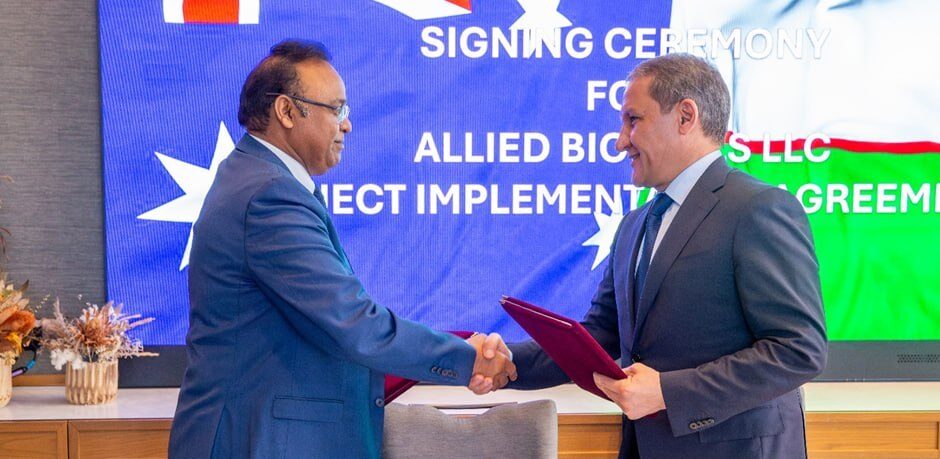
Uzbekistan has announced a major step toward developing large-scale clean energy infrastructure with the signing of a binding implementation agreement for a $6.08 billion biofuel project in the Khorezm region.

The Project Implementation Agreement (PIA) was signed between Allied Biofuels FE LLC and the regional government of Khorezm, formalizing plans to build what the developers describe as Central Asia’s first integrated biofuel refinery. The agreement was concluded on April 2 in Perth, Australia, by Khorezm regional governor Jurabek Rakhimov and Alfred Benedict, chairman and general director of Allied Biofuels.

According to Allied Biofuels, the project has been granted special economic zone status under a presidential decree, providing tax exemptions and customs incentives aimed at ensuring long-term financial stability and investor confidence.

Once completed, the facility is expected to produce sustainable aviation fuel (SAF), electro-synthetic SAF (e-SAF), and green diesel at an industrial scale. Annual output is projected to reach approximately 160,400 tonnes of SAF, 257,000 tonnes of e-SAF, and 5,040 tonnes of green diesel.

The refinery will be supported by a large renewable energy system, including battery storage and hydrogen production capacity. The project also incorporates a closed-loop model that converts biogenic carbon dioxide into fuel while using agricultural feedstock as a primary input.

Officials say the initiative is designed not only to produce fuel but also to strengthen industrial capacity and introduce advanced technologies. The construction phase alone is expected to generate around 2,000 direct and indirect jobs.

Speaking at the signing, Rakhimov said the project would help build a “high value-added industrial chain” in the region and expand export potential. He added that cooperation with Allied Biofuels would support the transfer of advanced green technologies and position Khorezm as “an emerging international hub for green industry.”

Benedict described the agreement as “a defining moment” for both the company and the broader clean energy sector. “This project sends an unambiguous message to the global investment community, Uzbekistan is not merely open for business; it is ready to lead,” he said.

The project is being developed in partnership with international technology providers, including hydrogen systems supplied by Plug Power. Advisory support for the transaction was provided by Affinity Capital Group.

Turkmenistan’s Air Connectivity Shows Little Change Despite Expansion Plans

Turkmenistan’s airport schedules remain largely unchanged, with no new destinations added and previously announced flights yet to begin operating. Plans to expand international air links from Turkmenistan have been discussed for years, but little has changed in practice.

At the end of last year, Russia’s S7 Airlines announced the launch of the Ashgabat-Novosibirsk route starting March 31. Tickets went on sale at the time, with flights planned once a week. However, as of early April, the flights are absent both from the airline’s schedule and from airport data. Only connecting options remain in booking systems. No official explanation has been provided, despite considerable interest in the route.

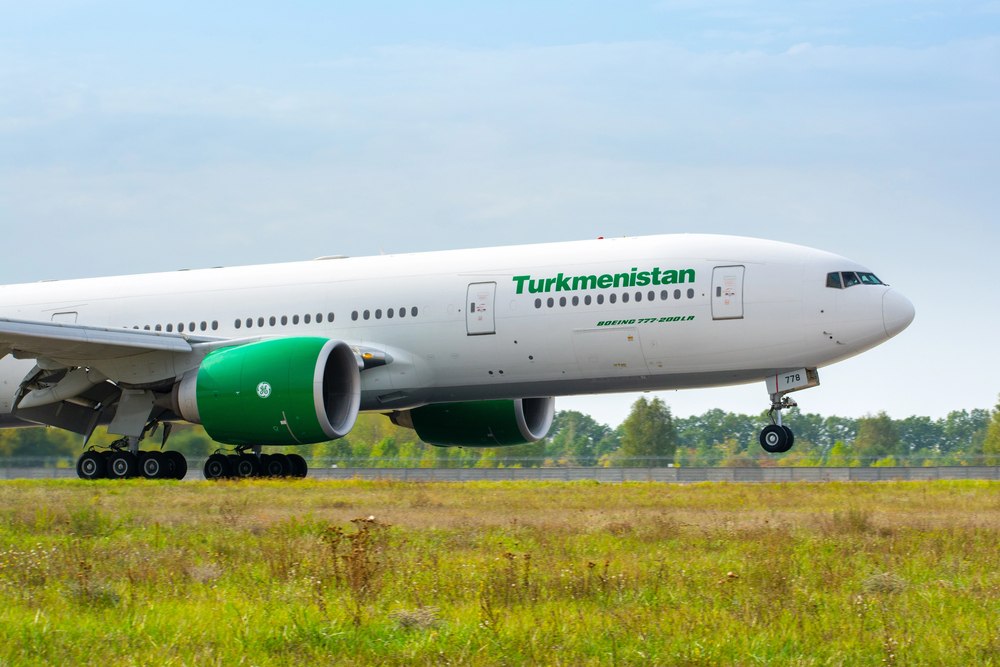
Flights from Turkmenistan to Russia remain in high demand, significantly exceeding supply. Tickets sell out almost immediately despite high prices, which passengers often associate with monopoly conditions and possible corruption schemes. At present, the choice is limited to two routes: S7 Airlines operates Ashgabat-Moscow flights, while national carrier Turkmenistan Airlines serves only the Ashgabat-Kazan route.

The limited number of direct routes forces passengers to seek alternatives. One of the most common is transit through Uzbekistan. The neighboring country can be reached by land, and from there dozens of flights to Russian cities are available.

At the same time, there is separate demand for travel to Uzbekistan itself, including for business, education, and tourism. Nevertheless, Turkmenistan has no direct air links with any neighboring country. The restoration of flights with Uzbekistan was discussed in 2025 by presidents Serdar Berdimuhamedov and Shavkat Mirziyoyev, but no specific timelines or routes have been announced since.

Some travel takes place via Azerbaijan. In the first two months of this year, more than 4,000 citizens of Turkmenistan entered the country. A significant share of these trips is related not to tourism but to obtaining European visas, as doing so from within Turkmenistan is more difficult. Meanwhile, discussions on transport cooperation between Ashgabat and Baku have focused mainly on cargo transportation.

The only notable change has been an increase in the number of flights between Ashgabat and Istanbul, driven by the foreign carrier Turkish Airlines.