• KGS/USD = 0.01144 0%
  • KZT/USD = 0.00198 0%
  • TJS/USD = 0.10857 -0.18%
  • UZS/USD = 0.00008 0%
  • TMT/USD = 0.28571 0%
  • KGS/USD = 0.01144 0%
  • KZT/USD = 0.00198 0%
  • TJS/USD = 0.10857 -0.18%
  • UZS/USD = 0.00008 0%
  • TMT/USD = 0.28571 0%
  • KGS/USD = 0.01144 0%
  • KZT/USD = 0.00198 0%
  • TJS/USD = 0.10857 -0.18%
  • UZS/USD = 0.00008 0%
  • TMT/USD = 0.28571 0%
  • KGS/USD = 0.01144 0%
  • KZT/USD = 0.00198 0%
  • TJS/USD = 0.10857 -0.18%
  • UZS/USD = 0.00008 0%
  • TMT/USD = 0.28571 0%
  • KGS/USD = 0.01144 0%
  • KZT/USD = 0.00198 0%
  • TJS/USD = 0.10857 -0.18%
  • UZS/USD = 0.00008 0%
  • TMT/USD = 0.28571 0%
  • KGS/USD = 0.01144 0%
  • KZT/USD = 0.00198 0%
  • TJS/USD = 0.10857 -0.18%
  • UZS/USD = 0.00008 0%
  • TMT/USD = 0.28571 0%
  • KGS/USD = 0.01144 0%
  • KZT/USD = 0.00198 0%
  • TJS/USD = 0.10857 -0.18%
  • UZS/USD = 0.00008 0%
  • TMT/USD = 0.28571 0%
  • KGS/USD = 0.01144 0%
  • KZT/USD = 0.00198 0%
  • TJS/USD = 0.10857 -0.18%
  • UZS/USD = 0.00008 0%
  • TMT/USD = 0.28571 0%
05 December 2025

Uzbekistan Plans Chemical Sector Expansion as Cotton Output Target Set at 4.5 Million Tons

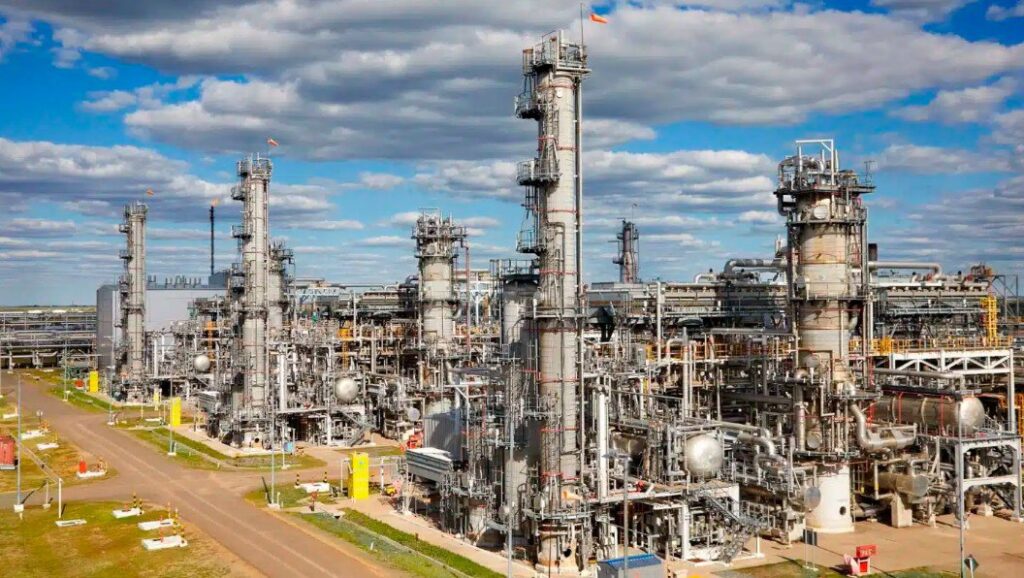
On December 3, President Shavkat Mirziyoyev reviewed proposals to expand production, increase exports, and reduce costs in Uzbekistan’s chemical industry, according to a statement from the presidential press service.

The government aims to double the size of the chemical sector by 2030, increase mineral fertilizer production by 1.5 times, and boost annual exports to $1 billion. Currently, 21 major projects worth $1 billion are underway, with an additional $4.5 billion in investments planned over the next three years.

Officials noted that many of Uzbekistan’s large chemical plants still rely on outdated equipment, resulting in high energy consumption and limited competitiveness. For instance, energy costs account for up to 55% of the production price of nitrogen fertilizers. The introduction of energy-efficient technologies and expanded digital management systems was emphasized as a key strategy to reduce production costs across the sector.

Despite strong global demand for chemical products and favorable logistics in neighboring markets, where potential demand is estimated at $1 billion, Uzbekistan has yet to fully tap into these opportunities. Officials proposed increasing domestic raw material processing to develop new products and at least double current export volumes.

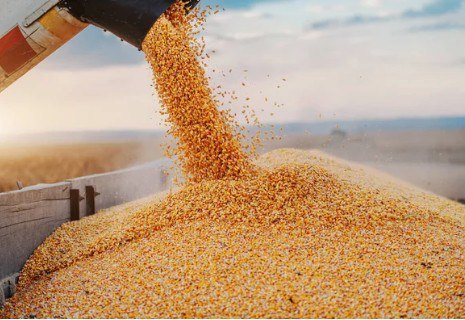
In 2025, new production lines for “green” mineral fertilizers, cyanide salts, potassium xanthate, and potassium sulfate began operating in the Tashkent, Navoi, and Jizzakh regions.

In parallel, the government has set a target to produce 4.5 million tons of cotton next year. To support this goal, authorities have instructed officials to build strategic reserves of phosphorus fertilizers, maintain steady supplies of sulfuric acid to manufacturers, and begin issuing preferential loans to farmers for fertilizer purchases as soon as possible.

Mirziyoyev underscored the chemical industry’s strategic role in the national economy, directing officials to ensure reliable domestic supply, enhance export capacity, and create new jobs in the sector.

Uzbekistan’s textile industry has also experienced rapid growth. Since 2017, cotton yarn production has more than doubled, knitted fabric output has increased significantly, and garment manufacturing has expanded from under 1 billion units to over 3 billion. As a result, textile exports have risen from approximately $1.1 billion in 2016 to an estimated $2.8 billion in 2024.

Kazakhstan’s Central Bank Raises Inflation Forecast for 2025-2026

The National Bank of Kazakhstan has raised its inflation forecast for 2025 and 2026 in its baseline scenario, according to the regulator’s November Monetary Policy Report.

The updated forecast projects inflation in the range of 12-13% in 2025 and 9.5-12.5% in 2026. The outlook for 2027 remains unchanged, with inflation expected to slow to 5.5-7.5%.

In comparison, the Bank’s August report had forecast inflation at 11-12.5% for 2025 and 9.5-11.5% for 2026.

The revision reflects persistent inflationary pressures, as both actual inflation and inflation expectations among households and businesses continue to exceed earlier projections. Additionally, administered prices are contributing to the increase. While their growth is expected to decelerate under the “inflation +5%” framework in 2026-2027, the cost of goods and services remains under significant pressure.

The broader forecast range for 2026 highlights rising uncertainty related to the planned tax reform, its impact on aggregate demand, and expanded financing by the quasi-budgetary sector.

Key risks identified by the regulator include:

– rising domestic consumer demand
– accelerating external inflation
– sustained high inflation expectations
– secondary effects from increased regulated prices, including fuel and VAT

A new Tax Code is scheduled to take effect in 2026, raising the VAT rate from 12% to 16%. Additionally, utility tariff and fuel price freezes will be lifted by early Q2 2025, further contributing to inflationary pressure.

The report also flags the scale of state involvement in the economy as a potential inflation driver. “A significant amount of quasi-fiscal injections could increase inflationary pressure and partially offset the effect of the upcoming fiscal consolidation of the republican budget,” the Bank stated.

Despite these risks, the National Bank expects inflationary pressures to ease gradually, supported by a moderately tight monetary policy and anti-inflation measures implemented under a joint program with the government and the Agency for Regulation and Development of the Financial Market.

A further stabilizing factor could be a decline in inflation among Kazakhstan’s key trading partners.

The Times of Central Asia previously reported that the International Monetary Fund links Kazakhstan’s high inflation to signs of economic overheating.

Reuters News Agency Pulls Report on Tajik-Russian Talks on Guarding Afghan Border

The Reuters news agency has withdrawn a story, denied by Tajikistan, that Tajikistan was negotiating with Russia about joint patrols along its troubled border with Afghanistan. 

The removal of the news story comes as China urges Tajikistan to upgrade security along the border, where security officials say five Chinese workers were killed in two separate attacks launched into Tajikistan from Afghanistan last week. Tajik President Emomali Rahmon met senior security officials in his government this week to discuss border security. 

“A Reuters story about Tajikistan holding talks with Russia about helping guard its Afghan border has been withdrawn following a post-publication review showing insufficient evidence. There will be no substitute story,” Reuters said in a statement from Almaty, Kazakhstan. 

Tajikistan has previously said it seeks to collaborate with the Collective Security Treaty Organization (CSTO), a regional group in which Russia is the most powerful member, on efforts to conter threats along its border with Afghanistan. As far back as 2013, the organization said it was planning to provide “military-technical assistance” to Tajikistan’s border of nearly 1,400 kilometers with Afghanistan. 

But Tajikistan’s Ministry of Foreign Affairs denied the Reuters report about “alleged discussions between Tajikistan and the Collective Security Treaty Organization regarding the involvement of Russian military personnel” in joint patrols along the Tajik-Afghan border.

“The Ministry emphasizes that this publication is untrue and that the dissemination of such false information misleads the international audience,” the ministry said on Wednesday. 

Tajikistan is “constantly” taking steps to strengthen the border with Afghanistan and that the situation there “remains stable and is under the full control of the competent authorities” in the country, according to the foreign ministry. Even so, Chinese media reported that the Chinese embassy in Tajikistan has urged its nationals to urgently leave the border area. 

The ruling Taliban in Afghanistan condemned the border attacks and pledged to collaborate in efforts to find those responsible. Mohammad Naeem, the deputy foreign minister, told Zhao Xing, China’s top diplomat in Afghanistan, during a meeting in Kabul that investigations were underway, the Afghan government said Wednesday. 


British-Kazakh Cultural Festival Returns to Burabay

Burabay, a popular lake resort in northern Kazakhstan, has hosted the 10th edition of the ‘Voices of Friends: Poetry & Art’ festival, which ran from 29 November to 2 December.

The annual gathering, arranged by the London-based Eurasian Creative Guild (ECG), has become one of Central Asia’s events for cultural collaboration, bringing together writers, filmmakers, visual artists and musicians from 20 countries.

This year’s programme continued the festival’s mix of literature and modern arts, with an emphasis for 2025 on emerging film talent, through the youth-focused Cinema Future festival and the Burabay International Short Film Festival (BISFF).

According to filmmaker and BISFF jury member Timur Akhmedjanov, “Young filmmakers from different countries on one screen [means] the birth of a new generation of cinema.”

Alongside film events, the festival featured book presentations from publishers Hertfordshire Press, discussions about art, performances by an international community choir, and creative workshops hosted at the ECG Horizons residency.

Organisers emphasised that for the festival, collaboration is as important as presentation. “The festival grows like a living universe of ideas and emotions. Here everyone is a creator – and everyone feels that their voice matters,” said festival director and cultural projects author Taina Kaunis.

During the event’s closing ceremony, awards were presented to some figures shaping Eurasian culture, while the Eurasian Creative Guild announced a change in leadership ahead of its 2026 season.

Founder Marat Akhmedjanov, originally from Uzbekistan but now residing in Scotland, highlighted the organisation’s international ethos, saying: “Creativity knows no borders. We speak dozens of languages, yet understand each other perfectly.” ECG vice-chair Saltanat Khamzeyeva called it “the beginning of a big story” for cultural development in Central Asia.

The Guild underscores that the Burabay resort has become more than a picturesque location for a festival. Chair Francesca Mepham summed up its growing impact: “We see Eurasian creativity becoming a global voice – and this voice will only become stronger.”

Why Regional Connectivity Is Reshaping Central Asia: Insights from ISRS Director Eldor Aripov (Part Two)

The Times of Central Asia presents the second part of an interview in Washington, D.C. with Eldor Aripov, Director of the Institute for Strategic and Regional Studies under the President of Uzbekistan. Dr. Aripov sat down with our Washington Correspondent, Javier M. Piedra, to discuss Uzbekistan’s geoeconomic and geopolitical strategic thinking.

The conversation focused on Uzbekistan’s and the region’s efforts to cooperate diplomatically to maintain peace and stability with neighbors, irrespective of historical “hotspots,” cultural sensitivities, or the all-important matter of water resources. Aripov comments on Afghanistan, Chabahar Port (Iran), Ferghana Valley, and business development – key for U.S. investors thinking about Uzbekistan and the broader Central Asian region.

TCA: What message do you have for businesses and private investors who do not have any experience in Central Asia? Many companies are sniffing around at this time – what do you want to tell them?

Aripov: Uzbekistan is ready for committed investors – those who deliver lasting benefits, quality jobs, and shared prosperity. A decade of reforms has strengthened our fiscal discipline, boosted SMEs, and anchored stability. Coupled with our focus on good relations and a secure, integrated Central Asia, we offer a reliable platform for long-term, sustainable investment. While we have more work to do, we invite you to be part of our momentum.

TCA: What are the risks that companies might face when considering long-term investment?

Aripov: No country is immune to downside risks – not only in the developed but developing world. Having said that, downside risks, including trade shocks, commodity price volatility, tighter external financing, and contingent liabilities from state-owned enterprises, are mostly exogenous factors driven by global conditions. Risks are mitigated through political stability, diversification of the economy, prudent macroeconomic management, and reforms to state-owned enterprises and governance. For more in-depth commentary, I refer you to recent IMF, World Bank, and Asian Development Bank assessments about our economic conditions and trends.

TCA: Let me move on to more regional issues. The first Ferghana Peace Forum was held in October 2025. How can it serve as a replicable model for other regions seeking sustainable peace?

Aripov: First of all, I’d like to put this important forum on everyone’s radar. I’d like to underscore that peace is possible when hard work, respect for others, and a commitment to understanding guide our actions, despite historical memories and past differences. Someone should write a case study about our ability to bring consensus into an otherwise challenging region.

In any event, the inaugural Ferghana Peace Forum brought together over 300 participants from more than 20 countries — representatives of Central Asian governments, international organizations, leading think tanks, research institutions, and local communities. A joint communiqué was adopted, confirming the intention to institutionalize the Forum as a permanent platform with rotating hosts.

This broad participation highlighted an important reality: the Ferghana Valley is no longer viewed as a fragile zone; it is now viewed as a model of pragmatic peacebuilding. The Forum demonstrated how regional leadership — particularly the openness and good-neighborliness promoted by President Mirziyoyev — has transformed a once-sensitive area into a space of trust, connectivity, and shared development.

The uniqueness of this experience lies in its practicality, i.e., success was a function of being able to reach a practical, verifiable compromise acceptable to all parties.

The Ferghana model is built on concrete agreements and workable mechanisms: open borders for people and trade; joint resource management, including water; and continuous dialogue among governments, experts, and communities. This approach addresses the root causes of conflict by creating tangible economic benefits and predictable relations among neighbors. It also allows for dialogue to resolve differences when they may arise.

Image: Silk Road Research, Ferghana Valley

TCA: But you would agree that without political will, success is largely ephemeral, right?

Aripov: You are correct, but, fortunately, here in Central Asia, there is, without a doubt, the political will. Maybe our success in bringing peace to the Ferghana Valley is a result of our practicality. Central Asian leaders have chosen cooperation over competition, consensus over unilateral actions, and development over tension — reviving a historical “code of harmony” that shaped the Ferghana Valley for centuries. The Forum amplified this reality by giving a platform not only to officials and experts, but also to women and youth initiatives, emphasizing that sustainable peace grows from the bottom up.

The model shows that peace is achievable when countries focus on interdependence rather than dividing lines. It demonstrates that even deep-rooted challenges — border disputes, resource competition, social fragmentation — can be resolved through sustained political dialogue, shared economic incentives, and inclusive participation.

TCA: When and where will the next forum take place, and what ideas are being considered to make the agenda more substantive?

Aripov: Preparations for the next Forum are underway, with several cities in the Ferghana Valley — including Khujand and Manas — being considered. Consultations with Kyrgyz and Tajik partners are ongoing. The next meeting will be even more results-oriented, with expanded discussions on transboundary clusters in logistics, agriculture, water resources, and digital technologies. A special focus will be placed on youth, education, and local initiatives. The idea of introducing the “Ferghana Principles” – good neighborliness, equality, and mutual respect – as a conceptual framework to support other fragile regions is also being explored.

TCA: Water management issues remain complex. Many fear that Afghanistan’s 285-km Qosh-Tepa Canal – a priority project for the Taliban-run government of Afghanistan – will divert a significant portion of the Amu Darya River – the largest river in Central Asia – and reduce water inflows into Uzbekistan and Turkmenistan. How is your dialogue with Afghanistan progressing?

Aripov: Concerns regarding the Qosh-Tepa Canal are understandable. The Amu Darya basin is already under pressure from climate change, population growth, and rising irrigation needs. Experts are worried that “too much” water removal from the river – remember that Uzbekistan and Turkmenistan are downstream – affects the entire regional ecosystem, agricultural landscape, and community relations. This is a delicate issue, but one that is being addressed calmly and responsibly.

Uzbekistan has chosen a principled, forward-looking approach — prioritizing dialogue, cooperation, and mutual understanding with Afghanistan. We believe in common sense and diplomacy.

President Mirziyoyev has repeatedly emphasized that stability and predictability in the Amu Darya basin are impossible without Afghanistan’s involvement as a full-fledged partner in negotiations and in the region. Uzbekistan was the first country in the region to initiate structured consultations with Kabul on water management.

The livelihoods of millions — farmers, rural communities, and entire sectors — depend on the stability and predictability of water flows. For this reason, we advocate a science-based approach, transparency in water usage, and its equitable and fair distribution. Domestically, we are accelerating the adoption of modern irrigation, water-saving technologies, and digital monitoring. We want to lead by example, and that is why responsible stewardship begins at home.

The broader stability of Central Asia will depend on how effectively the region engages Afghanistan, which is recovering from years of instability. President Mirziyoyev’s position has been consistent and well-received: only dialogue, mutual interests, and the gradual institutionalization of cooperation can preserve the Amu Darya as a vital artery for all.

Towards this end, an important step to reaching mutual understandings was the International Conference on Water Diplomacy held in Tashkent on 10 April 2025, where Afghanistan participated with a high-level delegation and expressed readiness for constructive engagement. Discussions are ongoing, and we have every expectation that issues regarding water usage will be addressed to the benefit of all.

Map of the Amu Darya River; image: Zoi Environment

TCA: Uzbekistan and Afghanistan maintain relations at the ambassadorial level. Why does Uzbekistan view the integration of Afghanistan into Central Asian processes as a positive step for security and economic development?

Aripov: As I alluded to earlier, for Uzbekistan, Afghanistan’s integration into regional processes is not an abstract geopolitical concept — it is a practical question of security and development.

Our position rests on a simple principle: The more isolated Afghanistan is, the higher the risks for Central Asia; the more it is included in regional mechanisms, the more stable the region becomes.

From a security perspective, Uzbekistan believes that vacuums generate threats. When a country lacks economic opportunities, international partnerships, and pathways to integration, conditions arise for radicalization, illegal migration, and narcotics trafficking. This is why involving Afghanistan in transport, energy, and trade projects is not a gesture of goodwill but a strategic investment in shared stability.

Economically, Afghanistan remains the shortest route to the ports of the Indian Ocean. Access to these markets reduces transport distances, lowers cost structures, and increases the competitiveness of Uzbek exports — all central to our diversification strategy.

Most importantly, regional thinking is changing. Central Asian leaders declared in Tashkent recently that Afghanistan is historically, culturally, and economically part of our region.

Uzbekistan’s approach has been not only consistent but optimistic: integrating Afghanistan is possible and will reduce risks that lead to instability. Integration will create new economic opportunities and strengthen interdependence — the foundation of a resilient region. A stable Afghanistan means a stable Central Asia, and Uzbekistan is playing an active role in this process.

TCA: India has signed a 10-year agreement for the management of the Chabahar port. Assuming the U.S. does not cancel its sanctions waiver on the use of the port, how do you assess the importance of Chabahar for Uzbekistan’s trade flows alongside the Middle Corridor?

Aripov: For Uzbekistan, the question has never been “either–or.” For a double-landlocked country, every new route is not merely an economic advantage but an element of national resilience.

India’s decade-long agreement, the reopening of its embassy in Kabul, and the U.S. sanctions waiver all signal that Chabahar will remain operational and connected to global markets. This is critical for us: predictability and long-term guarantees are the key factors for investors, exporters, and logistics operators.

Chabahar complements — rather than replaces — the Middle Corridor, the Trans-Afghan route, and our growing network of logistics links with the Gulf states.

Together, these routes form an architecture of connectivity that reduces transport costs, expands export geography, and strengthens economic independence.

There is also a geopolitical dimension: the more connected Central Asia becomes with different regions, the more stable and predictable it is. This fully aligns with President Mirziyoyev’s vision of Central Asia as an open, integrated, and dynamic region.


For part one of our interview with Dr. Eldor Aripov, click here.

Pannier and Hillard’s Spotlight on Central Asia: New Episode Available Now

As Managing Editor of The Times of Central Asia, I’m delighted that, in partnership with the Oxus Society for Central Asian Affairs, from October 19, we are the home of the Spotlight on Central Asia podcast. Chaired by seasoned broadcasters Bruce Pannier of RFE/RL’s long-running Majlis podcast and Michael Hillard of The Red Line, each fortnightly instalment will take you on a deep dive into the latest news, developments, security issues, and social trends across an increasingly pivotal region.

In the new episode, available now, the team breaks down a flurry of developments reshaping Central Asia’s security landscape, from the debut of the new C6 format and the surprise expansion of the once-exclusive C5 grouping, to Vladimir Putin’s key trip to Bishkek for the CSTO summit. We examine the alarming collapse in Tashkent’s air quality, Astana’s decision to withdraw from a decades-long arms agreement, and the escalating pattern of cross-border drone strikes between Tajik and Afghan actors along one of the region’s most volatile frontiers. The team is also joined by special guests Edward Lemon and Bradley Jardine to discuss Chinese influence in Central Asia and their new book, From Belt and Road to Backlash.