• KGS/USD = 0.01144 0%
  • KZT/USD = 0.00212 0%
  • TJS/USD = 0.10432 -0.29%
  • UZS/USD = 0.00008 0%
  • TMT/USD = 0.28571 0.28%
  • KGS/USD = 0.01144 0%
  • KZT/USD = 0.00212 0%
  • TJS/USD = 0.10432 -0.29%
  • UZS/USD = 0.00008 0%
  • TMT/USD = 0.28571 0.28%
  • KGS/USD = 0.01144 0%
  • KZT/USD = 0.00212 0%
  • TJS/USD = 0.10432 -0.29%
  • UZS/USD = 0.00008 0%
  • TMT/USD = 0.28571 0.28%
  • KGS/USD = 0.01144 0%
  • KZT/USD = 0.00212 0%
  • TJS/USD = 0.10432 -0.29%
  • UZS/USD = 0.00008 0%
  • TMT/USD = 0.28571 0.28%
  • KGS/USD = 0.01144 0%
  • KZT/USD = 0.00212 0%
  • TJS/USD = 0.10432 -0.29%
  • UZS/USD = 0.00008 0%
  • TMT/USD = 0.28571 0.28%
  • KGS/USD = 0.01144 0%
  • KZT/USD = 0.00212 0%
  • TJS/USD = 0.10432 -0.29%
  • UZS/USD = 0.00008 0%
  • TMT/USD = 0.28571 0.28%
  • KGS/USD = 0.01144 0%
  • KZT/USD = 0.00212 0%
  • TJS/USD = 0.10432 -0.29%
  • UZS/USD = 0.00008 0%
  • TMT/USD = 0.28571 0.28%
  • KGS/USD = 0.01144 0%
  • KZT/USD = 0.00212 0%
  • TJS/USD = 0.10432 -0.29%
  • UZS/USD = 0.00008 0%
  • TMT/USD = 0.28571 0.28%

Teacher’s Assault on Student Sparks Debate on School Violence in Tajikistan

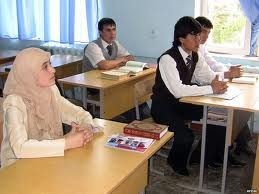
An alleged case of school violence in Tajikistan has reignited public concern after an 11th-grade student accused a teacher of assault in the southern city of Levakant. The incident, which has generated conflicting accounts from authorities and the student’s family, is now under investigation by law enforcement.

Conflicting Accounts

The case surfaced on September 30, when a video circulated on social media showing the student unconscious. Radio Ozodi reported that the boy had received “a strong blow to the back of the head from his teacher.”

According to the student, Mehmed Bozorov, the incident occurred on September 6 at School No. 4 in the village of Bohturobod. He said he had stepped out during a break to borrow a pen and was struck by the teacher upon returning. Bozorov claims he lost consciousness and was hospitalized for 15 days.

The Levakant Education Department offered a different version of events. It stated that Bozorov had shown disrespect toward the teacher, who “lost his temper and slapped him.” Officials said the student did not suffer serious injuries.

Hospitalization and Family Response

Bozorov’s uncle, Jamol Bozorov, a medical professional, was called to the school after the student complained of feeling unwell. The boy collapsed shortly afterward. His uncle recorded the incident and later shared the footage with local media.

Bozorov was admitted to the central hospital in Levakant. A private lab, Aksi Shifo, found no signs of serious trauma, but his mother insisted on continued treatment. He remained hospitalized for 13 days. The Education Department stated that the teacher covered all medical costs. Bozorov has since returned to school.

Official Response

The Ministry of Education and Science of Tajikistan has met with both parties involved. “Farhod Nazarov is a young teacher; he should not have resorted to violence, but the student also showed disrespect. Responsibility lies with both,” the ministry said in a statement.

Law enforcement is conducting a preliminary investigation. The student and his family have not commented on the ministry’s statement.

A Broader Issue

Violence in Tajik schools is not uncommon. Last year alone, three separate incidents involving physical altercations between teachers and students were reported, in the town of Bokhtar and twice in Khovaling district.

Following previous complaints about bullying, Tajik authorities introduced a methodological guide aimed at helping teachers prevent bullying and cyberbullying. However, the Levakant case underscores that school violence remains a persistent and unresolved issue.


Uzbekistan Airways Refutes Near-Collision Reports in Russian Airspace

Uzbekistan Airways has denied claims that one of its aircraft was involved in a near-collision with a private jet in Russian airspace, describing the reports inaccurate and misleading.

The airline issued a statement in response to tabloid coverage in Russia alleging a serious aviation incident near Moscow’s Vnukovo International Airport.

As previously reported by The Times of Central Asia, the incident allegedly occurred shortly after midnight on September 29 near Serpukhov, south of Moscow. Early accounts indicated that an Uzbekistan Airways Airbus A320 en route from Samarkand and an Embraer Legacy 650 business jet flying from Bodrum came within three kilometers horizontally and 700 feet vertically of each other—below international safety thresholds—due to a miscommunication over altitude clearance.

Uzbekistan Airways has firmly rejected this version of events. In a statement from its press service, the airline stressed that its crew fully complied with all instructions from Moscow air traffic control and did not breach any flight regulations. “All altitude levels were maintained in accordance with the established rules and procedures, and the required separation between aircraft was preserved,” the statement read.

The airline also clarified that the flight in question occurred on September 28, not September 29 as initially reported. It added that the aircraft’s onboard safety systems did not issue any alerts, and Moscow’s air traffic controllers made no objections or complaints about the crew’s actions.

Uzbekistan Airways criticized several Russian media outlets for publishing what it described as unverified information, which was later reprinted by some Uzbek outlets without proper verification. “This created a misleading impression among readers,” the airline said.

Reaffirming its commitment to international aviation standards, the company stated that flight safety remains its highest priority and that all crews operate in strict compliance with air traffic control instructions.

IAEA Approves Site for Nuclear Power Plant in Eastern Kazakhstan

The International Atomic Energy Agency (IAEA) has approved a site near the city of Kurchatov in Kazakhstan’s eastern Abai region for the potential construction of a nuclear power plant, according to its Chairman Almasadam Satkaliyev.

Kazakhstan held a national referendum last year on nuclear energy development, with over 71 percent of voters endorsing the construction of a nuclear power plant. Following the vote, the government selected Russia’s Rosatom as the contractor for the country’s first facility, located in the Almaty region. Construction has already begun near the village of Ulken on the shores of Lake Balkhash, approximately 400 kilometers from Almaty.

President Kassym-Jomart Tokayev has since outlined plans to build a network of two to three nuclear power plants across the country. He has instructed the government to finalize both the vendor selection and site locations. China’s National Nuclear Corporation (CNNC) has been chosen to construct two additional plants, although their locations remain undecided. Kurchatov, adjacent to the former Semipalatinsk nuclear test site, and the Mangystau region on the Caspian Sea coast are under consideration.

Speaking before parliament, Satkaliyev confirmed that the Kurchatov site has received IAEA approval. “We have a very transparent procedure before any decision on construction: mandatory public hearings, mandatory conclusions from the Ministry of Emergency Situations and other authorized state bodies, a full site survey, and an assessment by international experts. The IAEA has already approved the Kurchatov site, but without the consent of the local population, construction will not begin anywhere in Kazakhstan,” he said.

Satkaliyev emphasized that no final decision has been made regarding construction in Kurchatov, but he expressed personal support for deploying small and medium modular reactors in the Abai region, which he described as “not as critically dangerous.”

A decision has also not been finalized on the potential western site. Satkaliyev noted that the Caspian coast remains under review for the installation of small or medium reactors. “A corresponding study will soon be carried out to assess the feasibility of construction, based on IAEA criteria: seismic activity, safety, availability of a reservoir, and sufficient water supply. We believe this site has strong potential,” he said.

During a recent meeting of the State Commission on the Atomic Industry, the Zhambyl district in the Almaty region was identified as another prospective site. “This means the second plant will also be in the south of the country, where there is currently an energy deficit. Electricity is transmitted there via the North-South transit line. A plant in this region would improve the reliability and stability of energy supply,” Satkaliyev explained.

As previously reported by The Times of Central Asia, Tokayev also announced plans to establish nuclear science cities in Almaty and Kurchatov to support the development of nuclear energy and nuclear medicine.

Japarov Orders Death Penalty for Rape of Minors

Kyrgyz President Sadyr Japarov has ordered the drafting of legislation to reinstate the death penalty for the most serious crimes against children and women, following national outrage over the murder of a teenage girl.

The presidential press office announced that Japarov has instructed Murat Ukushev, head of legal affairs in the presidential administration, to prepare amendments making the rape of minors, and rape followed by murder, punishable by death.

The move is significant given that Kyrgyzstan abolished capital punishment in law in 2007.

In a statement published on Facebook, presidential spokesman Askhat Alagozov referred to the “brutal murder” of a young girl named Aisuluu, noting the wave of public anger the case provoked. “Crimes committed against children and women should not go unpunished,” he wrote, adding that Japarov has taken personal responsibility for ensuring legal and law enforcement reforms.

In neighboring Uzbekistan, lawmakers have also moved to tighten penalties for crimes involving minors. The Uzbek Senate recently approved a law raising the minimum age of criminal responsibility from 13 to 14, while also lengthening prison terms for sexual offenses involving children. In March, a bill was proposed to criminalize the possession of child pornography.

Japarov’s push to reintroduce the death penalty marks a sharp break from the region’s general move toward abolition. Uzbekistan ended executions in 1999, and Kyrgyzstan formally codified its abolition in 2007, according to the Asia-Pacific Human Rights Information Center.

Uzbek Authorities Investigate Mass Food Poisoning at Some Kindergartens

Uzbekistan’s Ministry of Health says almost all children who were hospitalized after suffering food poisoning at several state kindergartens in the Tashkent region have recovered and are back with their families. 

Hundreds of children had been affected by the preschool health crisis, which prompted an emergency response from medical institutions when the first cases of fever, nausea and diarrhea were reported a week ago. Lab workers conducted tests on outsourced food being served at the kindergartens. Prosecutors opened a criminal case and an investigation is underway. 

Media outlet UzDaily.com reported that authorities had arrested seven people, including executives of food companies that supplied the kindergartens. It said children got sick with gastroentiritis at schools in seven districts across the Tashkent region. Estimates of the number of affected children varied, with some reports saying more than 1,000 received medical treatment.

Nurmat Atabekov, first deputy chairman of the ministry’s sanitary-epidemiological welfare and public health committee, said on Tuesday that three children remain under medical supervision because of other diseases but are in stable condition and expected to return home in the coming days. 

Authorities will tighten control of food catering for all educational institutions in Uzbekistan, according to Atabekov. 

“In cooperation with law enforcement agencies and the Ministry of Health, all details of the incident are being thoroughly investigated,” the Ministry of Preschool and School Education said. “If deficiencies are found, the relevant contracts will be reviewed or canceled.” 

The kindergartens where children fell ill plan to reopen on Thursday.

Military Psychologists in Kazakhstan Say AI Chatbot Can Help in Hard Times

Kazakhstan’s military has turned to artificial intelligence to help stressed service members, unveiling the “AI-sulu” Telegram bot, a digital adviser available to those in need around the clock. The development comes as military leaders around the world look more closely at AI as a tool for the psychological treatment of personnel who sometimes go through harsh and traumatic experiences as part of their job, and are reluctant to talk to other people about it.   

The Kazakhstani bot was introduced at a military meeting in Astana in late September by Major Qasymkhan Tuitin, head of the information department at the National Military-Patriotic Center, which hosts displays about military history and promotes education and morale in the armed forces. The goal is not to replace human responders, he said, but to offer a first line of assistance at a critical time. 

“AI-sulu cannot replace a live specialist, but in difficult moments it can provide first aid, listen, and direct people toward the necessary advice and resources,” Tuitin said, according to the Ministry of Defense. 

AI-sulu provides anonymity to military personnel and their families and is available in the Kazakh and Russian languages, the ministry says. At the Astana meeting, participants talked about how to prevent destructive behavior and the role of IT tools in psychological work. 

The military’s bot initiative comes as Kazakhstan prepares to deploy artificial intelligence on a large scale across the economy, government and education, though there are concerns about cybersecurity, regulatory oversight and other aspects of the fast-developing technology. 

Militaries in some other countries have implemented AI in psychological treatment or are looking to do so.

Chatbots were introduced in Ukraine, a highly digitized society, to help address psychological trauma after Russia’s full-scale invasion in February 2022. 

A recent article published in the Military Medicine journal in the United States said there has been less research in U.S. military populations, compared to civilian populations, about the use of artificial intelligence and machine learning in behavioral health. There are positive signs but more research is needed, it said, noting concerns about suicide rates and declining mental health in the military. 

Another article in the journal noted that progress by adversaries such as China and Russia in AI-driven military health care “underscore the urgency for the United States to accelerate its integration efforts.”

The veteran affairs department of Canada’s government posted about a study this year of an AI-powered chatbot that would provide “trauma-informed” support to service members who have suffered sexual assault and harassment. 

“Existing resources are underutilized due to stigma, fear of retaliation, and complex procedures,” the department said. “This project will explore the potential of using Large Language Model (LLM) driven chatbots to improve access to trauma support in a safe, confidential, and judgment-free manner.”