• KGS/USD = 0.01144 0%
  • KZT/USD = 0.00211 0%
  • TJS/USD = 0.10460 0.19%
  • UZS/USD = 0.00008 0%
  • TMT/USD = 0.28490 0%
  • KGS/USD = 0.01144 0%
  • KZT/USD = 0.00211 0%
  • TJS/USD = 0.10460 0.19%
  • UZS/USD = 0.00008 0%
  • TMT/USD = 0.28490 0%
  • KGS/USD = 0.01144 0%
  • KZT/USD = 0.00211 0%
  • TJS/USD = 0.10460 0.19%
  • UZS/USD = 0.00008 0%
  • TMT/USD = 0.28490 0%
  • KGS/USD = 0.01144 0%
  • KZT/USD = 0.00211 0%
  • TJS/USD = 0.10460 0.19%
  • UZS/USD = 0.00008 0%
  • TMT/USD = 0.28490 0%
  • KGS/USD = 0.01144 0%
  • KZT/USD = 0.00211 0%
  • TJS/USD = 0.10460 0.19%
  • UZS/USD = 0.00008 0%
  • TMT/USD = 0.28490 0%
  • KGS/USD = 0.01144 0%
  • KZT/USD = 0.00211 0%
  • TJS/USD = 0.10460 0.19%
  • UZS/USD = 0.00008 0%
  • TMT/USD = 0.28490 0%
  • KGS/USD = 0.01144 0%
  • KZT/USD = 0.00211 0%
  • TJS/USD = 0.10460 0.19%
  • UZS/USD = 0.00008 0%
  • TMT/USD = 0.28490 0%
  • KGS/USD = 0.01144 0%
  • KZT/USD = 0.00211 0%
  • TJS/USD = 0.10460 0.19%
  • UZS/USD = 0.00008 0%
  • TMT/USD = 0.28490 0%

Informal OTS Foreign Ministers’ Meeting Tests Limits of Turkic Coordination

Escalating tensions linked to the widening conflict in the Middle East have tested the political cohesion of the Organization of Turkic States (OTS), according to Kazakh political commentator Dzhanibek Suleyev.

Recent incidents affecting both Azerbaijan and Turkey — including drone strikes in Azerbaijan’s Nakhchivan Autonomous Republic and a missile intercepted by Turkish air defenses — have raised security concerns across the wider region. Suleyev argues that developments of this scale might normally prompt an urgent summit of heads of state. Instead, Turkey convened an informal meeting of foreign ministers and senior diplomatic representatives from OTS member states.

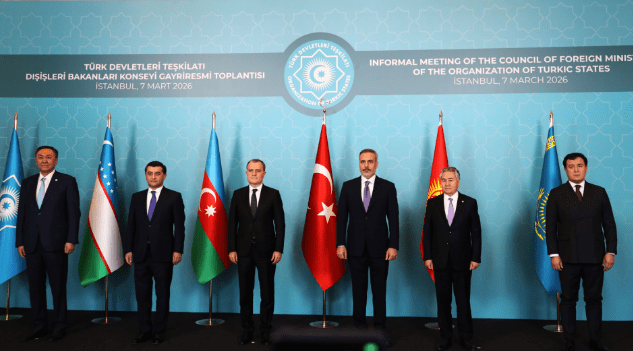
The gathering took place on March 7, when officials convened at the invitation of Turkish Foreign Minister Hakan Fidan. According to Turkish media, ministers later met with President Recep Tayyip Erdoğan during their visit.

Speaking to The Times of Central Asia, Suleyev drew attention to how the meeting was covered in the media of Central Asian member states.

“In the Uzbek press, coverage was limited, and even on the website of their Ministry of Foreign Affairs, there is not a single word about the informal summit of OTS foreign ministers. Kazakhstan, moreover, was represented not by Foreign Minister Yermek Kosherbayev but by his deputy Alibek Bakayev. Kyrgyzstan’s Foreign Ministry issued four notes about the trip of its minister Jeenbek Kulubaev to Istanbul, three of which were devoted to the summit, but without any particular details,” Suleyev said.

Kazakhstan’s Foreign Ministry published a short summary of the meeting, noting in broad terms that representatives discussed cooperation among Turkic states and regional developments.

According to Suleyev, the joint statement adopted after the meeting was difficult to find outside of Azerbaijani media. One of the few outlets to publish the text in full was Azerbaijan’s APA news agency.

Much of the statement focused on the incidents affecting Azerbaijan and Turkey, stressing that “any threat to the security of OTS member states causes concern for the entire Organization… The ministers strongly condemned the attacks carried out from the territory of the Islamic Republic of Iran against the Nakhchivan Autonomous Republic of the Republic of Azerbaijan, including strikes against civilian facilities and the territory of the Republic of Turkey,” the statement continued.

“The rest of the statement boils down to destabilization in the Middle East could lead to a global economic crisis, the Palestinian conflict must be resolved taking into account UN resolutions, and so on,” Suleyev told TCA.

One notable event during the meeting was the foreign ministers’ reception by President Erdoğan. Official summaries released by participating governments described the discussion in diplomatic terms. “Kazakh sources wrote that ‘prospects for the development of cooperation within the framework of Turkic cooperation were discussed,’” Suleyev said. Kyrgyz statements used similar language, stating that the “President of Turkey… noted the importance of regular dialogue on current regional and international issues and expressed interest in further developing multilateral cooperation within the framework of the Organization.”

“In short, these are streamlined diplomatic formulations without specific details,” Suleyev said.

According to a press release from the Kyrgyz Foreign Ministry, the discussions also addressed issues beyond the Middle East. Ministers exchanged views on tensions between Afghanistan and Pakistan, as well as concerns related to potential sanctions affecting Kyrgyzstan.

“The discussion of sanctions noted that unilateral restrictive measures negatively affect global trade and the stability of economic ties. The position of the Kyrgyz Republic on the need to observe the principles of international law and the inadmissibility of unilateral measures outside the framework of the United Nations Security Council was emphasized,” the ministry stated.

For Suleyev, the restrained tone of official statements and limited coverage in the region’s media point to deeper structural limits within the organization.

“These nuances and the minimal coverage in the press of the interested states indicate the inability of Ankara and Baku to ensure significant progress in integration even within the OTS itself,” he said.

Suleyev also pointed to the organization’s broader ambitions to expand cooperation with outside partners through formats sometimes described as OTS+. According to Suleyev, these initiatives appear aimed primarily at Hungary, an EU member state that has previously shown interest in cooperation with the organization. “That interest is connected with the search for an alternative to Russian hydrocarbons,” Suleyev said.

Originally founded in 2009 as the Turkic Council, the OTS brings together Azerbaijan, Kazakhstan, Kyrgyzstan, Turkey, and Uzbekistan, with observer states including Hungary and Turkmenistan. In recent years, the organization has expanded its agenda beyond cultural cooperation toward economic and transport connectivity across the Turkic world.


Kazakhstan Discusses Local Production of Nuclear Power Plant Equipment with South Korea

Kazakhstan has discussed the possibility of localizing production of equipment for nuclear power plants (NPPs) with South Korean partners during a working visit to the Republic of Korea by Almasadam Satkaliyev, chairman of Kazakhstan’s Agency for Atomic Energy.

According to the agency’s press service, the Kazakh delegation held meetings with officials from South Korea’s Ministry of Climate, Energy and Environment, as well as executives from major Korean companies, including Korea Hydro & Nuclear Power (KHNP) and Doosan Enerbility. The talks focused on strengthening strategic cooperation in the peaceful use of nuclear energy, expanding technological partnerships, and developing industrial and investment collaboration.

“Particular attention during the visit was given to cooperation with leading Korean companies that have extensive international experience in nuclear power plant construction and high-tech manufacturing,” the Kazakh agency said in a statement. “The sides discussed the development of industrial cooperation, including the possibility of localizing the production of equipment and individual components in Kazakhstan, as well as involving Kazakh enterprises in the technological and manufacturing chains of nuclear energy projects.”

During discussions with South Korean government representatives, Kazakhstan presented its priorities for developing the national nuclear industry, including institutional reforms and the creation of a modern system of state regulation and management of the sector. The parties also exchanged views on nuclear and radiation safety standards and explored opportunities to share regulatory experience and best practices in managing nuclear energy programs.

Another key topic was workforce development for the nuclear sector. Discussions covered potential cooperation in training specialists, expanding educational programs, and exchanging professional expertise necessary for the implementation of long-term nuclear energy projects.

“The meetings confirmed mutual interest in further strengthening the partnership, expanding institutional dialogue, and deepening practical cooperation between Kazakhstan and the Republic of Korea in the development of the nuclear energy sector,” the agency said.

As previously reported by The Times of Central Asia, Kazakhstan has already selected partners for the construction of three nuclear power plants. The first project will be led by Russia’s Rosatom, while the second and third plants are expected to be built by the China National Nuclear Corporation (CNNC).

Earlier this year, the authorities also selected the site for the country’s second nuclear power plant in the Zhambyl District of the Almaty Region, close to the location chosen for the first plant near the village of Ulken on Lake Balkhash.

Lukashenko Says Belarus Ready to Help Uzbekistan Build Nuclear Power Plant

Belarus is ready to assist Uzbekistan in building a nuclear power plant and training specialists for the country’s emerging nuclear energy sector, President Alexander Lukashenko said during a meeting with Uzbekistan’s ambassador to Belarus, Rakhmatulla Nazarov.

According to the Belarusian president’s press service, the discussion took place on March 9 in Minsk and covered a wide range of issues ahead of a planned visit by Uzbekistan’s President Shavkat Mirziyoyev to Belarus.

Lukashenko said relations between the two countries were developing steadily and that the upcoming visit could mark an important stage in expanding bilateral cooperation.

“My very good friend Shavkat Miromonovich [Mirziyoyev] and I have much to discuss,” Lukashenko said at the beginning of the meeting. “By the time of his visit, we will update our agenda and develop plans for the near and medium term.”

The Belarusian leader noted that both countries are working toward increasing bilateral trade to $2 billion in the coming years. He said such a target was realistic because the two economies complement rather than compete with each other.

“Everything we know how to produce, from agriculture to machine building, is needed by the densely populated Uzbek state,” Lukashenko said, according to Belarusian media.

Among the areas of potential cooperation, Lukashenko highlighted agriculture, industrial production, and nuclear energy. He said Belarus was prepared to share technologies, provide training, and support joint projects.

“We know about your interest in our specialists in building a nuclear power plant,” Lukashenko said during the meeting. “We acquired these competencies thanks to cooperation with Russia. If it suits you, come at any time. Your representatives can meet with our specialists, and we will facilitate the construction of your nuclear power station.”

Belarus has gained experience in nuclear energy through its cooperation with Russia on the Astravets nuclear power plant, which began operating in recent years.

Lukashenko said Belarusian specialists currently work with Russian partners on nuclear projects in several countries.

He emphasized that cooperation in nuclear energy and other sectors would be mutually beneficial, noting the size of Uzbekistan’s market and its rapidly growing economy.

Lukashenko also praised Uzbekistan’s recent development efforts. “We see how Uzbekistan is drawing experience and expertise from around the world,” he said, adding that Belarus is ready to contribute to training specialists and developing technology in different sectors.

The Belarusian president also said his country remains open to Uzbek workers seeking employment in Belarus, noting that migrant workers are offered access to education and social services on equal terms with local residents.

In August last year, officials from Uzbekistan’s Uzatom Atomic Energy Agency met with Belarusian Energy Minister Denis Moroz in Minsk to discuss potential collaboration in nuclear infrastructure development, specialist training, and radioactive waste management. During those talks, Belarus expressed readiness to share its experience as Uzbekistan develops its national nuclear energy program.

Uzbekistan Repatriates Over 21,700 Citizens from Middle East

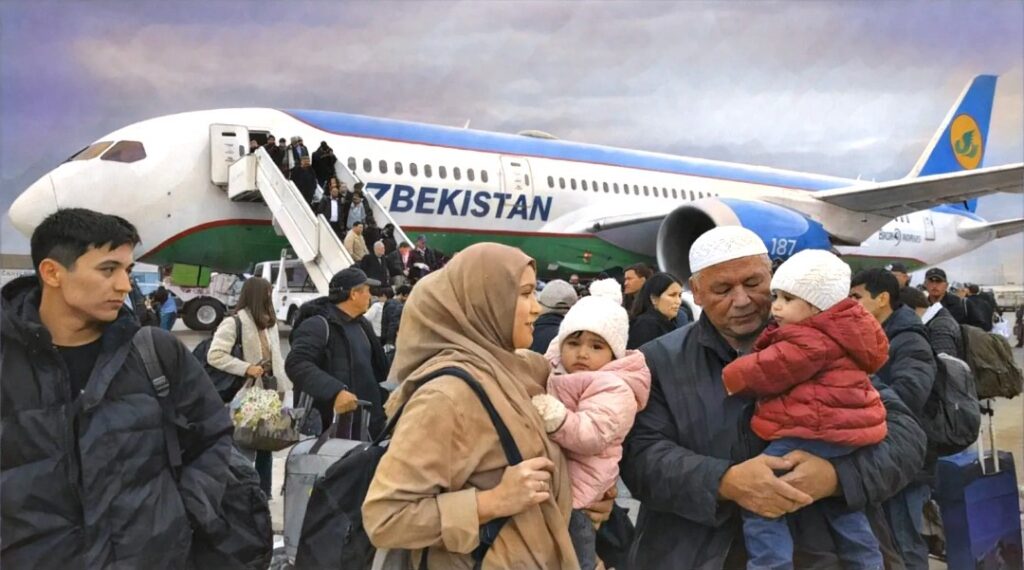
Uzbekistan has repatriated 21,712 citizens from several Middle Eastern countries as of 07:00 on March 9, the country’s Ministry of Foreign Affairs has said, as evacuation efforts continue amid regional instability. Most of those returned came from Saudi Arabia, where 17,963 citizens were brought back to Uzbekistan. Additional repatriations included 3,290 people from the United Arab Emirates, 378 from Qatar, 47 from Iran, 27 from Bahrain, and seven from Oman.

The ministry said the return of Uzbek citizens is being carried out “systematically and in stages,” with authorities continuing to coordinate transport and logistics for those seeking to return.

Officials noted that many repatriation flights are currently being organized through countries whose airspace remains open to civilian aviation.

Uzbekistan’s evacuation reflects the scale of its citizens’ presence across the Gulf. In recent years, the country has expanded labor migration agreements with Saudi Arabia, the United Arab Emirates, and Qatar, sending thousands of workers into construction, hospitality, and service sectors. Saudi Arabia has also become a major destination for religious travel from Uzbekistan, with large annual flows of pilgrims traveling for the Hajj and Umrah.

Kazakhstan has also evacuated citizens during the crisis, bringing 8,585 people home from Middle Eastern countries since the operation began. Central Asian citizens travel widely to Gulf states for work, tourism, and pilgrimage, leaving thousands affected when conflicts disrupt flights and close regional airspace.

The number of returned citizens has risen steadily over the past several days. According to the foreign ministry, 19,347 Uzbek citizens had returned home as of 07:00 on March 8.

Uzbek diplomatic missions in the region have also issued safety guidance to citizens who remain abroad. In a statement published by the Embassy of Uzbekistan in Israel, citizens were urged to follow official security instructions issued by local authorities.

The embassy said red alerts issued by Israel’s civil defense authorities indicate a dangerous situation and require people to stay near protected shelters and immediately enter them if warning sirens sound. Blue alerts indicate that the threat has passed, and people may leave shelters.

Other Central Asian countries have also organized evacuations of their citizens. According to Tajik media outlet Asia-Plus, more than 300 citizens of Tajikistan returned home on March 8 on two flights from Dubai.

One charter flight brought 130 Tajik citizens to Dushanbe in the morning, while a later flight operated by Somon Air transported another 180 passengers. The charter operation was organized with support from the Tajik embassy in the United Arab Emirates, local authorities, and the airline Flydubai.

About 550 Tajik citizens have returned home from Abu Dhabi and Dubai on charter flights in recent days amid the ongoing regional conflict.

Kyrgyzstan’s Health Ministry Proposes Higher Taxes on Sugary Drinks and Salty Foods to Protect Public Health

Kyrgyzstan’s Ministry of Health has proposed reforms to the country’s excise tax system targeting sugar-sweetened beverages and foods with high salt content in an effort to reduce their consumption and improve public health.

The proposal was discussed on March 9 at a meeting involving representatives of the Ministry of Economy and Commerce, the Ministry of Finance, the State Tax Service, the Ministry of Agriculture, the World Health Organization (WHO), UNICEF, and leading business associations.

Currently, Kyrgyzstan applies a uniform excise tax of 3 soms (about $0.03) per liter on sugar-sweetened non-alcoholic beverages, regardless of their sugar content.

The Ministry of Health proposes introducing a differentiated excise tax system in which the rate would depend on the amount of sugar in a beverage:

  • Up to 5 grams of sugar per 100 ml – 5 soms (about $0.06) per liter
  • 5-8 grams per 100 ml – 7 soms (about $0.08) per liter
  • 8-11 grams per 100 ml – 9 soms (about $0.10) per liter
  • More than 11 grams per 100 ml – 11 soms (about $0.12) per liter

Officials say the new structure would encourage manufacturers to reduce sugar content in beverages, promote healthier consumer habits, and decrease consumption of high-sugar products.

The ministry also proposes introducing a fixed excise tax of 20 soms (about $0.20) per liter on energy drinks, citing their high levels of sugar and caffeine and the potential health risks they pose, particularly for adolescents.

Authorities are also considering similar differentiated taxation for foods with high salt content, including fried and salty snacks such as chips, salted crackers, and similar products.

The goal is to discourage excessive consumption of high-salt foods and reduce related health risks.

Representatives of the World Health Organization and UNICEF have expressed support for the proposal.

WHO representative Alina Altymyshova noted that similar measures are widely used around the world. According to her, 116 countries already apply various forms of taxation or regulation on foods and beverages high in sugar and salt to help prevent noncommunicable diseases and promote healthier diets.

She also highlighted numerous international studies demonstrating the negative health impacts of regular consumption of sugary beverages, particularly among children and adolescents.

Deputy Health Minister Temirbek Erkinov warned that unhealthy diets are becoming a growing public health challenge in Kyrgyzstan.

According to data from the National Statistical Committee for 2023, about 9% of children in Kyrgyzstan, roughly one in eleven, are overweight.

Other indicators highlight widespread unhealthy dietary habits:

  • 75% of children aged 6-23 months consume unhealthy foods
  • 78% regularly drink sugary beverages
  • 16% do not consume fruits and vegetables daily

More than 84,000 people in Kyrgyzstan are currently registered with diabetes, with the number increasing by 5,000 to 7,000 cases each year.

“The issue of nutrition and related diseases is becoming one of the most serious challenges for the public health system,” Erkinov said.

Health officials believe measures to reduce the consumption of foods high in sugar and salt should become an important tool in preventing noncommunicable diseases and improving the country’s overall public health.

Kazakhstan Considers Supporting Dairy Sector to Curb Inflation

Kazakhstan’s government is considering additional support for dairy processors and bakeries as part of broader efforts to slow inflation and stabilize prices for essential food products.

The proposal was discussed during a government meeting focused on inflation dynamics and price trends for socially significant food products.

According to Aizhan Bizhanova, Kazakhstan’s First Vice Minister of Trade and Integration, inflation in the country has been slowing for five consecutive months, declining from 12.9% in September 2025 to 11.7% in February 2026.

Food inflation has also continued to ease, falling from 13.5% in December and 12.9% in January to 12.7% in February.

The ministry attributes the slowdown in part to the expansion of the list of socially significant food products subject to price regulation. The list has been expanded from 19 to 31 items, and since the beginning of the year authorities have opened more than 800 administrative cases related to violations of pricing rules.

“During the first week of March, the price index for socially significant food products increased by 0.1%. At the same time, dairy products recorded price growth, mainly due to rising costs of raw milk,” the government’s press service said in a statement.

Additional pressure on prices has also come from higher energy costs and increased production expenses.

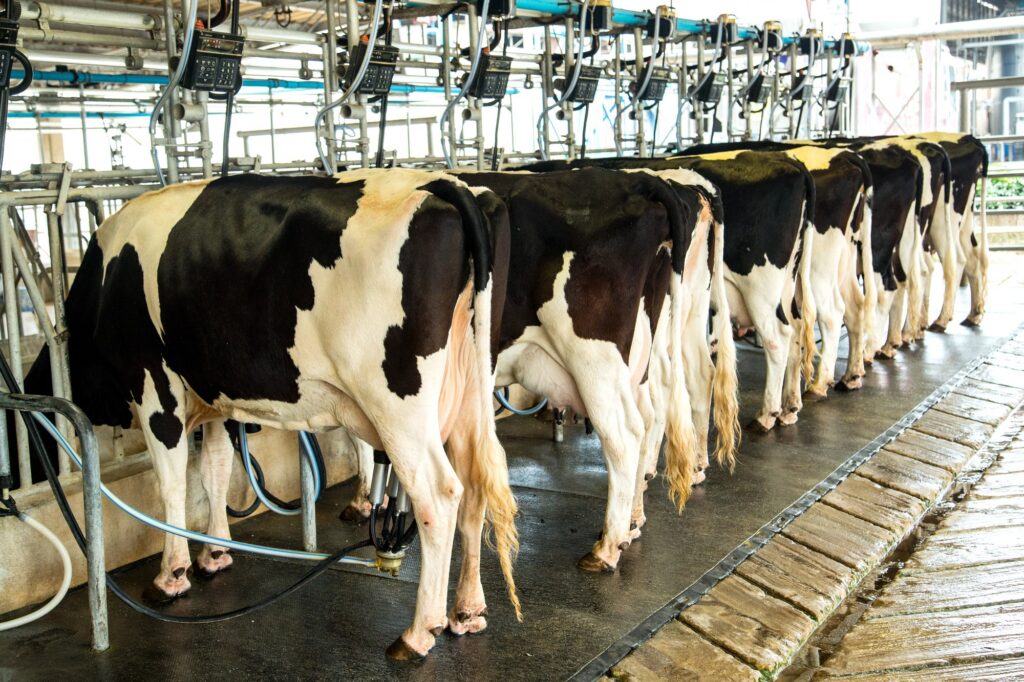
Dairy products account for a significant share of Kazakhstan’s food inflation, estimated at about 6.3%. The Ministry of Trade and Integration therefore proposed exploring mechanisms to support dairy processing enterprises in order to reduce production costs and stabilize prices.

The government also discussed possible support measures for Kazakhstan’s bakery sector. Among the options considered were providing bakeries with discounted grain and flour and exploring the possibility of lowering railway tariffs for transporting raw materials.

Officials suggested working with the national railway operator Kazakhstan Temir Zholy to reduce transportation costs for the sector.

Participants at the meeting noted that prices traditionally rise in March due to seasonal factors. However, the Ministry of Trade and Integration plans to mitigate the impact through additional price discount campaigns and expanded agricultural fairs.

Kazakhstan also continues to use a “green corridor” mechanism to facilitate the import of vegetables from neighboring countries.

Deputy Prime Minister and Minister of National Economy Serik Zhumangarin, who chaired the meeting, instructed authorities to conduct a detailed review of pricing at 42 dairy processing enterprises operating in Kazakhstan.

The aim is to identify effective mechanisms for supporting producers and stabilizing consumer prices.

Officials also highlighted slow releases of vegetables from regional stabilization funds, which supply products to the market at fixed prices. The slow pace was particularly noted in the Aktobe, Zhambyl, Kyzylorda, and Ulytau regions.

Zhumangarin instructed the Ministries of Agriculture and Trade to inspect regional stabilization funds and verify the actual availability of products reported by local authorities.

Despite recent improvements, several international organizations expect inflation in Kazakhstan to remain elevated in 2026.

S&P Global Ratings forecasts inflation will reach about 11% by the end of the year.

The Eurasian Development Bank predicts inflation could fall to 9.7% by the end of 2026.

Meanwhile, the International Monetary Fund has linked Kazakhstan’s inflation pressures to signs of economic overheating.