• KGS/USD = 0.01143 0%
  • KZT/USD = 0.00216 0%
  • TJS/USD = 0.10684 -0.28%
  • UZS/USD = 0.00008 0%
  • TMT/USD = 0.28571 0%
  • KGS/USD = 0.01143 0%
  • KZT/USD = 0.00216 0%
  • TJS/USD = 0.10684 -0.28%
  • UZS/USD = 0.00008 0%
  • TMT/USD = 0.28571 0%
  • KGS/USD = 0.01143 0%
  • KZT/USD = 0.00216 0%
  • TJS/USD = 0.10684 -0.28%
  • UZS/USD = 0.00008 0%
  • TMT/USD = 0.28571 0%
  • KGS/USD = 0.01143 0%
  • KZT/USD = 0.00216 0%
  • TJS/USD = 0.10684 -0.28%
  • UZS/USD = 0.00008 0%
  • TMT/USD = 0.28571 0%
  • KGS/USD = 0.01143 0%
  • KZT/USD = 0.00216 0%
  • TJS/USD = 0.10684 -0.28%
  • UZS/USD = 0.00008 0%
  • TMT/USD = 0.28571 0%
  • KGS/USD = 0.01143 0%
  • KZT/USD = 0.00216 0%
  • TJS/USD = 0.10684 -0.28%
  • UZS/USD = 0.00008 0%
  • TMT/USD = 0.28571 0%
  • KGS/USD = 0.01143 0%
  • KZT/USD = 0.00216 0%
  • TJS/USD = 0.10684 -0.28%
  • UZS/USD = 0.00008 0%
  • TMT/USD = 0.28571 0%
  • KGS/USD = 0.01143 0%
  • KZT/USD = 0.00216 0%
  • TJS/USD = 0.10684 -0.28%
  • UZS/USD = 0.00008 0%
  • TMT/USD = 0.28571 0%

Shoqan Walikhanov: Kazakh Scholar Recognized in the West

Shoqan Walikhanov gained recognition far beyond the Kazakh steppe, earning admiration in Russian and European intellectual circles. Although his life was brief, he left a lasting impact on Oriental studies, ethnography, geography, history, and folklore research.

Western academics especially valued his expedition to Kashgar and his detailed studies of Central Asia. Even today, many scholars writing about the region continue to rely on Walikhanov’s observations and publications.

One example of this influence appears in A Century of Russian Rule in Central Asia, a scholarly volume edited by Edward Allworth and published in the United States in 1967. In the book, researchers frequently cite Walikhanov’s articles and reports on Central Asia, recognizing them as important historical sources.

Russian Oriental scholars famously compared Walikhanov to “a fleeting meteor” whose brilliance appeared only briefly. The respected orientalist Nikolai Veselovsky also wrote about the high expectations scholars had for his future. Walikhanov’s studies first became known in Europe through the Russian Geographical Society. His works, including Sketches of Dzungaria, Journey to Altyshahr, and Notes on the Kyrgyz, introduced Western readers to the history, customs, and traditions of Central Asian peoples.

By 1865, Walikhanov’s reputation had already reached the English-speaking world. That year, The Russians in Central Asia was translated into English and published in London by John and Robert Michell. The book examined the Russian Empire’s expansion into Central Asia, the Syr Darya military frontier, and political relations with the khanates of Khiva, Bukhara, and Kokand. It included Walikhanov’s accounts from his 1858 and 1859 expedition to Kashgar and Dzungaria, identifying him as “Capt. Valikhanof,” a Russian-based transliteration of his name. His writings offered Western audiences rare insights into the geography, political climate, ethnography, and daily life of Xinjiang and neighboring territories.

The publication also featured studies by Russian travelers such as Mikhail Venyukov. The authors described the incorporation of the Kazakh steppe into the Russian Empire, the unstable political situation in the Central Asian khanates, and the international rivalry associated with the “Great Game.”

Decree of Emperor Alexander II on awarding Chokan Valikhanov the Fourth Class Order of Saint Vladimir for his journey to Kashgar, 1860. Photo credit: shoqan.kz

Clothing of Kashgar Women. Drawn by Chokan Valikhanov, 1858.
Photo credit: shoqan.kz

Modern historians still consider the book one of the most valuable nineteenth-century sources on Russian colonial expansion in Central Asia. At the time, Walikhanov’s observations on Kashgar were regarded as some of the most reliable information available to European scholars about a region that remained largely inaccessible.

Western academics admired Walikhanov not only for his scholarship, but also for his role as a bridge between Eastern and Western cultures. English-language studies often describe him as “the first European-educated Kazakh intellectual.” His growing reputation in the English-speaking academic world has also been examined in later research. In the article Chokan Valikhanov and the English-speaking World, British researcher Nick Fielding explains how Walikhanov’s writings attracted the attention of nineteenth-century British scholars. According to Fielding, members of the Royal Geographical Society highly valued his reports because reliable information about Kashgar and surrounding regions was extremely limited.

Walikhanov also received praise from Western scholars for his work in folklore studies. He was among the first researchers to study and introduce the Kyrgyz epic Manas to European audiences in a scholarly manner. English-language encyclopedia and academic references continue to highlight this achievement.

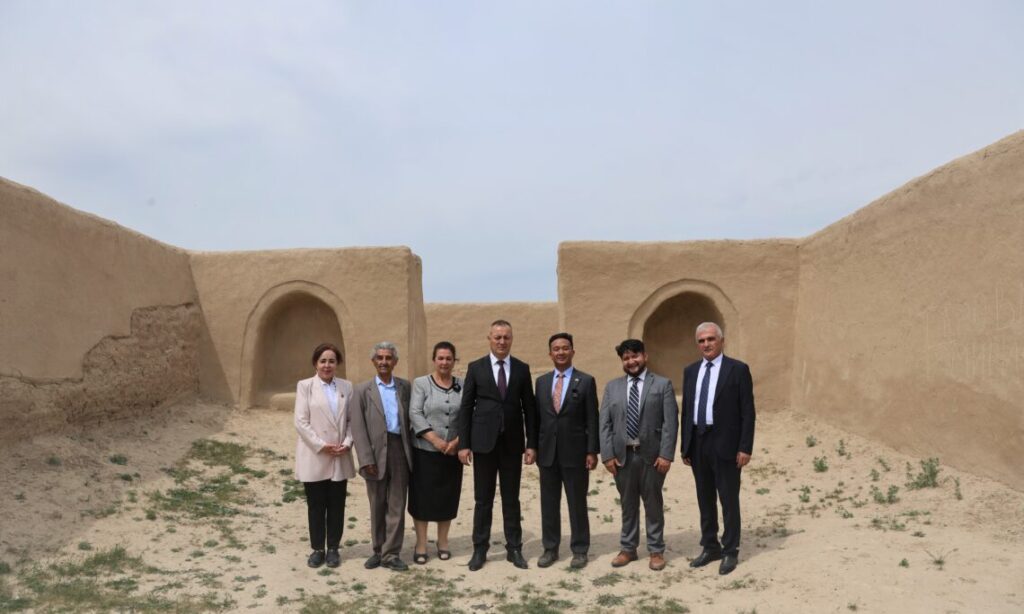
Photo credit: gov.kz

Today, Walikhanov’s legacy continues to inspire international interest. English translations of his works are preserved in libraries across London and the United States. In 2000, Selected Works of Chokan Valikhanov, published in collaboration with the University of Cambridge, introduced a new generation of Western readers to the ideas and scholarship of the renowned Kazakh thinker.

Shoqan Walikhanov remains an outstanding figure not only in Kazakh intellectual history, but also in the broader history of global Oriental studies. Through his research and writings, Western audiences gained a deeper understanding of the history, culture, and traditions of the Kazakh steppe and Central Asia. His contribution to world scholarship continues to be remembered and respected today.

Kyrgyzstan Expands Issyk-Kul Energy Infrastructure Ahead of SCO Summit

Kyrgyzstan has launched a large-scale modernization of energy infrastructure in the Issyk-Kul region as part of preparations for the upcoming Shanghai Cooperation Organization (SCO) summit, scheduled to take place this autumn in Cholpon-Ata.

According to the Energy Ministry, authorities are upgrading power grids, expanding substation capacity, and installing new transformers across the region.

In several villages in the Issyk-Kul region, self-supporting insulated wires are being installed to improve reliability and safety while reducing maintenance costs. Aging power networks are also being replaced.

Particular attention is being given to the village of Baktuu Dolonotu near Cholpon-Ata, where some summit-related events are expected to take place.

“Under the project, the existing 10 and 16 Megavolt-Ampere (MVA) transformers will be replaced with two new 40 MVA transformers, creating a modern high-capacity substation. The equipment has already been delivered, and preparations for installation are underway,” the ministry said.

The modernization drive is also linked to the development of tourism infrastructure in the region. Several major projects are underway in Issyk-Kul, including the Ala-Too Resort ski complex and tourism facilities in the Jyrgalan Valley.

To supply electricity to these new facilities, authorities are constructing a 110 kV transmission line from Karakol to Jyrgalan and replacing existing 35 kV overhead lines with underground cable systems.

According to the Energy Ministry, trenches extending more than 100 kilometers have already been prepared for the new transmission line. Last year, a new substation was commissioned in the region, and 12.8 kilometers of cable lines were laid.

“Work on the electricity supply for the cable car at the Ala-Too Resort ski base has been completed one hundred percent. The cable car could be launched right now,” Aslan Ibraev, deputy director of the Issyk-Kul Electric Grid Enterprise, told The Times of Central Asia.

According to Ibraev, the first phase of infrastructure work for the ski resort has already been completed.

“In total, we installed four transformer substations in Jyrgalan and laid 60 kilometers of underground electric cables,” he added.

Kyrgyz authorities say the infrastructure upgrades are intended not only to ensure the successful hosting of international events, but also to support the long-term development of the region’s tourism sector.

Construction of the ski resort is expected to be completed later this year. Authorities have also begun selling land plots for new tourism facilities near the resort area.

Healthcare Workers in Turkmenistan Reportedly Forced to Pay Mandatory Fees to Public Association

Turkmenistan does not allow independent public associations, and officially registered groups are reportedly funded through mandatory contributions collected from citizens, according to Chronicles of Turkmenistan.

The publication says healthcare workers and students at medical institutions were required to pay annual membership fees to support the public association Ýaş Tebigatçy (Young Naturalist) Civil Society Organization.

According to the report, the organization’s chairperson, Leyli Shymadova, appealed earlier this year to then-health minister Myrat Mammedov for assistance. Mammedov retired in February 2026.

“Shymadova asked the minister to issue instructions requiring all employees of the ministry’s institutions and students of medical educational establishments to pay $5.72 as an annual contribution. The minister ordered that her request be fulfilled, as reflected in a document dated January 12,” the publication reported.

The report also states that similar letters were sent to the Ministries of Education and Environmental Protection, and that employees of institutions under those ministries were likewise required to pay the requested amounts.

“Public associations are non-profit organizations and should be financed through voluntary donations from individuals or organizations. But in Turkmenistan this is done coercively,” the publication’s authors wrote.

The Ýaş Tebigatçy association was officially registered in September 2022.

Tajikistan to Gain Access to Concessional ADB Loans Starting in 2027

Tajikistan will gain access to concessional loans from the Asian Development Bank (ADB) beginning in 2027, in addition to the grants it already receives, according to Lea Gutierrez, Director General of ADB’s Central and West Asia Department.

Currently, Tajikistan receives support exclusively through grant mechanisms provided by the Asian Development Fund. That status is set to change next year.

“Starting in 2027, Tajikistan will be classified as an IDA gap country, which means access to concessional lending,” Gutierrez said.

The designation applies to countries transitioning from reliance solely on grants to eligibility for low-interest financing. The move is expected to provide Tajikistan with additional financial tools for implementing state programs and infrastructure projects.

ADB officials stressed that the bank will continue seeking additional grant resources for Tajikistan, particularly through climate-related and regional financing programs.

At the same time, the bank warned of mounting economic risks facing the country.

ADB forecasts that inflation in Tajikistan will remain elevated, driven in part by rising utility tariffs. External pressures are also contributing to inflationary risks, including higher global commodity prices, rising logistics costs, and the effects of instability in the Middle East.

According to the bank, these factors could affect both food prices and agricultural production.

More broadly, ADB estimates that the economies of Central and West Asia grew by 4.6% in 2025, although inflationary pressures across the region remain significant.

Among the key risks identified by analysts are rising energy costs, disruptions to trade and logistics, and persistent global uncertainty.

Against this backdrop, countries in the region are being advised to maintain cautious macroeconomic policies, continue structural reforms, and support the most vulnerable segments of the population.

Trade and Economic Park Planned at Border of Kyrgyzstan, Tajikistan, and Uzbekistan

On May 6, Kyrgyz President Sadyr Japarov visited the Dostuk Stele (Friendship) in the country’s southwestern Batken region, erected at the junction point of the state borders of Kyrgyzstan, Tajikistan, and Uzbekistan, where he reviewed the concept and master plan for the proposed Dostuk International Trade and Economic Park.

During a summit in the northern Tajik city of Khujand on March 31, 2025, Presidents Sadyr Japarov of Kyrgyzstan, Emomali Rahmon of Tajikistan, and Shavkat Mirziyoyev of Uzbekistan signed a historic agreement on the junction point of the three countries’ state borders.

The leaders also took part in a remote inauguration ceremony for the Friendship Stele, which marks the exact location where the borders of the three countries meet and symbolizes friendship among the three nations, the resolution of long-standing border issues, and a new stage of regional cooperation.

The planned Dostuk International Trade and Economic Park would span 100 hectares and include administrative, tourism, logistics, production, commercial, and recreational zones. The project aims to strengthen trade and logistics links, attract investment, and create new economic opportunities.

If implemented, the project is expected to create more than 5,000 jobs and increase cross-border trade.

The concept also includes the development of tourism infrastructure and the organization of international cultural events, ethnic festivals, and exhibitions, contributing to stronger cultural and humanitarian ties while promoting the historical heritage of the Silk Road.

Japarov said good-neighborly relations among Kyrgyzstan, Tajikistan, and Uzbekistan remain important, citing the role of joint infrastructure and economic initiatives in regional stability and sustainable development.

He also expressed confidence that, with mutual support from the three neighboring countries, the project could become a major platform for trade and investment, as well as a symbol of peace, trust, and unity among the peoples of Central Asia.

Syrian Security Forces Detain Uzbek Fighters During Operation in Idlib

Syrian security forces have detained a group of Uzbek fighters during a security operation in the country’s northwest, according to two Syrian security officials cited by Reuters. The arrests followed unrest in Idlib province after the authorities attempted to detain an Uzbek militant accused of opening fire in Idlib city.

According to Reuters, the incident escalated when armed Uzbek fighters gathered outside a government security facility demanding the release of the suspect. The protests later triggered a broader security sweep in several parts of the countryside, including the towns of Kafriya and al-Foua.

Locals and Syrian officials said security forces deployed military convoys and reinforcements to the area, where sporadic gunfire was heard during the operation. It remains unclear how many Uzbek fighters were detained.

The Syrian Interior Ministry did not immediately comment on the reports.

The latest incident highlights ongoing tensions between Syria’s Islamist-led authorities and foreign militants who traveled to the country during the civil war that began in 2011. Many foreign fighters, including Uzbeks, fought alongside factions linked to current Syrian President Ahmed al-Sharaa before he formally severed ties with al-Qaeda in 2016.

Reuters previously reported, citing a Syrian security source, that around 1,500 Uzbek fighters were believed to be living in Syria, some accompanied by their families.

The Syrian government has attempted to integrate thousands of foreign fighters into the country’s newly reorganized military structures following the December 2024 ouster of former President Bashar al-Assad. Some foreign militants have assumed senior state roles, including a Jordanian commander of the Republican Guard and an Australian head of a newly established sovereign fund. Others, however, have resisted joining state institutions, creating continuing security concerns for Damascus.

The recent operation marks the second major confrontation in Idlib involving foreign militants in recent months. Last year, Syrian government raids targeting foreign fighters near the Turkish border drew in Uzbek militants after clashes erupted around a compound linked to French jihadist Omar Diaby, also known as Omar Omsen.

At the time, the U.S.-based Institute for the Study of War said Syrian transitional authorities were conducting “a low-level effort to target foreign fighters in Syria who have not integrated into the Ministry of Defense.” The institute reported that Uzbek militants had deployed to reinforce foreign fighters during clashes in Harem, a city near the Turkish border.

The same report stated that Syrian authorities had arrested two prominent Uzbek foreign fighters in August 2025, contributing to growing dissatisfaction among Central Asian militant groups operating in Syria.