• KGS/USD = 0.01144 0%
  • KZT/USD = 0.00192 -0%
  • TJS/USD = 0.10849 0.37%
  • UZS/USD = 0.00008 0%
  • TMT/USD = 0.28571 0.28%
  • KGS/USD = 0.01144 0%
  • KZT/USD = 0.00192 -0%
  • TJS/USD = 0.10849 0.37%
  • UZS/USD = 0.00008 0%
  • TMT/USD = 0.28571 0.28%
  • KGS/USD = 0.01144 0%
  • KZT/USD = 0.00192 -0%
  • TJS/USD = 0.10849 0.37%
  • UZS/USD = 0.00008 0%
  • TMT/USD = 0.28571 0.28%
  • KGS/USD = 0.01144 0%
  • KZT/USD = 0.00192 -0%
  • TJS/USD = 0.10849 0.37%
  • UZS/USD = 0.00008 0%
  • TMT/USD = 0.28571 0.28%
  • KGS/USD = 0.01144 0%
  • KZT/USD = 0.00192 -0%
  • TJS/USD = 0.10849 0.37%
  • UZS/USD = 0.00008 0%
  • TMT/USD = 0.28571 0.28%
  • KGS/USD = 0.01144 0%
  • KZT/USD = 0.00192 -0%
  • TJS/USD = 0.10849 0.37%
  • UZS/USD = 0.00008 0%
  • TMT/USD = 0.28571 0.28%
  • KGS/USD = 0.01144 0%
  • KZT/USD = 0.00192 -0%
  • TJS/USD = 0.10849 0.37%
  • UZS/USD = 0.00008 0%
  • TMT/USD = 0.28571 0.28%
  • KGS/USD = 0.01144 0%
  • KZT/USD = 0.00192 -0%
  • TJS/USD = 0.10849 0.37%
  • UZS/USD = 0.00008 0%
  • TMT/USD = 0.28571 0.28%
11 December 2025

Uzbek Student Accuses Wizz Air of Discrimination After Being Denied Boarding without Explanation

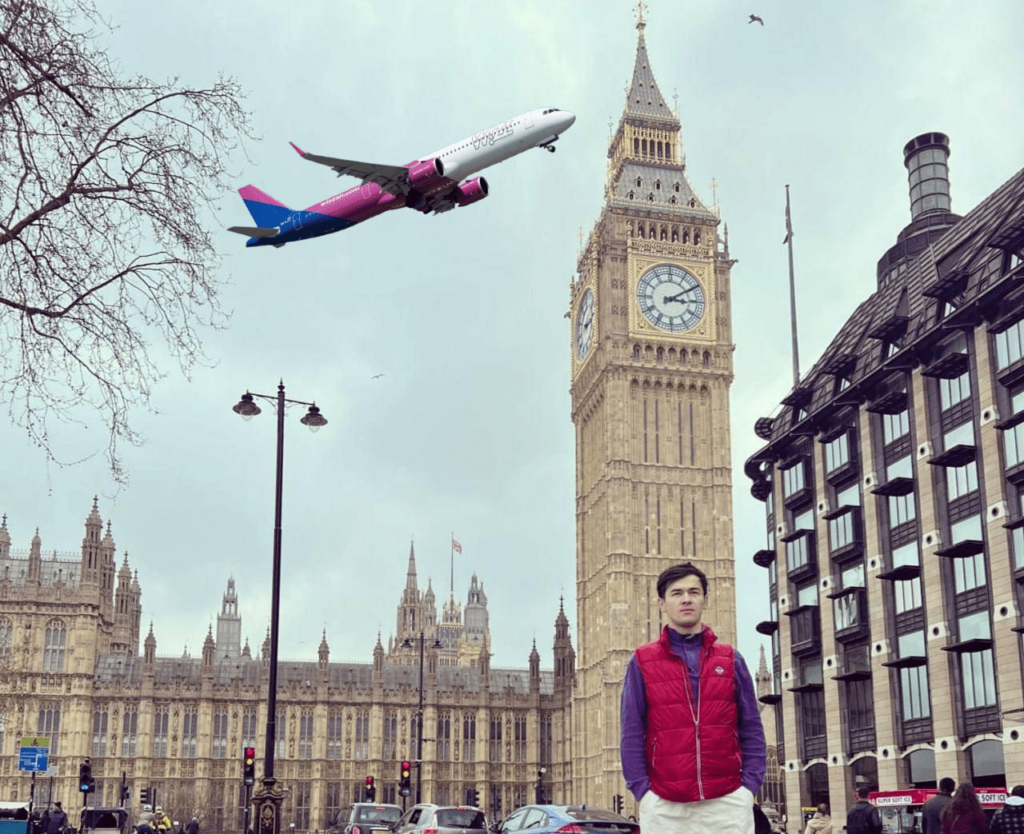
Earlier this year, Uzbekistan’s Competition Committee took action against Wizz Air following complaints about the airline’s failure to offer safety instructions in the Uzbek language on a flight from Samarkand to Abu Dhabi. Now, another troubling incident has come to light, this time, involving an Uzbek student who claims he was denied boarding without explanation, possibly due to his nationality.

——-

Suhrob Ubaydullayev, a University of World Languages student in Uzbekistan, was returning home after completing a Work and Travel program in Europe. He had booked a Wizz Air flight from Rome to Abu Dhabi, with a connection onward to Samarkand. According to Ubaydullayev, despite having all required travel documents — including a valid passport, visa, and certificates from Germany’s Federal Employment Agency — he was inexplicably denied boarding at the gate.

“I had all my documents in order,” Ubaydullayev told The Times of Central Asia. “The staff checked them and gave them back to me, but when I reached the gate, they suddenly said I couldn’t fly. No reason. No explanation.”

He claims the airline staff asked him a single question — “Are you from Uzbekistan?” — and upon hearing his affirmative response, refused to let him on board.

What followed, he says, was a humiliating and deeply distressing ordeal: threats of calling the police, warnings that his embassy wouldn’t be able to assist him, and a refusal to provide any written explanation.

“I was speaking English clearly — communication wasn’t an issue,” he told TCA, “but they treated me like a criminal. I believe it was simply because I’m from Uzbekistan.”

Ubaydullayev says that this incident occurred on 31 August 2023. He has repeatedly sent emails to the company requesting compensation. However, most emails went unanswered, or he was told to wait.

——-

After being left behind in Rome, Ubaydullayev’s troubles worsened. Because he was denied boarding on August 31, Ubaydullayev was at immediate risk of overstaying his visa, which expired on the same day. This meant that any further stay in the Schengen area would make his presence technically illegal under EU immigration law.

He scraped together borrowed funds to fly to Istanbul, where he found himself sleeping on the streets. “I met some Uzbek guys near the Sultan Ahmed Mosque who offered help,” he said. “But they ended up taking my money and disappearing.”

His eventual return home took him through Kazan, Russia, and Osh, Kyrgyzstan, before finally reaching Namangan — emotionally drained, physically exhausted, and over $2,000 in debt.

Now, Ubaydullayev has accused Wizz Air of discrimination, human rights violations, and consumer protection breaches. He has filed a complaint with the European Court of Human Rights and says his lawyers are currently working through the pre-trial phase. “This is about more than me,” he said. “This is a fight for justice — for every Uzbek passenger who deserves to be treated with dignity.”

——-

In giving a legal assessment of Ubaydullayev’s case to TCA, legal expert Azizbek Odilov says the airline’s actions amount to a clear violation of international and European law.

“The refusal to allow an Uzbek citizen to board a flight based solely on his nationality directly violates the principles of non-discrimination,” Odilov said. “This is a breach of the International Covenant on Civil and Political Rights, as well as the Convention on the Elimination of All Forms of Racial Discrimination.”

Article 26 of the International Covenant on Civil and Political Rights (ICCPR), which has been ratified by Italy, Hungary, and Uzbekistan, states: “All persons are equal before the law and are entitled without any discrimination to the equal protection of the law. In this respect, the law shall prohibit any discrimination and guarantee to all persons equal and effective protection against discrimination on any ground such as race, colour, sex, language, religion, political or other opinion, national or social origin, property, birth or other status.”

Odilov emphasized that while state authorities are primarily responsible for upholding such treaties, private entities — including airlines — are also bound by these standards under international law.

Furthermore, Wizz Air, as a European carrier based in Hungary, is subject to European Union law. Article 21 of the Charter of Fundamental Rights of the European Union prohibits discrimination on the basis of nationality or any other status. Airlines, Odilov says, are legally obligated to offer services without arbitrary or unjustified discrimination.

In addition to international human rights violations, Odilov argues that Wizz Air failed to meet its obligations under Regulation (EC) No 261/2004 of the European Parliament. This regulation mandates compensation and assistance for passengers who are denied boarding without justification. In particular, Article 7 provides for the payment of compensation to passengers of between €250 and €600, and for the reimbursement of costs associated with delays.

According to Odilov, Wizz Air was legally required to:

  • Provide an official explanation for denying boarding;
  • Offer an alternative route;
  • Refund the full cost of the ticket;
  • Pay compensation in accordance with the law;
  • Offer food and drink proportional to the delay;
  • Allow two phone calls, faxes, or emails;
  • Provide hotel accommodation and transport if an overnight stay was necessary.

Beyond the European Court, Odilov says Ubaydullayev has the right to file a formal complaint with Italy’s National Civil Aviation Authority (ENAC), one of the bodies tasked with enforcing Regulation (EC) No 261/2004.

“This isn’t just about one person,” Odilov told TCA. “It’s about holding companies accountable when they fail to treat people equally. No airline, no country, has the right to discriminate.”

“I didn’t just lose money,” Ubaydullayev said. “I lost peace of mind. I was humiliated, ignored, and left to survive alone. This case isn’t just mine — it belongs to every Uzbek passenger who deserves respect and fair treatment.”

——-

This is not Wizz Air’s first controversy involving Uzbek citizens. The airline was previously criticized when former Uzbek deputy Rasul Kusherbayev was nearly removed from a flight for requesting safety instructions in Uzbek. That case prompted a national investigation and led to a promise from Wizz Air to include Uzbek-language assistance on flights to and from Uzbekistan starting in 2025.

——-

In a statement, Wizz Air told TCA: “Wizz Air takes all allegations seriously and is currently reviewing the circumstances surrounding this case. At the time of travel in 2023, Uzbekistan citizens were required to hold a valid visa to enter the UAE. As a point-to-point carrier, Wizz Air does not offer connecting flights, and a transit visa would not have been sufficient.

We firmly reject any accusations of discrimination. Wizz Air is committed to inclusivity and equal treatment of all passengers.

Although no official complaint was submitted through our standard claims process, we will contact Mr. Ubaydullayev or his legal representatives to investigate further and work toward a resolution.”

Two Participants Die During Half Marathon in Almaty

Two runners, one elderly and the other young, died during a half marathon in Almaty, Kazakhstan on Sunday, according to organizers.

The participants were identified as 84-year-old Akkoyan Rsaliyev, who has regularly taken part in races since 2021, and 21-year-old Nurbol Ahmadi, who had participated in a 10-kilometer race and had registered for several long-distance events, including a marathon in Almaty.

Rsaliyev suddenly felt bad in the first kilometer of the 21.1-kilometer run and responders in an ambulance that drove up to him found no pulse, the marathon organizers said in a statement. They quoted Dr. Alibek Khozhanazarov as saying an initial diagnosis was that the runner had a pulmonary embolism and had been suffering from chronic arterial hypertension.

Then Ahmadi lost consciousness at the 16-kilometer mark and doctors arriving at the scene tried in vain to resuscitate him. The preliminary diagnosis was a pulmonary embolism and acute heart failure, according to Dr. Aigerim Yesdauletova.

The Courage to Be the First corporate foundation, which supported the race, expressed its condolences to the families and friends of the runners who died.

The organizers said they “acted according to the regulations: medical services, emergency services and the police worked quickly and in a timely manner. Despite the measures taken, it was not possible to save the lives of the participants.”


NASA’s Oldest Active Astronaut, Two Russian Cosmonauts, Land in Kazakhstan

Accompanied by two Russian cosmonauts, NASA astronaut Donald Pettit marked his 70th birthday on Sunday with a parachute-supported landing on the steppes of Kazakhstan after a journey back to Earth from the International Space Station.

A Soyuz MS-26 spacecraft carrying Pettit, as well as cosmonauts Alexey Ovchinin and Ivan Vagner, touched down at 6:20 a.m. local time southeast of Zhezkazgan, a city in Kazakhstan’s central Ulytau region. The three men had launched from the Russia-operated Baikonur Cosmodrome in Kazakhstan and docked at the station on Sept. 11 last year, spending a total of 220 days in space.

“Rehabilitation and a meeting with loved ones lie ahead!” Roscosmos, the Russian space agency, said on Telegram.

Photographs and video of the landing showed Pettit giving a thumbs-up as support team members carried him away from the spacecraft. Ovchinin and Vagner were shown wrapped in blankets and smiling broadly.

Pettit, Ovchinin and Vagner orbited the Earth 3,520 times and traveled 93.3 million miles during their mission, according to NASA.

It was Pettit’s fourth spaceflight and he has spent a total of 590 days in orbit. Ovchinin, also a four-time spaceflight traveler, has spent just five days longer than Pettit in space. Vagner has logged 416 days in space on his two trips.

While American John Glenn became the oldest person to go to space in 1998 at age 77, Pettit is NASA’s oldest active astronaut.

During his time on the space station, Pettit researched how to enhance in-orbit metal 3D printing capabilities, advance water sanitization technologies, explore plant growth under varying water conditions, and investigate fire behavior in microgravity, NASA said. His photography also attracted followers back on Earth.

“Mother Earth, I am coming home,” Pettit posted on X on Saturday.

Swiss Bank Investigated Over Ties to Central Asian Elites

Swiss bank Reyl, part of Intesa Sanpaolo Group, is under investigation by Switzerland’s financial regulator FINMA for allegedly failing to prevent money laundering and mishandling accounts belonging to high-risk clients, including relatives of prominent former Central Asian leaders. The investigation stems from confidential correspondence reviewed by the Organized Crime and Corruption Reporting Project (OCCRP) and Le Monde.

High-Risk Clients from Central Asia

Among the individuals named are the daughters of the former presidents of Uzbekistan and Kazakhstan. OCCRP also identified the bank’s connections with the son-in-law of a powerful Central Asian leader.

One such client is Lola Karimova, daughter of the late Uzbek president Islam Karimov, and her husband, Timur Tillyaev. The couple, known for their lavish lifestyle, relocated to Geneva by 2013. In 2012, Swiss regulators warned another financial institution, Fidurhône, that the couple posed a high compliance risk. By 2014, Fidurhône was instructed to sever ties with them after account balances surged to 190 million Swiss francs. The bank faced the threat of losing its license for non-compliance, and one partner was fined for failing to report suspicious transactions.

In 2020, Tillyaev’s company became a client of Reyl, which was followed by the opening of his personal account. By late 2023, one of these accounts held 83 million francs (approximately $97 million). In January 2024, FINMA requested full disclosure of all Reyl accounts linked to Uzbekistan, including Tillyaev’s. The bank stated it was re-evaluating its relationship with him due to reputational concerns amid renewed media focus on his sister-in-law, Gulnara Karimova.

The eldest daughter of Islam Karimov, Gulnara Karimova was once a prominent public figure in Uzbekistan, known for her ventures in business, fashion, and music under the name Googoosha. She also served in diplomatic roles. Her fall from grace began in 2014 with her house arrest, followed by a series of legal proceedings after her father’s death in 2016. In 2017, she was sentenced to nine years for corruption, which was later increased to over 13 years.

Kazakhstan Connection

Kazakhstan’s former president Nursultan Nazarbayev, who ruled for nearly three decades, oversaw the emergence of a wealthy inner circle. OCCRP has previously reported that he established private foundations controlling assets worth approximately $8 billion.

His daughter, Dinara Kulibayeva, moved to Switzerland in 2007 and entrusted Reyl with managing part of her wealth. For years, bank CEO François Reyl personally oversaw her accounts. However, in 2023, FINMA launched an inquiry into the origin of the large deposits in her accounts. In May 2024, the bank was ordered to provide comprehensive documentation on her financial holdings and those of her Luxembourg-based company, which had secured a €25 million loan from Reyl to purchase real estate in France.

The investigation was prompted by a suspicious activity report filed by Reyl and the opening of a criminal case in Switzerland. A lawyer representing Kulibayeva stated she had fully cooperated with authorities and that her wealth derives from shares in Halyk Bank, one of Kazakhstan’s largest financial institutions. The bank confirmed that her accounts were funded through dividend payments. Although her accounts were frozen in 2023, Swiss authorities permitted the release of 650,000 francs in May for personal expenses.

Dinara Kulibayeva and her husband, Timur Kulibayev, were ranked 673rd on Forbes‘ 2025 billionaire list, with an estimated net worth of $5.3 billion. They are the majority shareholders in Halyk Bank and hold substantial assets in Kazakhstan’s oil and gas sector.

Kyrgyzstan Establishes Ecological Corridor to Protect Snow Leopards and Biodiversity

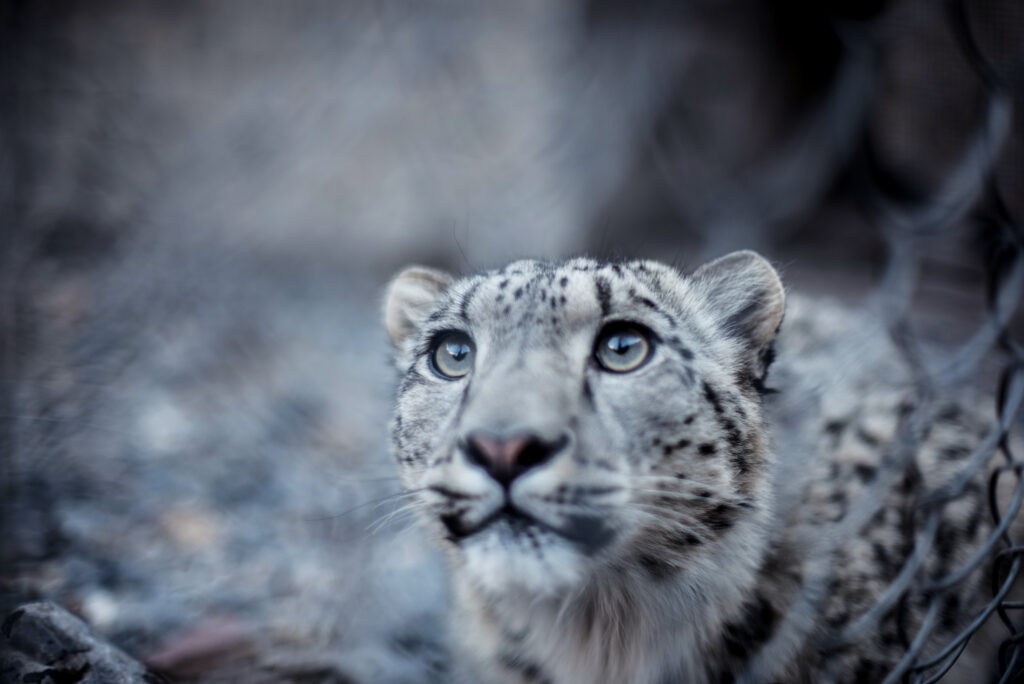
Kyrgyzstan has created the Ak Ilbirs (Snow Leopard) Ecological Corridor in the northeastern Issyk-Kul region, a major step in safeguarding rare wildlife and preserving the country’s rich biodiversity.

The corridor encompasses over 792,000 hectares, linking several protected areas: the Khan-Tengri State Nature Park, the Sarychat-Eertash Nature Reserve, and the Naryn Nature Reserve. It is designed to serve as a safe habitat for the snow leopard and other endangered species, while promoting the sustainable management of natural resources.

Image: mnr.gov.kg

Key Objectives

The Ak Ilbirs Ecological Corridor aims to:

  • Conserve wild animal populations, including the endangered snow leopard
  • Protect diverse ecosystems and their biological richness
  • Safeguard rare and threatened plant and animal species

To preserve the integrity of the corridor, strict prohibitions have been introduced. These include a ban on the introduction of non-native species, the use of pesticides, radioactive waste disposal, and any other activities that could harm the ecosystem.

At the same time, the corridor supports legal and environmentally responsible activities, such as scientific research, reforestation, forest management, and population regulation of certain wildlife species.

National and Global Significance

The initiative marks a significant advancement in Kyrgyzstan’s environmental policy. Notably, the corridor strengthens efforts to protect the snow leopard, a species regarded as an indicator of the stability and health of mountainous ecosystems.

In December 2023, President Sadyr Japarov signed a decree recognizing the snow leopard as a national symbol of the Kyrgyz Republic. The species is classified as rare or endangered across 12 countries.

Kyrgyzstan has also played a leading role in international snow leopard conservation. At the 79th session of the UN General Assembly, the country introduced the resolution establishing October 23 as International Snow Leopard Day, backed by other range states including Bhutan, China, India, Nepal, Mongolia, Kazakhstan, Pakistan, Russia, Tajikistan, and Uzbekistan.

According to the Population Assessment of the World’s Snow Leopards, conducted between 2020 and 2024 under the Global Snow Leopard and Ecosystem Protection Program (GSLEP), Kyrgyzstan is estimated to have an average snow leopard population of 285.

How Orthodox Christians Celebrate Easter in Central Asia and Around the World

In 2025, Orthodox Christians will celebrate Easter on April 20. This central event in the Orthodox liturgical calendar is marked with solemnity and joy across Orthodox-majority countries such as Russia, Belarus, Georgia, Bulgaria, Greece, Romania, and others. In Central Asia, Orthodox Christian communities also observe the holiday, maintaining centuries-old traditions despite being religious minorities.

Kazakhstan

On the night of April 20, Easter services will be held in all Orthodox churches across Kazakhstan. According to the Semirechensk Metropolitanate, the Holy Fire from Jerusalem will be brought to the Ascension Cathedral in Almaty, where Metropolitan Alexander will lead the liturgy and Easter procession. The service will begin at 23:30 and will be broadcast live on the Metropolitanate’s official YouTube channel. A ceremonial arrival of the Holy Fire is scheduled for 17:00 on Easter Sunday at the cathedral.

Uzbekistan

In Uzbekistan, the focal point of Easter celebrations is the Holy Dormition Cathedral in Tashkent. Each year, Metropolitan Vikenty of Tashkent and Uzbekistan brings the Holy Fire from Jerusalem. In 2024, he celebrated Easter Matins with Bishop Savvatiy of Bishkek and Kyrgyzstan. Earlier that year, Vikenty made another pilgrimage to the Holy Land to receive the flame.

Tajikistan

In Dushanbe, Easter is traditionally celebrated at St. Nicholas Cathedral. In 2024, dozens of worshipers, including members of the Russian diplomatic mission and the ambassador, attended the festive liturgy. Following the service, a traditional procession took place, and parishioners received blessings along with kulich (traditional Easter bread) and other Easter treats.

Turkmenistan

Turkmenistan is home to approximately 485,000 Orthodox Christians, around 9% of the population. The Russian Orthodox Church operates through 12 churches organized under a Patriarchal benefice. While official celebrations are relatively modest, traditional Easter practices are still observed, particularly in urban centers.

Russia

In Russia, Easter remains the most significant church holiday. Services begin on Saturday evening with a midnight vigil, followed by festive Matins and the Divine Liturgy. The faithful greet one another with “Christ is risen!” and respond “Truly risen!” In the morning, families gather around tables adorned with kulichi, paskha (a cheese dessert), and colored eggs, which are traditionally used for “egg battles.”

Easter Traditions Worldwide

Because Orthodox churches use the Julian calendar and most Western churches follow the Gregorian calendar, Easter dates typically differ. However, in 2025, both calendars align, and Easter will be celebrated on the same day. Traditions vary widely around the world.

In Poland, congregants bring willow branches and blessed food to churches, and festivities continue with “Wet Monday,” a water-splashing custom. Bulgarians dye eggs and enjoy family feasts. In Greece, fireworks mark the midnight celebration, and tables are filled with magiritsa soup and roast lamb.

In France and Germany, the Easter bunny and chocolate eggs dominate the holiday. Italians serve colomba cakes and lamb dishes, while the British favor hot cross buns and organize egg hunts. In Spain and Poland, dyed eggs are used for games and decoration.

In Australia, Easter is celebrated with countryside festivals and egg hunts. Sweden observes a four-day holiday beginning on Good Friday. While the Swedish celebration has largely secularized, the festive table still features eggs and traditional foods.

Across the globe, Easter serves as a celebration of renewal, unity, and hope, regardless of cultural or religious nuances.