• KGS/USD = 0.01144 0%
  • KZT/USD = 0.00196 -0%
  • TJS/USD = 0.10899 0%
  • UZS/USD = 0.00008 0%
  • TMT/USD = 0.28490 0%
  • KGS/USD = 0.01144 0%
  • KZT/USD = 0.00196 -0%
  • TJS/USD = 0.10899 0%
  • UZS/USD = 0.00008 0%
  • TMT/USD = 0.28490 0%
  • KGS/USD = 0.01144 0%
  • KZT/USD = 0.00196 -0%
  • TJS/USD = 0.10899 0%
  • UZS/USD = 0.00008 0%
  • TMT/USD = 0.28490 0%
  • KGS/USD = 0.01144 0%
  • KZT/USD = 0.00196 -0%
  • TJS/USD = 0.10899 0%
  • UZS/USD = 0.00008 0%
  • TMT/USD = 0.28490 0%
  • KGS/USD = 0.01144 0%
  • KZT/USD = 0.00196 -0%
  • TJS/USD = 0.10899 0%
  • UZS/USD = 0.00008 0%
  • TMT/USD = 0.28490 0%
  • KGS/USD = 0.01144 0%
  • KZT/USD = 0.00196 -0%
  • TJS/USD = 0.10899 0%
  • UZS/USD = 0.00008 0%
  • TMT/USD = 0.28490 0%
  • KGS/USD = 0.01144 0%
  • KZT/USD = 0.00196 -0%
  • TJS/USD = 0.10899 0%
  • UZS/USD = 0.00008 0%
  • TMT/USD = 0.28490 0%
  • KGS/USD = 0.01144 0%
  • KZT/USD = 0.00196 -0%
  • TJS/USD = 0.10899 0%
  • UZS/USD = 0.00008 0%
  • TMT/USD = 0.28490 0%
08 December 2025

Kazakh Theatrical Performance Breaks Annual Record

The play Gauhartas, directed by Kazakhstani theater artist Askhat Maemirov, has been staged over 250 times within a year, marking a record achievement in Kazakhstan’s theater industry.

This widely acclaimed production is an adaptation of a work by esteemed Kazakh writer, Dulat Isabekov. His story depicts the life of a Kazakh family during the Soviet period, shedding light on the struggles of ethnic minorities under an authoritarian regime. In 1975, the Kazakhfilm studio produced a movie based on this work.  

With every show selling out, the play has already drawn nearly 75,000 spectators. It has been performed in several major cities across Kazakhstan, including Aktau, Atyrau, Oral, Taldykorgan, and Almaty. Plans are now in place to present the production on an international stage. “In this production, we emphasize the significance of family and cultural values in Kazakh society,” said the director of the musical drama. “We examine the roles of mothers and fathers, questioning their responsibilities and influence. By portraying the life of an ordinary Kazakh family, we aim to reflect deeper human emotions. At its core, the play conveys the importance of safeguarding love and happiness within the home.”

Though Gauhartas was first introduced to readers fifty years ago, its themes remain highly relevant today. The dynamics of family life and the bond between parents and children continue to be timeless subjects in literature and theater, and currently, many young people in Kazakhstan are coming to watch this play.

Image: TCA, Duisenali Alimakyn

This work was written by the recently deceased Kazakh writer, Dulat Isabekov, when he was 25 years old while serving in the military near Moscow. Depicting Kazakh society, including one family’s internal resistance to the system and the impact of Soviet society on people, this work became one of the author’s timeless creations.

The play offers a fresh perspective to Kazakh audiences by addressing the issue of women’s equality. It delves into the fractured relationship between society, a father, and a son, highlighting their inability to connect and understand one another, ultimately leading to tragedy. In essence, this work looks back at the past, aligns with the present, and paves the way for a hopeful future.

English Law in Kyrgyzstan? Bold Move Faces Hurdles in Investment Disputes

Kyrgyzstan’s government is considering adopting elements of English common law to handle investment disputes, but legal experts remain skeptical about its feasibility.

On March 13, Chairman of the Cabinet of Ministers Adylbek Kasymaliev met with the British Ambassador to Kyrgyzstan and a group of international consultants to discuss the potential integration of English legal principles into Kyrgyzstan’s legal framework. The initiative has also received support from President Sadyr Japarov, who, in late 2024, stated at the People’s Kurultai in Bishkek that the adoption of English law principles is essential for attracting foreign investment.

“Citizens and external investors have the opportunity to invest in the construction of large projects. For large investments, first of all, it is necessary to have fair courts,” Japarov stated.

Challenges in Implementing English Law

In an interview with The Times of Central Asia, Shamaral Maichiev, chairman of the International Court of Arbitration in Kyrgyzstan, cautioned that adopting English law would require extensive legal and structural changes.

“A package of legal and regulatory documents duplicating existing commercial law, including court procedures, would need to be developed and adopted. Alternatively, specific sections based on English law principles could be incorporated into current legislation,” Maichiev explained.

Beyond legislative changes, Maichiev noted that judicial retraining would be essential. This includes:

  • Requalifying legal professionals to apply Common Law principles
  • Establishing a register of judges specialized in Common Law
  • Conducting court proceedings in English or other international languages could pose logistical and financial challenges
  • Hiring foreign judges would add further costs to the national budget.

“Creating a new Common Law Court would be financially burdensome for the country, requiring substantial resources and a long implementation period,” Maichiev emphasized.

Existing Arbitration Mechanisms in Kyrgyzstan

Legal experts argue that Kyrgyzstan already allows the use of Common Law principles in international arbitration courts, making a new Common Law Court unnecessary.

Judges at the Court of Arbitration under the Chamber of Commerce and Industry of Kyrgyzstan contend that investment and commercial disputes are already effectively handled through alternative dispute resolution mechanisms.

“Today, the Kyrgyz Republic is one of the regional leaders in establishing legislative mechanisms for alternative dispute resolution. To enhance Kyrgyzstan’s international reputation and investment appeal, it is proposed that the International Court of Arbitration under the Chamber of Commerce and Industry handle investment and commercial disputes, including those based on Common Law principles, without requiring state budget funds,” Maichiev told TCA.

The judge expressed confidence that the International Court of Arbitration in Kyrgyzstan has the resources to become a leading center for economic dispute resolution in the Eurasian region.

National Bank of Kazakhstan to Launch Digital Investment and Gold Coins

The National Bank of Kazakhstan has announced the launch of the Gold Coin project, a digital investment coin, starting March 17. The coin’s value is pegged to 1/20 of a troy ounce of gold, fluctuating based on global gold prices.

According to the National Bank, the Gold Coin project aims to offer Kazakhstani citizens an alternative investment tool, integrating digital assets with modern financial technology. One unit of the Gold Coin corresponds to 1/20 of a troy ounce of gold (with one troy ounce equaling 31.1035 grams). The coin’s value will be determined by the price of gold, as set by the London Bullion Market Association (LBMA), and the official exchange rate of the tenge against the U.S. dollar on the preceding day of a transaction. As of the evening of March 13, the price of gold on the London Stock Exchange stood at $2,924.80 per troy ounce.

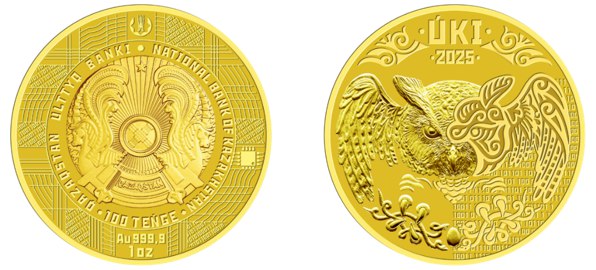
“The new investment instrument will be available through the Tabys mobile application of the Astana International Exchange (AIX), part of the Astana International Financial Centre (AIFC). Users will be able to buy, sell, and gift Gold Coins online. Additionally, holders who accumulate 20 units of Gold Coin can exchange them for a physical ÚKI gold investment coin at National Bank branches nationwide. The ÚKI coin will be introduced into circulation on March 17, 2025,” the National Bank stated in a press release​.

The ÚKI gold coin was unveiled in February 2025 at the World Money Fair in Berlin, the world’s largest numismatic event. The fair gathers central banks, mints, coin production companies, designers, and numismatic publishers. Kazakhstan’s National Bank presented the ÚKI coin, which is made of 99.99% pure gold (Au 999.9), weighs 31.1 grams, and has a face value of 100 tenge. The coin will also be available for purchase via the Tabys application​.

At the end of 2024, the National Bank of Kazakhstan issued commemorative collector coins, including S. Nurmagambetov. 100 JYL from the “Outstanding Events and People” series and Alexander the Great from the “Great Commanders” series. The first coin, honoring Kazakhstan’s first Minister of Defense and national hero Sagadat Nurmagambetov, is made of cupronickel (MN 25), weighs 15 grams, has a face value of 200 tenge, and was minted in a quantity of 5,000. The Alexander the Great coin is made of sterling silver, weighs 31.1 grams, has a face value of 1,000 tenge (approximately $2), and was issued in a limited run of 2,000 copies​.

As previously reported by The Times of Central Asia, Kazakhstan began issuing coins with inscriptions in its new Latin-based alphabet in 2019​.

EBRD and ADB Finance Upgrade of Key Road in Tajikistan

The European Bank for Reconstruction and Development (EBRD) has announced a loan to finance the upgrade and expansion of the Dangara-Guliston road in Tajikistan​.

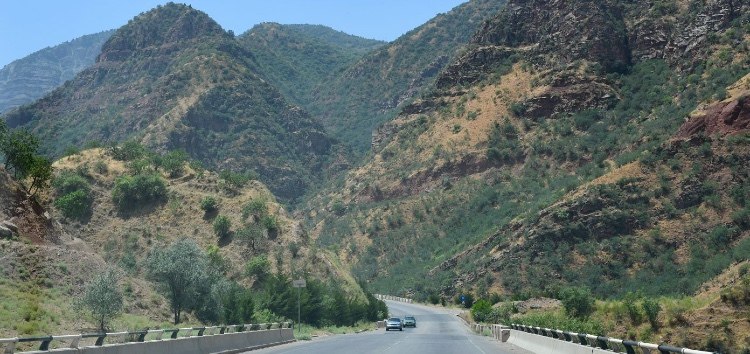
Built in the 1930s as part of a major international highway, this road serves as a crucial link between the north and south of the Khatlon region, an area that produces more than 53% of Tajikistan’s agricultural output and is home to 35% of the country’s population.

Financing and Project Scope

The EBRD’s sovereign loan of up to €38 million will help finance improvements to a 49-kilometer section of the road, including the construction of charging infrastructure for electric vehicles. The Asian Development Bank (ADB) will provide $86.7 million (€83.5 million) in grant financing to support the project.

The upgrades will convert the existing single-lane road into a dual-lane highway, significantly improving transportation efficiency and reducing cargo delivery times across the Khatlon region and beyond. Additionally, the upgraded road will feature:

  • Improved lighting
  • Cycle paths
  • Pavements for pedestrians

Electric Mobility and Sustainability

This will be one of the first roads in Tajikistan equipped with charging stations for electric vehicles (EVs), encouraging wider EV adoption in the country.

The EBRD will also provide a technical cooperation grant to develop a national electric mobility action plan, aimed at stimulating public and private investment in sustainable transportation infrastructure across Tajikistan.

EBRD’s Broader Investment in Tajikistan

To date, the EBRD has invested over €1 billion in Tajikistan through 183 projects, supporting key sectors such as infrastructure, energy, and private enterprise development.

Uzbekistan and Hungary Use Nobel-Winning Discovery to Develop Health Supplements

Scientists from Uzbekistan and Hungary are collaborating to develop new health supplements derived from sweet wormwood (Artemisia annua), a plant known for its medicinal properties. The research is being conducted by the Pharmaceutical Institute of Tashkent and Hungary’s Meditop Pharmaceutical Ltd.

The project is based on the groundbreaking work of Chinese scientist Tu Youyou, who won the 2015 Nobel Prize in Physiology or Medicine for discovering artemisinin, a compound extracted from sweet wormwood that effectively treats malaria.

The joint initiative aims to produce antiseptic and anti-inflammatory supplements in various forms, including capsules, ointments, hydrogels, mouthwashes, and ear drops. These products are classified as food supplements rather than medicines. Currently, researchers are testing the active compounds on animals to evaluate their effectiveness.

While still in the early stages of development, with prototypes being tested, mass production is planned to take place in Uzbekistan using Hungarian pharmaceutical expertise. It remains uncertain whether all prototypes will reach large-scale production, but both sides express optimism about the project’s potential.

This collaboration is part of a broader partnership between the two countries. In 2023, Hungarian Foreign Minister Péter Szijjártó and Uzbek Minister of Investment, Industry, and Trade Laziz Kudratov announced plans to establish a special industrial zone in Uzbekistan for Hungarian companies.

Sweet wormwood has been used in traditional medicine for centuries, particularly in Chinese medicine, where it has been employed to treat fever and infections. In recent years, artemisinin has been investigated not only for malaria treatment but also for its potential applications in cancer therapy and respiratory health, including during the COVID-19 pandemic.

Chevrolet vs China: The Battle for the Future of Uzbekistan’s Auto Industry

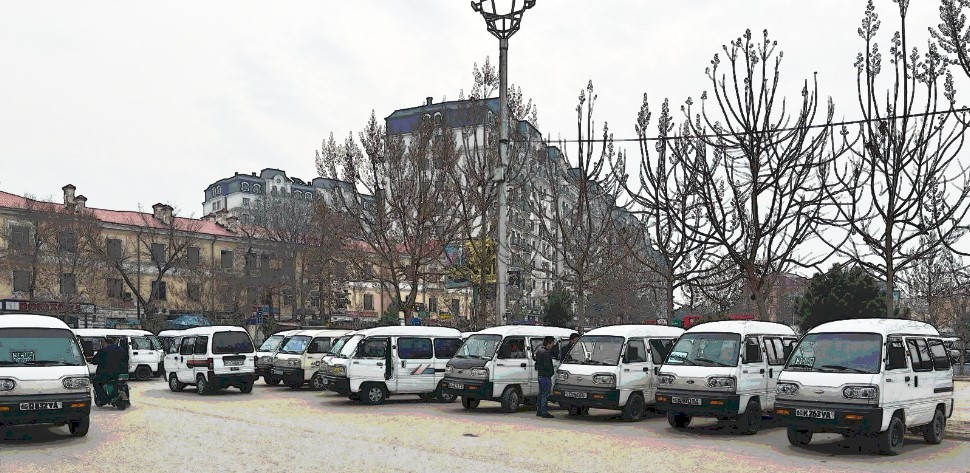
ANDIJAN — Spend long enough in Uzbekistan and you become adept at reading numberplates. While in Paris or Los Angeles, you will generally identify your taxi by its color and its manufacturer; try doing that in Uzbekistan, and you run into a problem: for the past two decades or so, the color and manufacturer have invariably been White and Chevrolet.

“Yep, it’s true,” laughed Alisher, as I remarked on this when he collected me from Andijan train station. “90% of the cars are Chevrolets, and 80% of them are white.”

But this era of monochrome monopoly may be coming to an end. With the electric vehicle (EV) revolution sweeping the world, Chinese companies have Chevrolet’s kingdom in their sights.

A Levy for the Chevy

Islam Karimov, Uzbekistan’s first president, was alone among the leaders of former Soviet republics in being a trained economist. Schooled in the planned economy, his powerful state acquired control over key industries and sought to make Uzbekistan self-reliant.

It did a deal with South Korean conglomerate Daewoo to open its first factory in Uzbekistan in 1996, while slapping huge tariffs on all cars coming into the country from abroad.

Daewoo, caught up in the Asian Financial Crisis in 1998, sold its auto arm to General Motors in 2002. The Detroit giant saw little wrong with the deal they had inherited in Uzbekistan, and so continued to produce Daewoo cars but now under their Chevrolet branding. The partnership transformed streets all across the country, with practically the only other cars to be seen on the roads being old Ladas from the Soviet period.
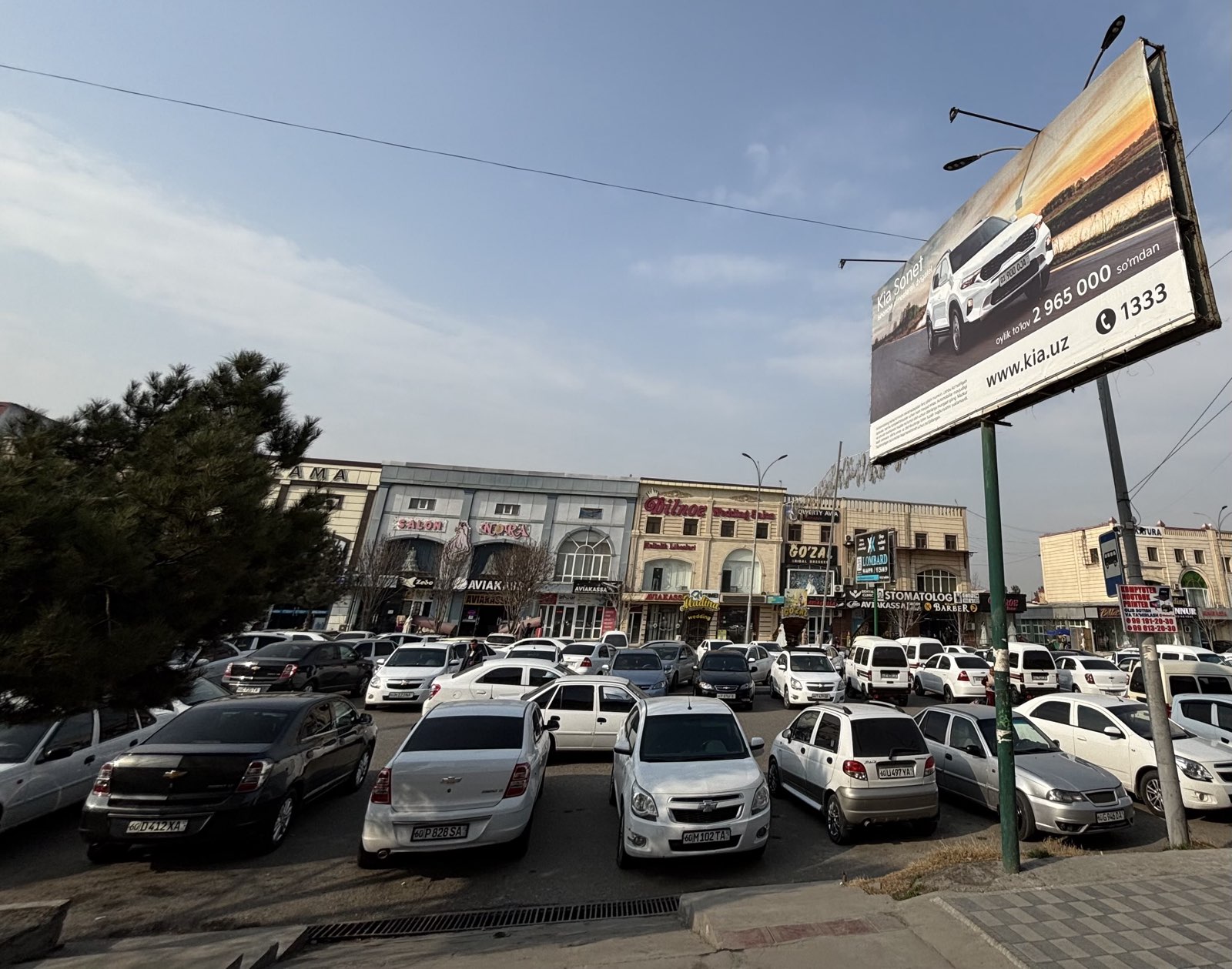
A Kia hoarding above, naught but Chevrolet’s below; image: Joe Luc Barnes

This lack of choice nevertheless provided jobs and an industrial base for the country’s auto industry.

“I am very proud that Uzbekistan has built such an industry,” said Aziz Shukurov, CEO of A Group, a chain of car dealerships and owner of the nation’s largest network of service stations. “Today, more than one hundred companies operate in the local automotive industry producing parts for the vehicles; a lot of technology has been transferred over the years with tens of thousands of people employed. To my mind, a strong local automotive industry is a substantial asset for any country.”

Meeting Mr. Market

After Karimov died in 2016, his successor, Shavkat Mirziyoyev, began to embrace the free market. Close to a decade later, Tashkent throughfares are home to ever more foreign brands. Most prominent are South Korea’s Kia and Hyundai and China’s BYD and Changan.

“The new president started opening up the country from 2017, giving access to foreign institutions and companies to the Uzbekistan market,” said Farkhodjon Israilov, an expert who specializes in attracting foreign investment into the country.

In 2019, the government removed import duties and excise taxes on EVs. Given the growing popularity of EVs since then, the state-owned UzAuto Motors partnered with BYD to open one of only two operational production facilities outside China – the other is in Rayong, Thailand, with more planned in Brazil, Hungary, Indonesia, and Turkey – in Mirziyoyev’s home city of Jizzakh. The plant, 60% owned by UzAuto and 40% by BYD, is expected to produce around 50,000 cars annually.

Recent stats detailing 2024 car sales show these changes are beginning to take effect. Of the 482,000 vehicles sold in 2024, 353,730 were Chevrolet. There were around another 50,000 domestically produced cars, mainly under the Kia and BYD brands, as well as another 80,000 imported cars.

Israilov finds the new availability of choice exhilarating. “You can even find Porsche here now!” he said. “But there are also Chinese cars whose brands I haven’t even heard of… so there is always choice.”

BYD has taken increasing market share in the country; image: Joe Luc Barnes

A Well-Defended Bastion

Outside the capital it’s a different story: in Andijan, around ten kilometers from the Chevrolet factory in Asaka, a quick survey on Bobur Prospekt revealed that nine cars out of a total of 200 were not Chevrolet. In other words, 4.5%.

“Electric cars are more expensive,” said Alisher. “If I have the money, sure, it’s a great idea. But the service is more expensive; the maintenance too.”

Alisher touches on an underrated aspect of Chevrolet’s dominance: the preponderance of spare parts. If your new Chinese electric car breaks down or needs a new part, there isn’t necessarily the availability or expertise to fix it. With Chevrolet, given every garage in the country has learned to specialize in it, vehicle repairs become a lot easier.

Mechanics are also used to switching out the Chevrolet’s engine. “When you buy the car, it runs on petrol, but installing a propane tank has become very common,” said Alisher. Propane and methane are common fuel sources when it’s so expensive to import refined petrol into the country. “Actually, an electric car might be even cheaper if the up-front costs weren’t so high.”

In Andijan, Chevrolet’s dominance remains near-total; image: Joe Luc Barnes

But these structural moats that protect Chevrolet’s business model may be being bridged.

“There are still tons of customers who still think like them,” said Sherzod Yuldashev when I told him about Alisher’s concerns. Yuldashev is the Director of Business Development at Runking Motor Group, an EV importer. However, he’s confident that people will come around to EVs. “Year by year, the growing sales of electric vehicles in Uzbekistan are evidence that people are changing their minds,” he added.

Israilov agrees that the direction of travel seems inevitable and that the market is quickly adapting to servicing electric vehicles. “Two or three years ago, when you bought any kind of electric vehicle, you might have a problem. Right now, even if you are buying Tesla, there are people who can help you to solve any issue.” He adds that more established brands like BYD even provide their own car servicing.

EVs are predicted to become more affordable, with Shukurov believing that economies of scale and infrastructure development will drive prices down. Israilov agrees, saying that there are already Chinese EVs available for as little as US $15,000.

Then, there are the problems that Chevrolet itself is experiencing. Yuldashev believes that the company is struggling to develop new competitive models. “Their current product portfolio is getting smaller and smaller,” he said, noting that the popular Spark, Lacetti, and Nexia have all been dropped from their product line. Of the remaining models, only the Cobalt sedan remains popular, with a long delayed new version set to go on sale this year.

Has the Leopard Changed Its Spots?

There are a few signs that the government is concerned about the number of imports, imposing several non-tariff barriers last year. This is in response to the fact that BYD models produced in Uzbekistan are more costly than those imported directly from China. One of these barriers includes last November’s introduction of compulsory electromagnetic compatibility checks on imported EVs, a layer of bureaucracy costing nearly 6.3 million UZS (almost $500) per vehicle.

Nevertheless, given the speed of change and the fact that Uzbekistan’s domestic EV production is still relatively low, Shukurov doesn’t seem to feel that there is much that can be done to counter Chinese influence. “The scale and the pace of Chinese EV industrialization made it inevitable for Chinese EV products to come to many regions and compete with local products,” he said.

In the meantime, however, many customers are simply reveling in the newfound choice, something which even Chevrolet has begun to embrace, having been forced to lower its prices to entice customers. “We never had any discounts from Chevrolet in Uzbekistan before; it forces our domestic producers to also become competitive,” said Israilov. “This is the market economy at work.”
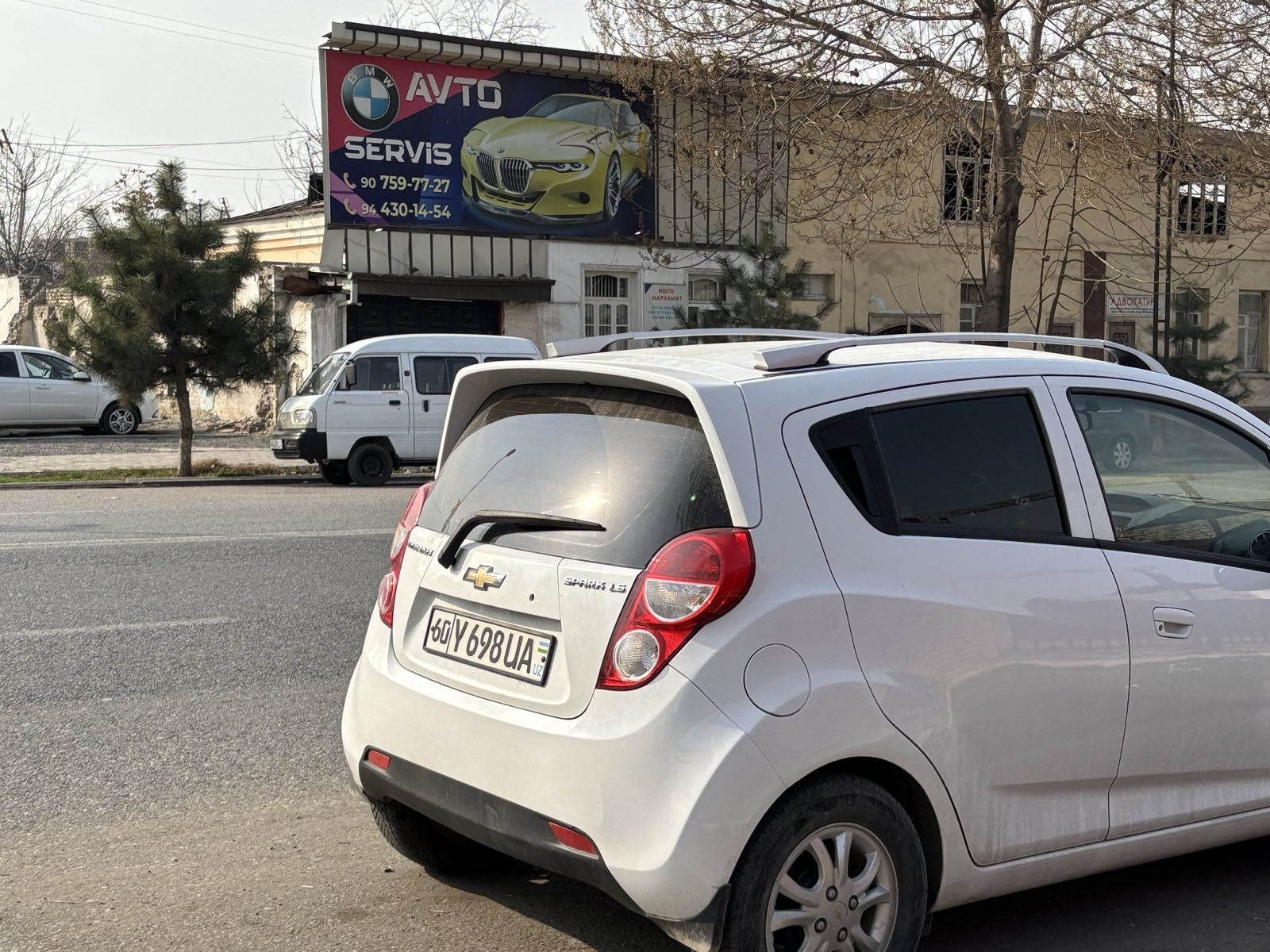
You can’t start a fire without a Spark; image: Joe Luc Barnes