• KGS/USD = 0.01144 0%
  • KZT/USD = 0.00212 0%
  • TJS/USD = 0.10456 0.19%
  • UZS/USD = 0.00008 0%
  • TMT/USD = 0.28490 0%
  • KGS/USD = 0.01144 0%
  • KZT/USD = 0.00212 0%
  • TJS/USD = 0.10456 0.19%
  • UZS/USD = 0.00008 0%
  • TMT/USD = 0.28490 0%
  • KGS/USD = 0.01144 0%
  • KZT/USD = 0.00212 0%
  • TJS/USD = 0.10456 0.19%
  • UZS/USD = 0.00008 0%
  • TMT/USD = 0.28490 0%
  • KGS/USD = 0.01144 0%
  • KZT/USD = 0.00212 0%
  • TJS/USD = 0.10456 0.19%
  • UZS/USD = 0.00008 0%
  • TMT/USD = 0.28490 0%
  • KGS/USD = 0.01144 0%
  • KZT/USD = 0.00212 0%
  • TJS/USD = 0.10456 0.19%
  • UZS/USD = 0.00008 0%
  • TMT/USD = 0.28490 0%
  • KGS/USD = 0.01144 0%
  • KZT/USD = 0.00212 0%
  • TJS/USD = 0.10456 0.19%
  • UZS/USD = 0.00008 0%
  • TMT/USD = 0.28490 0%
  • KGS/USD = 0.01144 0%
  • KZT/USD = 0.00212 0%
  • TJS/USD = 0.10456 0.19%
  • UZS/USD = 0.00008 0%
  • TMT/USD = 0.28490 0%
  • KGS/USD = 0.01144 0%
  • KZT/USD = 0.00212 0%
  • TJS/USD = 0.10456 0.19%
  • UZS/USD = 0.00008 0%
  • TMT/USD = 0.28490 0%

Astana Leads 2024 Smart City Rankings in Kazakhstan

Kazakhstan’s Ministry of Digital Development, Innovation, and Aerospace Industry (MDIIA) has released its latest evaluation of local governments’ efforts to implement Smart City technologies. For 2024, the capital city, Astana, secured the top position.

A Smart City integrates multiple information and communication technologies (ICT) and Internet of Things (IoT) solutions to manage urban assets, ranging from residential and commercial properties to transportation and public infrastructure. The core objective is to enhance the quality of life for residents through greater efficiency, safety, and connectivity.

Kazakhstan began implementing its Smart City strategy in 2019, introducing a standardized benchmark for assessing the adoption of smart technologies by local authorities.

The first national Smart City ranking, published in 2020, placed Almaty, Kazakhstan’s largest metropolis, firmly at the top. In subsequent years, Almaty and Astana alternated between first and second place. In 2023, however, Astana emerged as the clear leader.

According to the MDIIA, alongside Astana, the cities of Almaty, Karaganda (Central Kazakhstan), Kostanay (northern Kazakhstan), and Ust-Kamenogorsk (eastern Kazakhstan) rounded out the top five for their effective implementation of urban digital technologies.

“These cities have widely adopted systems for monitoring school performance, electronic fare collection, and real-time tracking of public transport,” the ministry reported. “Online registration for outpatient clinics is in place, and unified 109 contact centers handle public inquiries and complaints. The number of surveillance cameras has also increased, improving public safety.”

As previously reported by The Times of Central Asia, Kazakh authorities are also planning to construct a new city, Alatau, near Almaty. The project is being designed from the ground up to meet all the criteria of a Smart City.

Uzbek Banker Olimov Abducted in Paris, Freed After Ransom Payment

A high-profile Uzbek banker was abducted in central Paris last month and later released after a ransom was paid, Le Monde has reported. Kakhramonjon Olimov, 48, the sole shareholder of Anorbank, was kidnapped in the city’s 8th arrondissement on June 23 and held for nearly two days. French prosecutors have since opened an investigation, and one suspect has been charged with “organized kidnapping.”

The case, described by Le Monde as “straight out of a spy novel,” has drawn international attention due to its dramatic nature and the stature of the victim.

Olimov, a frequent visitor to France, had traveled to Paris on a business trip scheduled for late June. His agenda included meetings with French partners, including executives from energy giant EDF. He is reportedly involved in a gas power plant project in Surkhandarya, southern Uzbekistan, through a Dutch-registered company.

According to Le Monde, Olimov and his assistant arrived in Paris from Tashkent via Istanbul on June 21. That evening, while at the hotel bar, he was approached by an unknown woman who introduced herself as Anastasia, claiming to work at a beauty salon in Turkey. Speaking in both Russian and English, she aroused suspicion due to her opulent appearance, including a white Louis Vuitton jacket and a Tiffany bracelet, which did not align with her purported background.

Two days later, Olimov was kidnapped. He was transported to the basement of a villa near Nice, where he was physically assaulted, threatened, and reportedly subjected to a mock execution. He was later brought to Hôtel-Dieu hospital in Paris on June 25. Medical staff documented multiple traumas and injuries. According to reports, Olimov also exhibited severe psychological trauma, including insomnia and “hypervigilance.”

“It wasn’t pleasant for him, but at least it’s over,” his personal assistant told Le Monde. Olimov is now recovering.

Anorbank, which Olimov fully owns, manages more than $1 billion in assets and ranks among Uzbekistan’s top ten financial institutions, based on the bank’s own reporting.

The motives behind the kidnapping remain unclear. Authorities have not disclosed the ransom amount or further details about the abductors. The case continues to raise alarms in both financial and diplomatic circles, particularly regarding the security of high net worth individuals abroad.

French prosecutors are continuing their investigation. So far, only one individual has been formally charged.

What Does the Arrest of a Former Top Anti-Corruption Official Signal for Kazakhstan?

On Friday, July 4, Kazakhstani media erupted with news of the arrest of Talgat Tatubayev, former head of the National Anti-Corruption Bureau, predecessor to the current Anti-Corruption Agency. Yet the significance of Tatubayev’s arrest may extend far beyond his own record. Many believe the case is the opening move in a broader probe that could ensnare Kairat Kozhamzharov, a former senator and top security official under Kazakhstan’s first president.

Tatubayev’s arrest was amplified by a post from Aset Mataev, head of the KazTAG news agency and the son of Seytkazy Mataev, the current chairman of the Union of Journalists of Kazakhstan. Both father and son were previously prosecuted during Kozhamzharov’s tenure, a period marked by high-profile anti-corruption investigations, including the conviction of former economy minister Kuandyk Bishimbayev.

While Kozhamzharov’s leadership was once praised for exposing major corruption cases, many in Kazakhstan’s media remained skeptical. The elder Mataev’s case in particular shook the journalistic community, which saw his prosecution as politically motivated. It is widely believed that the Mataevs were targeted after refusing to sell KazTAG to allies of then-Mazhilis Speaker Nurlan Nigmatulin.

“In 2016, I had two encounters with Deputy Head of the Financial Police, Talgat Tatubayev,” Aset Mataev wrote on his Telegram channel. “He offered us a deal under Article 65 of the Criminal Code, exemption from liability in exchange for a guilty plea. Others close to Nigmatulin, Yeseyev, Baybek, Zhumagaliyev, and Mailybayev took that route. We refused”.

At the time, the Union of Journalists was gaining influence in the blogosphere amid growing distrust in traditional media. According to Aset Mataev, this created an opportunity for authorities to undermine the Mataevs’ reputation and isolate them professionally. Tatubayev’s damaging interview, published on Ratel.kz, appeared to many as a tool in this campaign.

“He tried to intimidate us, saying, ‘We have orders, and we’ll crush you anyway,’” Mataev wrote. After Seytkazy’s arrest, Tatubayev allegedly contacted Aset from his father’s phone, urging him to stop speaking to the press. “He promised the case would be dropped. Of course, he lied. We were tortured until the verdict was handed down, while he gave interviews claiming my father admitted guilt.”

Unlike Ratel.kz, which was seen as aligned with certain state actors, other outlets mentioned by Mataev allegedly served figures like Bulat Utemuratov, long considered the financial backer of former President Nursultan Nazarbayev, and Karim Massimov, who moved from prime minister to head of the National Security Committee in 2016.

The Mataev prosecution sparked widespread condemnation among journalists, who viewed it as a watershed moment in Kazakhstan’s clampdown on press freedom.

To this day, the Mataev case is widely believed to have been orchestrated by Nigmatulin and his political allies.

Now, with Tatubayev under arrest once more, this time for alleged torture in the notorious Khorgos customs embezzlement case, some observers see the return of unfinished business from the “Old Kazakhstan.” Khorgos, a major border post linking Kazakhstan and China, was the center of large-scale corruption investigations under Kozhamzharov’s leadership.

The General Prosecutor’s Office confirmed Tatubayev’s detention in relation to abuses during the Khorgos probe. Meanwhile, rumors are circulating that Olesya Keksell, one of the key investigators in the Bishimbayev and EXPO-2017 cases, has also been named a suspect.

Whether these developments mark a genuine reckoning or a narrative driven by Kozhamzharov’s critics remains to be seen. If the allegations prove true, the investigation could expose a deep web of corruption tied to the former regime, a legacy Kazakhstan is still grappling with.

Tajikistan’s Energy Paradox

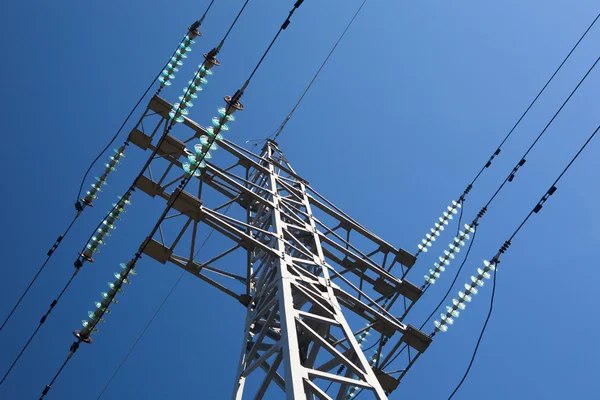
Tajikistan stands out among developing countries for having achieved near-universal access to electricity by 2022. This milestone, documented in the international SDG7-2025 report by the UN, World Bank, WHO, IEA, and IRENA, places the country alongside Eastern European and South Caucasus states in electrification. However, beneath this achievement lie persistent vulnerabilities, particularly in rural and mountainous regions, where winter brings regular power outages due to seasonal dips in hydropower generation and surging demand.

Firewood and Coal Still Dominant

Despite near-total electrification, Tajikistan remains significantly behind in access to clean cooking fuels. Fewer than 40% of the population use modern, safe technologies. In villages, the majority of households still rely on coal, firewood, or even manure for heating and cooking, practices that pose serious environmental and health risks, especially for women and children.

Tajikistan’s power sector is heavily dependent on hydropower, which accounts for over 90% of electricity production. While this results in low CO₂ emissions, it also creates structural vulnerabilities. Climate change and glacial retreat threaten the reliability of this single energy source. Meanwhile, the potential of solar and wind energy remains largely untapped due to a lack of investment, insufficient institutional frameworks, and limited support for decentralized energy projects.

Lagging in Energy Efficiency

Tajikistan is one of the most energy-intensive countries in the region. Aging heating systems, poorly insulated buildings, and inefficient technologies in agriculture and industry all contribute to this inefficiency.

The SDG7 report emphasizes the need to upgrade buildings and adopt energy-saving technologies. Some progress has been made: with assistance from the European Bank for Reconstruction and Development (EBRD), thermal upgrades are underway in schools and hospitals.

In 2021, Tajikistan received approximately $100 million in international support for energy projects, most of it allocated to hydropower. Major donors include the World Bank, the Asian Development Bank (ADB), and various UN agencies. However, investment in solar and wind energy, as well as broader energy efficiency initiatives, remains negligible. Experts are urging international partners to revise their priorities and fund projects that directly improve living standards, particularly in remote and rural areas.

A Regional Disparity in Investment

The pace of energy transition varies across Central Asia. While electrification is largely complete, access to clean cooking fuels remains uneven. Tajikistan and Kyrgyzstan are notably behind in this area. In contrast, Uzbekistan has emerged as a regional leader, securing the bulk of international energy investment. Uzbekistan, on the contrary, entered the top five world leaders in attracting investments in green energy.

Globally, progress toward Sustainable Development Goal 7 (SDG 7) is slowing. As of 2022, 91% of the world’s population had access to electricity, but over two billion people still rely on harmful fuels for cooking. Energy efficiency improvements are lagging, advancing at just one-quarter of the pace needed to meet 2030 targets.

Charting a Path Forward

Experts recommend three immediate priorities for Tajikistan. First, scaling up decentralized solar and wind energy projects. Second, investing in the energy efficiency of buildings and infrastructure. Third, expanding access to clean cooking fuels through local production, targeted subsidies, and educational programs.

To support this transition, Tajikistan must also invest in workforce training and deepen cooperation with international donors. Without a strategic shift in investment and policy, the country risks falling short of its sustainable energy goals, despite its early progress in electrification.

QazElles Brings Kazakh Culture to France

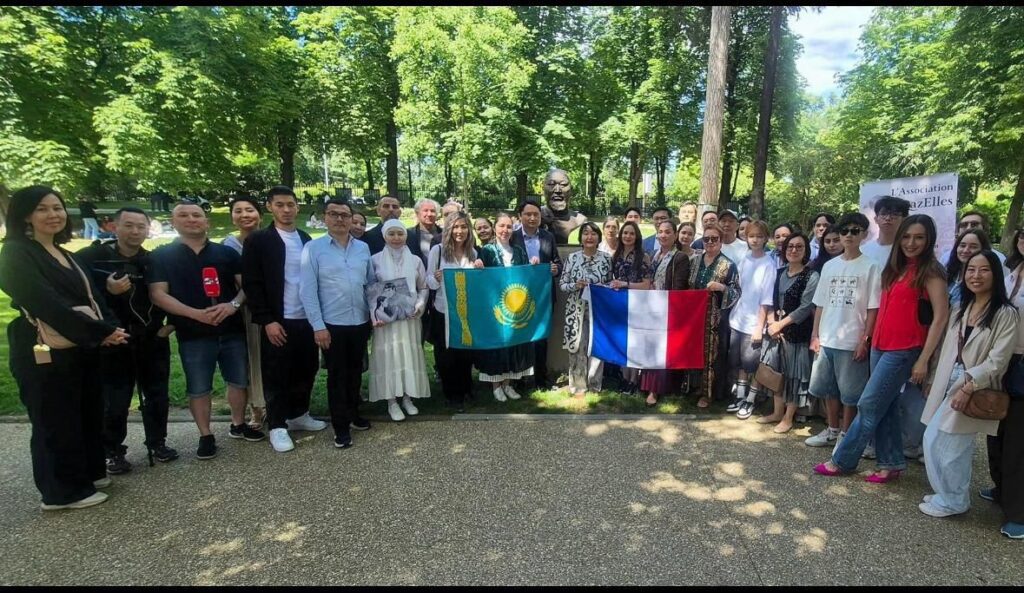
Since 2023, the Association of Kazakh Women in France — QazElles, a name blending “Kazakhstan” with the French word elles (meaning “women”) — has gained international recognition for its impactful initiatives well beyond the borders of France.

Today, QazElles unites 40 accomplished women living in cities across France, all of whom have personal or professional ties to Kazakhstan. Its diverse membership includes students from leading Parisian universities, engineers at prominent French companies, entrepreneurs, and professionals in the creative industries.

The association was established a few years ago in cooperation with the Embassy of the Republic of Kazakhstan in France.

“QazElles represents bright, strong, and accomplished daughters of their homeland who dedicate their free time to promoting Kazakh identity in France, building a supportive community of like-minded women,” says Madina Kulmanova, president of QazElles, who has lived in France for over 20 years. “Many of us have no close family here in France. This association became our family.”

Despite its relatively recent founding, QazElles has already organized several high-profile cultural events, all carried out on a fully volunteer basis by Kazakh women living in Paris.

In 2023, the group operated a chalet at La Défense, the largest Christmas market in the Paris region, for over a month. Showcasing Kazakh artisans, it quickly became a crowd favorite. Long queues formed for traditional manti (steamed dumplings filled with meat, pumpkin, and dough) and handmade felt slippers.

For two consecutive years, a miniature Kazakh aul (village) has come to life during Nauryz (March 21–22) on Place des Ternes, just steps from the Arc de Triomphe. Much like in Kazakhstan, the celebration features a yurt, traditional games, folk music, and festive cuisine.

This year, several thousand visitors, mostly local Parisians, many encountering Kazakh culture for the first time, explored the aul. Inside the yurt, guests experienced a guided audio tour written and narrated by Aliya Syzdykova. Outside, dancers from the Kazakh city of Shymkent performed in the square, while artisans sold out of tyubeteikas (traditional embroidered caps). Among the exhibitors was QazElles member Kamila Florenti, a jeweler who creates a distinctive line of delicate silver pieces inspired by Kazakh motifs.

“We love this project because it brings people together. There was so much kindness, warmth, and friendship. I think we truly gave Parisians a little journey into a real Kazakh celebration,” shares Madina Kulmanova, her emotion clearly visible.

QazElles quickly discovered that the way to a Parisian’s heart is through culinary exploration. One of the association’s most celebrated initiatives was a “four-hands” dinner featuring two renowned chefs: Artem Kantsev from Astana and Frédéric Simonin from Paris. The event was held at Simonin’s Michelin-starred restaurant, where the two chefs collaborated on a unique menu that blended the bold flavors of Kazakh cuisine with the finesse of French culinary tradition.

Among the standout dishes was camel meat manti wrapped in coffee-infused dough, served with a sauce made from kurt (a salty, dried fermented dairy product popular in Central Asia) and French cheeses.

The success of the event marked the beginning of what would become known as “gastronomic diplomacy,” a budding culinary partnership between Kazakhstan and France.

“We are equally enthusiastic about our social projects, both those supporting the development of the Kazakh diaspora in France and those that contribute back home, to our beloved country. We’ve taken part in projects big and small. One of our members, Maya Khanna, recently created a miniature yurt complete with interior furnishings. A true museum piece!”

At its heart, QazElles is about unity and shared purpose. The association has succeeded in bringing together compatriots to collaborate for the common good. As its membership continues to grow, so does its impact, strengthening community ties and raising the profile of Kazakh culture far beyond national borders.

Uzbekistan and China Deepen Ties Across Strategic, Economic, and Soft-Power Fronts

Uzbekistan and China have significantly expanded their bilateral relationship in the last month. The meeting between Presidents Shavkat Mirziyoyev and Xi Jinping on June 17, 2025, in Astana, during the second China–Central Asia Summit, formally endorsed what both states termed a “multi-dimensional strategic partnership.”  The occasion marked the conclusion of bilateral negotiations on Uzbekistan’s accession to the World Trade Organization. This membership is both procedural and symbolic, as it signals Uzbekistan’s intensifying participation in global economic architecture. In particular, it serves to legitimize the country’s market-opening reforms in the eyes of international partners.

Strategic Dialogue and the Evolution of Political Ties

The June 2025 summit meeting built upon groundwork laid during Mirziyoyev’s January 2024 state visit to China, when a suite of agreements were reached that catalyzed the creation of a Strategic Dialogue between the two countries’ foreign ministries. A year later, in January 2025, this was formally upgraded to an “all-weather comprehensive strategic partnership”.

This phrase signifies that the dialogue was acquiring operational substance in the form of diversified sectoral initiatives spanning infrastructure, innovation, security, and energy. For Uzbekistan, this initiative marks a sustained effort to define itself not only as a recipient of foreign capital but as a co-architect of regionally significant configurations.

Trade and investment data point to a structurally intensifying relationship. Bilateral trade stood at $14 billion in 2024, up from $13 billion the previous year, with both sides aiming for $20 billion in the near term. As of February 2025, 3,467 Chinese firms were active in Uzbekistan, an increase of over 1,000 from the prior year. However, the $9.8 billion trade deficit in China’s favor remains politically sensitive, highlighting asymmetries even as cooperation deepens.

Sectoral Investment and Institutional Coordination

A joint investment portfolio exceeding $60 billion undergirds this integration. Key projects include special economic zones, technoparks, and localized production of BYD electric vehicles. The sectoral spread extends to renewable energy, mining, logistics, metallurgy, pharmaceuticals, and smart agriculture. Financial institutions such as the Silk Road Fund and China Eximbank are underwriting emblematic initiatives, including the Olympic Village in Tashkent. On June 28, 2025, Uzbekistan’s Deputy Minister of Investments, Industry and Trade met with Chinese leather industry representatives to coordinate manufacturing projects in Andijan and Ohangaron.

These dynamics were further institutionalized at the Uzbekistan–China Interregional Forum held June 1–2, 2025, in Samarkand, where Uzbekistan’s Deputy Prime Minister Jamshid Khodjaev emphasized that Chinese investment has increased fivefold since 2017. Although this was technically a regional event, it reinforced — as a public-facing moment of alignment between central planning and international economic engagement — a national-level policy architecture receptive to external capital, particularly from China.

Infrastructure and Energy

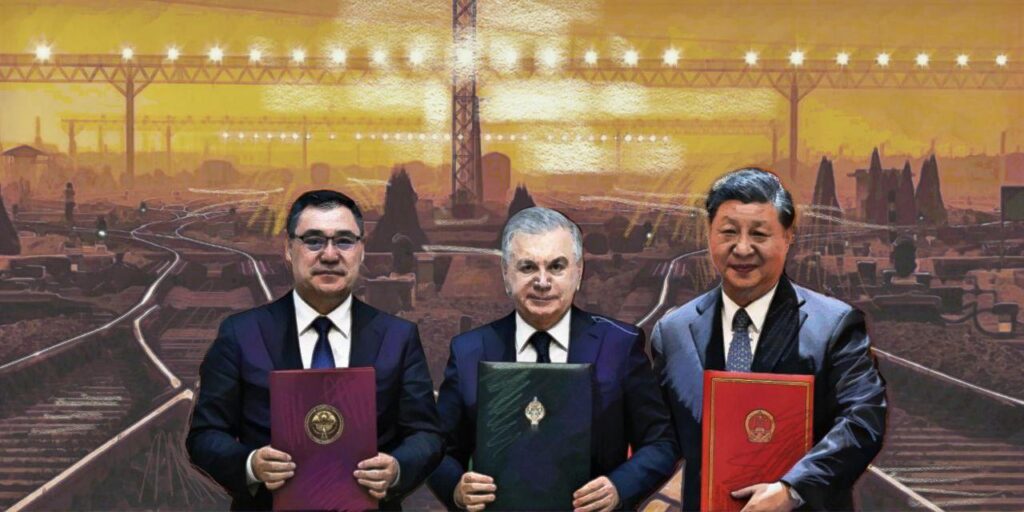
At the infrastructural core of bilateral cooperation stands the China–Kyrgyzstan–Uzbekistan (CKU) railway. Both presidents re-emphasized the project’s strategic relevance, identifying it as essential to transcontinental logistical continuity from East Asia to Europe. The project has not only economic but also geopolitical significance, situating Uzbekistan as a connective node rather than a peripheral conduit. If completed on time, it may also reduce Uzbekistan’s dependency on northern or western transit corridors.

Uzbekistan’s natural gas exports to China saw a substantial increase of over 60% year-on-year in the first five months of 2025. According to official data from Uzbekistan’s National Statistics Committee, gas exports to China reached $288 million between January and May 2025. Interestingly, physical volumes have not been officially reported or unofficially hinted at. Based on typical regional prices, however, a reasonable estimate of quantities would be 1.0–1.5 billion cubic meters (bcm), or an annual rate of 2.4–3.6 bcm. This development reinforces the dual commercial and energy linkages that increasingly characterize the bilateral channel.

China’s expanding role in Uzbekistan’s energy sector now also includes a strategic shift toward green infrastructure and technological modernization. Since 2023, Chinese state and private enterprises have committed to over 5,000 megawatts (MW) of new solar and wind capacity in Uzbekistan, including flagship facilities in Andijan, Karakalpakstan, and Jizzakh. Uzbekistan’s Atomic Energy Agency is also in exploratory talks with China National Nuclear Corporation to deploy small modular reactors and expand uranium production, signaling a long-term alignment on low-carbon energy strategies.

Human Mobility and Soft-Power Engagement

Effective June 1, 2025, a mutual 30-day visa-free regime was implemented for citizens of both countries. Announced by Foreign Ministers Wang Yi and Bakhtiyor Saidov, the policy aims to facilitate not just tourism and business but also people-to-people connectivity. The agreement is expected to normalize short-term mobility for professionals, students, and cultural figures. In this connection, Beijing has established a branch of Northwest Agricultural and Forestry University and the International Mathematics Center with Peking University in Uzbekistan.

Public sentiment within Uzbekistan remains, nevertheless, cautious. A mid-June 2025 incident in which a local official appeared to suggest farmland transfers to Chinese investors ignited controversy. The Ministry of Agriculture swiftly denied any such transactions, but the viral video triggered a broader reaction over land sovereignty and, by extension, economic dependency. These concerns are not new but have gained visibility as China’s economic footprint expands. Tashkent has sought to manage public discourse with narratives emphasizing national benefit and regulatory oversight, all while denying the reports. While elite consensus remains favorable toward Chinese investment, societal perception introduces an enduring constraint, shaping how far and how fast integration can proceed without risking political backlash.

Beyond trade and infrastructure, the relationship is being expanded to issue areas of human and social development. The two governments have pledged cooperation on poverty reduction initiatives, aligning with Uzbekistan’s domestic policy agenda. Coordination in smart agriculture, logistics, and green energy development has also been framed as a long-term platform for mutual benefit. Whether such diversification will insulate the relationship from any geopolitical shocks remains uncertain, but the effort to institutionalize its breadth is evident.

Balancing Growth and Sensitivities

Uzbekistan and China have consolidated a high-density bilateral relationship, combining formal diplomatic upgrades with tangible projects and policy coordination. The July 2025 milestone of mutual visa liberalization and expanding logistical access serves as both a signal and substance of this convergence. However, structural asymmetries and public sensitivities temper the otherwise smooth trajectory.

The Uzbek government must now navigate between the material benefits of Chinese capital and the symbolic costs perceived domestically. Going forward, the pace of implementation, particularly of the China–Kyrgyzstan–Uzbekistan railway, and the durability of public consent will serve as bellwethers for the sustainability of this accelerated bilateralism. Much will hinge on whether economic gains are sufficiently distributed to justify the strategic momentum.