• KGS/USD = 0.01144 0%
  • KZT/USD = 0.00193 -0%
  • TJS/USD = 0.10876 0.55%
  • UZS/USD = 0.00008 0%
  • TMT/USD = 0.28490 0%
  • KGS/USD = 0.01144 0%
  • KZT/USD = 0.00193 -0%
  • TJS/USD = 0.10876 0.55%
  • UZS/USD = 0.00008 0%
  • TMT/USD = 0.28490 0%
  • KGS/USD = 0.01144 0%
  • KZT/USD = 0.00193 -0%
  • TJS/USD = 0.10876 0.55%
  • UZS/USD = 0.00008 0%
  • TMT/USD = 0.28490 0%
  • KGS/USD = 0.01144 0%
  • KZT/USD = 0.00193 -0%
  • TJS/USD = 0.10876 0.55%
  • UZS/USD = 0.00008 0%
  • TMT/USD = 0.28490 0%
  • KGS/USD = 0.01144 0%
  • KZT/USD = 0.00193 -0%
  • TJS/USD = 0.10876 0.55%
  • UZS/USD = 0.00008 0%
  • TMT/USD = 0.28490 0%
  • KGS/USD = 0.01144 0%
  • KZT/USD = 0.00193 -0%
  • TJS/USD = 0.10876 0.55%
  • UZS/USD = 0.00008 0%
  • TMT/USD = 0.28490 0%
  • KGS/USD = 0.01144 0%
  • KZT/USD = 0.00193 -0%
  • TJS/USD = 0.10876 0.55%
  • UZS/USD = 0.00008 0%
  • TMT/USD = 0.28490 0%
  • KGS/USD = 0.01144 0%
  • KZT/USD = 0.00193 -0%
  • TJS/USD = 0.10876 0.55%
  • UZS/USD = 0.00008 0%
  • TMT/USD = 0.28490 0%
11 December 2025

Ukraine’s Drone Strike on Russian Oil Hub Sparks Concerns Over Kazakhstan’s Energy Security

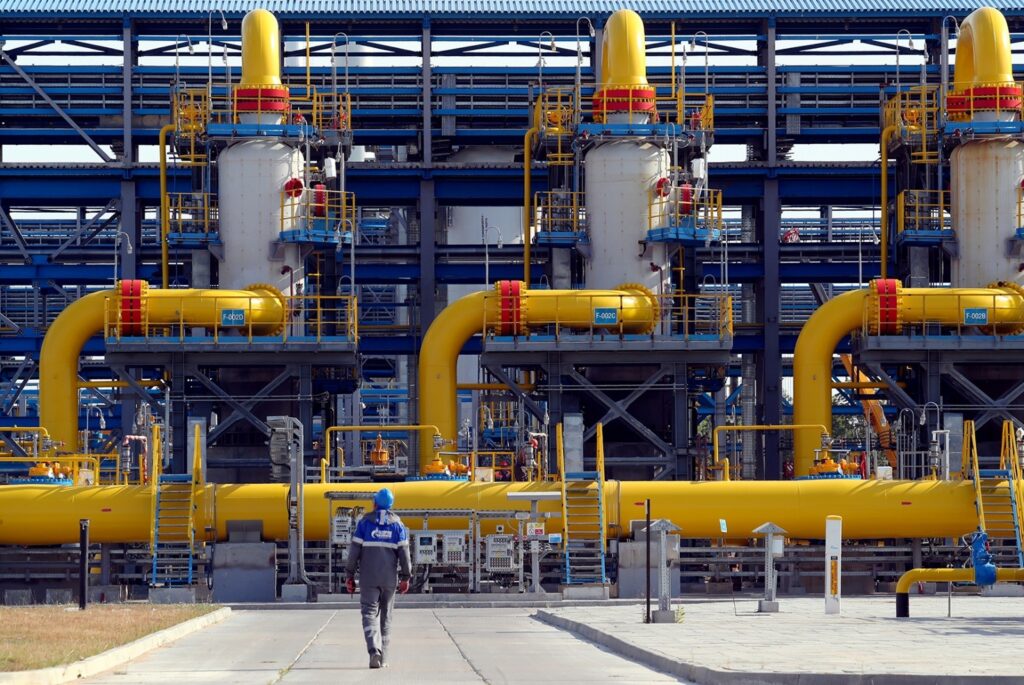
On February 17, seven Ukrainian unmanned aerial vehicles (UAVs) attacked an oil transportation facility of the Caspian Pipeline Consortium (CPC), targeting the Kropotkinskaya oil pumping station in Russia. Following the attack, reports emerged that the volume of oil pumped from Kazakhstan through the CPC could decrease by 30% for a period of one and a half to two months.

Conflicting Reports on the Impact

On February 18, Ukraine officially confirmed the strike.

“Yesterday, the Ukrainian defense forces carried out a pinpoint strike on strategic facilities of the military and fuel and energy infrastructure of the Russian Federation… The Kropotkinskaya and Andriapol oil pumping stations, which played a key role in transporting fuel for the occupiers, were hit. After the strike, they were put out of action, significantly complicating the logistics of fuel supplies to the aggressor,” the General Staff of the Armed Forces of Ukraine stated.

Shortly after, Transneft, the Russian shareholder in the CPC, warned that oil pumping volumes from Kazakhstan could drop by approximately 30% due to the damage. 

Meanwhile, Russian Deputy Prime Minister Alexander Novak provided an even bleaker assessment. During a meeting with President Vladimir Putin, he stated:

“We see a decrease in pumping volumes by about 30 – 40% compared to levels before the drone attack.”

Novak estimated that restoring the CPC infrastructure would take “several months, at least,” citing the need to replace damaged Western-made equipment, including Siemens gas turbines. 

However, later that day, Kazakhstan’s Ministry of Energy issued a statement disputing these claims.

“Currently, there are no restrictions on Kazakh oil shipments via the CPC, and acceptance is proceeding as scheduled,” the ministry said. 

Despite this, Russian Foreign Minister Sergey Lavrov framed the attack as a direct assault on Kazakhstan’s energy infrastructure. 

Expert Perspectives: Overreaction or Serious Threat?

While officials issued conflicting statements, financial analyst Rasul Rysmambetov urged against panic. Writing on his Telegram channel ArtFinanze, he dismissed talk of a 30% reduction in pumping volumes as an “overreaction.” However, he acknowledged that the attack exposed the risks of Kazakhstan’s reliance on foreign transit routes.

“Geopolitical and other risks when exporting through third countries can easily double. It’s too early to panic; there are few catastrophic scenarios at this stage. But if attacks on infrastructure continue, it will become increasingly difficult to protect the underwater pipeline system, especially considering the Russian Black Sea Fleet’s recent losses. Kazakhstan’s oil facilities have been largely spared so far, but there’s no guarantee this will continue. Contrary to popular belief, the fact that companies like Chevron are involved won’t deter anyone; on the contrary, such infrastructure can be used to exert pressure on entire countries,” he warned. 

Kazakhstan’s Dilemma: Dependence on Russian Routes

While experts downplay immediate consequences, Kazakhstan’s vulnerability is undeniable. Calls to boost domestic petrochemical production to reduce dependence on foreign pipelines remain largely aspirational. Meanwhile, efforts to diversify oil export routes have yielded little progress.

Currently, 93% of Kazakhstan’s oil exports pass through Russian territory, leaving the country with limited alternatives:

  • Caspian Pipeline Consortium (CPC): Handles 80% of exports but is now a target of Ukrainian attacks.
  • Atyrau-Samara Pipeline: Accounts for 13% of exports, connecting to Russia’s Transneft system for access to European markets. 
  • Alternative Routes: The Kazakhstan-China pipeline, railway shipments, and the Baku-Tbilisi-Ceyhan (BTC) pipeline combined handle less than 7% of total exports.

There are plans to increase BTC capacity from 1.5 million to 3 million tons per year, but this pales in comparison to the 60+ million tons transported annually via the CPC. Despite discussions about diversification since 2022, little has changed in Kazakhstan’s oil export architecture.

Diplomatic Response: A Last Resort?

With no viable alternatives in the short term, Kazakhstan appears to be turning to diplomacy. On February 19, Foreign Ministry spokesperson Aibek Smadiyarov stated that Kazakhstan would raise the issue with Ukraine.

“This is a very important issue for Kazakhstan’s economy, and we will naturally discuss this situation with our Ukrainian partners through diplomatic channels,” Smadiyarov said. 

Whether Kyiv will heed Kazakhstan’s concerns or prioritize its military strategy remains to be seen.


Kazakhstan Introduces New Visa Categories to Attract Foreign Professionals

On February 18, 2025, Kazakhstan’s Ministry of Foreign Affairs hosted a briefing for representatives of the diplomatic community to highlight the country’s newly introduced visa categories: the Neo Nomad Visa, Digital Nomad Visa, and Residence Visa. 

Kazakhstan updated its visa regulations in November 2024 to attract business immigrants, skilled professionals, and tourists. Among the key offerings is the Digital Nomad Visa, which provides long-term residence options for freelancers, self-employed entrepreneurs, IT specialists, and startup founders. Meanwhile, the Neo Nomad Visa is designed for foreign citizens who work remotely while traveling. Applicants for this visa must demonstrate a verified monthly income of at least $3,000 and provide health insurance and a clean criminal record.

The Residence Visa is aimed at attracting foreign professionals with expertise in medicine, science, innovation, education, and the creative industries. It allows recipients to stay in Kazakhstan for up to 90 days.

Kazakhstan’s Deputy Foreign Minister Roman Vassilenko emphasized that these new visa categories significantly expand opportunities for foreign nationals wishing to live and work in the country.

“Our country provides the necessary conditions to attract international professionals by offering visa-free entry to citizens from more than 80 countries and a simplified electronic visa for 109 countries. By expanding air connectivity, Kazakhstan now operates over 700 international flights per week to more than 30 countries. Additionally, we are actively developing digital infrastructure, creating smart cities, and ensuring access to high-speed internet,” he said.

Vassilenko added that implementing a flexible visa policy benefits not only Kazakhstan but also its partners through tax revenues and remittances from remote professionals, as well as the skills and experience they acquire in the country.

Kazakhstan’s Deputy Minister of Tourism and Sports, Yerzhan Yerkinbayev, highlighted the timeliness and relevance of these visa initiatives, adding:

“Kazakhstan continues to strengthen its position as an open and accessible destination for international visitors. This commitment to openness has been a key factor in the growth of tourism. In 2024, 15.3 million people visited Kazakhstan, marking a 66% increase from the previous year.”

Kyrgyzstan Advances Hydropower Modernization Efforts

Kyrgyzstan is moving forward with the modernization of two major hydroelectric power plants as part of its efforts to increase electricity generation and meet the country’s growing energy demands.

According to the Ministry of Energy, on February 20, French company GE Hydro will begin reconstruction of hydroelectric generating unit No. 4 at the Toktogul Hydropower Plant (HPP) – the country’s largest power facility, located on the Naryn River. The plant currently generates approximately 40% of Kyrgyzstan’s electricity. Once completed, the upgrade will add 60 megawatts (MW) to the plant’s capacity.

In November 2024, Toktogul HPP successfully launched a modernized unit No. 1, increasing its output by 60 MW. That unit’s reconstruction, which began in March 2024, followed earlier upgrades to units No. 2 and No. 3, which collectively added 120 MW to the facility’s capacity. Before modernization, Toktogul HPP had a total capacity of 1,200 MW, with each of its four units generating 300 MW.

Upon completion of upgrades to all four units, Toktogul HPP’s total capacity will rise to 1,440 MW, and its operational lifespan will be extended by 25 to 30 years.

Meanwhile, on March 1, 2025, China National Electric Engineering Company (CNEEC) will begin the modernization of unit No. 2 at the Uch-Kurgan HPP, increasing its capacity by 9 MW.

Situated on the Naryn River, the Uch-Kurgan HPP plays a key role in Kyrgyzstan’s energy supply. Before its modernization, the plant had a total capacity of 180 MW, with four units generating 45 MW each. Since its commissioning in 1962, the plant had never undergone major upgrades until 2024, when unit No. 4 was reconstructed, boosting its output by 16 MW.

The modernization of Toktogul unit No. 4 and Uch-Kurgan unit No. 2 is expected to be completed by December 2025.

To ensure an uninterrupted power supply during the temporary shutdown of these units, the Ministry of Energy has held negotiations with neighboring countries regarding electricity imports. The government has also urged the population to use electricity sparingly while modernization work is underway.

In addition to these upgrades, Kyrgyzstan is constructing the Kambarata-1 Hydropower Plant, which will have a projected capacity of 1,860 MW and an average annual generation of 5.6 billion kilowatt-hours. Once completed, Kambarata-1 will be the country’s largest hydropower facility and is expected to help eliminate Kyrgyzstan’s electricity shortages.

Tajikistan to Replace Kazakh Liquefied Petroleum Gas with Russian Supply in 2025

Tajikistan will begin replacing Kazakh liquefied petroleum gas (LPG) with Russian supplies in 2025, Oil and Gas of Kazakhstan reports.

Tajik importers plan to increase rail deliveries from Russia next year, following the European Union’s embargo on Russian LPG imports, which took effect on December 20, 2024. As a result, Kazakhstan has redirected more of its LPG exports to Europe, making Russian LPG more competitively priced for Central Asian buyers.

Last year, Tajikistan was the largest importer of Kazakh LPG, accounting for 48% of Kazakhstan’s total LPG exports. In December and January, Russian suppliers sent trial batches of LPG to Tajikistan, and discussions are now underway for long-term supply contracts.

More than 97% of Tajikistan’s LPG imports arrive by rail through two Uzbek border crossings: Bekabad, which supplies the northern regions, and Kudukli, which serves the southern and central regions, including Dushanbe.

At the same time, European imports of Russian liquefied natural gas (LNG) have increased despite EU efforts to reduce reliance on Russian fossil fuels. According to The Guardian, data from Rystad Energy shows that European ports received 17.8 million tonnes of Russian LNG in 2024, over 2 million tonnes more than the previous year.

Meanwhile, Kazakhstan has officially banned the export of gasoline and diesel fuel by road and rail. The decision, effective January 29, 2025, is outlined in amendments to the joint order “On Some Issues of Export of Oil Products from the Territory of the Republic of Kazakhstan.” The restriction was approved by the Minister of Energy, the Chairman of the National Security Committee (KNB), and the Ministers of Finance and Internal Affairs, as previously reported by The Times of Central Asia.

Kazakhstan to Establish Air Crash Investigation Center

Kazakhstan will establish a specialized center for investigating air incidents by the end of the year, Deputy Transport Minister Talgat Lastayev announced during a government meeting.

The decision follows the crash of an Azerbaijani AZAL Airlines aircraft near Aktau in December last year, which prompted an inspection of domestic airlines. According to Lastayev, air accident investigation is one of the eight critical safety parameters assessed by the International Civil Aviation Organization (ICAO), and Kazakhstan currently scores 51% in this area, the lowest among all indicators.

“To improve the situation, we plan to establish a specialized air accident investigation center by the end of the year, equipping it with highly qualified specialists and the necessary technical resources,” Lastayev said.

Kazakh aviation authorities are also preparing a report on the AZAL Embraer 190 crash near Aktau.

As previously reported by The Times of Central Asia, a preliminary investigation into the incident revealed evidence of external impact on the aircraft’s fuselage while it was approaching Grozny Airport before continuing to Aktau. 

Experts identified multiple perforations and non-penetrating damages of various shapes and sizes in the tail section, vertical stabilizer, horizontal stabilizer, elevator, and rudder. However, the final report on the crash has yet to be released.

Lastayev also noted that inspections were conducted not only on airlines but also on major airports in Aktau, Astana, Almaty, Shymkent, Pavlodar, and Ust-Kamenogorsk. Assessing the response of Aktau Airport staff during the AZAL crash, he stated that their actions were carried out “at the highest level.”

Additionally, Lastayev highlighted staffing challenges in Kazakhstan’s civil aviation sector. Of the 1,500 pilots working for domestic airlines, 400 are foreign, as Kazakhstan is forced to rely on foreign personnel due to the lack of an EASA PART-FCL certification at the Almaty Academy of Civil Aviation.

Kazakhstan’s domestic air transport network is currently served by six airlines operating 56 routes. Each year, Kazakh airlines acquire approximately 10 to 15 new aircraft, with the national fleet now totaling 104 planes.

Fake Nephew of Sadyr Japarov Detained in Kyrgyzstan

A man posing as an adviser and relative of Kyrgyz President Sadyr Japarov has been detained for attempting to seize a coal deposit worth approximately 50 million KGS ($572,000), the State Committee for National Security (SCNS) reported. 

According to security officials, the suspect falsely claimed to be a presidential adviser and Japarov’s “jeen” (nephew). He allegedly demanded that the mine be transferred to a foreign company, threatening the owner with arrest and citing supposed connections within law enforcement. He also claimed to have personal ties to the country’s leadership, using this assertion to pressure his target.

The SCNS launched an investigation after receiving a complaint from a citizen who reported that an individual, along with an accomplice, was attempting to take over a coal deposit by exploiting the president’s name. Authorities confirmed that the suspects had no actual connection to Japarov or his family.

Both individuals were arrested and placed in the SCNS pre-trial detention center. Investigators are now looking into the potential involvement of additional accomplices and are examining whether the detainees have committed similar crimes.

This is not the first case of someone misusing presidential ties for personal gain. In the summer of 2024, media reports surfaced about the arrest of Ulan Japarov, an actual nephew of the president. 

According to reports, he allegedly accepted more than $100,000 in exchange for promising to secure an appointment as a presidential plenipotentiary representative in one of Kyrgyzstan’s regions. However, when he failed to deliver on his promise, he was arrested by the SCNS. He was later released under house arrest.