
• KGS/USD = 0.01143 -0%
  • KZT/USD = 0.00192 -0%
  • TJS/USD = 0.10820 0.19%
  • UZS/USD = 0.00008 0%
  • TMT/USD = 0.28575 0%
  • KGS/USD = 0.01143 -0%
  • KZT/USD = 0.00192 -0%
  • TJS/USD = 0.10820 0.19%
  • UZS/USD = 0.00008 0%
  • TMT/USD = 0.28575 0%
  • KGS/USD = 0.01143 -0%
  • KZT/USD = 0.00192 -0%
  • TJS/USD = 0.10820 0.19%
  • UZS/USD = 0.00008 0%
  • TMT/USD = 0.28575 0%
  • KGS/USD = 0.01143 -0%
  • KZT/USD = 0.00192 -0%
  • TJS/USD = 0.10820 0.19%
  • UZS/USD = 0.00008 0%
  • TMT/USD = 0.28575 0%
  • KGS/USD = 0.01143 -0%
  • KZT/USD = 0.00192 -0%
  • TJS/USD = 0.10820 0.19%
  • UZS/USD = 0.00008 0%
  • TMT/USD = 0.28575 0%
  • KGS/USD = 0.01143 -0%
  • KZT/USD = 0.00192 -0%
  • TJS/USD = 0.10820 0.19%
  • UZS/USD = 0.00008 0%
  • TMT/USD = 0.28575 0%
  • KGS/USD = 0.01143 -0%
  • KZT/USD = 0.00192 -0%
  • TJS/USD = 0.10820 0.19%
  • UZS/USD = 0.00008 0%
  • TMT/USD = 0.28575 0%
  • KGS/USD = 0.01143 -0%
  • KZT/USD = 0.00192 -0%
  • TJS/USD = 0.10820 0.19%
  • UZS/USD = 0.00008 0%
  • TMT/USD = 0.28575 0%
13 December 2025

Central Asian Migrants In Group Being Deported by U.S. to Costa Rica

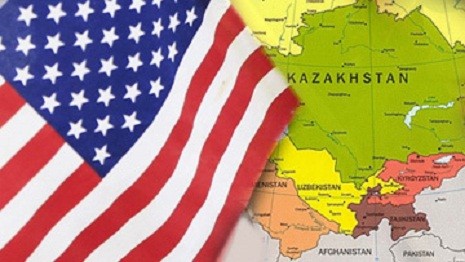
A group of 200 migrants from Central Asia and India is scheduled to be flown from the United States to Costa Rica this week as part of the Trump administration’s crackdown on immigration.   

Costa Rica’s presidency said in a statement that it was collaborating with the United States on the repatriation of migrants who were illegally in the U.S. and that the “first group” of 200 would be transferred from Juan Santamaria International Airport, near the capital of San José, to a temporary facility for migrants in the Costa Rican area of Corredores. The area is in the south of the country, near the border with Panama. 

The Costa Rican statement, which was issued on Monday, had said the U.S.-funded commercial flight was scheduled for Wednesday afternoon. However, several Costa Rican and international news reports said the flight was delayed until Thursday.

The statement did not identify the nationalities of the migrants from Central Asia, though Costa Rican President Rodrigo Chavez subsequently said they were from countries including Uzbekistan, Kyrgyzstan, Kazakhstan, Pakistan and India. The operation is being supervised by the International Organization for Migration, a Geneva-based United Nations agency that will take care of the migrants while they are in transit, according to the Costa Rican government.  

In a similar arrangement, Uzbek citizens are among a separate group of migrants from multiple countries who were recently flown from the United States to Panama prior to repatriation to their countries of origin. Panama has come under intense pressure from U.S. President Donald Trump, who has threatened to seize the Panama Canal. It is difficult for the United States to repatriate migrants to some countries, leading Washington to look for third countries as a transit point.   

The Costa Rica flight received some attention in Uzbek media. 

Costa Rica’s human rights watchdog, La Defensoría de los Habitantes, said on Wednesday that it didn’t know details of the negotiation and agreement between the United States and the Costa Rican government for the repatriation of migrants, nor whether there are children, elderly people, disabled people or families in the group arriving in the Central American country. 

The Costan Rican government must guarantee their human rights, and provide medical checkups and adequate lodging space while they are in the country, according to the watchdog. It said Costa Rica, as a signatory to the U.N. convention against torture, must also confirm that none of the migrants will be subjected to “cruel, inhuman or degrading treatment” once they return to their countries of origin.

The watchdog said it would remain vigilant, noting that it’s unclear whether the migrants will be safe from threats to their lives and freedom once forced to go back to their countries. 

Last month, as the Trump administration began to implement deportation plans, Kyrgyzstan warned its citizens in the United States to follow immigration law and always carry relevant documents with them. Chicago, a focus of some federal raids, has a growing Kyrgyz population.


First PPP Project to Build Major Railway Launched in Kyrgyzstan

On February 19, a public-private partnership (PPP) agreement was signed in Bishkek for the “Trans-Eurasian Route” railway project, marking Kyrgyzstan’s first PPP initiative in the railway sector. The agreement was signed between the National Investment Agency under the President of the Kyrgyz Republic, Kyrgyzstan’s national railway company Kyrgyz Temir Zholu, and the U.S.-based consortium All American Rail Group Global Infrastructure Partner LLC.

The project involves constructing a railway across central Kyrgyzstan, traversing mountainous terrain from east to west, and connecting Karakol in the northeastern Issyk-Kul region with Makmal in the southwestern Jalal-Abad region.

According to the National Investment Agency, the railway will be a key step in modernizing Kyrgyzstan’s transport infrastructure, enhancing regional connectivity and economic development.

National Investment Agency Director Talantbek Imanov stated that the project represents an investment of approximately $3 billion, expected to create new jobs, improve the national transport network, and generate long-term economic benefits.

Additionally, the railway will enhance Kyrgyzstan’s connectivity with neighboring countries, particularly through its link to the China-Kyrgyzstan-Uzbekistan railway, which will pass through Makmal.

The China-Kyrgyzstan-Uzbekistan (CKU) railway project, officially launched in December 2024, aims to serve as a major East-West trade route. Construction of the CKU railway is already underway.

The 523-kilometer CKU railway will connect Kashgar (China), Torugart, Makmal, Jalal-Abad (Kyrgyzstan), and Andijan (Uzbekistan). Once completed, it is expected to transport up to 15 million tons of cargo annually, facilitating trade between China, Central Asia, the Middle East — including Turkey — and the European Union.

Central Asia Receives Half of Eurasian Investments from China, Turkey, Iran, and Gulf States

The Eurasian Development Bank (EDB) has released a new study analyzing mutual direct investment (MDI) flows across the Eurasian region.

The report examines investment trends between 13 Eurasian countries – Armenia, Azerbaijan, Belarus, Georgia, Kazakhstan, Kyrgyzstan, Moldova, Mongolia, Russia, Tajikistan, Turkmenistan, Ukraine, and Uzbekistan – and external partners, including China, Turkey, Iran, and the Gulf states, from 2016 to the first half of 2024.

Key Findings on Investment Trends

According to the EDB, total MDI stock in the region reached $90.4 billion by mid-2024, reflecting a 6.4% increase from 2023.

China remains the largest investor in the Eurasian region, holding an MDI stock of $58.6 billion at the end of H1 2024, accounting for 64.8% of the total. Other major investors include:

  • Turkey – $12.3 billion (13.6%)
  • United Arab Emirates (UAE) – $12.2 billion (13.5%)
  • Iran – $3.2 billion (3.5%)
  • Saudi Arabia – $2.3 billion (2.5%)
  • Qatar – $1.6 billion (1.8%)

Among these, Iran showed the highest investment growth, doubling its investments since 2016, with 90% directed toward Azerbaijan. Turkey demonstrated broad sectoral diversification, while Saudi Arabia and Qatar emerged as new investors, making their first investments in 2021 and 2024, respectively.

Investment Distribution in Eurasia

The largest investment recipients in the Eurasian region include:

  • Russia – $23.5 billion (26%)
  • Turkmenistan – $17.5 billion (12.5%)
  • Kazakhstan – $15.5 billion (11.1%)
  • Mongolia – $10.3 billion (7.4%)
  • Uzbekistan – $8.8 billion (6.3%)

Central Asia received 51% of all investments from China, Turkey, Iran, and the Gulf states, totaling $46.2 billion, an increase of 25% since 2022.

Outbound Investment from Eurasia

The report also highlights outbound investments from the Eurasian region, which totaled $49.4 billion, doubling since 2016. Turkey received 80% of these investments, with a significant portion originating from Russia.

Sectoral Trends: Energy, Manufacturing, and Greenfield Investments

China continues to expand its investments in energy and manufacturing, although its traditional focus on extractive industries has declined. As of mid-2024, Chinese investment in mining and resource extraction stood at $36.2 billion, comprising 61.7% of its total investments in Eurasia.

Other notable sectoral trends include:

  • Energy sector – Chinese investment grew 2.1-fold in 18 months to $4.1 billion, with 85% directed toward Uzbekistan.
  • Manufacturing sector – Investment increased 8% to $11.8 billion, with most projects concentrated in Central Asia.

The Gulf states are also expanding their investments in the region:

  • The UAE invested $12.2 billion, with 90% of its projects in Central Asia.
  • Saudi Arabia increased investments from $300 million in 2021 to $2.3 billion in 2024, primarily in Uzbekistan’s power sector.
  • Qatar made its first major investment in Kazakhstan in 2024, committing $1.6 billion to the telecom sector.

Rise of Greenfield Investments

Greenfield projects – new businesses and infrastructure developments – remain the dominant form of MDI, totaling $57 billion, nearly double the 2016 level. These projects now account for 63% of total investments, driven by the economic growth of Central Asia and increasing investor interest in energy, manufacturing, and extractive industries.

Uzbekistan Strengthens Intellectual Property Protection

Uzbekistan is taking significant steps to enhance intellectual property (IP) protection with a new draft law, which was approved in its first reading by the Legislative Chamber of the Oliy Majlis on February 18.

The proposed legislation introduces amendments to multiple legal codes, strengthening penalties for copyright violations and industrial property rights infringements. Key changes include:

  • Increased fines for copyright infringement
  • Administrative penalties for violating rights to selection achievements
  • Confiscation of items used in patent-related offenses
  • Expanded judicial powers to inspect and seize counterfeit goods
  • Stricter criminal liability for intellectual property violations
  • Criminal penalties for unauthorized use of trademarks, software, and inventions
  • Mandatory destruction of counterfeit goods at the offender’s expense

The law aims to curb counterfeit production, attract foreign investment, and support Uzbekistan’s efforts to join the World Trade Organization.

Under Uzbekistan’s Copyright Law, intellectual property rights apply to works by Uzbek citizens, residents, and those first published in the country. Currently, fines for copyright violations range from UZS 375,000 (USD 28.95) to UZS 1.87 million (USD 144.36) for individuals and up to UZS 3.75 million (USD 289.48) for officials.

Additionally, the Code of Administrative Responsibility imposes various fines for violations of personal non-property rights related to intellectual property.

In neighboring Kazakhstan, copyright or related rights violations under the Criminal Code carry a minimum fine of KZT 295,360 (USD 588.17) as of 2024. More severe offenses can result in imprisonment for three to six years.

Kyrgyzstan’s Aviation Authorities Await Removal from EU Blacklist

Kyrgyzstan’s State Civil Aviation Agency has announced that auditors from the European Union Aviation Safety Agency (EASA) will visit the country on March 9 to assess the possibility of lifting the EU’s long-standing flight ban on Kyrgyz airlines.

Kyrgyz airlines have been on the EU’s aviation blacklist since 2006, with repeated but unsuccessful attempts by the country’s authorities to resolve the issue. The EU has cited multiple concerns, including shortcomings in Kyrgyzstan’s aviation legislation, inadequate inspector training, and a lack of flight crew development programs. The aging aircraft fleet has also been a key factor in maintaining the ban.

Over the past two years, Kyrgyzstan has undergone two separate aviation audits, one focused on flight safety and another on aviation security.

“Flight safety covers everything related to flight operations, while aviation security deals with protecting airports and aircraft from illegal interference,” explained Daniyar Bostonov, director of the State Civil Aviation Agency.

According to Bostonov, Kyrgyzstan has been working since 2017 to meet all EU requirements. Hundreds of industry documents have been translated into English to demonstrate transparency and regulatory compliance.

Bostonov believes the country now meets international aviation standards, and a final decision on Kyrgyzstan’s removal from the blacklist is expected in November 2025 at a meeting of the European Parliament’s Committee on Transport and Tourism (TRAN).

“The question is no longer whether we will be removed from the EU blacklist – it is a certainty. We may just need to submit some additional documents to the European Parliament,” Bostonov stated.

If the ban is lifted, Kyrgyzstan will be able to resume direct flights to the European Union and gain access to more favorable aircraft leasing agreements.

“For example, if an Airbus aircraft is sold for $1,000, that price remains the same for non-blacklisted countries. However, if it is delivered to a blacklisted state, the price can drop to $800, which discourages investors,” Bostonov explained.

Further supporting the possibility of removal from the blacklist, Manas International Airport recently became a member of ACI Europe, an organization representing over 500 airports across the continent.

ADB to Help Uzbekistan Introduce Smart Water Management

The Asian Development Bank (ADB) has approved a $125 million loan to support Uzbekistan’s government in modernizing water management, improving water security, and expanding access to safe and reliable water.

Advancing Smart Water Management

ADB’s Climate-Smart Water Management Improvement Project will assist Joint Stock Company Uzsuvtaminot, the country’s national water utility, and its regional branches in enhancing water infrastructure and efficiency. Key initiatives include:

  • Completing the nationwide installation of bulk flow metering and telemetry systems at major water sources.
  • Conducting a comprehensive asset inventory and geographic mapping of all water supply and wastewater infrastructure, covering approximately 4 million customer connections.
  • Implementing climate-smart, IT-based utility management systems, including training programs for national water utility staff.
  • Upgrading customer service centers with new financial management software, ensuring transparent financial statements aligned with international standards.

Addressing Water Security Challenges

ADB Country Director for Uzbekistan Kanokpan Lao-Araya emphasized the urgency of improving water management in the face of climate change and inefficient usage.

“Uzbekistan’s water resources are under acute threat from climate change and inefficient usage. ADB’s project introduces smart water management systems to improve water usage, reduce energy consumption, and increase operational efficiency to lower Uzbekistan’s carbon footprint,” she stated.

ADB’s Ongoing Support for Uzbekistan

Since Uzbekistan joined ADB in 1995, the bank has committed $14.3 billion in public sector loans, grants, and technical assistance to support the country’s development.


