• KGS/USD = 0.01144 0%
  • KZT/USD = 0.00213 0%
  • TJS/USD = 0.10456 0.19%
  • UZS/USD = 0.00008 0%
  • TMT/USD = 0.28490 0%
  • KGS/USD = 0.01144 0%
  • KZT/USD = 0.00213 0%
  • TJS/USD = 0.10456 0.19%
  • UZS/USD = 0.00008 0%
  • TMT/USD = 0.28490 0%
  • KGS/USD = 0.01144 0%
  • KZT/USD = 0.00213 0%
  • TJS/USD = 0.10456 0.19%
  • UZS/USD = 0.00008 0%
  • TMT/USD = 0.28490 0%
  • KGS/USD = 0.01144 0%
  • KZT/USD = 0.00213 0%
  • TJS/USD = 0.10456 0.19%
  • UZS/USD = 0.00008 0%
  • TMT/USD = 0.28490 0%
  • KGS/USD = 0.01144 0%
  • KZT/USD = 0.00213 0%
  • TJS/USD = 0.10456 0.19%
  • UZS/USD = 0.00008 0%
  • TMT/USD = 0.28490 0%
  • KGS/USD = 0.01144 0%
  • KZT/USD = 0.00213 0%
  • TJS/USD = 0.10456 0.19%
  • UZS/USD = 0.00008 0%
  • TMT/USD = 0.28490 0%
  • KGS/USD = 0.01144 0%
  • KZT/USD = 0.00213 0%
  • TJS/USD = 0.10456 0.19%
  • UZS/USD = 0.00008 0%
  • TMT/USD = 0.28490 0%
  • KGS/USD = 0.01144 0%
  • KZT/USD = 0.00213 0%
  • TJS/USD = 0.10456 0.19%
  • UZS/USD = 0.00008 0%
  • TMT/USD = 0.28490 0%

Turkmenistan Among Nations Targeted in New U.S. Travel Restrictions and Bans

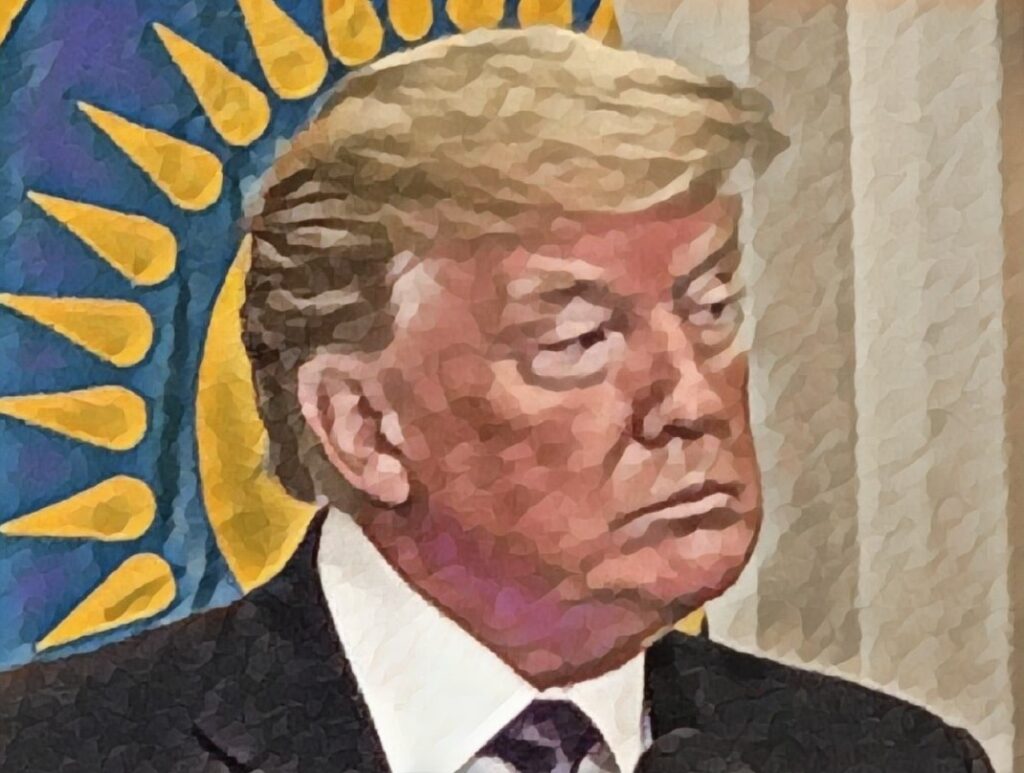
Citizens from Turkmenistan face restrictions on travel to the United States under an order signed by President Donald Trump that bans or curbs the entry of nationals from 19 countries.

Trump said in a statement released by the White House on Wednesday that the order, which takes effect on June 9, aims to protect national security and prevent people from overstaying their visas in the United States. The measure resembles an effort in Trump’s first term as president to tighten control of the influx of foreign nationals, prompting court challenges and criticism that such sweeping policies are discriminatory.

“Many of these countries have also taken advantage of the United States in their exploitation of our visa system and their historic failure to accept back their removable nationals,” said Trump, who has cracked down on immigration since his second term began in January.

A full travel ban, subject to case-by-case waivers and other exceptions, will go into effect for nationals from Afghanistan, Myanmar, Chad, the Republic of Congo, Equatorial Guinea, Eritrea, Haiti, Iran, Libya, Somalia, Sudan and Yemen.

Turkmenistan is among seven countries whose citizens face partial restrictions, such as not being able to move permanently to the U.S. or get tourist and student visas. The other countries are Burundi, Cuba, Laos, Sierra Leone, Togo, and Venezuela.

“According to the Overstay Report, Turkmenistan had a B-1/B-2 visa overstay rate of 15.35 percent and an F, M, and J visa overstay rate of 21.74 percent,” the Trump administration’s order said. “The entry into the United States of nationals of Turkmenistan as immigrants, and as nonimmigrants on B-1, B-2, B-1/B-2, F, M, and J visas is hereby suspended.”

B-1 (business) and B-2 (tourism) refer to non-immigrant visas for people who want to stay temporarily in the U.S. F, M, and J visas are for non-immigrant visas used by students and other visitors enrolled in exchange programs.

Turkmenistan tightly controls its population and it is difficult to get independent information about the country. Despite Turkmenistan’s vast energy resources, some of its nationals attempt to seek opportunities abroad.

Interview: Taliban-Ruled Afghanistan Looks to Kazakhstan

ASTANA – War-torn Afghanistan, now led by the Taliban, is in desperate need of funding. The radical group is seizing every opportunity to secure not only financial support but also major infrastructure projects that could help rebuild the country.

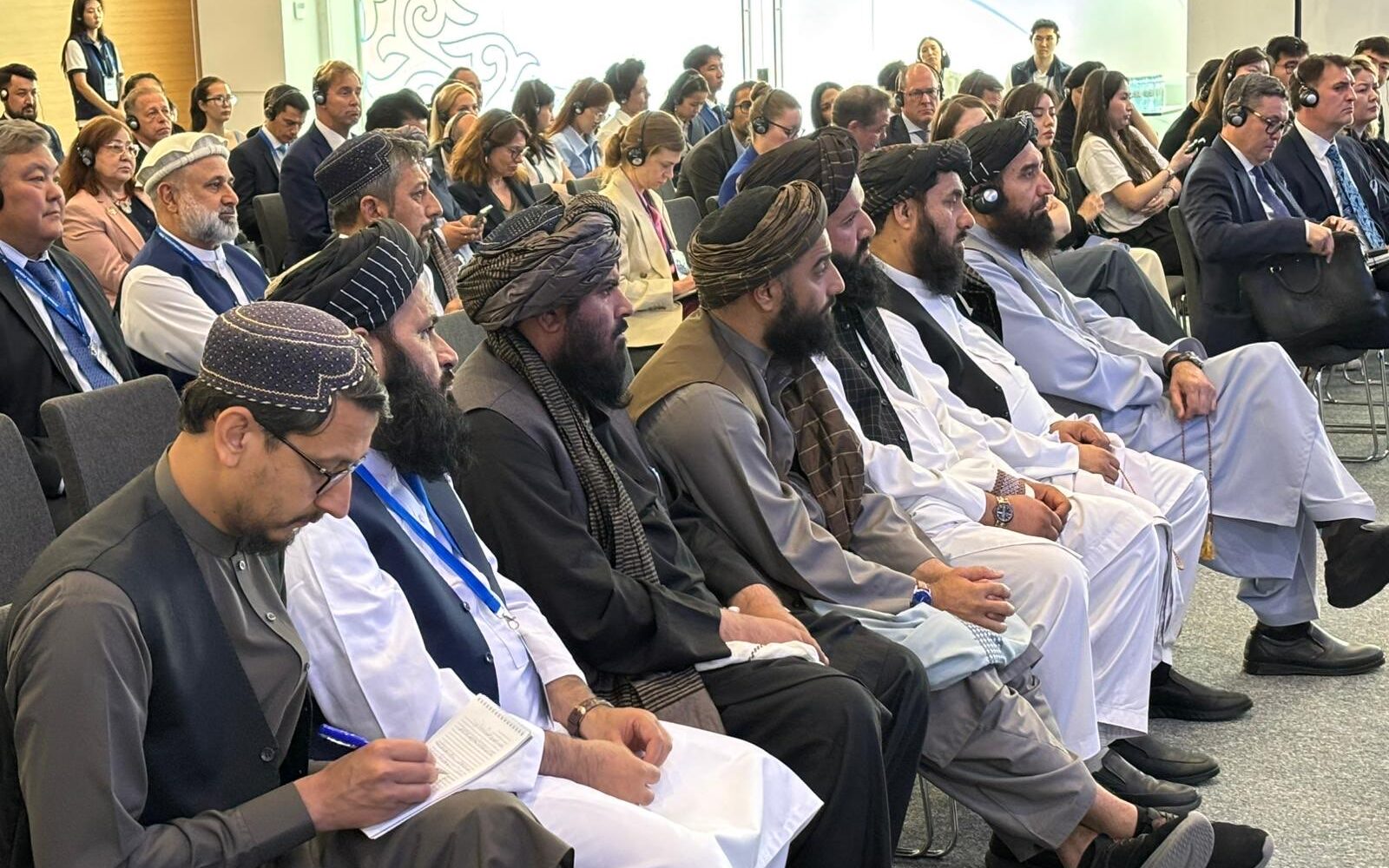
In late May, a delegation of Taliban representatives, led by Haji Nooruddin Azizi, the Minister of Trade and Industry, visited Kazakhstan to attend the Astana International Forum (AIF). During the summit, they spoke with The Times of Central Asia, discussing their ambitions and plans.

It was their first participation in the prominent forum, made possible by Kazakhstan’s 2024 decision to remove the Taliban from its list of terrorist organizations. Since then, Kazakhstani political and business leaders have traveled to Kabul on several occasions aiming to establish closer relations with the Islamic Emirate.

Image: TCA, Nikola Mikovic

Most recently, during a meeting with Azizi, Kazakhstan’s President Kassym-Jomart Tokayev emphasized the need to strengthen political ties with Afghanistan. The economy, however, seems to play an equally important role in this relationship, with Astana aiming to increase its bilateral trade volume with Afghanistan to $3 billion in the coming years.

Kazakhstan is also eyeing investing $500 million in the construction of the 115-kilometer (71 miles) Turgundi–Herat railway line, a section of the rail corridor linking Turgundi in the north of Afghanistan and Spin Boldak on the country’s border with Pakistan. The route effectively connects Central and South Asia via Afghanistan.

Neighboring Turkmenistan is also interested in participating in this project, as the railway aims to connect Central Asia to Pakistan’s Karachi and Gwadar ports, providing Turkmenistan and its neighbors access to vast South Asian markets. The Turgundi–Herat–Kandahar–Spin Boldak railway line is considered a key segment of the broader Trans-Afghan Railway project, which even Russia has expressed an interest in joining.

“It is still too early to discuss who will build the railway, although it is clear that Afghan companies are unlikely to be able to undertake the project,” Mirwais Ghafouri, Senior Advisor of the Afghanistan Railway Authority, told The Times of Central Asia in an interview.

In his view, given that Afghanistan is a mountainous country, the entire project will cost at least $2–3 billion. The problem for Kabul is that – due to various sanctions and the fact that most countries still do not officially recognize the Taliban-led government – it cannot count on significant support from international financial institutions such as the World Bank and the Asian Development Bank.

“But we expect Kazakhstan to invest in this project, as well as in our economy in general. The shortest route connecting Central Asia and South Asia is through Afghanistan. Once the railway is complete, Kazakhstan and other Central Asian nations will be able to use it to export their agricultural products to huge markets such as India, Pakistan, and Bangladesh”, Ghafouri stressed, pointing out that Kabul and Astana are currently working on a project feasibility study.

The Taliban appear to be aiming to revive nearly all previously announced projects of regional and interregional importance. In doing so, they hope to attract foreign investment.

“We plan to develop extensive energy and infrastructure projects by 2030,” Haji Nooruddin Azizi said during a session of the Astana International Forum, emphasizing that Afghanistan can prosper “only if it receives economic assistance.”

Many countries remain skeptical about investing in the “Graveyard of Empires,” however. What worries them are the Taliban’s radical policies regarding women’s rights, as well as various controversial bans they have imposed since coming to power in 2021. For Azizi, however, such issues are not priorities at the moment.

“We call on the international community to try to see the situation in Afghanistan from our perspective, not through the prism of Western propaganda. We have 15 million young people who need jobs, and many people in Afghanistan are hungry. We will address the issue of women’s rights. Women can also be an important part of economic development,” the Taliban-appointed Minister of Trade and Industry stressed.

Meanwhile, Kabul will likely focus on developing ties with nations that do not insist on human rights issues but have adopted a more pragmatic stance toward Afghanistan. Kazakhstan is undoubtedly one of them.

“Over the past few years, we have managed to establish good relations with Kazakhstan, the region’s largest economy, and now we hope to strengthen economic ties between our two countries,” Muhammad Rehman Rahmani, the Taliban-appointed Chargé d’Affaires of the Islamic Emirate of Afghanistan to Kazakhstan, told The Times of Central Asia.

Muhammad Rehman Rahmani, Chargé d’Affaires of Afghanistan to Kazakhstan; image: TCA, Nikola Mikovic

Similarly, Azizi views Kazakhstan as Afghanistan’s “role model,” claiming that Astana has opened all doors to the Afghan private sector. Moreover, following the earthquakes that struck Afghanistan in early October 2023, Kazakhstan delivered over 1,600 tons of humanitarian aid to Afghanistan’s Herat province, effectively winning the hearts and minds of the local population.

Thus, the Central Asian nation has the capacity to position itself well in Afghanistan, hoping to achieve some of its geoeconomic goals by strengthening influence, expanding trade routes, and potentially securing a long-term strategic partnership with Taliban-ruled Afghanistan.

Opinion: How the Emerging Trump Doctrine Played at Astana International Forum

With His Riyadh Allocution, Trump Ripped Up the Foreign Policy Playbook

The May 29–30 Astana International Forum (AIF) in Kazakhstan drew thousands of attendees — heads of state, senior diplomats, and entrepreneurs — eager for insights into Central Asia’s rising global significance. Topics ranged from foreign policy and water management to energy, trade, and economic integration.

A key message from the organizers was that Middle Powers — Kazakhstan, Indonesia, Türkiye, South Africa, Argentina, and others — should serve as bridges to peace and solidarity amid growing global polarization and Great Power conflict. Unsurprisingly, lots of folk were trying to horn in on business opportunities – mainly agriculture, mining, and metals, of which there is an abundance in the region.

Yet the real buzz in the hallways and cafés wasn’t about panel discussions, raw materials, or the next sound bite for the press. What had international policy mavens all atwitter was President Trump’s unexpected speech in Saudi Arabia which might well prove to be the Trump Doctrine: global crises, he said, are better resolved through diplomacy and mutually beneficial business partnerships, not bayonets, diktat, and moral sermonizing. That message, coming from the President of the United States, landed with force.

During the three days I spent in Astana, I noticed that many delegates who normally spoke in well-rehearsed sound bites designed not to offend, suddenly spoke more bluntly, even going off-script. They dropped the cautious language and the standard foreign policy group-speak. What was going on?  Was this the Trump effect?

My guess is that Trump’s Riyadh allocution was intended to rip up the decades-old foreign policy playbook of Brussels, London, and prior U.S. administrations. Instead of promoting the globalist/woke agenda, which had been de rigueur at international diplomatic clambakes of the Astana sort, Trump called for détente and reciprocity – more the realism of Nixon and Kissinger (leavened with a pinch of Ronald Reagan) than the idealism of Wilson and FDR. He wanted to deliver on his promise to the American people to make America great again (including boosting domestic manufacturing) rather than squander precious resources beating down any country that looks at us cross-eyed.

Trump’s Riyadh speech — like his inaugural address — called for a peaceable foreign policy.  That message reverberated in Astana: “Before our eyes, a new generation of leaders is transcending the ancient conflicts and tired divisions of the past and forging a future where the Middle East is defined by commerce, not chaos; where it exports technology, not terrorism; and where people of different nations, religions, and creeds are building cities together — not bombing each other out of existence.”

Perhaps most cutting was Trump’s indictment of interventionist dogma: “This great transformation has not come from Western interventionists giving you lectures… The gleaming marvels of Riyadh and Abu Dhabi were not built by ‘nation-builders,’ ‘neo-cons,’ or ‘liberal non-profits’… Instead, the birth of a modern Middle East has been brought about by the people of the region themselves – pursuing their own visions and charting their own destinies.” That’s not just decentralization – Trump at Riyadh rejected ideological globalism.

Trump didn’t stop there. “In the end, the so-called ‘nation-builders’ wrecked far more nations than they built — intervening in complex societies they didn’t understand.” I quoted that to more than two dozen delegates, who simply replied, though not always in so many words: “Finally, someone gets it.”

The core of Trump’s message resonated with many AIF attendees: national interests, sovereignty, and prosperity are best advanced through pragmatic diplomacy, not paternalistic ideology or self-serving initiatives disguised as altruism. Who can argue with that?

“It was as though Trump flipped a switch,” said a senior Indian businessman. “For years, we’ve all spoken in cautious, semi-choreographed language. But after Riyadh, the tone at AIF markedly changed. Trump gave people cover to speak plainly — for once.”

What’s more, delegates cited Trump’s speech as a masterclass in development economics, in which national identity, customs, and cooperation form the foundation of sustainable growth.

In Riyadh, Trump highlighted the futility of imposing outside blueprints on diverse nations: “Peace, prosperity, and progress ultimately came [to Saudi Arabia] not from a radical rejection of your heritage, but from embracing it… You achieved a modern miracle the Arabian way.” If there’s an Arabian way, surely there’s a Kazakh, Azeri, Turkmen, Indian, Kenyan, Chilean, and American way too. No one in Astana doubted it. Even the globalists were left tongue-tied.

Kazakh President Tokayev’s keynote reinforced the shift in emphasis: “Instead of making wars we must embrace our peoples, first of all, the younger generation, to become more engaged in making progress and creating enlightened societies.” In other words, let us strive for peace.

Vice President Vance also echoed Trump in his graduation address at the U.S. Naval Academy (May 2025): “Now I want to be clear; the Trump administration has reversed course. No more undefined missions, no more open-ended conflicts. We’re returning to a strategy grounded in realism and protecting our core national interests.” Secretary of State Marco Rubio expressed much the same thought though in different terms: “A mature foreign policy requires a balancing of interests — that’s a fact.”

Central Asian leaders welcome the new tone emanating from Washington.

A seasoned hand in geopolitics, Tokayev lamented the spread of senseless conflicts: “Conflicts and wars continue to spread across continents and communities. As of last year, 52 states were experiencing armed conflict. Meanwhile, the economic impact of violence reached $19 trillion – nearly 13.5% of global GDP.”  We must do better. Others echoed these sentiments.

No one in Central Asia — or anywhere else in the Global South — welcomes Great Power meddling in their affairs, especially if done under the guise of European values or democracy building.

Half the battle is simply making it acceptable to say things out loud that until recently were all but unspeakable. Trump’s commonsense realism and focus on American strategic interests seem to have broken the spell of messianic globalism. Kazakhstan and Central Asia have an unprecedented opportunity to assert their interests, and, judging by what transpired at the Astana International Forum, are ready to act accordingly.


The views expressed in this article are those of the author and do not necessarily reflect the official policy or position of the publication, its affiliates, or any other organizations mentioned.

Where East Meets West: Seventh Eurasian Film Festival Celebrates Cinema in London

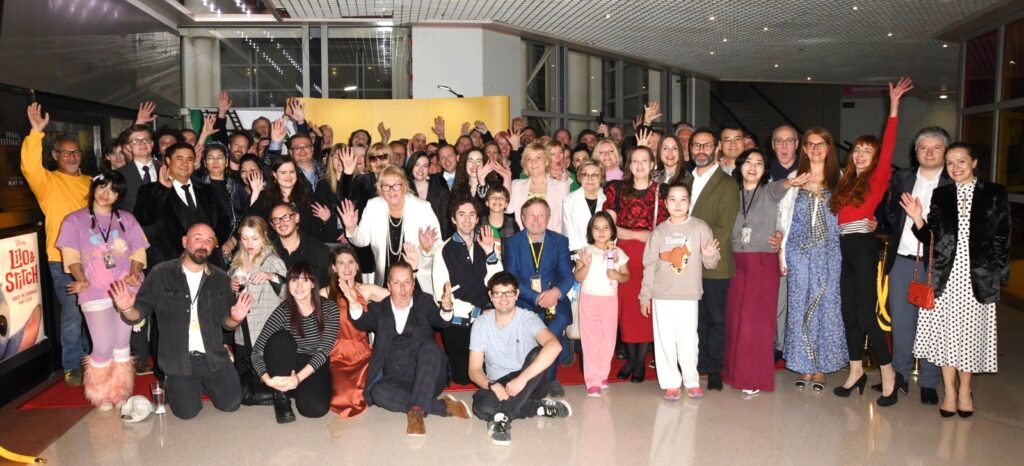
From May 22 to 27, the seventh Eurasian Film Festival brought a celebration of Eurasian cinema to London. Organized by Silk Road Media and the Eurasian Creative Guild (ECG), the event, held in partnership with the Romford Film Festival, showcased a range of artistic talents while fostering cultural and industry connections.

This year’s festival featured submissions from 23 countries, providing a diverse line-up of feature films, shorts, documentaries, animation, music videos, screenplays, and more. The event provided a platform for filmmakers to share stories rooted in Eurasia’s cultural heritage.

Prize-Winning Films

This year’s awards spanned a range of categories, honoring creativity and technical excellence. Highlights included Sirin’s Song by Elena Turova (Belarus) for Best Animation and The Master of the Altai Mountains by Vadim Vitovtsev and Ilya Tsyganov (Russia) as for Best Documentary. The Audience Award in this category went to Baltic Radiation by Aldona Grupas (UK). In the feature film category, Where The White Cranes Dance (Russia) and Aydillar (Uzbekistan) shared the top honor, with Magtymguly Pyragy (Turkmenistan/Uzbekistan) taking the Audience Award.

Kazakhstan made a strong showing in the Short Films category, with Poncha by Kaisha Rakhimova taking first place and Call by Asem Kuanishbayeva winning the Audience Award. Several screenplays and productions also received special jury mentions, including Daddy Arrived by Almaz Kossobaev (Kyrgyzstan), emphasizing the festival’s role in highlighting emerging talent.

Literature Meets Film

A notable theme this year was the dialogue between literature and cinema. Presentations included The Legends of the Great Silk Road: Adventures of the Spirit of Time a children’s book series by Gulchekhra-begim Makhmudova, exploring its adaptation into film. Ukrainian poet Serhii Bely also unveiled a project based on his novel The Maestro and the Muse.

Special Recognitions and Events

The festival also celebrated cultural contributions, with the Poezija Londyn Foundation presenting honorary medals to individuals such as Zhazira Zhanabayeva (Kazakhstan), whose art exhibition ran concurrently with the festival. A crowdfunding event led by actress Francesca Mepham generated significant interest in new projects, showcasing the event’s collaborative spirit.

Submissions are now open for the 2026 season, as the festival continues to spotlight Eurasian cinema on the global stage.

Bublik Loses at Roland Garros After Run to Quarterfinals

Alexander Bublik’s impressive run at the French Open is over.

The Russia-born tennis player from Kazakhstan was routed by top-ranked Jannick Sinner of Italy in the quarterfinals at Roland Garros on Wednesday.

Sinner easily defeated Bublik 6-1, 7-5, 6-0, ending the match with a serve down the middle and then a crosscourt forehand winner. Still, Bublik smiled as he walked up to the net to shake hands and exchanged a few warm words with Sinner.

Bublik’s run to the quarterfinals was his best performance in a major tournament despite his past declarations that he detested playing on clay.

European Zoos Aid Kazakhstan’s Przewalski’s Horse Reintroduction

On June 3, a new group of Przewalski’s horses arrived in Kazakhstan as part of the international “Return of the Wild Horses” project. This marks the second such transfer, with the animals delivered from Prague Zoo and Hungary’s Hortobágy National Park.

Supervised Adaptation in Altyn Dala

Four horses were flown in by two military transport aircraft, landing early in the morning at Arkalyk Airport. They were then transported for five hours to the Altyn Dala State Reserve, where they will remain for a year under expert supervision before their release into the wild.

Located in the Kostanay region, the Altyn Dala reserve provides the necessary infrastructure and qualified personnel to ensure successful acclimatization. According to Daniyar Turgambaev, chairman of the Forestry and Wildlife Committee, the second group has been safely delivered, while the first group is already ready for life in the open steppe.

“For us, as the leading body for biodiversity conservation in Kazakhstan, it is a great honor to lead such an important stage in the restoration of our nature,” he said.

Unexpected Incident in Prague

One stallion, named Whisky, caused a stir in Prague prior to departure. He kicked open the door of a moving trailer and ended up loose on a highway near Černý Most, disrupting traffic on the Prague Ring Road and the city’s South Highway. Fortunately, no injuries were reported.

According to Miroslav Bobek, director of the Prague Zoo, Whisky was sedated and returned to the zoo. The remaining horses were successfully loaded and sent to Kazakhstan.

Reviving a Wild Species

Przewalski’s horse is the last surviving species of true wild horse, once extinct in the wild by the mid-20th century. Its survival has depended entirely on captive breeding programs. Kazakhstan began its reintroduction efforts in 2024 with support from several international partners: the Prague Zoo, Association for the Conservation of Biodiversity of Kazakhstan (ACBK), the Frankfurt Zoological Society, and the Nuremberg and Berlin Zoos, as well as the Hortobágy National Park.

The initial group of seven horses arrived in June 2024. They endured harsh conditions in the Turgai steppe, including temperatures dropping to -30 °C. Two mares, Umbra and Vesper, were fitted with GPS collars to monitor their movements after release.

Ecological Significance

The Altyn Dala reserve, established in 2012, spans nearly 490,000 hectares. It also hosts a parallel program for the reintroduction of kulans (Asiatic wild asses). By 2029, authorities aim to reintroduce 40-45 Przewalski’s horses, enough to establish a self-sustaining population. As Bobek notes, the project will continue until “a viable and genetically diverse population is formed.”

Przewalski’s horses play a crucial role in steppe ecosystems by controlling vegetation, reducing the risk of wildfires, and facilitating winter survival for other species through snow clearance and trail formation.

The species is listed in the Red Book of Kazakhstan and in Appendix II of the CITES Convention. A memorandum signed on February 28, 2023, provides for the transport of at least 40 wild horses to Kazakhstan over the next four to five years. The Altyn Dala Center, operated by ACBK, is now a central hub for restoring endangered species to their natural habitats.