• KGS/USD = 0.01144 0%
  • KZT/USD = 0.00196 -0%
  • TJS/USD = 0.10899 -0%
  • UZS/USD = 0.00008 -0%
  • TMT/USD = 0.28490 0%
  • KGS/USD = 0.01144 0%
  • KZT/USD = 0.00196 -0%
  • TJS/USD = 0.10899 -0%
  • UZS/USD = 0.00008 -0%
  • TMT/USD = 0.28490 0%
  • KGS/USD = 0.01144 0%
  • KZT/USD = 0.00196 -0%
  • TJS/USD = 0.10899 -0%
  • UZS/USD = 0.00008 -0%
  • TMT/USD = 0.28490 0%
  • KGS/USD = 0.01144 0%
  • KZT/USD = 0.00196 -0%
  • TJS/USD = 0.10899 -0%
  • UZS/USD = 0.00008 -0%
  • TMT/USD = 0.28490 0%
  • KGS/USD = 0.01144 0%
  • KZT/USD = 0.00196 -0%
  • TJS/USD = 0.10899 -0%
  • UZS/USD = 0.00008 -0%
  • TMT/USD = 0.28490 0%
  • KGS/USD = 0.01144 0%
  • KZT/USD = 0.00196 -0%
  • TJS/USD = 0.10899 -0%
  • UZS/USD = 0.00008 -0%
  • TMT/USD = 0.28490 0%
  • KGS/USD = 0.01144 0%
  • KZT/USD = 0.00196 -0%
  • TJS/USD = 0.10899 -0%
  • UZS/USD = 0.00008 -0%
  • TMT/USD = 0.28490 0%
  • KGS/USD = 0.01144 0%
  • KZT/USD = 0.00196 -0%
  • TJS/USD = 0.10899 -0%
  • UZS/USD = 0.00008 -0%
  • TMT/USD = 0.28490 0%
08 December 2025

Kazakhstan Introduces New Reserve Military Service

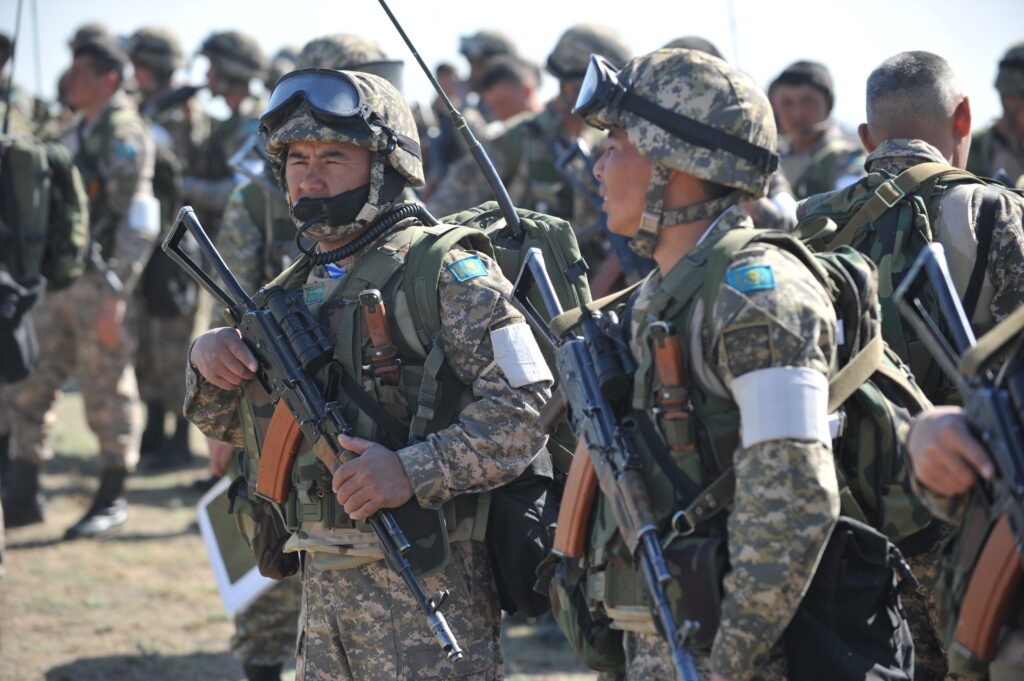
Kazakhstan’s parliament has approved a bill introducing a new type of military service in the form of reserve duty, aimed at enhancing the country’s defense capabilities. This initiative is expected to bolster the military’s readiness by training specialists in key areas, expediting mobilization processes, and increasing overall combat efficiency.

The new legislation introduces a status for “military reservists,” who will be equated with active servicemen during training camps and exercises. The recruitment of reserve forces is set to begin in 2025, marking the start of a program modeled on successful practices implemented in other Commonwealth of Independent States (CIS) countries and beyond. The move aligns with Kazakhstan’s defensive strategy to maintain an army capable of safeguarding the nation’s sovereignty and territorial integrity.

Reserve Force Details

In the initial phase, the Ministry of Defense plans to enlist approximately 2,000 reservists from across the country, with future adjustments based on military needs. The service will be voluntary, requiring recruits to meet medical and age criteria: officers may serve up to the age of 60, while sergeants and soldiers can serve up to 50.

Reservists will undergo training at military units in their local areas. The training program will be funded by the state budget. During 30-day training camps, participants will receive payments equivalent to their average monthly salary, while routine training sessions will guarantee them at least the minimum wage.

Comprehensive Legal Reforms

To accommodate the introduction of reserve service, the new bill includes about 100 amendments across six legal codes and 14 laws. A new chapter on reserve service will be added to the law “On Military Service and Status of Servicemen” to regulate the selection process, rights, duties, and specific conditions of reservists’ service.

Under the new framework, reservists will be classified as servicemen and will be subject to military criminal law, similar to active-duty personnel. Amendments to the Criminal Code and the Code of Criminal Procedure will incorporate the unified term “serviceman” for both active and reserve military personnel.

Social Support for Reservists

The law also outlines measures for the social support of reservists, including provisions for payments, insurance contributions, and pensions. These benefits are designed to incentivize participation in the reserve service while ensuring financial security for those who enlist.

A Voluntary System for National Defense

The new reserve service will be exclusively voluntary, open to adult citizens of Kazakhstan who meet the necessary requirements. By offering training opportunities close to home and guaranteeing compensation for participants, the program seeks to attract skilled and motivated individuals to contribute to national defense.

Strengthening Defense Readiness

Kazakhstan’s decision to introduce reserve military service reflects a strategic commitment to bolstering its armed forces while remaining consistent with its defensive posture. By creating a robust pool of trained reservists, the nation is taking a proactive step toward ensuring its sovereignty and readiness in the face of potential challenges.

The program’s success will depend on careful implementation and sustained support, but it represents a significant milestone in Kazakhstan’s approach to modernizing its military.

Central Asia’s Economic Growth to Reach 5% in 2025

The World Bank’s Global Economic Prospects report offers projections for economic growth, risks, and challenges across Europe and Central Asia (ECA), highlighting mixed outcomes for the region as a whole.

Regional Outlook

Economic growth across ECA is projected to slow to 2.5% in 2025, with a modest recovery to 2.7% expected in 2026. This deceleration is largely attributed to weaker economic activity in Russia and Turkey, two key regional economies. Excluding these two countries and Ukraine, growth in the rest of the region is forecasted to average 3.3% in 2025-2026. The recovery in these areas will primarily be driven by private consumption and investment, as inflationary pressures ease and monetary policies gradually become less restrictive.

Despite these projections, significant risks remain. Global policy uncertainty and potential changes in trade policies could negatively affect trade flows, capital investments, and economic growth. Geopolitical tensions – particularly stemming from Russia’s invasion of Ukraine – and persistent inflation in the region could also pose serious challenges to stability.

Central Asia: A Bright Spot

Central Asia is expected to outperform the broader ECA region, with growth projected to accelerate to 5% in 2025 before softening to 4.2% in 2026. This growth will be driven by increased oil production in Kazakhstan, which will serve as a critical engine of recovery for the region.

Remittances will also continue to play a key role, particularly for Kyrgyzstan and Tajikistan. These inflows provide vital support to household consumption and help improve current account balances. However, international sanctions on Russia and financial restrictions on cross-border transfers could push some remittance flows into informal channels, potentially limiting their economic impact.

Long-Term Challenges

While short-term recovery appears promising, the ECA region’s long-term growth potential remains subdued. Between 2022 and 2030, annual growth is projected to average just 3.0%, down from 3.6% in the previous decade. Several factors contribute to this slowdown, including labor shortages caused by low workforce participation rates, aging populations, and significant emigration, particularly from the Western Balkans.

Education remains a critical area for improvement. Although ECA boasts relatively strong educational systems, issues such as declining quality in higher education and ongoing brain drain have hindered human capital development. Addressing these issues and improving education systems could help the region move closer to high-income economies in the long term.

Conclusion

While Central Asia’s projected growth for 2025 presents an optimistic outlook, the region – and ECA as a whole – faces significant headwinds. Structural challenges, geopolitical instability, and demographic pressures will require governments to adopt forward-looking policies to sustain growth and promote resilience. As inflation cools and monetary policies ease, targeted investments in education and workforce development could unlock new opportunities for long-term economic stability.

Uzbekistan Encourages Civil Servants in Tashkent to Wear National Dress

Shavkat Umurzakov, the khokim of Tashkent, has signed a decree launching the National Tashkent project, an initiative aimed at promoting Uzbekistan’s cultural heritage and national traditions within the capital.

The project includes a wide range of activities, from redesigning public spaces to reflect traditional Uzbek aesthetics to encouraging civil servants to adopt national attire. Public transportation, markets, parks, and other spaces across Tashkent will be adorned in a national style as part of this effort.

Traditional Clothing for Civil Servants

As part of the initiative, government employees in Tashkent are encouraged to wear traditional Uzbek clothing during work hours, provided it does not conflict with existing uniform requirements. To further promote this practice, Fridays have been designated as “National Dress Day” for civil servants. Employees of khokimiyats, departments, and other government agencies are being urged to embrace traditional attire on these days.

A special working group, led by Shakhnoza Sultanova, deputy khokim and head of the Department for Family and Women’s Affairs, has been tasked with overseeing the project. This group has developed an action plan that includes educational programs, public events, and support for local entrepreneurs who specialize in the production of ethnic clothing.

Celebrating Uzbek Culture

The National Tashkent project emphasizes integrating Uzbek cultural elements into mass events such as holidays, exhibitions, concerts, and sports competitions. Participants at these events will don traditional costumes, while the programs will feature folk games, dances, and songs. Contests and awards will further highlight the richness of Uzbek traditions.

Additionally, the initiative envisions creating television programs, publishing articles in both traditional and social media, and launching public challenges such as “National Dress for Everyone.” A contest titled “The Best Promoter of National Traditions” will recognize individuals or organizations that effectively advocate for Uzbek culture. Educational institutions will also participate by hosting lectures on the history of national crafts and clothing.

Cultural Zones for Tourists

The project includes measures to enhance the cultural experience for tourists visiting Tashkent. Special zones will be created, featuring craft workshops, photo opportunities with national costumes, and curated cultural routes. Hotels and restaurants will host exhibitions and competitions to showcase traditional values, further engaging both residents and visitors.

Public transportation will also reflect the project’s goals, with buses and transport cards decorated with national patterns. Similarly, the facades and interiors of shopping centers, markets, and museums will incorporate traditional Uzbek designs. Schools will see the introduction of “National Classrooms” decorated in the spirit of Uzbek culture.

Strengthening National Identity

The National Tashkent project is a comprehensive effort to preserve Uzbekistan’s cultural heritage, strengthen national identity, and pass down traditions to younger generations. By raising awareness of ethnic customs and promoting national pride, the initiative seeks to enrich the cultural fabric of the capital while fostering a deeper appreciation for Uzbekistan’s historical and artistic legacy.

Bishkek Authorities Plan to Relocate Railroad and Build Expressway

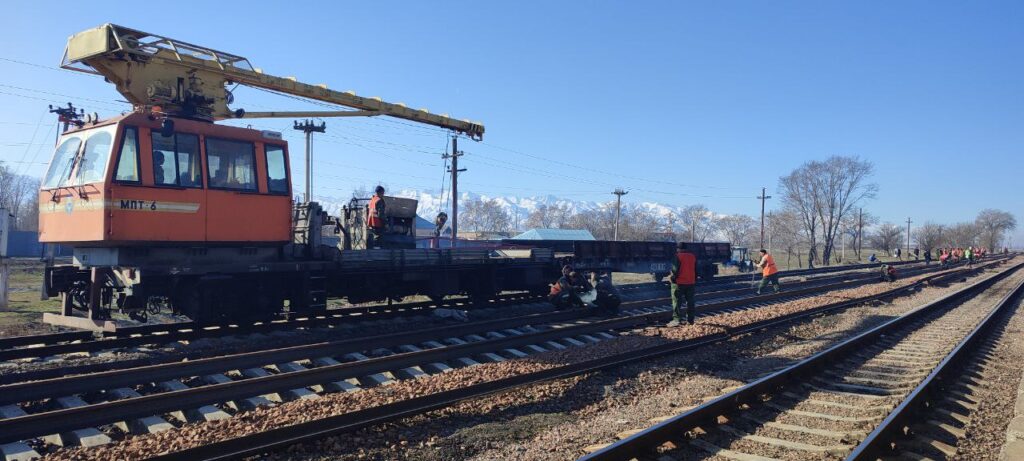
Bishkek City Hall has unveiled plans to relocate the railroad from the city center to the outskirts, replacing it with an expressway and residential developments with integrated shopping centers. While the initiative aims to modernize the capital’s infrastructure, it has drawn criticism from experts in transportation and urban planning.

Plans for Relocation

Bishkek Mayor Aibek Junushaliev outlined the project during a parliamentary session, revealing that the new railroad route would be constructed near the northern bypass road. The Chinese company China Road and Bridge Corporation (CRBC) has expressed readiness to finance the project, which is estimated to cost $550 million. In exchange, CRBC is seeking ownership of the land vacated by the current railroad. Alternatively, the city is also exploring the possibility of self-financing the project.

“We’ve conducted the necessary studies. Relocating the railroad to the south of Bishkek would harm the environment, so we decided to move it to the north, outside the city,” Junushaliev explained. He added that the project would include the creation of a new transportation hub with a railroad and a modern railway station.

CRBC recently presented several potential routes for the relocated railroad during a working meeting with city officials.

Criticism from Experts

Despite the ambitious nature of the proposal, the plan has been met with skepticism from some in Kyrgyzstan. Specialists in transport infrastructure argue that Bishkek’s traffic congestion issues would be better addressed by improving traffic regulation and constructing multi-level interchanges, rather than embarking on an expensive relocation project.

Talant Sadakbayev, head of the Independent Engineering Association, emphasized the need for detailed planning and feasibility studies before proceeding.

“Relocating the railroad will involve more than just moving the tracks—it will require rebuilding the entire railroad infrastructure, including stations, sidings, signal systems, and freight loading and unloading facilities. This is a complex and costly endeavor,” Sadakbayev told The Times of Central Asia.

He added that Kyrgyzstan already has affordable access to reinforced concrete due to production quarries near Bishkek, suggesting that constructing an expressway over the existing railroad could be a more cost-effective solution.

Challenges and Alternative Solutions

Sadakbayev questioned whether the proposed expressway would deliver the anticipated benefits, stressing the importance of data-driven planning.

“Authorities need to analyze cellular data to determine where people live and work, as well as how cargo and passenger traffic is organized. In some areas, solutions might involve widening streets, improving traffic signals, or simply changing road markings,” he said.

Sadakbayev also noted that Bishkek’s road network problems are not being addressed comprehensively, leading to persistent traffic congestion. He criticized the lack of specialized expertise within city authorities, pointing to this as a barrier to effective urban planning.

Future Developments

In addition to the railroad relocation project, the mayor’s office is planning to build new traffic interchanges to alleviate congestion. CRBC is also expected to participate in these developments. According to Mayor Junushaliev, construction on three overpasses in different parts of Bishkek will commence in the near future.

While the relocation of the railroad and the construction of an expressway represent bold initiatives, experts warn that without thorough planning and careful consideration of alternative solutions, the project may fail to achieve its goals of easing traffic and improving urban infrastructure. For now, the debate continues as city authorities and experts work to address Bishkek’s pressing transportation challenges.

Kazakhstan Ends Era of Cheap Fuel: Price Controls Set for Abolition

On January 17, the Ministry of Energy of the Republic of Kazakhstan published a number of draft orders on the Open NLA (normative legal acts) portal, which were to be discussed within five days. In total, the Ministry proposed the abolition of eleven orders regulating wholesale and retail prices for petroleum products, which have been under price control since 2014. In addition, it intends to change the calculation formulas and price ceilings for wholesale and retail sales of liquefied and natural gas.

I have been writing about the need for price liberalization since 2018, as seen in articles such as “#Kazneft, part 2: The Bermuda Gasoline Triangle – Why Prices Will Rise” and “#Kazneft, part 4: We Rank Seventh in the World for the Cheapest Gasoline. Is It Sold at a Loss?”

This is a landmark event for the Government of Kazakhstan, which has long maintained not only the lowest fuel prices in the region but some of the lowest globally. The country consistently ranks among the top ten nations with the cheapest energy resources, including fuel, natural gas, coal, and electricity.


Cheap and Even Cheaper

According to Global Petrol Prices, as of January 20, 2025, fuel prices per liter in dollar terms across the EAEU, CIS, and neighboring countries are as follows:

(Table 1)

Country

RON-95

Diesel

Turkmenistan

0,43

0,29

Kazakhstan

0,47

0,55

Russia

0,61

0,71

Azerbaijan

0,65

0,59

Belorussia

0,75

0,75

Kyrgyzstan

0,81

0,81

Afghanistan

0,83

0,83

Uzbekistan

0,99

0,95

Georgia

1,09

1,06

China

1,15

1,02

Ukraine

1,39

1,37

Mongolia

1,49

1,19

Kazakhstan ranks seventh globally for the affordability of RON-95 gasoline, trailing behind Angola, Egypt, Algeria, Kuwait, Turkmenistan, and Malaysia. At the same time, there are “throwaway” prices in Iran, Libya, and Venezuela, but these price indicators do not reflect the actual availability of fuel in these countries. Turkmenistan also shows relatively low fuel prices, primarily due to the use of alternative fuels, such as methane, in transportation.

Kazakhstan has historically had nearly double the price gap compared to its neighboring countries, which has facilitated the shadow export of fuel despite an official ban on exporting petroleum products.


A Leaky Bucket

I have described Kazakhstan’s domestic fuel market as a “leaky bucket”— no matter how much fuel is produced, it is constantly in short supply. In 2024, the country processed about 18 million tons of oil, with its three major refineries — Atyrau: 99% owned by the national company KazMunayGas (KMG), Shymkent: 51% owned by China National Petroleum Corporation (CNPC), and 49% by KMG, and Pavlodar: 100% KMG — accounting for approximately 17 million tons. Mini-refineries produced an additional one million tons. The production of petroleum products (excluding fuel oil) amounted to around 14.5 million tons.


The balance of petroleum products for 2025 is as follows, million tons:

(Table 2)

Product

Production in the Republic of Kazakhstan

Import from Russia

Import to production, %

RON-92, RON-95, RON-98

5,0

0,29

6 %

Diesel fuel

5,1

0,45

9 %

Jet fuel

0,75

0,3

40 %

Bitumen/tar

1,1

0,50

45 %

For 2025, the Indicative Supply Plan between the Russian Federation and the Republic of Kazakhstan provides for a duty-free supply of 1.6 million tons of petroleum products within the EAEU. For gasoline, the highest dependence is observed during periods of refinery maintenance, whilst for diesel fuel there is a high volume of imports during planting and harvesting seasons. There is also a dependence on the importation of winter and Arctic diesel due to the low domestic production of these specific products.

As for jet fuel and bitumen/hydrone for highway construction, the level of dependence can be defined as critical. One should also take into account that the ongoing exchange of attacks on energy and oil infrastructure in Russia and Ukraine exacerbates the fuel supply situation –  Russia has imposed bans on gasoline and diesel exports, though exceptions are made for EAEU countries.

Despite near-full utilization of Kazakhstan’s refineries and increasing imports from Russia, the domestic market still faces periodic shortages of certain petroleum products. For example, there was a shortage of RON-95 gasoline in the summer of 2024 due to fuel flowing into neighboring countries via illegal schemes, such as modified fuel tanks, exports disguised as other goods, and even makeshift pipelines crossing borders.

With such significant price differences and vast land borders, combating fuel smuggling is almost impossible. For instance, in 2024 alone, over 1,200 attempts to illegally export fuel were intercepted at the Kazakhstan-Kyrgyzstan border. Taking into account the high level of corruption and semi-legal export, the Ministry of Energy assumes that shadow exports are growing and amount to at least 500,000 tons annually to border countries, including the Russian Federation.

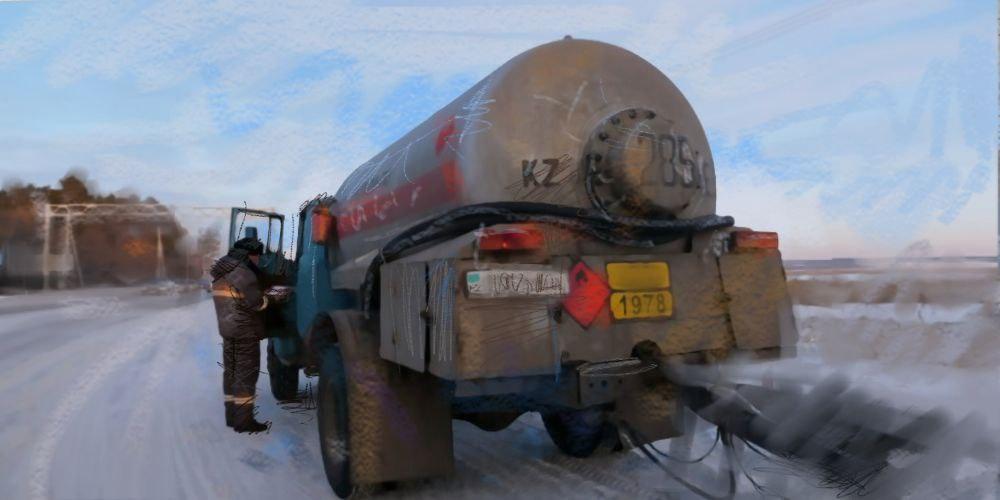
Kazakhstan has essentially become a low-cost fueling station for the entire transit flow of Central Asia. For example, diesel trucks transporting fruits and vegetables from Uzbekistan to Moscow travel around 3,500 km on Kazakh fuel: they refuel in Kazakhstan at the border with Uzbekistan, drive across Kazakhstan on Kazakh diesel, fill a full tank (from 1,000 to 3,000 liters) at the border with the Russian Federation, and can then drive on a full tank to Moscow and back to Kazakhstan.

While this is simply business, maintaining the lowest prices in the region ensures that fuel is siphoned off through both illegal and legal means.

Attempts to introduce differentiated fuel prices for foreign vehicles have failed. For instance, the government tried to curb diesel outflows by requiring vehicle registration certificates and driver’s licenses for refueling. However, official data showed that only 1% of fuel sales were to foreign vehicles, indicating that the measures were ineffective and prone to corruption at private gas stations.


Day of Independence from Addiction

When analyzing the situation, it is essential to consider the structure of the domestic market. Oil companies, under their subsoil use contracts, are required to supply 50–80% of their crude to domestic refineries at $20–25 per barrel. This is not only three times below global prices, but also below the average production cost of over $40 per barrel. Meanwhile, large international oil and gas projects that are considered “whales,” such as Tengiz, Karachaganak, and Kashagan – which account for two-thirds of national output – do not supply oil to the domestic market.

Thus, out of the 87.8 million tons of oil and gas condensate extracted in 2024, approximately 59 million tons are produced by these “whales.” In contrast, other companies supply 18 million of the 29 million tons they produce (62%) at prices close to or below actual production costs, covering losses through crude oil exports.

Kazakhstan’s multilayered “dependency pie” also includes Chinese companies, which provide 35% to 45% of all refining volumes for the domestic market. The earliest the country might be able to reduce its reliance on Russian oil products is by 2030. This will require the expansion of PetroKazakhstan Oil Products LLP (the Shymkent refinery in the south of the country), jointly owned by CNPC and KMG, which plans to increase its capacity from 6 million to 12 million tons yearly.

Chinese partners have long been dissatisfied with the prevailing pricing policies and obligations to supply oil domestically. Meanwhile, the Kazakhstan-China export pipeline operates at only 11 million of its 20-million-ton capacity, with 10 million tons of that volume coming from Russian oil via swap arrangements.

Thus, oil-producing Kazakhstan remains, and will continue to remain, dependent on both Russian oil and oil products supplies and on Chinese oil companies, which play a crucial role in domestic supply and own major infrastructure, including the largest refinery in the south of the country.

The combination of these factors, along with uncertainty over stable oil product supplies from Russia amid sanctions, attacks on refineries, growing domestic demand, and the declining national currency (since last year the devaluation of the tenge amounted to 18%) has led to the need to abandon marginal wholesale and retail prices for fuel, which is a cause for some discontent among both the public and shadow networks that control the distribution of scarce fuel resources.

Efforts to establish oil and oil product trading on exchanges, which Kazakhstan had been gradually moving toward, were “frozen” after the January 2022 events, which were exploited in an attempted coup.

The abandonment of the state regulation of fuel prices and transition to market-based pricing methods, including within the framework of the Common Market of oil, oil products, and gas of the EAEU starting January 1, 2027, will undoubtedly impact all countries in the region. It will lead to higher transportation costs for both individuals and businesses.

The break-even price for the most common gasoline grade, AI-92, is at least $0.60 per liter, compared to its current price of $0.40 per liter. This means an imminent price increase of at least 1.5 times. However, the government is likely to implement this adjustment gradually, avoiding an abrupt shift to market prices.

In conclusion, Kazakhstan’s experiment with subsidized energy prices, much like in other oil-producing countries, has failed. Instead of benefiting the domestic market, it has only deepened the country’s dependence on Russia and China.

Kyrgyz Deputy Maripov Proposes Moving Capital Away From Bishkek

Jogorku Kenesh (Parliament) deputy Bakytbek Maripov has proposed moving Kyrgyzstan’s capital away from Bishkek, presenting the idea during a parliamentary session on January 22.

Maripov argued that even radical measures to improve Bishkek’s infrastructure – such as reforming the city’s management system or developing transportation networks – would be insufficient to solve its persistent issues with smog and traffic congestion.

The deputy suggested that relocating the capital could offer an effective long-term solution, particularly when viewed in the context of large-scale investment opportunities. He cited a comparison of major infrastructure costs: for instance, the construction of the planned city of Asman on the coast of Issyk-Kul is already drawing $10 billion in investments. Meanwhile, relocating Bishkek’s railroad infrastructure would cost $550 million, and building a ring road around the city would require approximately $1 billion.

“If the capital were moved, the problems of traffic congestion and air pollution could be avoided,” Maripov emphasized.

Although the proposal to move the capital remains at an early stage, it has sparked significant debate among lawmakers and the public.

Bishkek’s Challenges: Traffic and Smog

Bishkek is grappling with severe traffic congestion and air pollution, which are fueling calls for drastic action. According to data from the 2GIS navigation service, residents spent 777 hours stuck in traffic during July, August, and September of 2024. In October, congestion levels in the city reached nine out of 10 points. The primary factors contributing to traffic jams include a surge in the number of vehicles, insufficient road capacity, and inefficient traffic light management.

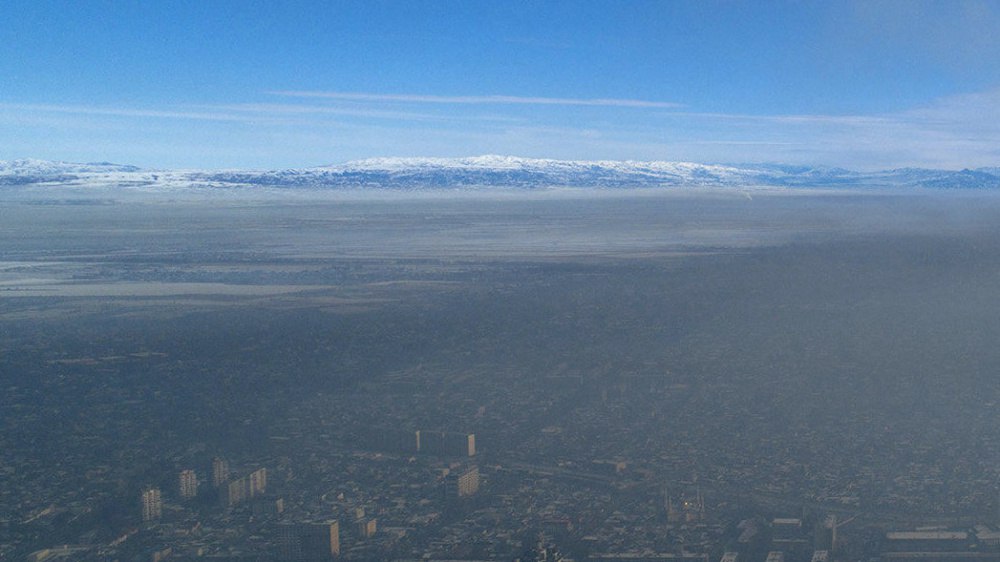
The city’s air pollution problem is equally pressing. In November 2024, Bishkek ranked among the top 10 most polluted cities in the world. Key sources of pollution include emissions from motor vehicles, the use of low-quality fuels for heating private homes, and unfavorable meteorological conditions that trap pollutants.

Government Efforts and Public Concerns

Authorities have introduced several initiatives to address Bishkek’s environmental and transportation challenges. In January 2025, the Jogorku Kenesh discussed measures aimed at reducing smog and alleviating traffic congestion in both Bishkek and Osh. However, despite ongoing efforts, the situation remains critical, underscoring the need for a comprehensive and systemic approach to improving urban infrastructure and environmental conditions.

While the idea of relocating Kyrgyzstan’s capital is far from finalized, it has already opened up discussions about long-term solutions to Bishkek’s chronic problems. For now, the debate continues as the city’s residents and lawmakers consider the potential benefits and challenges of such a monumental shift.