• KGS/USD = 0.01144 0%
  • KZT/USD = 0.00193 -0%
  • TJS/USD = 0.10866 0.55%
  • UZS/USD = 0.00008 0%
  • TMT/USD = 0.28490 0%
  • KGS/USD = 0.01144 0%
  • KZT/USD = 0.00193 -0%
  • TJS/USD = 0.10866 0.55%
  • UZS/USD = 0.00008 0%
  • TMT/USD = 0.28490 0%
  • KGS/USD = 0.01144 0%
  • KZT/USD = 0.00193 -0%
  • TJS/USD = 0.10866 0.55%
  • UZS/USD = 0.00008 0%
  • TMT/USD = 0.28490 0%
  • KGS/USD = 0.01144 0%
  • KZT/USD = 0.00193 -0%
  • TJS/USD = 0.10866 0.55%
  • UZS/USD = 0.00008 0%
  • TMT/USD = 0.28490 0%
  • KGS/USD = 0.01144 0%
  • KZT/USD = 0.00193 -0%
  • TJS/USD = 0.10866 0.55%
  • UZS/USD = 0.00008 0%
  • TMT/USD = 0.28490 0%
  • KGS/USD = 0.01144 0%
  • KZT/USD = 0.00193 -0%
  • TJS/USD = 0.10866 0.55%
  • UZS/USD = 0.00008 0%
  • TMT/USD = 0.28490 0%
  • KGS/USD = 0.01144 0%
  • KZT/USD = 0.00193 -0%
  • TJS/USD = 0.10866 0.55%
  • UZS/USD = 0.00008 0%
  • TMT/USD = 0.28490 0%
  • KGS/USD = 0.01144 0%
  • KZT/USD = 0.00193 -0%
  • TJS/USD = 0.10866 0.55%
  • UZS/USD = 0.00008 0%
  • TMT/USD = 0.28490 0%
11 December 2025

Reporters Without Borders Condemns Attack on Turkmen Journalist Soltan Achilova

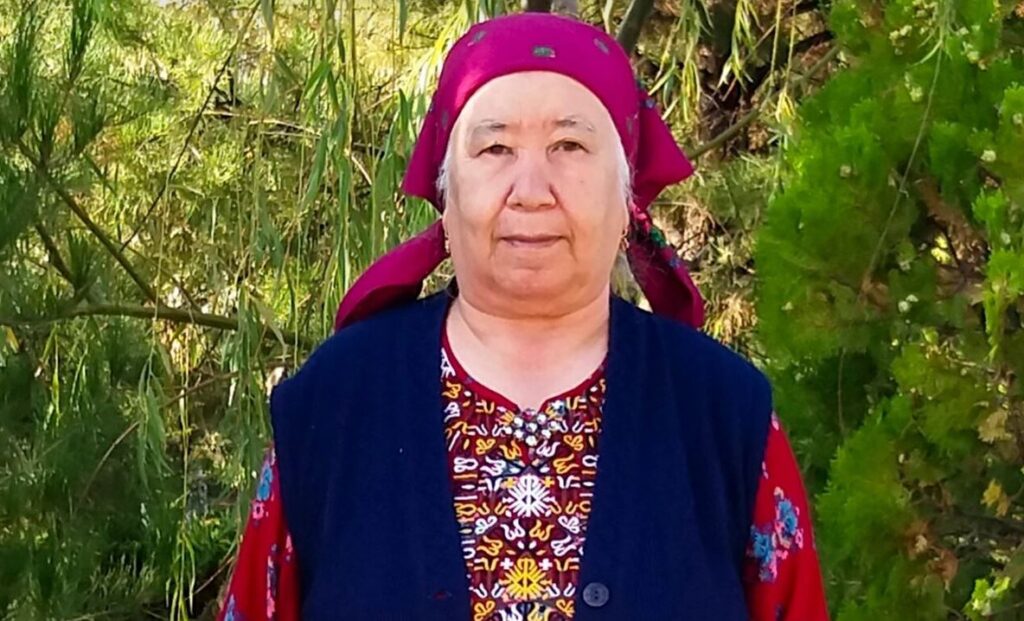
Reporters Without Borders (RSF) has strongly condemned the alleged attempt on the life of independent Turkmen journalist Soltan Achilova and has called on the international community to pressure Turkmenistan to cease its repression of free press.

Achilova, a prominent journalist known for her critical reporting on Turkmenistan, stated that authorities attempted to poison her in November 2024 and later barred her from leaving the country under the pretext of an infectious disease diagnosis.

On the morning of November 20, as Achilova prepared to leave for the airport with her daughter, several individuals in medical uniforms arrived at her home. They demanded she open the door, with one forcibly snatching her key and reportedly threatening her, saying, “Why do you need a key in the other world?” As previously reported by The Times of Central Asia, despite exhibiting no signs of illness, Achilova was forcibly taken to an infectious disease center in Ashgabat, where she was held in isolation for six days and barred from communicating her whereabouts.

In a video message published by Chronicles of Turkmenistan, Achilova directly blamed Turkmenistan’s authoritarian leadership, including President Serdar Berdimuhamedov and former President Gurbanguly Berdimuhamedov, for orchestrating the incident, stating: “They will not rest until they destroy me. This is all done on their orders.”

Achilova suspects the poisoning attempt is connected to her journalistic work. Just days before she was scheduled to travel to Geneva to accept the prestigious Martin Ennals Award for human rights defenders, a man visited her home, claiming to have evidence of police corruption. He later returned with samosas, a traditional snack, which he offered as a gesture of goodwill. One of Achilova’s neighbors who sampled the food lost consciousness within 15 minutes and was rushed to the hospital, where she was placed in intensive care.

RSF has described the incident as part of a broader pattern of repression aimed at silencing dissenting voices in Turkmenistan. Jeanne Cavelier, RSF’s head of Eastern Europe and Central Asia, has expressed concern: “This attempted poisoning and systematic persecution of Soltan Achilova show that the Turkmen authorities will stop at nothing to suppress independent journalism. We call on the international community to intervene immediately to protect her life and her right to independent reporting.”

Soltan Achilova is one of the few journalists in Turkmenistan who openly engages with independent outlets, making her a frequent target of government harassment. Since beginning her work in 2006, she has faced threats, attacks, and constant surveillance. Her relatives are regularly interrogated, and her phone remains under strict monitoring.

This is not the first time authorities have obstructed Achilova’s international travel. In 2023, while attempting to travel to Geneva, border officials deliberately defaced her passport, rendering it invalid.

Turkmenistan consistently ranks among the world’s worst countries for freedom of the press, placing 175th out of 180 nations in the World Press Freedom Index. RSF continues to spotlight Achilova’s case as emblematic of Turkmenistan’s efforts to suppress independent journalism and maintain strict control over information.

RSF’s statement calls for immediate international intervention to ensure Achilova’s safety and to hold Turkmen authorities accountable for their systematic repression of journalists.
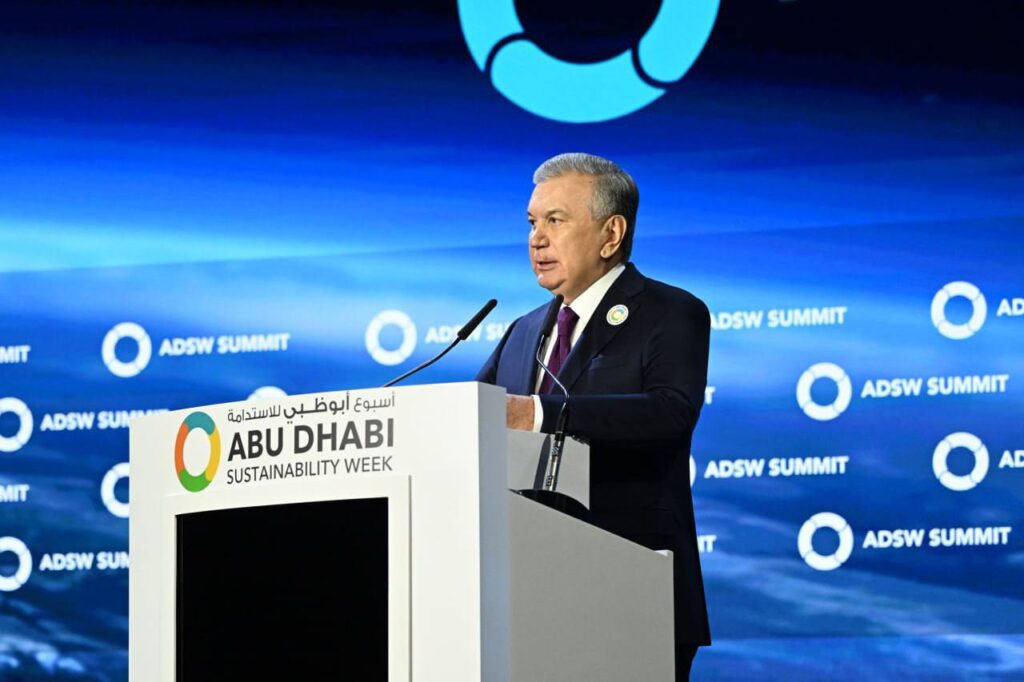

Mirziyoyev: Central Asia Can Become a Global Green Energy Hub

President Shavkat Mirziyoyev of Uzbekistan delivered a keynote address at the Sustainability Week Summit in Abu Dhabi on January 14. The event, hosted by UAE President Sheikh Mohammed Al Nahyan, gathered global leaders, including the presidents of Azerbaijan and Kazakhstan, the prime ministers of Italy, Malaysia, and Finland, as well as heads of international organizations and financial institutions.

The Urgency of Transitioning to a Green Economy

In his speech, Mirziyoyev emphasized the critical need for a green economic transition, stating: “The diversification of energy sources and a drastic reduction of hydrocarbons are now critical conditions for mitigating climate change and ensuring global security.”

Mirziyoyev noted that Uzbekistan has declared 2025 as the “Year of Environmental Protection and Green Economy.” The country’s strategic goal, under the “New Uzbekistan” framework, is to achieve sustainable economic growth through environmental sustainability and resource conservation.

Low-Carbon Development Goals

Outlining Uzbekistan’s low-carbon development strategy, Mirziyoyev announced plans to integrate green finance into 50% of investment projects over the next five years; reduce greenhouse gas emissions by 35% by 2030; “Green” at least 30% of urban areas; and ensure that 100% of agricultural lands adopt water-saving technologies.

Mirziyoyev also highlighted Uzbekistan’s achievements in renewable energy, stating: “In the past five years, we have attracted almost $20 billion in foreign investments, commissioning modern energy capacities of 9.6 gigawatts. This includes 14 solar and wind power plants with a total capacity of 3.5 gigawatts.”

Uzbekistan is currently collaborating with foreign partners on over 50 major energy projects worth $26 billion, aiming to reach a total energy capacity of 24 gigawatts by 2030. By that time, renewable energy is expected to account for 54% of the country’s total energy generation.

Regional Collaboration and Global Ambitions

Mirziyoyev underscored the importance of regional cooperation, saying: “We aim to turn Central Asia into one of the global centers for green economy and clean energy.”

He highlighted a multilateral agreement with Kazakhstan and Azerbaijan to export green energy to Europe and restore the Great Silk Road through energy connectivity.

The president shared success stories of partnerships with companies like Masdar, which have generated 1.5 gigawatts of renewable energy in Uzbekistan. Additional projects are underway to create 1.6 gigawatts of generating capacity and build energy storage systems with a capacity of about 520 megawatts per hour.

He also noted Uzbekistan’s untapped renewable energy potential, citing the ability to produce 500 gigawatts of solar, 100 gigawatts of wind, and 10 gigawatts of hydro energy.

Advancing Green Research and Innovation

Mirziyoyev referenced the establishment of the Green University in Tashkent – which will serve as a hub for global scientific collaboration – and proposed creating an international research network focused on combating land degradation and desertification. He also reiterated Uzbekistan’s initiatives introduced at COP-28 and COP-29, including the creation of an International Center for Damage and Loss Assessment and a regional hub for water-saving technologies.

“We are ready to begin practical work in these areas with all our partners,” he stated.

A Nationwide Green Movement

Concluding his address, Mirziyoyev reaffirmed Uzbekistan’s commitment to sustainable development:

“Today, green development in Uzbekistan has been raised to the level of a nationwide movement. New Uzbekistan is ready for broad, practical cooperation to advance sustainable and green development.”

Kyrgyz Businesses React With Cautious Optimism To Tax Amnesty

The Kyrgyz government has announced a tax amnesty aimed at easing the financial burden on businesses and reducing the workload of the State Tax Service (STS). However, local entrepreneurs have received the initiative with cautious optimism.

As part of the amnesty, President Sadyr Japarov has decreed the exemption of taxes on agricultural land, the cancellation of private vehicle taxes for citizens, and the write-off of all tax debts accrued before January 1, 2022.

The initiative has been met with mostly positive reactions from Kyrgyzstan’s business community. Entrepreneurs noted that many small and medium-sized enterprises in the country are burdened with significant debts to the state. They believe this measure has the potential to improve the business climate – provided the government maintains a stable and predictable tax policy.

“Such decisions were likely made to support entrepreneurs during a challenging economic period, stimulate economic activity, and improve the overall state of business in the country. It could also be part of a broader strategy to foster trust between the government and the business community,” the JIA Business Association, one of Kyrgyzstan’s largest business groups, told the Times of Central Asia.

By writing off debts, the JIA representatives said, the government will significantly ease the financial strain on businesses across various sectors. This would allow many entrepreneurs to focus on recovery and growth, particularly after the economic setbacks caused by the COVID-19 pandemic.

Despite these positives, the association expressed concerns over the fairness of the tax amnesty.

“We hope that the amnesty will also include those businesses that were declared debtors by court decisions, but remain unable to pay their debts to this day. Additionally, there are social businesses – such as those in education and healthcare – that are registered as non-profit organizations but still face tax burdens. Including these entities in the amnesty would ensure greater fairness and also ease the workload of the tax service,” a JIA spokesperson explained.

However, under the presidential decree, businesses or individuals with tax debts resulting from court rulings are not eligible for the amnesty.

The Kyrgyz presidential administration estimates that the amnesty will result in the write-off of approximately 11 billion KGS (around $126 million) in tax debts for over 20,000 businesses. But while this decision is welcomed by many, it has drawn criticism from some quarters.

Market representatives argue that the amnesty may be unpopular among diligent taxpayers who have consistently fulfilled their tax obligations and do not owe the state. Nonetheless, they acknowledged that the government’s decision demonstrates a willingness to be flexible. This includes addressing other concerns, such as issues surrounding the introduction of electronic commodity invoices, which have been controversial among entrepreneurs.

“In the past three years, there has been significant progress in reforming tax administration. We anticipate further reforms, such as limiting the application of electronic goods invoices (ETNs) to specific types of goods or simplifying their use for small and medium-sized businesses. Efforts to improve digital tools for businesses, streamline tax administration, and increase public and business awareness of tax policies are also critical. Stability in tax policy will help entrepreneurs plan investments with greater confidence and grow their businesses more effectively,” the JIA added.

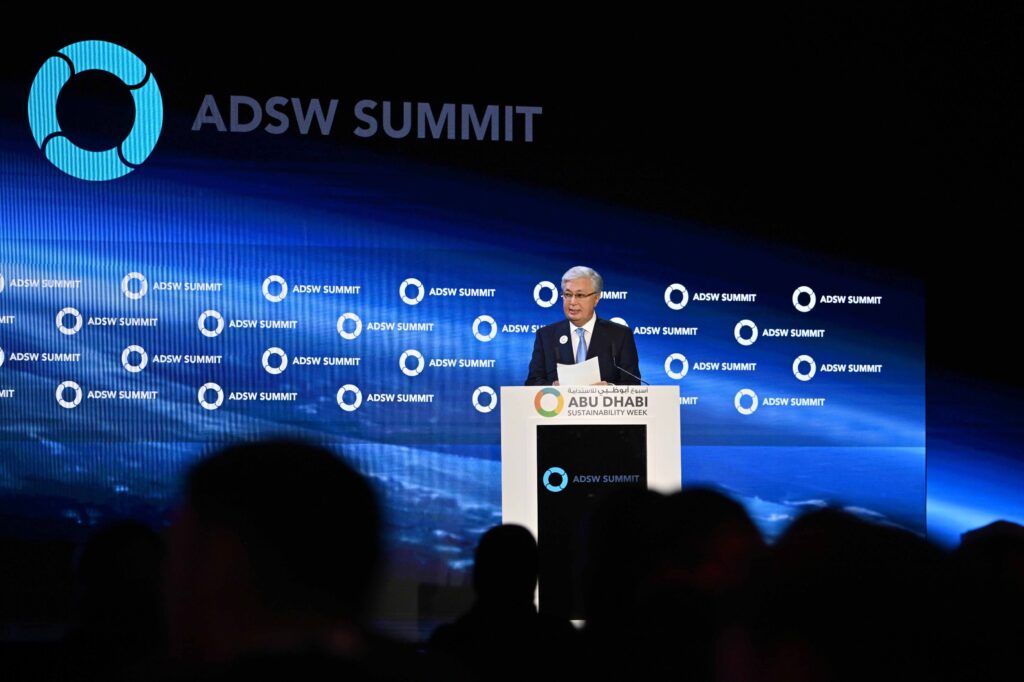
Kazakh President Proposes Solutions to Climate Threats at Abu Dhabi Summit

Kazakh President Kassym-Jomart Tokayev participated in the Abu Dhabi Sustainability Week summit, where global leaders and experts convened to address pressing challenges in sustainable development.

In his address, Tokayev highlighted the urgent threats posed by climate change, desertification, biodiversity loss, and food insecurity – issues exacerbated by geopolitical tensions and disruptions to global supply chains.

Kazakhstan’s Strategy for Sustainability

Tokayev presented Kazakhstan’s roadmap for tackling these challenges, focusing on digitalization, major infrastructure projects, and nuclear energy. Noting that global energy systems account for 75% of greenhouse gas emissions, he underscored Kazakhstan’s commitment to green energy development. The country is collaborating with international partners, including Masdar, Total, and Eni, to implement projects to generate 43 GW of renewable energy. Additionally, Tokayev highlighted the strategic importance of constructing Kazakhstan’s first nuclear power plant, an initiative supported through a national referendum.

Regional Connectivity and Transport Infrastructure

Addressing the role of transportation in sustainable development, Tokayev emphasized Kazakhstan’s position as a key transit hub in Eurasia. He called for further development of the Trans-Caspian International Transport Corridor to enhance regional connectivity and strengthen global supply chains. Sustainable transport infrastructure, he argued, is essential for driving economic growth across the region.

Climate and Food Security in Central Asia

Tokayev devoted significant attention to the challenges facing Central Asia, particularly the impact of global warming on ecosystems and agriculture. He proposed the introduction of water-saving technologies, the modernization of irrigation systems, and the application of artificial intelligence to better manage water resources.

On food security, Tokayev outlined Kazakhstan’s plan to advance sustainable agricultural practices and technologies, aiming to mitigate climate risks while ensuring reliable food supplies.

A Global Paradigm Shift

Tokayev called on the international community to adopt a new development paradigm based on green finance, the transfer of climate-friendly technologies, and the integration of artificial intelligence with environmental priorities. He emphasized that aligning these strategies could significantly boost global GDP by 2030 while addressing environmental challenges.

Summit Collaboration and Hope for the Future

The Kazakh President concluded his speech by expressing optimism that the summit could serve as a turning point in harmonizing global priorities for sustainable development.

The event featured participation from other prominent leaders, including Uzbek President Shavkat Mirziyoyev, Rwandan President Paul Kagame, Finnish Prime Minister Petteri Orpo, Malaysian Prime Minister Anwar Ibrahim, and President of the International Union for Conservation of Nature Razan Al Mubarak. Together, the dignitaries reinforced the need for global cooperation in confronting environmental and economic challenges.

Foreign Online Marketplaces to Be Registered in Kazakhstan

Kazakhstan’s Minister of Trade and Integration, Arman Shakkaliyev, has proposed introducing regulations requiring foreign online marketplaces operating in the country to register on a dedicated electronic platform. The proposal was discussed during a government meeting on e-commerce development held on January 14.

As outlined by Shakkaliyev, the mandatory conditions for these platforms would include:

  • Compliance with product safety standards;
  • Measures to combat counterfeit products;
  • Protection of consumer rights and personal data; and
  • Adherence to tax and customs transparency requirements.

Addressing Consumer Complaints

The proposed measures aim to address a growing number of complaints from Kazakh citizens about foreign online trading platforms. Many of these platforms operate outside of Kazakhstan’s jurisdiction, making it difficult – if not impossible – for customers to return or exchange goods due to geographic distances. Furthermore, goods purchased through foreign marketplaces often lack certification in Kazakhstan, raising concerns over product safety and quality.

The Rise of E-Commerce in Kazakhstan

In 2023, purchases on foreign online marketplaces in Kazakhstan totaled $1.3 billion, accounting for about 20% of the country’s total online sales. The sector continues to grow, with new foreign platforms entering the market. Notably, Russian marketplaces Ozon and Wildberries plan to establish three fulfillment centers in Astana and Almaty in 2024, with a combined area of 291,000 square meters.

Kazakhstan’s e-commerce industry has witnessed rapid growth in recent years. According to the Ministry of Trade and Integration, e-commerce transactions from January to November 2024 amounted to approximately 3.2 trillion KZT (over $6 billion), representing 14.5% of the total retail trade and creating over 300,000 jobs.

The government aims to increase e-commerce’s share in total retail trade to 18.5% by 2029.

Comparative Trends and Local Initiatives

The Times of Central Asia previously reported that in 2023, Kazakhstan’s e-commerce volume exceeded 2.2 trillion KZT ($4.8 billion), accounting for 13% of all retail trade – an increase of 0.5% compared to the previous year.

In addition to regulating foreign platforms, Kazakhstan is fostering its domestic e-commerce sector. Recently, a new local online marketplace, Teez, was launched, with investments totaling $50 million. Teez boasts its own infrastructure, further strengthening the country’s digital economy.

Tajikistan Leads Central Asia in Energy Transition Index

Tajikistan has secured the top position among Central Asian countries in the World Economic Forum’s (WEF) annual Energy Transition Index (ETI). Ranking 71st out of 120 nations, Tajikistan achieved a score of 53.6.

This performance places Tajikistan ahead of its regional neighbors, including Kyrgyzstan, which ranked 80th with a score of 52.7, and Kazakhstan, which came in 98th with 50.1. Uzbekistan and Turkmenistan were not included in the ranking.

The ETI evaluates global energy systems based on two primary criteria: Energy system efficiency (60% weighting); and readiness for a sustainable energy transition (40% weighting).

Key factors influencing scores include energy affordability, sustainability, innovation, infrastructure, policy support, and investment activity.

While Tajikistan’s score of 53.6 was slightly below the global average of 56.5, it outperformed many other nations in Central Asia. Globally, Northern European countries dominated the rankings. Sweden led the index with 78.4 points, followed by Denmark (75.2) and Finland (74.5).

Among the Commonwealth of Independent States (CIS) and Caspian countries, Azerbaijan ranked highest, securing 38th place with a score of 60.3.

The Times of Central Asia previously reported on Tajikistan’s decision to rejoin Central Asia’s unified energy system. Originally established in 1960, the system interconnected the power networks of Uzbekistan, southern Kyrgyzstan, northern Tajikistan, and southern Kazakhstan’s Shymkent region. These systems were linked by 110- and 220-kilovolt power lines and operated independently of the Soviet Union’s central energy network.

Tajikistan’s leadership in the Energy Transition Index reflects its ongoing commitment to energy sustainability and regional collaboration.