• KGS/USD = 0.01144 0%
  • KZT/USD = 0.00192 -0%
  • TJS/USD = 0.10849 0.37%
  • UZS/USD = 0.00008 0%
  • TMT/USD = 0.28571 0.28%
  • KGS/USD = 0.01144 0%
  • KZT/USD = 0.00192 -0%
  • TJS/USD = 0.10849 0.37%
  • UZS/USD = 0.00008 0%
  • TMT/USD = 0.28571 0.28%
  • KGS/USD = 0.01144 0%
  • KZT/USD = 0.00192 -0%
  • TJS/USD = 0.10849 0.37%
  • UZS/USD = 0.00008 0%
  • TMT/USD = 0.28571 0.28%
  • KGS/USD = 0.01144 0%
  • KZT/USD = 0.00192 -0%
  • TJS/USD = 0.10849 0.37%
  • UZS/USD = 0.00008 0%
  • TMT/USD = 0.28571 0.28%
  • KGS/USD = 0.01144 0%
  • KZT/USD = 0.00192 -0%
  • TJS/USD = 0.10849 0.37%
  • UZS/USD = 0.00008 0%
  • TMT/USD = 0.28571 0.28%
  • KGS/USD = 0.01144 0%
  • KZT/USD = 0.00192 -0%
  • TJS/USD = 0.10849 0.37%
  • UZS/USD = 0.00008 0%
  • TMT/USD = 0.28571 0.28%
  • KGS/USD = 0.01144 0%
  • KZT/USD = 0.00192 -0%
  • TJS/USD = 0.10849 0.37%
  • UZS/USD = 0.00008 0%
  • TMT/USD = 0.28571 0.28%
  • KGS/USD = 0.01144 0%
  • KZT/USD = 0.00192 -0%
  • TJS/USD = 0.10849 0.37%
  • UZS/USD = 0.00008 0%
  • TMT/USD = 0.28571 0.28%
11 December 2025

Kyrgyz National Bank Maintains Discount Rate at 9% Amid Stable Inflation and Economic Growth

The National Bank of the Kyrgyz Republic has announced its decision to keep the discount rate steady at 9%, according to a statement published on its official website.

The Bank credited its effective monetary policy for maintaining stable inflation. As of November 2024, annual inflation dropped from 7.3% at the start of the year to 5.2%, aligning with the regulator’s targets. Inflationary pressures remained moderate, with slowed price growth in both food and non-food categories. Key drivers of price levels include strong domestic demand and the impact of tariff policy measures.

Kyrgyzstan’s economy continues to demonstrate robust growth, primarily driven by expansion in the construction and services sectors. Real GDP grew by 9.6% during the first ten months of 2024, fueled by increased domestic consumption supported by rising household incomes. Higher real wages and a surge in individual remittances have contributed significantly to this growth. Fixed asset investments, largely financed by domestic sources, have also risen.

The domestic foreign exchange market has shown resilience, with fluctuations in the national currency attributed to seasonal factors and balanced supply-demand dynamics. The National Bank has conducted $20.75 million in net foreign currency sales since the beginning of the year to prevent sharp exchange rate volatility.

The Bank has progressively adjusted its discount rate over the past two years. In November 2022, it was reduced from 14% to 13%, followed by further reductions in 2024: from 13% to 11% in April and then to the current 9% in May. The next review of the discount rate is scheduled for January 27, 2025.


Turkmenistan Authorities Set Up Fake Bazaars for U.S. Ambassador’s Visit

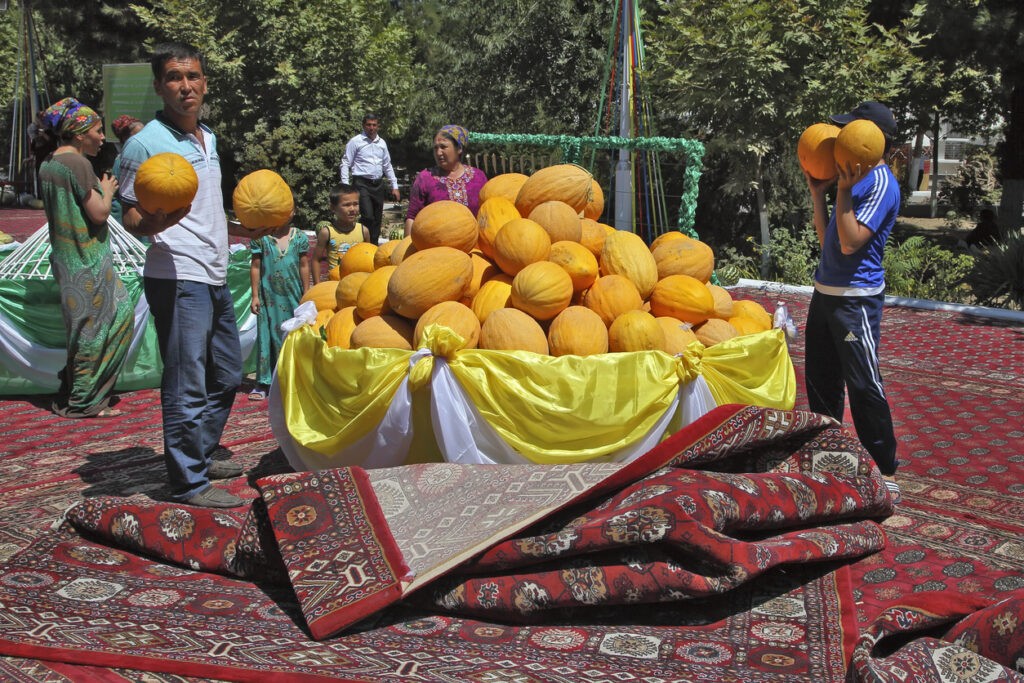
Ahead of U.S. Ambassador to Turkmenistan Elizabeth Rood’s visit to the Balkan region, local authorities undertook misleading measures to create a favorable impression of the area. According to Radio Azatlyk, markets in the city of Turkmenbashi were artificially overstocked with food products, and English teachers were deployed as market vendors.

On November 22, the U.S. Embassy in Ashgabat reported on Ambassador Rood’s visit to Balkan. During her visit, the ambassador met with local business representatives and U.S. companies operating in Turkmenistan, reaffirming the U.S. commitment to expanding investment and commercial ties to promote economic growth and shared prosperity.

In preparation for the visit, Turkmenbashi city authorities reportedly instructed English teachers to pose as vendors at local markets, including the Kenar market and other major trading hubs. These measures were designed to create the illusion of a thriving marketplace and well-being among residents. Local sources revealed that the product variety was artificially increased for the occasion, and teachers donned vendor attire to serve shoppers.

Such practices are common in Turkmenistan during high-profile visits. In addition to market modifications, Turkmenbashi authorities temporarily banned cars manufactured before 2015 from city roads to present an image of affluence. Observers noted that only new and expensive cars were visible, reinforcing the portrayal of prosperity.

While official sources did not confirm visits to local markets by U.S. representatives, local authorities took preventive measures to pre-empt potential criticism. Campaign-style meetings were held in school and cultural assembly halls, where officials from the hakimlik, Trade Union, and Women’s Union instructed residents not to discuss food shortages or economic issues with outsiders, to maintain order in queues for cooking oil, and to report anyone photographing lines.

Kazakhstan Increases Water Allocation to Restore the Aral Sea

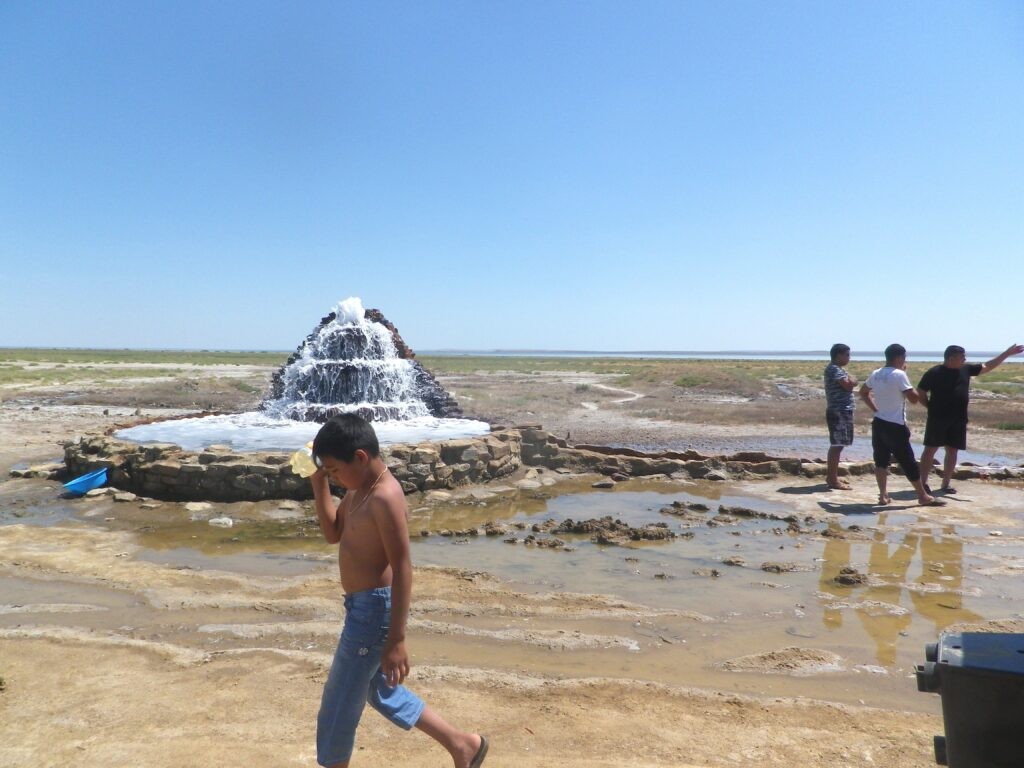
Kazakhstan plans to direct an additional 1.6 billion cubic meters of water to the Aral Sea by April 2025, announced Nurzhan Nurzhigitov, Minister of Water Resources and Irrigation. This initiative builds on efforts from October 2023 to April 2024, during which 1.3 billion cubic meters were allocated, bringing the total water volume in the Northern Aral Sea to 22 billion cubic meters as of early 2024.

Minister Nurzhigitov emphasized that adopting water-saving technologies is essential for restoring the region’s water balance. In 2024, farmers in the Kyzylorda region conserved 200 million cubic meters of water, enabling additional flow into the Northern Aral. These technologies also facilitated the allocation of 1 billion cubic meters to the Aral Sea during the 2024 irrigation season, a threefold increase compared to the previous year.

The preservation of the Aral Sea is a national priority, addressed through regional collaboration and strategic planning. At the 87th meeting of the Interstate Commission for Water Coordination of Central Asia (ICWC) in Turkmenistan, agreements were made to channel 11 billion cubic meters of water to the Shardara reservoir by April 1, 2025. This move aims to ensure sufficient irrigation for southern Kazakhstan’s 2025 growing season.


Kazakhstan Explores Agro-Drones to Revolutionize Agriculture

The potential of drones to transform agriculture in Kazakhstan was a key topic at a government meeting on November 26. Officials discussed the environmental and economic advantages of adopting agro-drones over traditional spraying equipment.

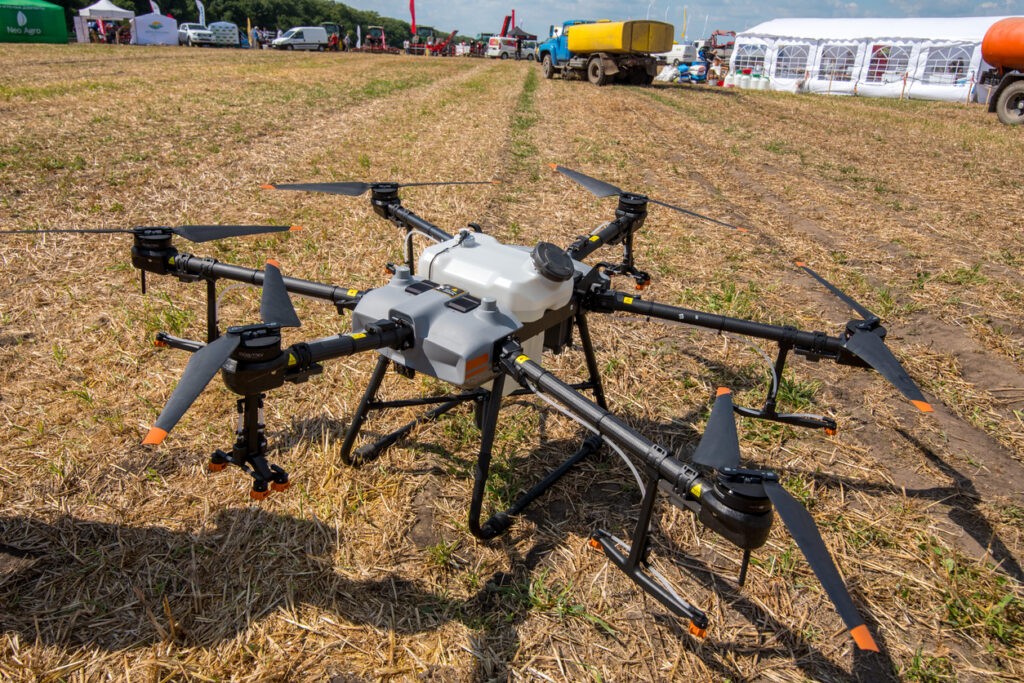
International examples demonstrate that agro-drones can significantly reduce water usage, lower CO2 emissions, and access hard-to-reach areas more effectively. Sanzhar Nurgazinov, representing a company that operates agro-drones, highlighted their efficiency: while wheeled sprayers require 150 liters of water per hectare—amounting to 750,000 liters for 5,000 hectares—a drone uses just 50,000 liters for the same area, reducing water consumption more than 15-fold. Additionally, drones prevent the 6% crop loss caused by the tracks of wheeled sprayers, ensuring higher harvest yields.

To advance drone adoption, Kazakhstan’s Ministry of Agriculture has partnered with the Chinese company Eavision to import 80 drones for pest and disease management. Furthermore, a joint venture, Sunkar Eavision International LLP, has been established to assemble drones locally in the Alatau Special Economic Zone near Almaty.

The Ministry has been tasked with creating a roadmap by February 2025 for integrating agro-drones into the country’s agricultural practices. This plan includes establishing service centers, training specialists, and developing financial support programs to help farmers acquire this cutting-edge technology.

By embracing agro-drones, Kazakhstan aims to modernize its agricultural sector, boosting efficiency and sustainability while addressing the challenges of water conservation and crop protection.

The Amu Darya and the Aral Sea Crisis: Voices from the Heart of an Environmental Disaster

A documentary entitled Amu Darya: Missing to the River has been produced as part of Project Amu Darya. This initiative began in 2022, and is a collaboration between students from Karakalpakstan, Khorezm, and Oxford University in the UK.

This research is important for several reasons. Firstly, the Aral Sea crisis, which is one of the most severe man-made ecological disasters in history, is under-reported by the global media. Secondly, the academic field is limited – outside of Uzbekistan, the historiography of the Aral crisis is still a developing field. Thirdly, the geographical scope of research is limited. Research is often focused on the Aral Sea itself, and does not take into account the impact on the wider region. Finally, there is no involvement of stakeholders. The personal experiences of those living along the Amu Darya River are often excluded from studies.
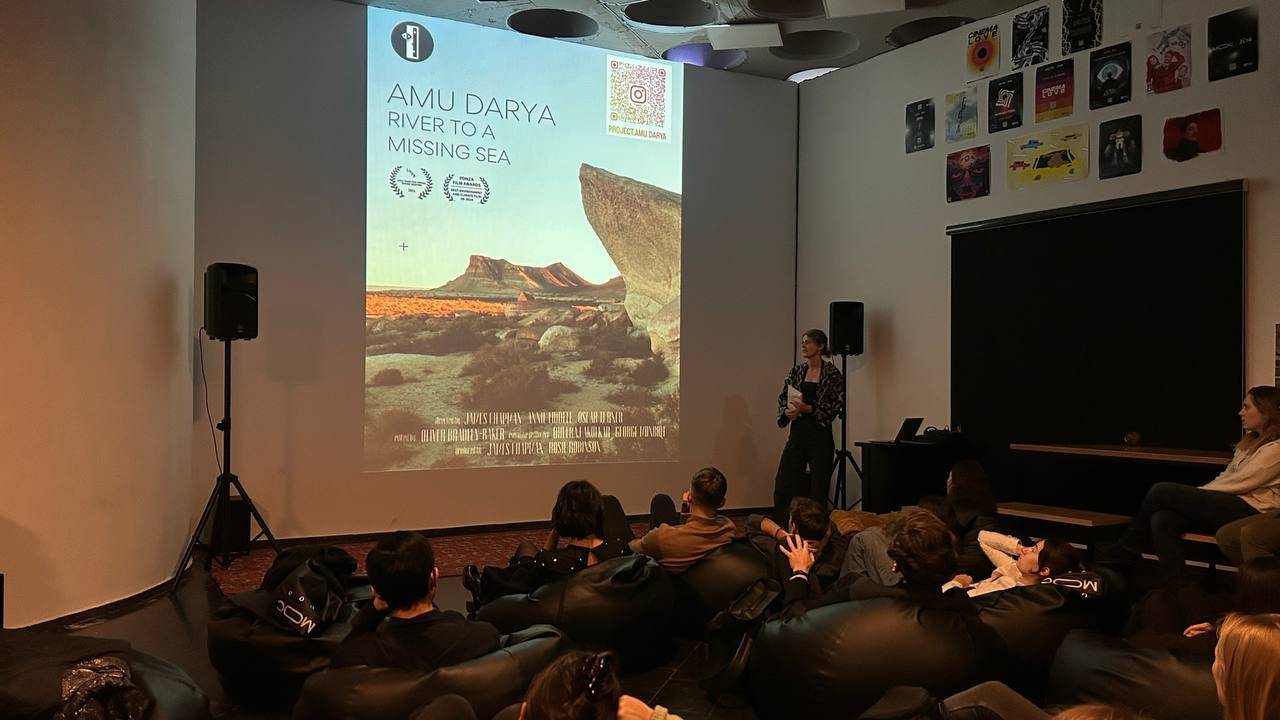
Amu Darya: Missing to the River screening – image: TCA, Sadokat Jalolova

The Amu Darya is one of the two main rivers feeding the Aral Sea. Irrigation in the Amu Darya basin has been carried out for more than three thousand years. However, the current Aral Sea crisis was caused by mismanagement during the Soviet and post-Soviet eras.

International donors have intensified their efforts to address the crisis. By December 2022, the UN Multi-Partner Human Security Trust Fund for the Aral Sea Region had raised over $16 million to support communities affected by the disaster. Established in 2018, the fund helps mitigate the environmental and social consequences of the crisis. President Mirziyoyev’s government has also lifted many data restrictions, allowing more research in the region. In 2017, the United Nations conducted the first socioeconomic survey of Aral Sea communities.
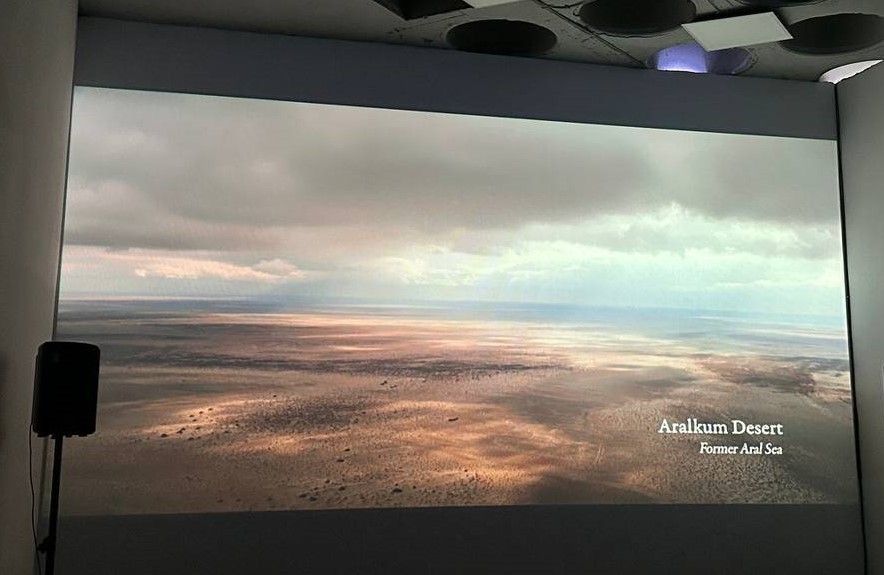
Aralkum Desert, former Aral Sea; image: TCA, Sadokat Jalolova

Central Asian countries are also cooperating to solve the problem of water level reduction in the Aral Sea. This year, as a result of the introduction of water-saving technologies on 55,000 hectares of rice fields in Kazakhstan, more than 200 million cubic meters of water were directed to the Aral Sea.

The Times of Central Asia spoke with Annie Liddell, one of Project Amu Darya’s co-founders. She shared her thoughts about the inspiration behind the documentary. According to Liddell, the team were inspired by Svetlana Alexievich’s book Voices of Chernobyl. The author used oral interviews to highlight the personal stories behind the environmental disaster, making it more relatable. Liddell explained that the film aims to preserve the authenticity of interviewees’ voices and connect their stories of the Amu Darya’s past with the reality of its present state, which is a rapidly spreading desert.

Local communities played a central role in the film’s creation. Students from Karakalpak State University and Urgench State University contributed to the research. Residents of Karakalpakstan and Khorezm also shared their personal stories, and provided insights into their culture and stability.
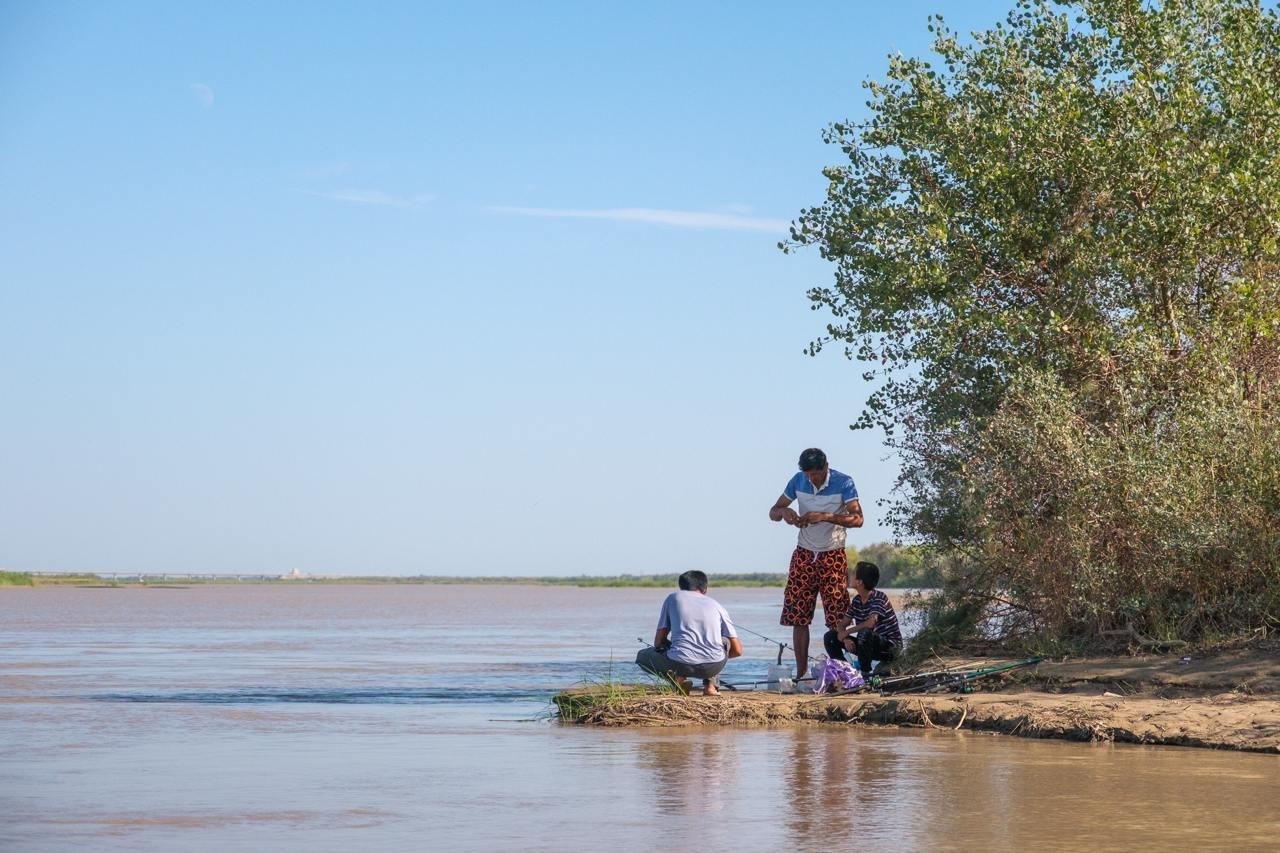
Image: Project Amu Darya

The documentary depicts different historical periods and personal experiences. It covers the period of Zoroastrianism, early Russian history, and events from the 1930s to the present day. The team spoke with interviewees of widely-differing ages, including a 94-year-old woman and a 17-year-old girl. These stories highlight the differences between generations in how people in the Amu Darya delta view water and environmental issues.

Liddell hopes the documentary will raise awareness about the impact of human activities in environmental problems. “Many people in the Aral Sea Region are not aware or are reluctant to talk about the fact that the Aral Sea Crisis was caused by unsustainable water management,” she noted; “but if we do not address this fact, we cannot combat ongoing water management problem.”

The team has ambitious plans for the future, and hopes to use the documentary, along with other resources, to improve communication and youth education on the crisis. “We are working to expand our project’s work to create a multimedia educational toolkit on climate change in the Aral Sea Region,” Liddell told TCA. “A big issue surrounding the Aral Sea Crisis is that few people in Uzbekistan – especially young people – have access to information or education about the crisis.”

The documentary also captures voices from the region. Reflecting on the loss of the Aral Sea, former fisherman Oralbay Otegenov explained that the sea once provided ample fish for local consumption and export, but now it has become a desert. “After the Aral Sea dried up, the irrigation canals also dried up. Now, if you look at the river’s breadth, it’s all desert. If the Aral Sea still existed, we would catch a lot of fish for Uzbekistan and export them to other places, too. Now, there is nothing,” said Otegenov.
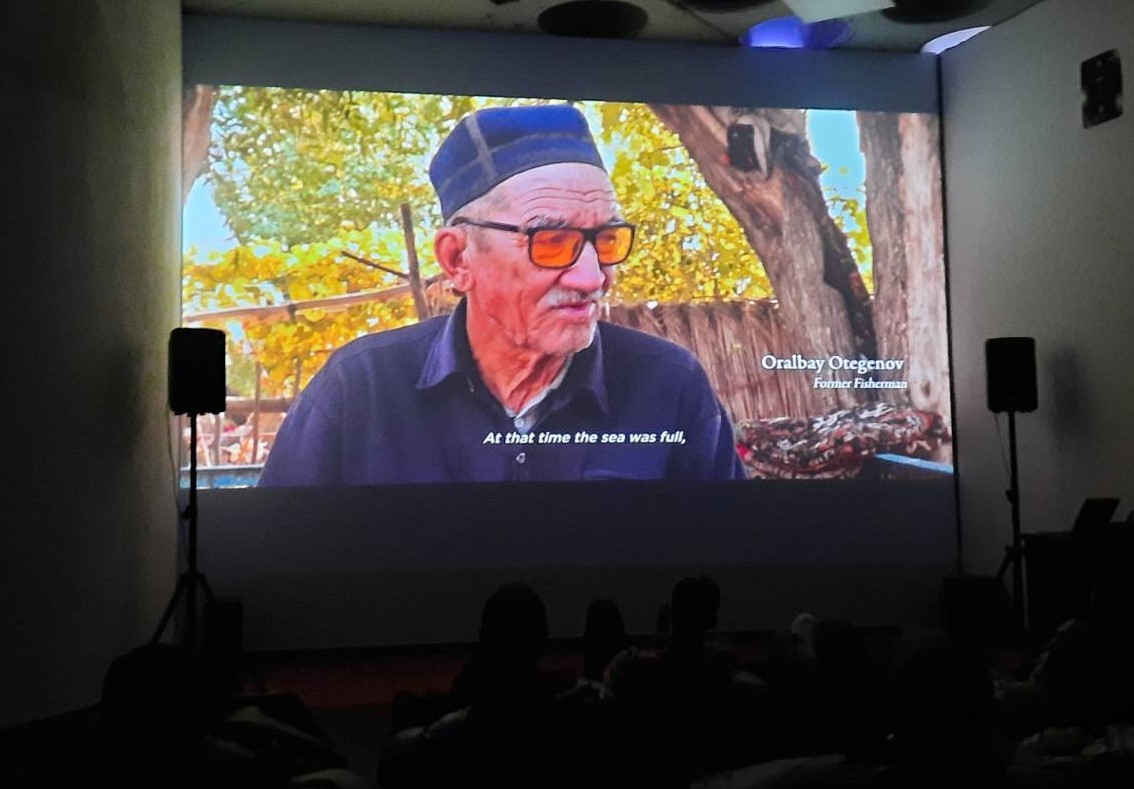
Oralbay Otegenov; image: TCA, Sadokat Jalolova

The Aral Sea produced 30% of Soviet catch in the 1920s, and saved Russia from widespread famine.

Drastic changes have since harmed the ecosystem, threatening many fish species, including three unique species of sturgeon. The loss of such species has disrupted the natural balance and affected the livelihoods of the local communities which previously depended on fishing. To revive fisheries, the European flounder was introduced, but the ecosystem is now on the verge of collapse, with the fishing industry decimated, causing job losses and economic difficulties.

Seventeen-year-old Aynura expressed concerns about the health impacts of air pollution in the area. Yusup Kamalov, chair of the Union for Defense of the Aral Sea and Amu Darya, highlighted inequalities in the use of water use, detailing how upstream users pollute the water, leaving downstream communities to drink poison. “We have discrimination, not by race, not by nations, but we have discrimination by geographical location,” Kamalov stated.

Project Amu Darya is a testament to the urgent need to eliminate the negative impact of the Aral Sea crisis on humans and the environment.

The team plans to hold further screenings of the documentary in Uzbekistan, starting in February 2024.

China Constructs Vital Fertilizer Plant to Boost Agriculture in Kyrgyzstan

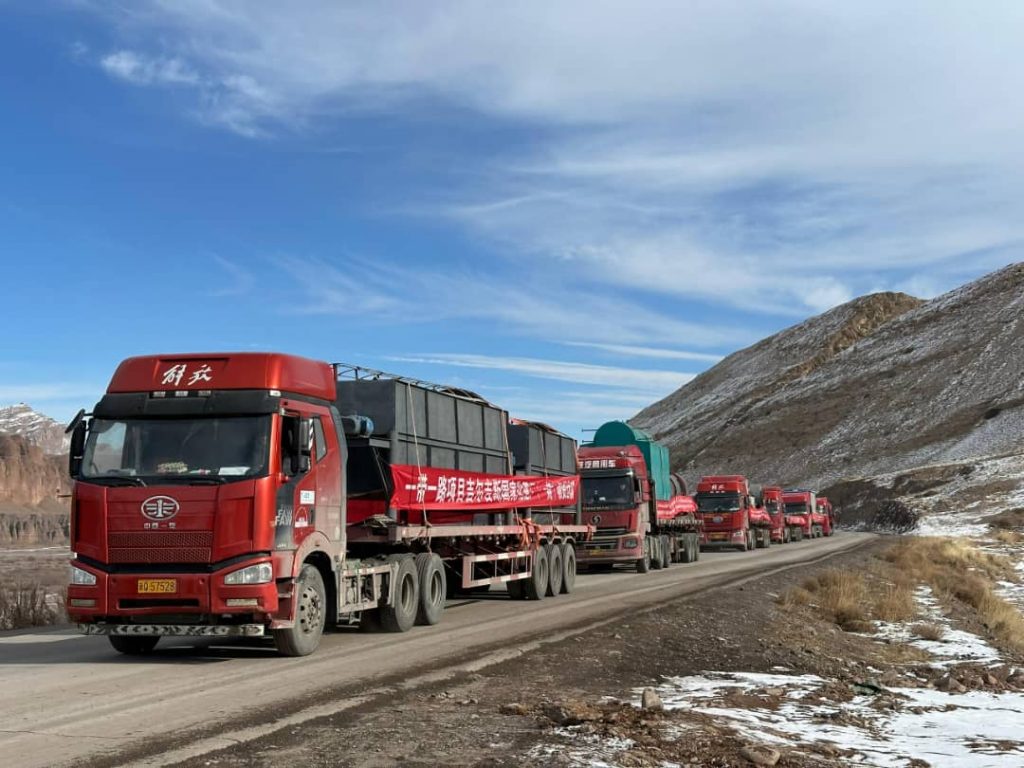
Construction has started on a Kyrgyz-Chinese mineral fertilizer plant in the Nookat district of southern Kyrgyzstan’s Osh region. On November 25, equipment worth $15 million arrived from China to advance the project.

The $260 million investment agreement for the plant was signed in May 2023 between Kyrgyzstan’s Ministry of Agriculture and China’s Hebei Bai Dou Jia LLC during President Sadyr Japarov’s visit to China.

The project will be executed in phases, with the first phase set for completion by 2025. This initial phase aims to produce 100,000 tons of fertilizer annually. Future phases include plans for an agricultural machinery assembly plant and expanding production capacity to 500,000 tons per year. Once fully operational, the facility is expected to generate around 2,000 jobs.

The plant is a strategic move to reduce Kyrgyzstan’s dependency on imported mineral fertilizers. Currently, the country imports most of its 286,000-ton annual demand from Uzbekistan and Russia. The new facility is poised to meet and exceed domestic needs, boosting agricultural productivity and supporting the country’s economy.